









Check Availability
Modify/Cancel Reservations

More Search OptionsReturn to Check Availability Console


The Greenbrier®

History

The allure of White Sulphur Springs dates back to the Native Americans and early settlers who came to drink and bathe in the mystical waters that sprang from deep underground. After a woman’s rheumatism was magically cured in the late 18th century, a steady stream of visitors came to partake of the water’s healing powers. The arrival of a stagecoach route in the 1830s ushered in an era of prominence as planters, judges, lawyers and merchants from across the South migrated here to escape the humid summer.

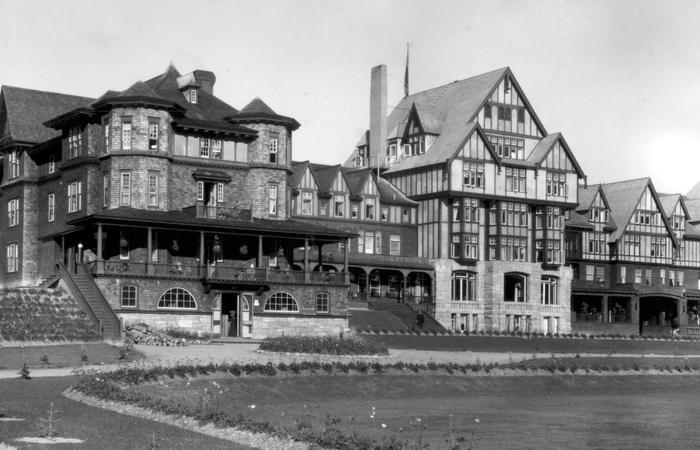
The resort was originally comprised of four neat rows of cottages, many of which still stand today. In the years before the Civil War, White Sulphur Springs had become the most fashionable resort in the South. In 1858, the Grand Central Hotel, or the Old White, as it was affectionately known, was constructed with three levels of porches for relaxing and large aisles to accommodate promenading guests. Despite serving as a hospital and military headquarters for both Union and Confederate forces, the hotel survived the war intact.

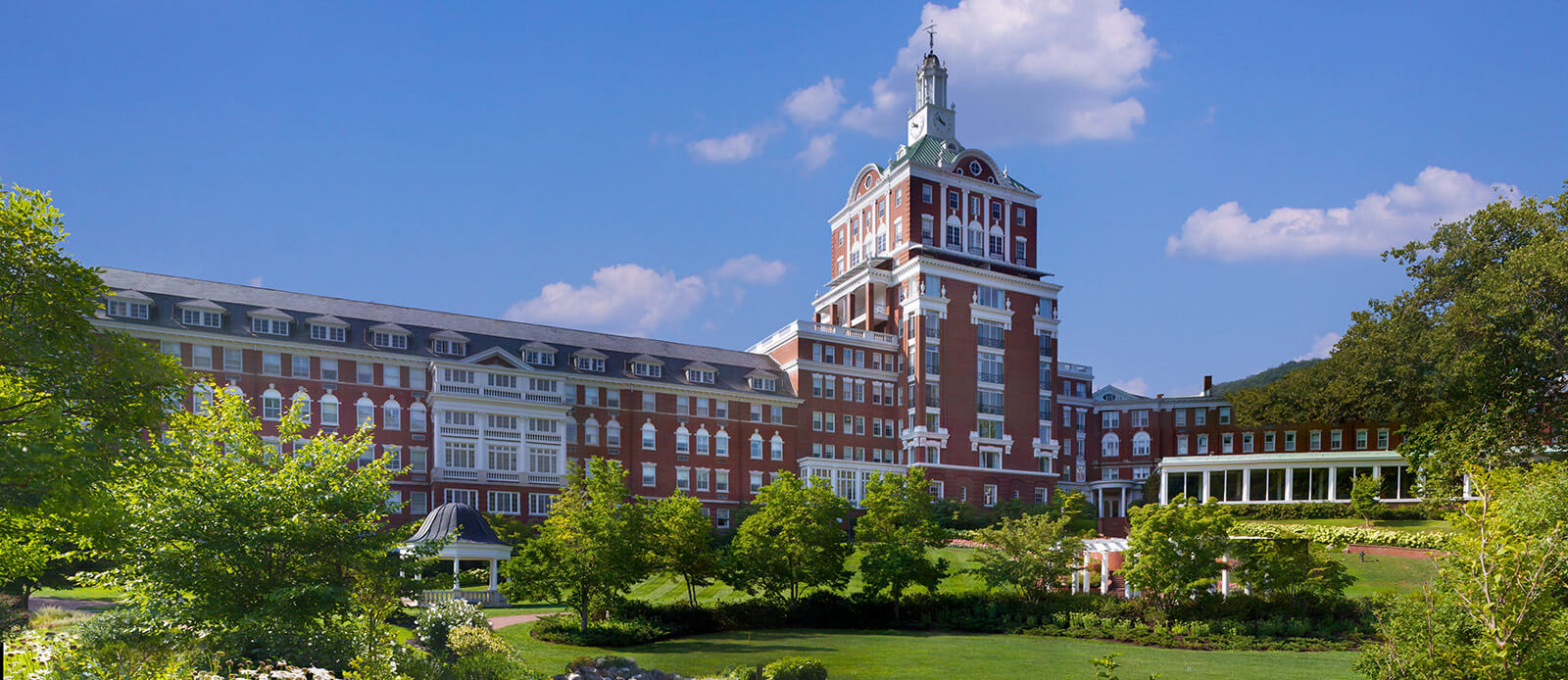
The advent of the Chesapeake and Ohio Railway brought renewed prosperity to the area and the railway purchased the hotel in 1910. A major expansion resulted in the construction of the Greenbrier Hotel (the central portion of today’s resort), an 18-hole golf course and a new Mineral Bath department.

During World War II, the Greenbrier housed German, Japanese and Italian diplomats awaiting exchange for American personnel overseas. In 1942, the hotel was acquired by the U.S. Army and operated as Ashford General Hospital, a surgical and rehabilitation center. After the war, the hotel was purchased again by the C&O Railroad and underwent an extensive makeover under the watchful eye of designer Dorothy Draper.

In the 1950s, the U.S. Army approached the resort for help in constructing an emergency relocation center or bunker to be used by Congress in the event of war. The facility was built in conjunction with an above-ground addition and for the next 30 years, the top-secret structure was kept in a state of perpetual readiness.


It appears you are using an older web browser! While using our site, you may encounter some trouble along the way. For PC users, we recommend upgrading to the latest version of Internet Explorer or Firefox. For Mac users, we recommend the latest version of Safari or Firefox.