Raffles London at The OWO
London, United Kingdom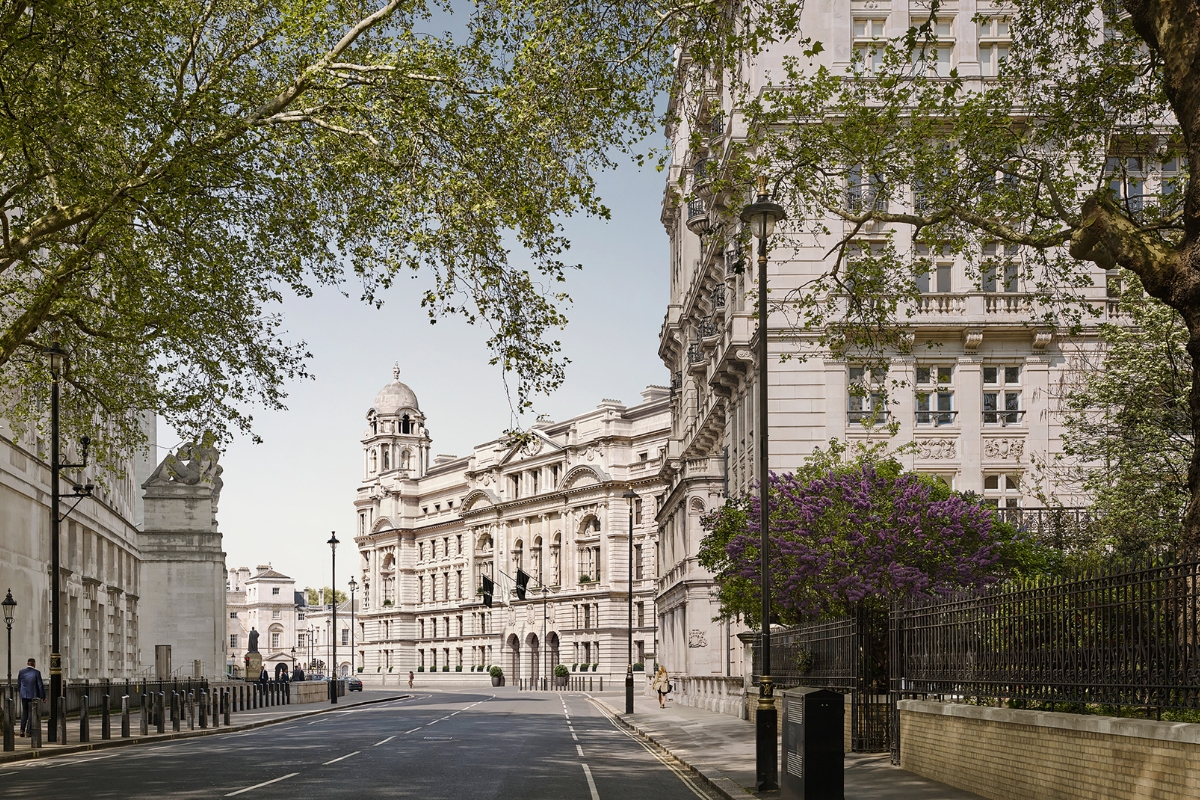
Raffles London at The OWO
57 Whitehall, London, United Kingdom, SW1A 2BX Original Property Opened in 1906 Historic Hotels Worldwide member since 2023- The 2025 Top 25 Historic Hotels Worldwide® Most Historic Bars and Lounges List Is Announced
- 2024 Top 25 Historic Hotels Worldwide Holiday Traditions & Spectacular Displays List Announced
- The 2024 Top 25 Historic Hotels Worldwide® Most Magnificent Ceilings and Domes List Is Announced
- The 2023 Top 25 Historic Hotels Worldwide Most Magnificent Ceilings and Domes
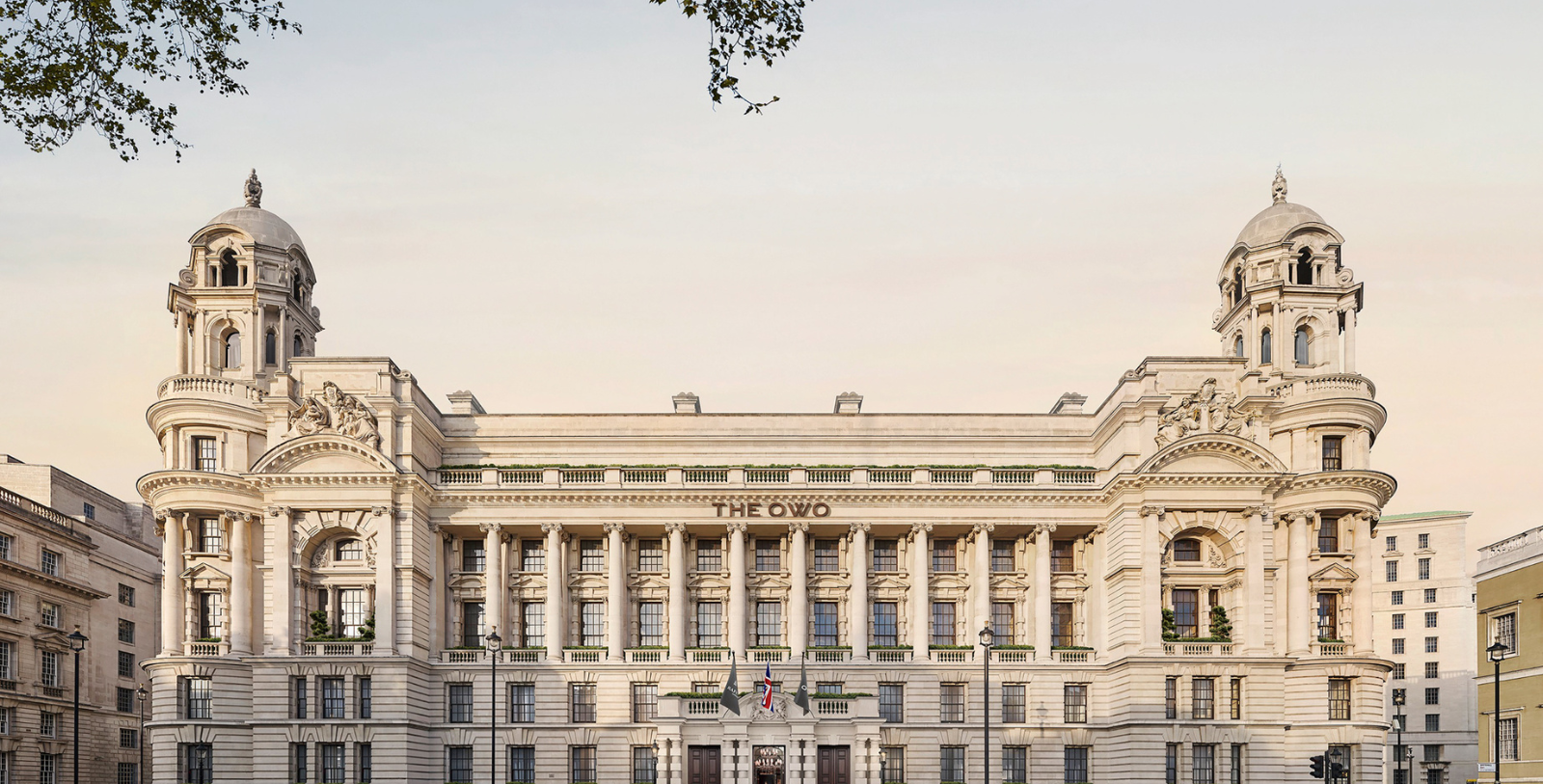
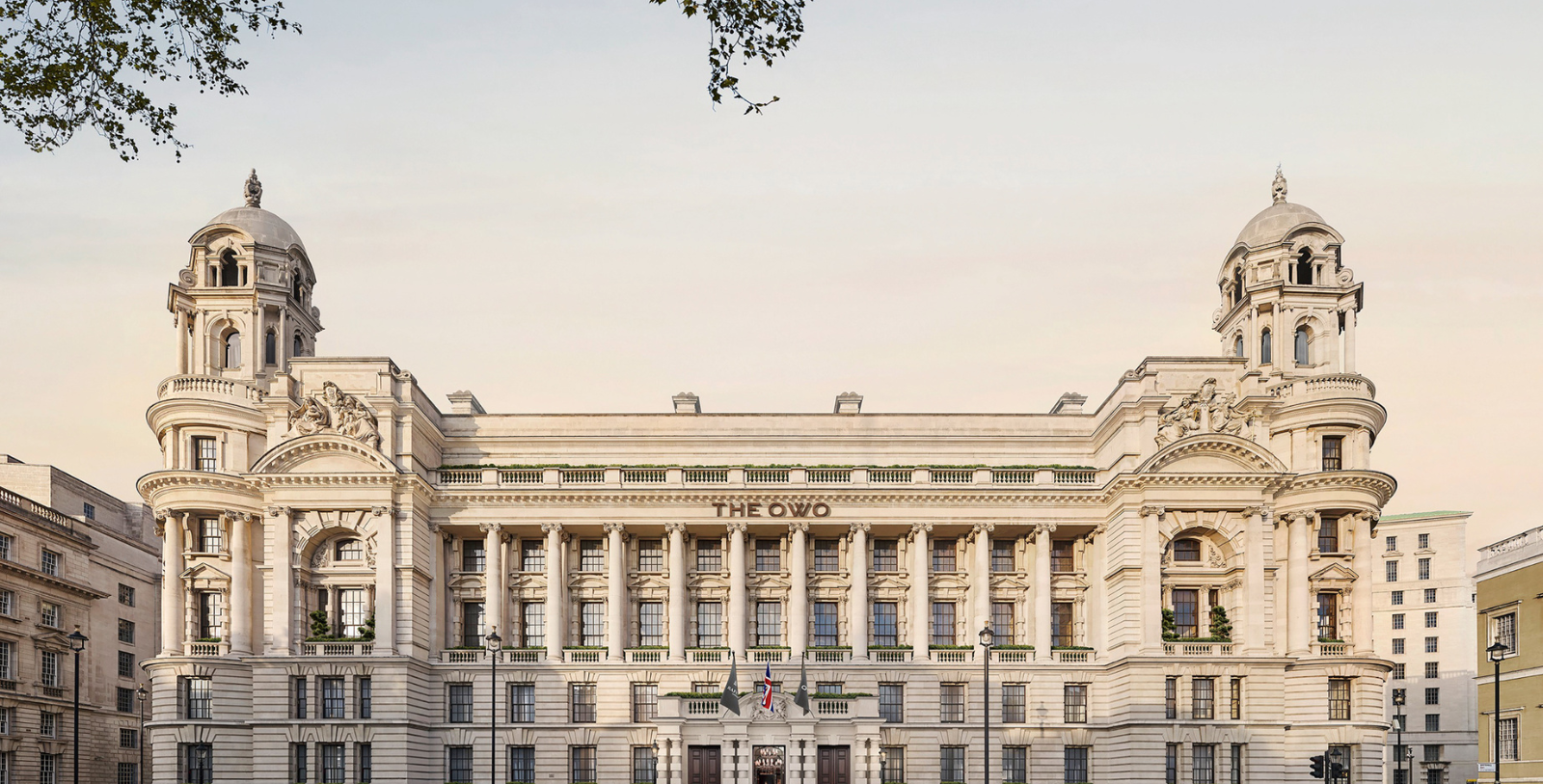
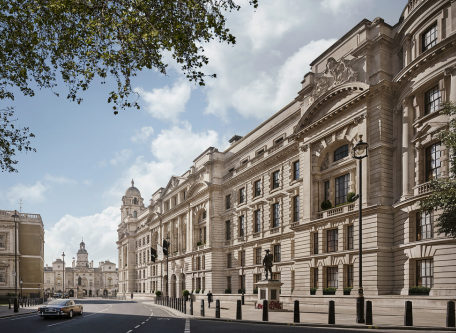
Raffles London at The OWO boasts a prestigious Whitehall address in Central London, the epicenter of power both royal and governmental bordering the Thames. Suffused with majestic pomp and circumstance, Whitehall is an area lined with numerous London landmarks—Buckingham Palace, Horse Guards, St. James Park, and Westminster cultural attractions. Now, the formidable Old War Office building, a beacon of white stone, has undergone a grand metamorphosis from civil service hub to ultra-luxe hotel. Much effort has been done to preserve the distinctive domes, soaring ceilings, and mosaic floors of this 1898 building where key historical figures, such as Winston Churchill, Lord Kitchener, and British spy-turned-novelist Ian Fleming, the creator of James Bond, once roamed its venerable halls.
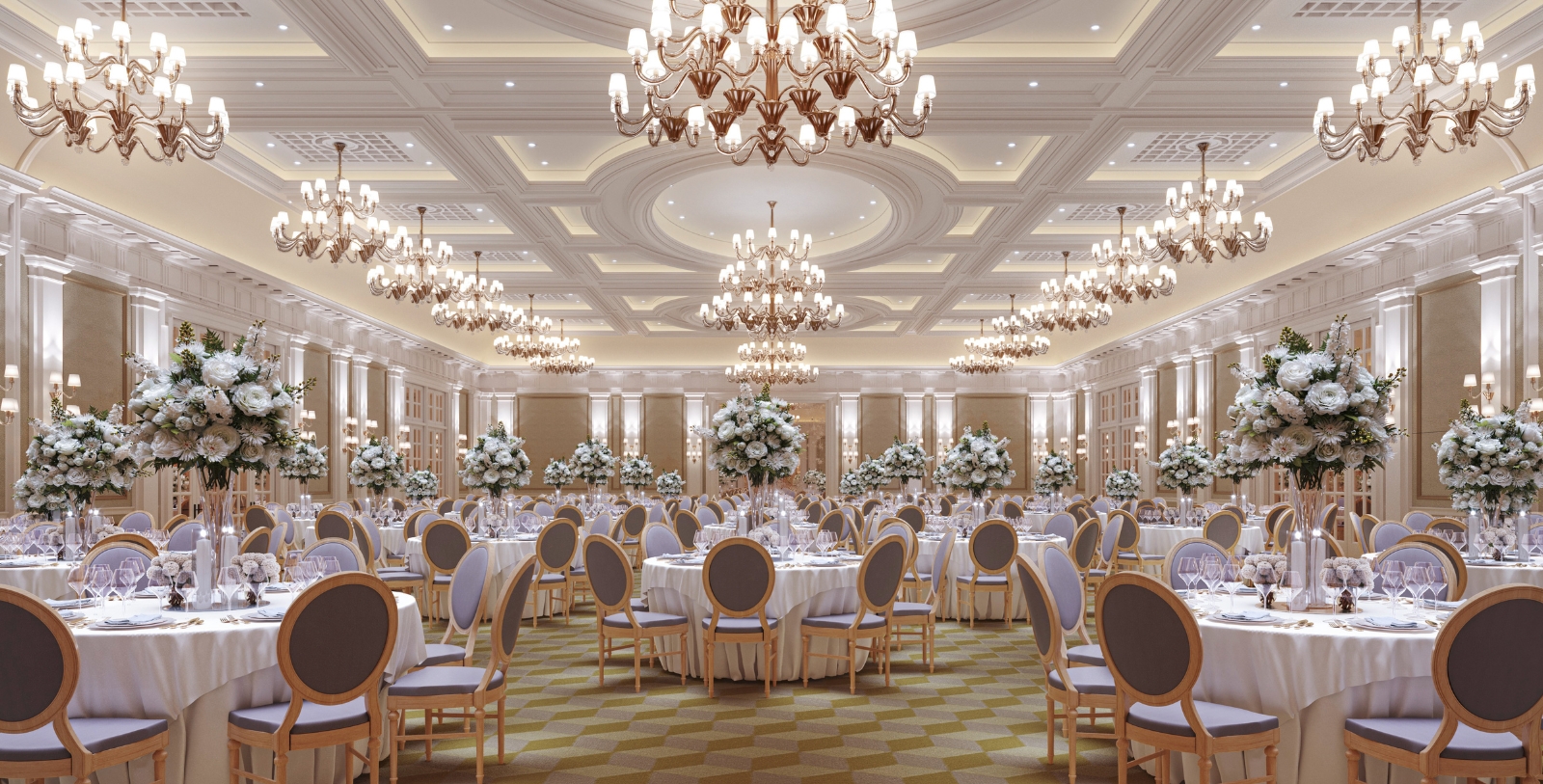
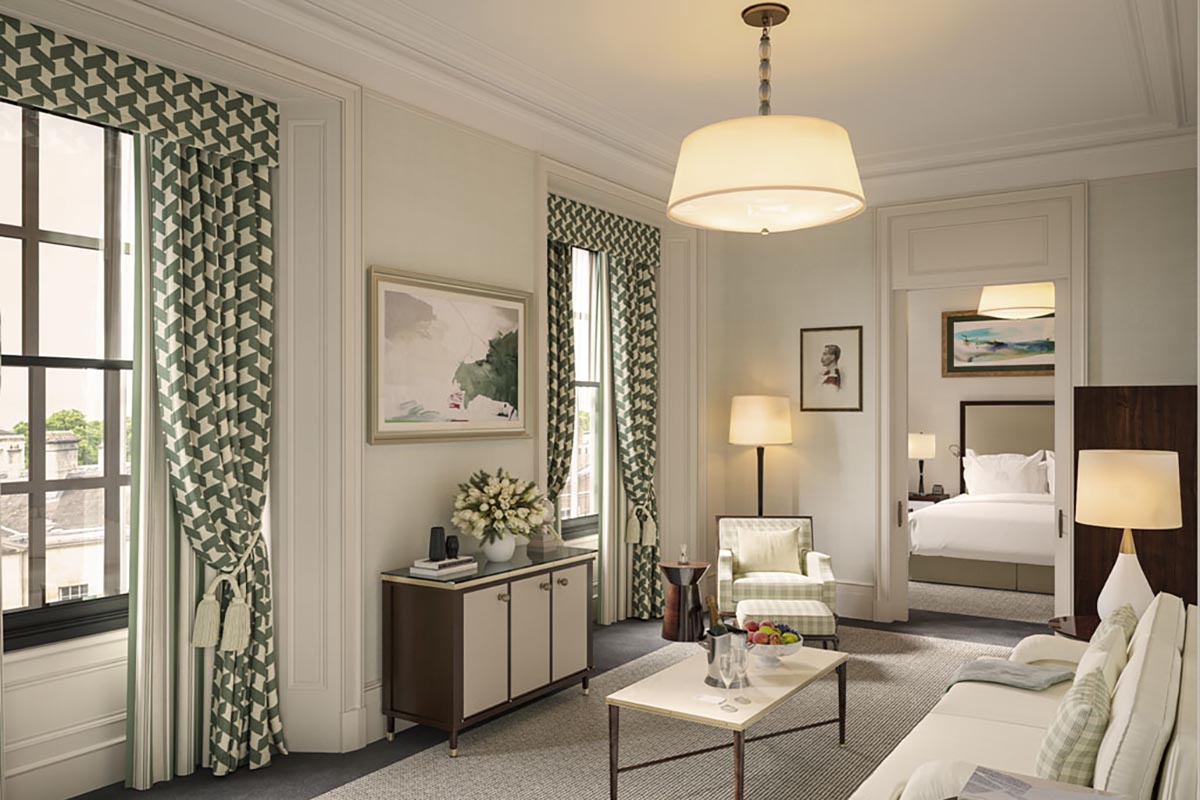
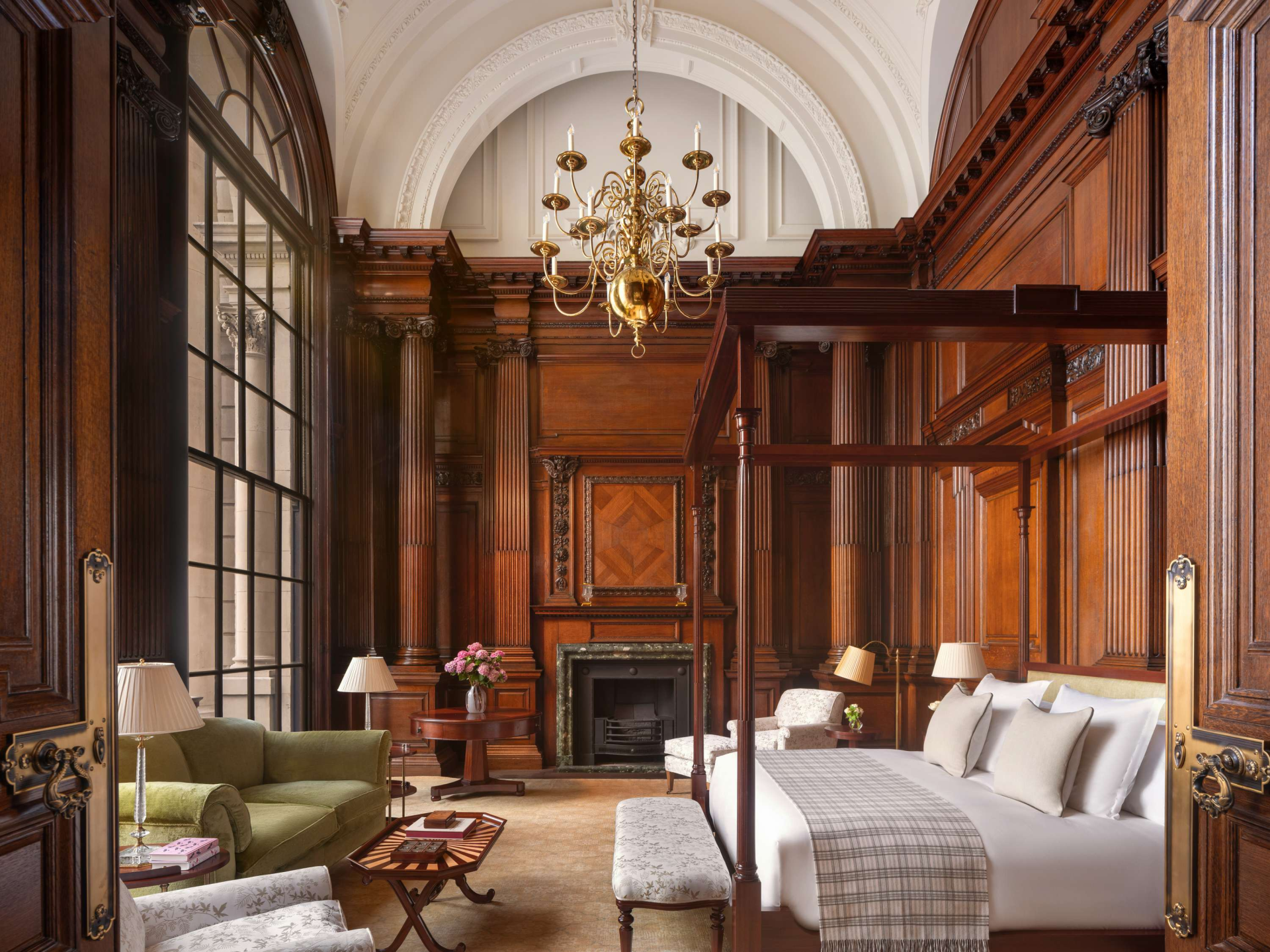
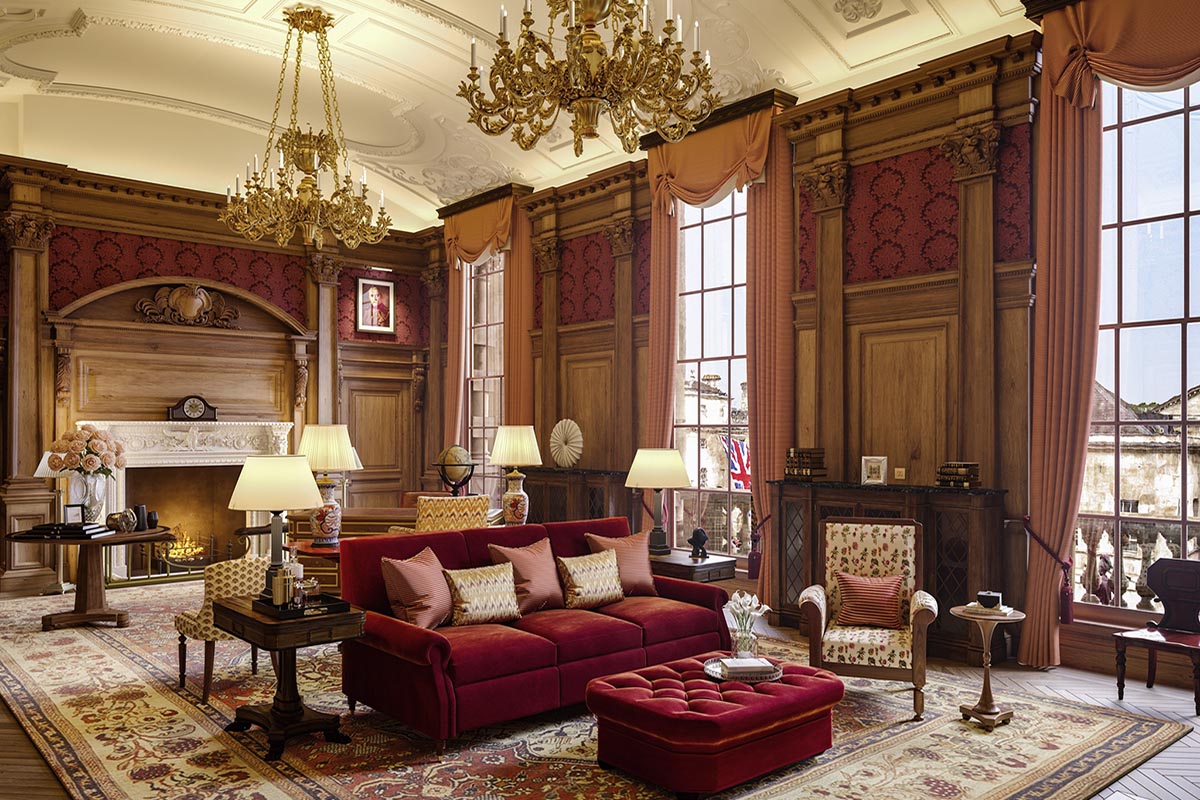
Occupying a block of prime real estate that was once the site of a royal palace, this neo-Baroque marble-clad edifice houses 120 exquisitely appointed guestrooms and suites, nine high-concept restaurants and three bars, including a subterranean speakeasy, a destination spa and wellness club with a pool, and rooftop terraces. In addition, there are 85 exclusive, private residences. Renowned architects have fashioned interiors that effortlessly fuse antique furnishings and classical architectural elements with streamlined silhouettes and contemporary art for a vibrant, yet refined, ambiance. Equally luxurious event spaces are also available, including a lavish ballroom and intimate meeting venues. In a nod to its legacy as the main base for British military operations until 1964, venues bear names such as “The Lawrence,” after the famed Lawrence of Arabia, British officer Lt. T.E. Lawrence, and “Morse” and “Code” in tribute to clandestine messages of the spy trade. Meanwhile, the decidedly regal “Whitehall Ballroom” pays tribute to the property’s more distant past as the former site of the Palace of Whitehall.
Discover
- Discover why the over 750,000-square-foot Old War Office is a designated Grade II building. Hailed as being of national importance, a Grade II-listed building is defined as a UK structure that is “of special interest, warranting every effort to preserve it.”
- Admire how its four distinctive domes create a dignified rooftop silhouette, typifying Edwardian Baroque architecture, while the building’s monumental turrets add to the grandeur of The OWO. Each of these towers is named for some of England’s most famed women, including noteworthy female spies and Clementine, Winston Churchill’s adored wife.
- Walk in the footsteps of monarchs like King Henry VIII and Anne Boleyn. Before the Old War Office, this distinguished Westminster address was home to the Palace of Whitehall, at one time Europe’s largest palace, which saw royal weddings and the first recorded performance of Shakespeare’s The Tempest grace its halls.
- Soak up the inspiration behind film’s most iconic secret agent, James Bond. Once the workplace of Ian Fleming during his time in Britain’s Naval Intelligence Service, the corridors of the Old War Office are where the spy novelist dreamt up 007 and even served as Mi6 headquarters in several movies.
Explore
- Marvel at a royal lion skull, a Moon rock, and a beautifully carved nautilus shell in the Treasures Gallery at the Natural History Museum.
- Explore the Royal Collection, one of the largest art collections in the world, at the Queen’s Gallery Buckingham. The Collection tracks the tastes and interests of the British Royal family over the past 400 years.
- Experience a unique behind-the-scenes look at troopers working with horses in the original 18th-century working stables at The Household Cavalry Museum in the Horse Guards building of Buckingham Palace and St James’s Palace. The Household Cavalry Mounted Regiment has a long tradition with Irish horses, especially the Cavalry blacks.
- Enjoy a glimpse of Henry VIII’s original wine cellar (by invitation only), which remains intact today and preserved in its original location under the Ministry of Defence main building.
Experience
- Don some finery and attend a ballet or opera at the Royal Opera House. Though the theatre itself opened in 1732, King Charles has been a patron since 1975 and, on occasion, can be spotted from the second-floor Royal Box.
- Get fitted for a bespoke suit at the famous Savile Row, an over 200-year tradition of custom fine tailoring by hand. Named for the wife of the 3rd Duke of Burlington, Lady Dorothy Savile, this fashionable suiting street was erected in the early 1730s as part of the Burlington Estate.
- Take in a showing of The Phantom of the Opera at His Majesty’s Theatre, where it has performed to sellout crowds since its opening in 1986. Previously called Her Majesty's Theatre during the reign of Queen Elizabeth, this historic site has played host to four playhouses since 1705 and gone through several name changes through the years depending on the gender of the sitting monarch.
- Aim darts at the bull’s-eye. Most British pubs have a dartboard for this popular game with a longstanding history.
Taste
- Get a hearty start to the day with a full English breakfast, a delicious custom started by the landed gentry during the Middle Ages as a way to show off their wealth to guests before a hunt. Plentiful restaurants in the city offer this classic morning meal, which features an expansive spread of savory dishes, such as eggs, bacon, fried mushrooms, baked beans, grilled tomatoes, and black pudding, also known as blood sausage.
- Nibble on a savory pie, a mainstay of the English diet going back to the 12th century. Steak and kidney, steak and ale, and vegetarian are popular versions.
- Sip a gin & tonic (G&T), a drink said to have been invented by British troops in India in the 19th century. Tonic water in those days contained quinine, a traditional medicine for malaria, and the soldiers added gin, sugar, and lime to make it less bitter.
- Enjoy a proper high tea with a cup of Earl Grey and tiers of petits-fours and crust-less cucumber sandwiches. Introduced to England in the 1800s by Anna, the 7th Duchess of Bedford, this afternoon ritual helped to fill the gap between lunch and a late dinner, while also giving the upper classes a chance to dress up and socialize.
- Tuck into a traditional Sunday Roast, which dates back to 1485 and the reign of King Henry VII. Along with decadently cooked meat, this classic meal is typically accompanied by an assortment of vegetables, Yorkshire pudding, and a healthy dollop of gravy. Dozens of area restaurants serve this quintessential weekend feast, including Blacklock Soho and Cora Pearl Covent Garden.
FEATURED ACCOMMODATIONS
Featured Offer
Book the Best Available Rate at this property on HistoricHotelsWorldwide.com and receive a complimentary one-year family membership (a $30 value) to the National Trust for Historic Preservation in the United States, a member of the International National Trusts Organisation.