
History
Discover the Bernini Palace Hotel, which was once the majestic residence for the powerful Pera family.
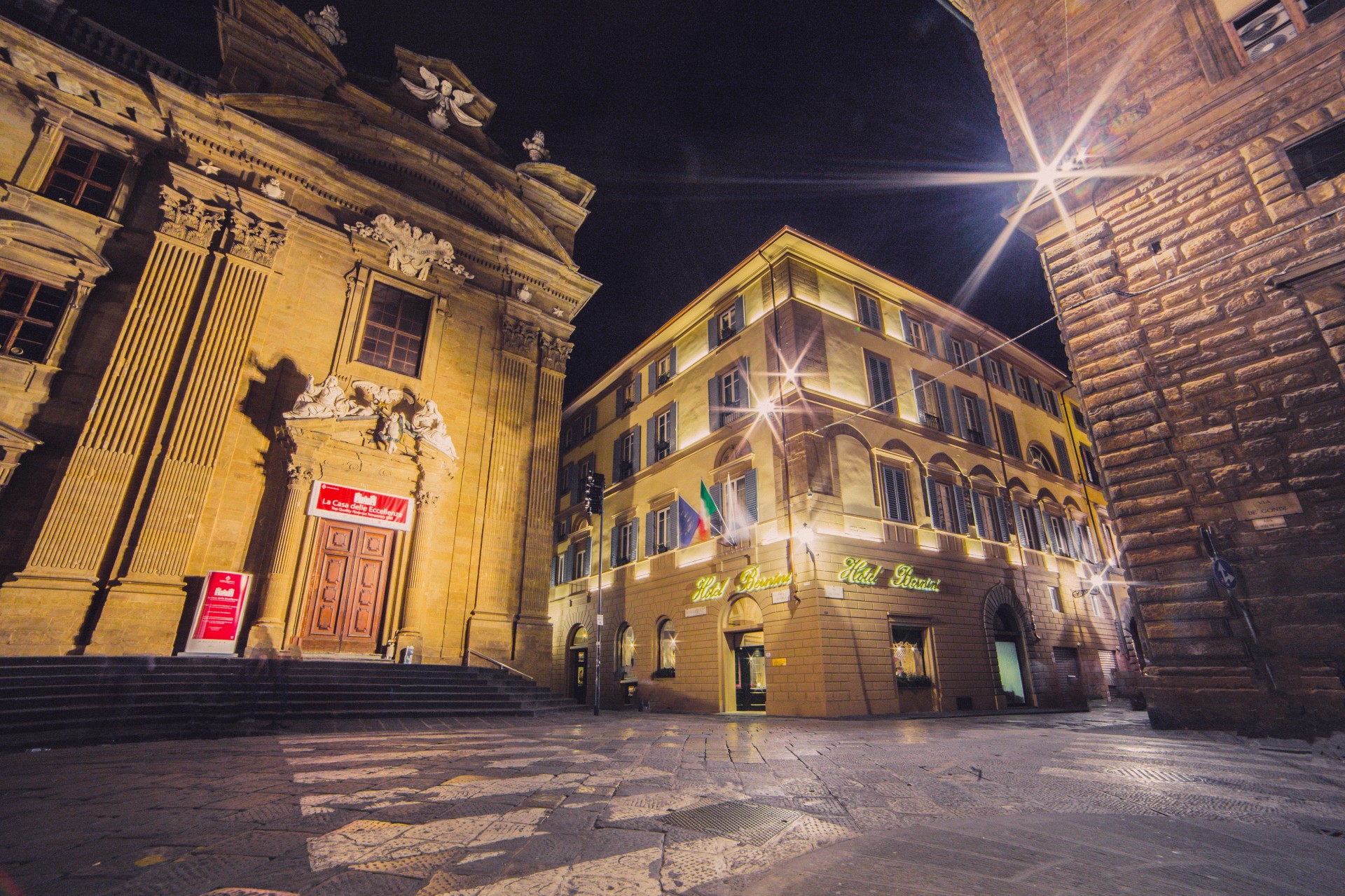
Located on the corner of Via dei Leoni and the medieval Borgo dei Greci, the hotel is just beyond the first circle of walls that once protected ancient Florence. The building was once owned by the Pera family. The Peras were prominent Florentine financiers who were mentioned in the final section of Dante’s Divine Comedy. On the side of the hotel, there is a marble plaque recalling the rich and powerful family during Dante’s time: “The gateway, named from those of Pera, led into the narrow circuit of your wells” (Paradiso, Canto XVI). For centuries, the building has been devoted to hospitality. During the 17th century, it was the only hotel in Florence with running water and shelter for guests’ animals. By the mid-19th century, the palace was already known as the elegant Hotel of the Shield of France. It was not until Florence became the capital of the Kingdom of Italy (1865-1871), that the building had its greatest moment of glory when The Shield of France became the Columbia Parlamento Hotel. Due to its convenient location, it was the place to meet for members of the House of Parliament, who gathered at Palazzo Vecchio, and the senators, who gathered at Palazzo Pitti. Some members chose to establish their permanent residence at the hotel, while others spent their mealtimes having informal discussions, establishing alliances, and striking agreements that marked the destinies of the first tumultuous years of the Kingdom. During this particular time, the hotel was transformed to its current look as seen by today’s guests. Now known as the Bernini Palace Hotel, this spectacular historic destination has been member of Historic Hotels Worldwide since 2015.
Hotel Timeline
The Location
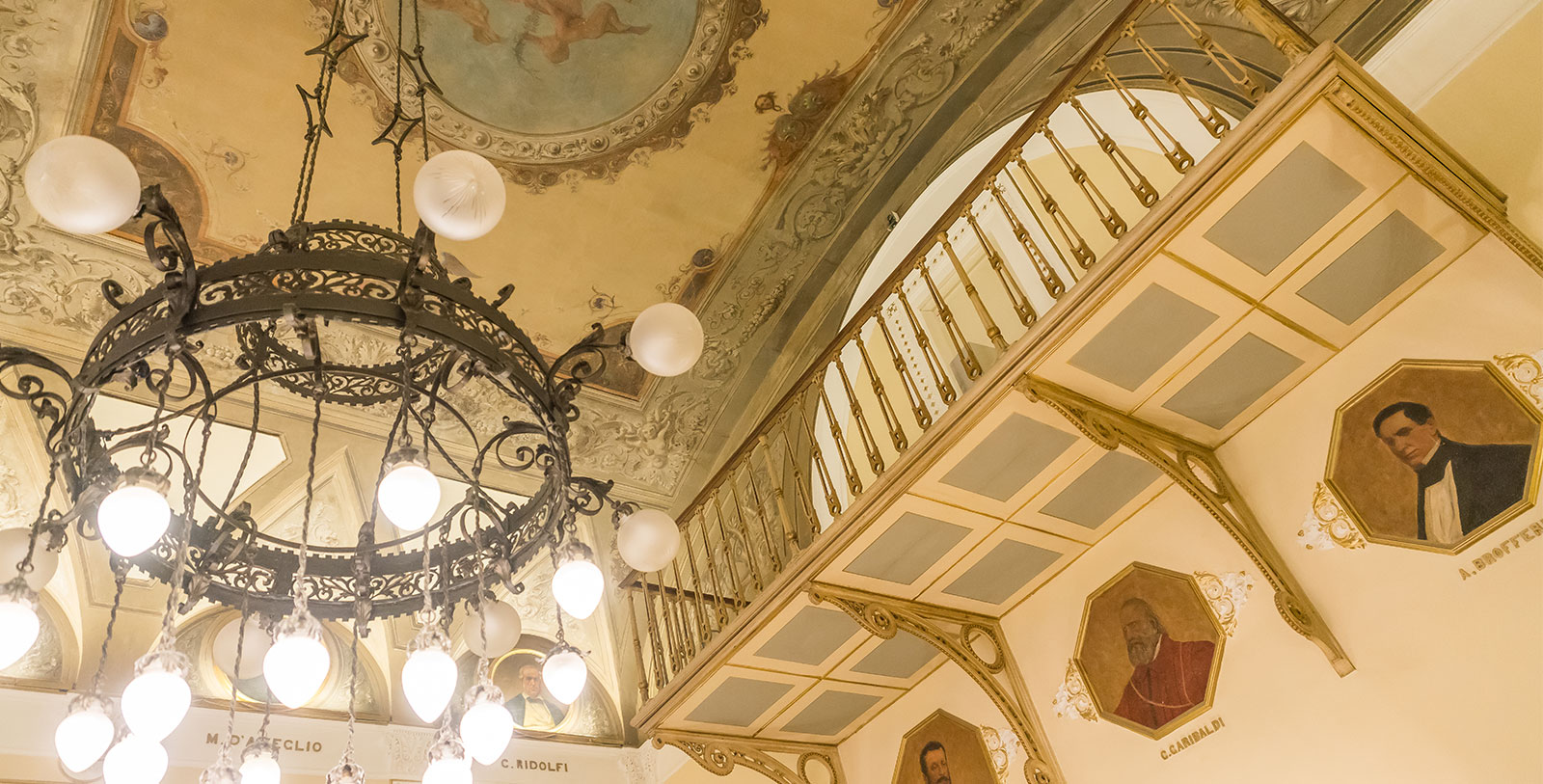
"When the capital transferred to Rome, the hotel fell out of popularity until the 1980s, when major renovation was initiated. The recovery process culminated in the discovery of many key features of the building. A large frescoed room on the first floor of the Bernini Palace Hotel is one of the treasures of this historic Italian hotel. It features portraits of the protagonists of Italian Unification, including Garibaldi, Nero Corsini, Cosimo Ridolfi, Giuseppe Montanelli, Vincenzo Salvagnoli, and Manfredo Fanti. The fresco also pays tribute to the famous people from Piedmont, Cavour, Brofferio, Balbo, and Gioberti, Lamarmora, and Valerio, Giuseppe Farina, and the hero of the of the Republic of San Marco, Daniele Manin. During the 1980s restoration a 16th-century gallery was discovered on the ground floor, which had been almost completely hidden from view previously. Another discovery was a series of niches decorated with female heads coiffed with curious hats, in memory of a former exhibition in the lobby of the hotel in the early 1900s."