
History
Discover the Dromoland Castle Hotel, which was the ancestral home of the famous O’Brien clan.
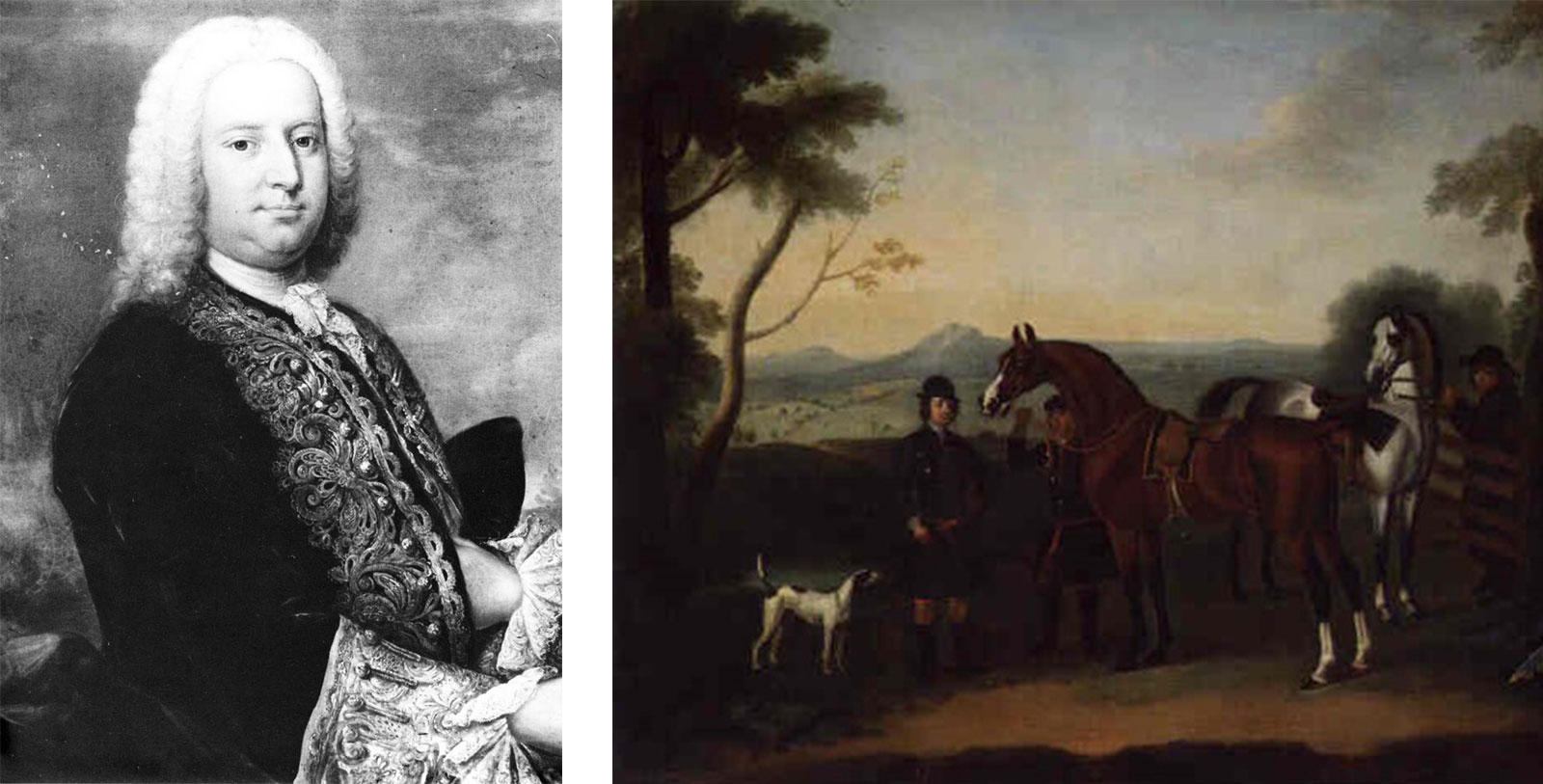
A member of Historic Hotels Worldwide since 2011, Dromoland Castle Hotel is one of the most famous baronial castles in Ireland. It was once the ancestral home of the O’Briens—the Barons of Inchiquin—who are one of the few native Gaelic families to possess a royal Irish heritage. They are direct descendants of Brian Boroimhe, the High King of Ireland during the 11th century. Also known as “Brian Boru,” he is renowned today for his defeat of the Danes in 1014. The structure was then thoroughly rebuilt when the O’Briens surrendered to King Henry VIII in the 16th century. As such, the family became known as the Barons of Inchiquin and the Earls of Thomond. This historic building and its surrounding houses were known by locals as “Dromoland” for centuries. The word “Dromoland” translates in English as “Hill of Litigation.” The first mention of Dromoland in any records was in the will of Murrough O’Brien in 1551. He relied upon a traditional Gaelic system of inheritance for passing down titles and property known as Tanistry. Murrough O’Brien had been given the title Earl of Thomond by Henry VIII and bequeathed the castle to his son, Dermod. The land and the homes built upon it remained in the family for six generations, with several disputes taking place over their ownership during that time.
By 1795, Sir Edward O’Brien became the owner of Dromoland Castle. He oversaw renovations to the main house that lasted well into the 1800s. Its new Gothic Revival-style designs were done by James and George Pain, who were students of English architect John Nash. The restoration finally concluded in 1835. One visitor at the time described Dromoland Castle as, “a superb edifice in the castellated style…surrounded by an extensive and richly wooded demesne.” Another felt it was, “built entirely of dark blue limestone and in fine chiseled workmanship.” Although quarried on the estate itself, the cost of cutting and hauling its stone proved enormous. The castle was the birthplace of William Smith O’Brien in 1803. He would become a champion of oppressed Irish farmers as an adult, leading the Young Irelanders rebellion against British authority in 1848. After the forced sale of the estate’s tenant farmlands in 1921, the leaders of the fledgling Irish Free State marked Dromoland Castle for destruction. Locals succeeded in reversing that decision though, arguing that the O’Briens had been fair and benevolent landlords. For more than a decade, Dromoland was supported by the personal wealth of the Baron Lucius O’Brien’s widow, Lady Ethel Inchiquin. Her portrait hangs near the staircase in the Castle’s main hall in honor of her stewardship.
In 1962, Lady Ethel Inchiquin's son, Sir Donough O’Brien, sold Dromoland Castle and its surrounding land to American industrialist Bernard P. McDonough. McDonough then converted the castle into a luxurious boutique hotel. The current Baron Inchiquin, Conor O’Brien, continues to live in a nearby manor known as the Thomond House. He and his family still operate parts of the historical demesne as a sporting and leisure estate. More recently during the late 1990s, a group of Irish and American investors purchased Dromoland Castle. Under their stewardship, the structure transformed into one of Europe’s most celebrated holiday destinations. Indeed, their management of the resort resulted in numerous, high-profile luminaries to visit the resort frequently. In fact, President George W. Bush and several nations of the European Union organized a series of meetings in 2004 known as the US – EU Summit. The purpose of the event was to gather many leading politicians, businesspeople, and intellectuals from the two societies to discuss the various ways they could possibly enhance their transatlantic economic relationship. Officials from the United States and the European Union decided to specifically met at Dromoland Castle toward the end of June. President Bush himself stayed at the castle overnight, prompting the grounds to be inundated by thousands of security personnel.
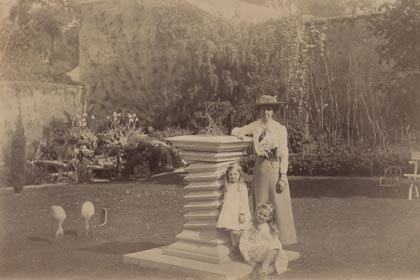
Hotel Timeline
The Location
Dromoland Castle Hotel is nestled within the verdant hills of County Clare, Ireland. County Clare was once the ancient Gaelic homeland for the Kingdom of Connacht. The Kingdom of Munster—one of its neighboring rivals—annexed the realm during the 10th century and renamed it as “Thomond.” It was during this time that a nobleman from Thomond named Brian Boru came to power. Becoming the King of Munster, he subsequently seized the coveted title of High King of Ireland in 1002. Boru eventually met his glorious end fighting against a Viking invasion at the Battle of Clontarf, where his forces successfully drove the invaders from Ireland’s shores. His descendants would come to call Thomond home, forming the Kingdom of Thomond in 1118. For the rest of the Middle Ages, the O’Brien clan fought to protect their claim to Thomond from Norman knights, English lords, and rival families of noble lineage. By the 1400s, the O’Briens had successfully reasserted their dominance over the land, becoming the undisputed Kings of Thomond once more. But their victory was not to last. Following a failed rebellion against mounting English influence in the 1530s, King Henry VIII of England initiated a conquest to subjugate all of Ireland. King Murrough O’Brien surrendered his crown to Henry, turning the Kingdom of Thomond into the Earldom of Thomond.
English administrators then combined Thomond with other lands in 1565, forming the first iteration of present-day County Clare. Parts of Thomond now reside geographically between County Clare and County Limerick. The closest town to Dromoland Castle Hotel is Newmarket-on-Fergus. Known historically as “Corractlin,” archaeologists speculate that Newmarket-on-Fergus grew atop two historical marketplaces that resided along the Ogarney River many centuries ago. Local myths persist that Sir Edward O’Brien, the 2nd Baronet of Leaghmenagh, insisted that the town change its name to “Newmarket-on-Fergus” in honor of the horse-racing track in Newmarket, England. Further to the south is the City of Limerick, which raiding Norsemen founded around 922. Serving as the seat for the Kingdom of Thomond from 1106 to 1174, Limerick gradually emerged as one of the most economically important settlements in Ireland. Visitors today can visit outstanding historic sites within the city limits, such St. Mary’s Cathedral and King John’s Castle. Guests staying at Dromoland Castle Hotel can even explore the many more historic sites that inhabit the Wild Atlantic Way—a heritage route that traces the western Irish coast from Cork to Donegal. Among the most fascinating landmarks to resides along the trail are the Cliffs of Moher, Skellig Michael, Slieve League, and The Burren.
The Architecture
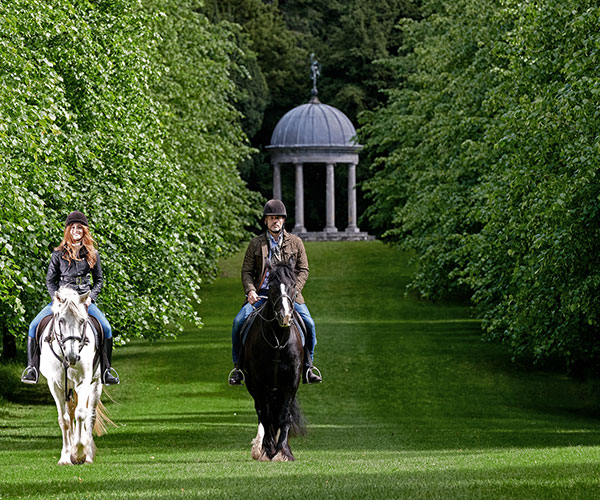
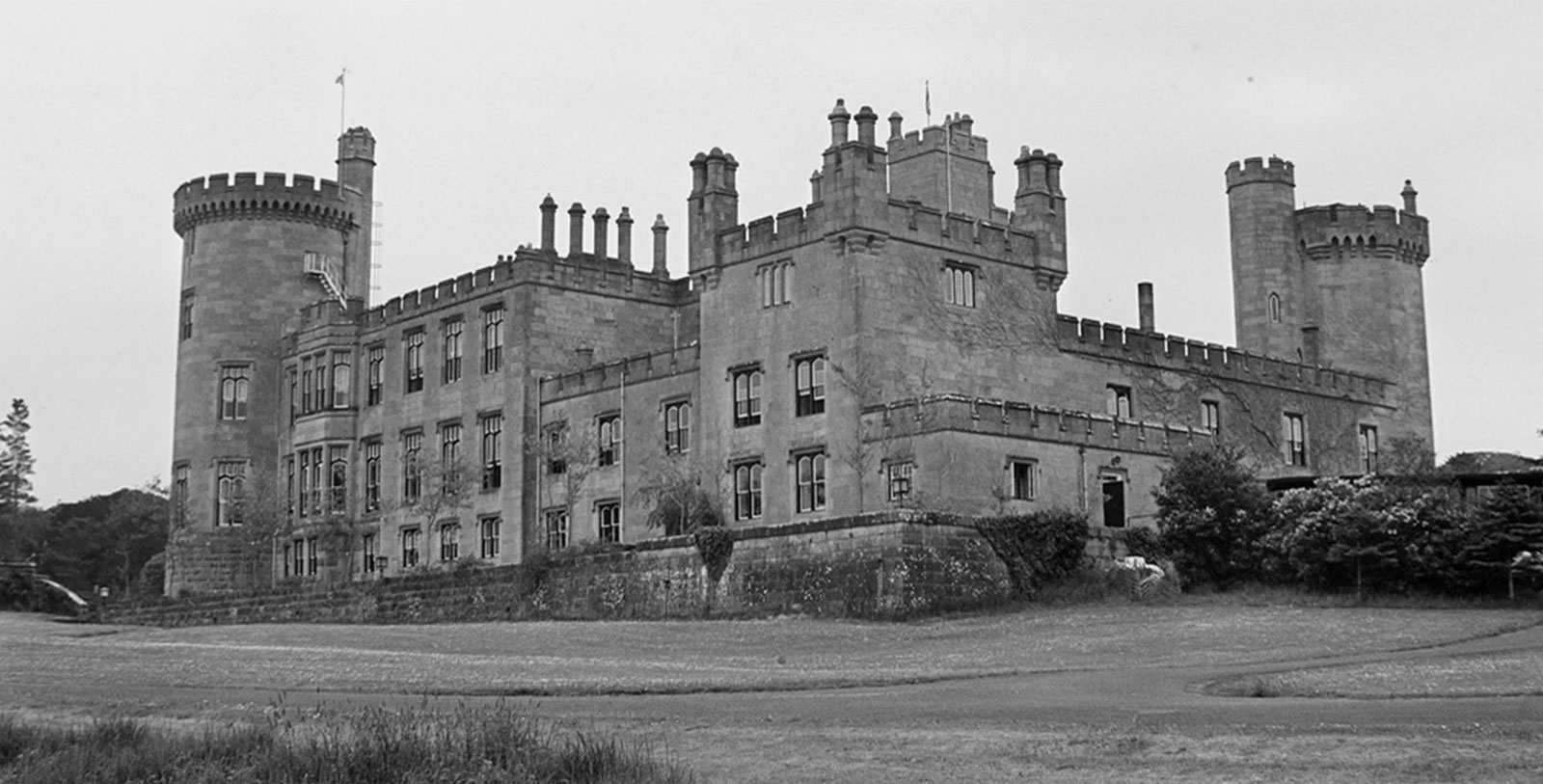
While some elements of Dromoland Castle date all the way back to the 11th century, most of the structure hails from the early 1800s. Much of the work came about from the desire of Sir Edward O’Brien, the 4th Baronet of Leaghmenagh, to renovate the Dromoland Castle upon his inheritance of the estate during the 18th century. O’Brien had hired two English architects to oversee the project: James and George Richard Pain. Acolytes of the renowned John Nash, the two brothers had worked on a number of historic structures throughout Ireland, including Strancally Castle and St. James’ Church in County Cork. The Pains masterfully employed Gothic Revival-style architecture when restoring Dromoland Castle, taking great care to preserve each one of the structure’s four unique castellated turrets. Inside, the interior spaces contained many outstanding features that are still visible today, such as radiant chandeliers, gold cornices, and paneled corridors. Today, many of the castle’s impressive rooms—such as the drawing room and the main lounge—appear as they did when the O’Briens occupied the grounds. The octagonal-shaped study located under the round tower is now a cocktail lounge and dining area. Its exterior dark blue limestone continues to display the fine craftsmanship used to erect them in place many centuries ago. And the historic porch on the north side of the building still guides guests toward a magnificent carving of the O’Brien family coat of arms. Dromoland Castle also offers over 450-acres of gardens to behold. Similar in appearance to the famed Gardens at Versailles, these wonderfully landscaped spaces were originally designed by Andrew Le Notre. Visitors uncover many unexpected features at every twist and turn, including the picturesque lily pond and a dramatic yew tree gallery that dates back to 1740.
Famous Historic Guests
- Cary Grant, renowned actor known for such roles in To Catch a Thief, Charade, and North by Northwest.
- Robert Redford, famous actor known for such roles in Out of Africa, All the President’s Men, and Butch Cassidy and the Sundance Kid.
- Johnny Cash, celebrated country music star who had sold more than 90 million records throughout his lifetime.
- John Lennon, lead vocalist and rhythm guitarist for the legendary rock band, The Beatles.
- Paul McCartney, lead vocalist and bassist for the legendary rock band, The Beatles.
- George Harrison, vocalist and lead guitarist for the legendary rock band, The Beatles.
- Ringo Starr, drummer for legendary rock band, The Beatles.
- Muhammad Ali, famous African American boxer and Civil Rights activist known by many as “The Greatest.”
- King Juan Carlos I of Spain (1975 – 2014)
- Nelson Mandela, anti-apartheid revolutionary and 1st President of South Africa.
- Bill Clinton, 42nd President of the United States (1993 – 2001)
- George W. Bush, 43rd President of the United States (2001 – 2008)
Film, TV and Media Connections
High Spirits (1988)