History
Discover Elkonin Tel Aviv Hotel – MGallery, which has hosted renowned intellectuals and politicians since the early 20th century.
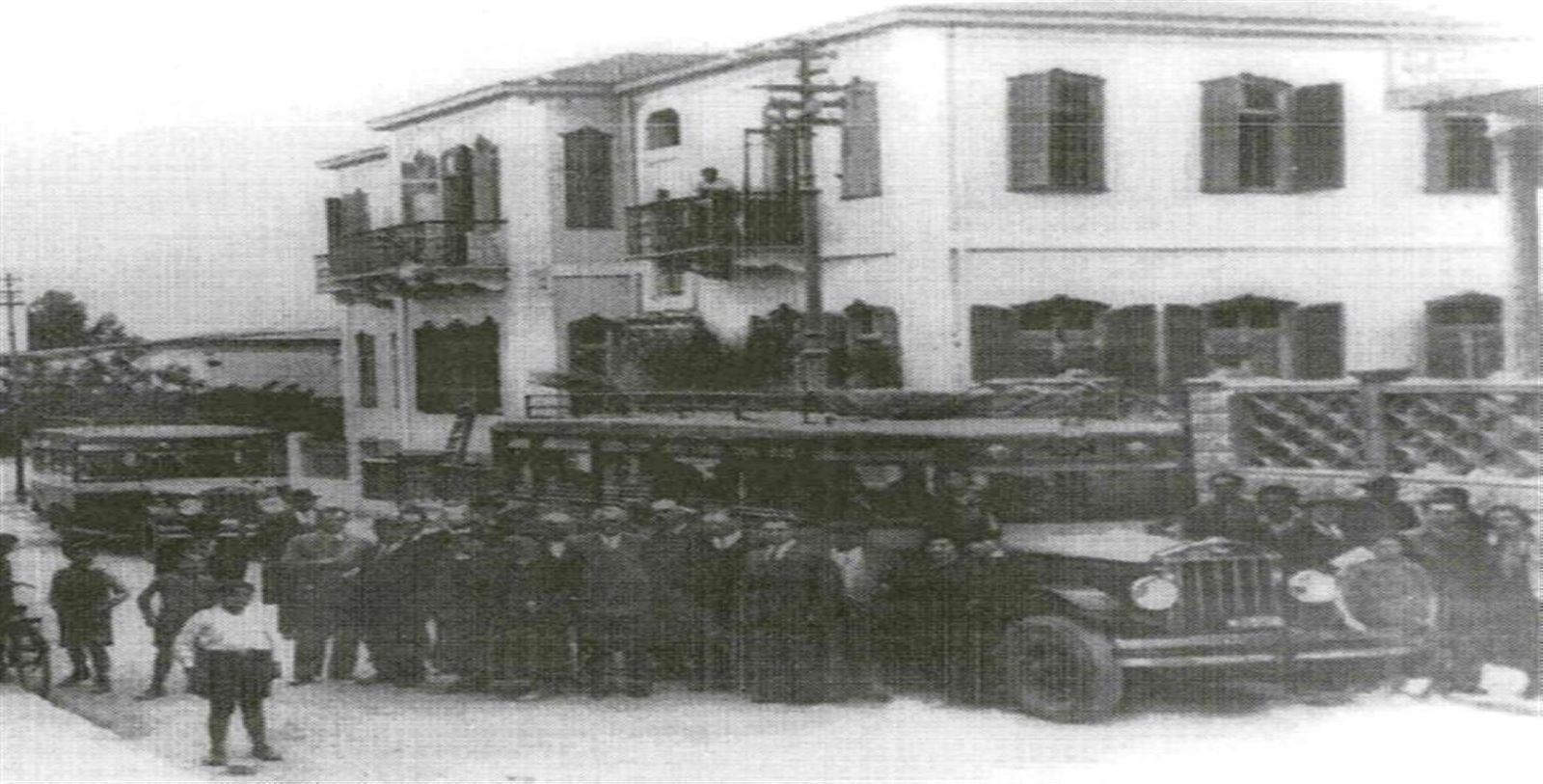
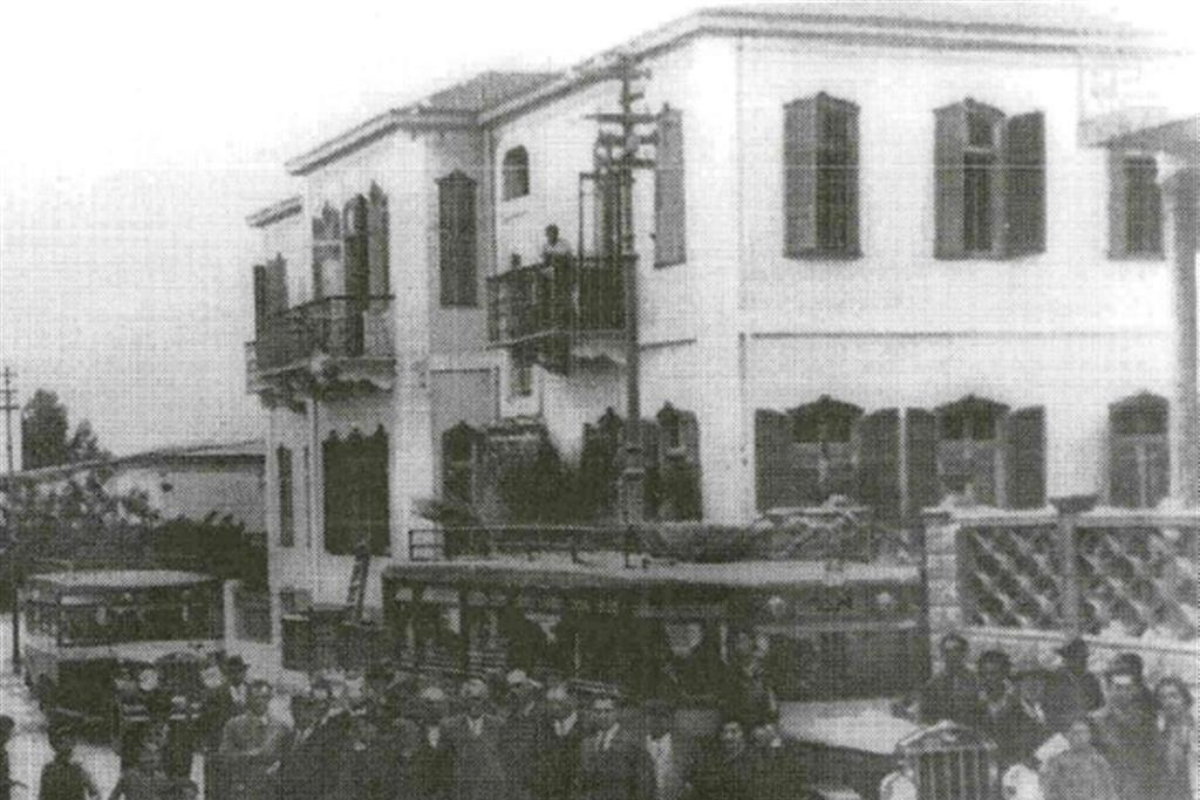
A member of Historic Hotels Worldwide since 2022, the Elkonin Tel Aviv Hotel – MGallery’s origins trace back to a Russian entrepreneur Menachem Nahum Elkonin. In the early 20th century, Elkonin had relocated his entire family to the newly developed Hebrew settlement of Tel Aviv. Like many other Jewish immigrants who arrived at the time, Elkonin was inspired by the community’s greater mission to create a haven near the Holy Land free from oppression and discrimination. He subsequently decided to remain in Tel Aviv permanently and began planning to open the area’s first boutique hotel. To turn his dream into a reality, Elkonin turned to a renowned local architect named Samuel Nathan Wilson to oversee the design. Wilson proceeded to craft a brilliant multistory edifice that featured 38 luxurious guestrooms. The building also included many other outstanding amenities, too, including a private synagogue. Interestingly, Wilson had designated a portion of the structure to serve as the personal residence of the Elkonin family, as well. The architect masterfully constructed a series of gorgeous interlocking apartments that Elkonin himself immediately adored. After several months of continuous construction, Menachem Nahum Elkonin’s new building finally debuted as “The Elkonin Hotel” to great acclaim. It quickly emerged as one of Tel Aviv’s most celebrated holiday destinations, entertaining all kinds of illustrious travelers who had visited Tel Aviv. Among the most noteworthy were renowned international figures like Albert Einstein, David Ben-Gurion, and Chaim Weizman.
Unfortunately for The Elkonin Hotel, Menachem Nahum Elkonin passed away not long after its grand opening. His widow, Malka Alkonin then sold the hotel to Pieblosha Zusmanowitz. He subsequently renamed the hotel as the “Elkonin Central Hotel,” although it operated under other monikers like the “Tel Aviv Hotel” and “Sugar Hotel.” Despite the success of the business, the hotel eventually closed, and its guestrooms were rented out as apartments. The building gradually transitioned into a full-time apartment complex over the next two decades, with future owners implementing a series of renovations to maintain its prestige. In fact, their work resulted in the creation of the building’s iconic beautiful Art Deco architecture, which remains intact today. Nevertheless, another ownership group opted to transform the entire site for the exclusive use of workshops and warehouses following World War II. The decision proved short-sighted, as the activity subsequently pushed the building into a prolonged period of considerable decay. By the 1980s, the erstwhile hotel had become completely abandoned. Thankfully, interest in saving the historic structure did not disappear. After several abortive attempts to fully restore the historic structure, work finally began to reopen the building as a hotel in 2013. Even though the project took longer than expected, the restoration brilliantly revitalized the architectural integrity of the site. Now known as the “Elkonin Tel Aviv Hotel – MGallery,” the future of this celebrated local landmark has never looked brighter.
Hotel Timeline
The Location
The history of Tel Aviv harkens back millennia to the ancient port city of Jaffa. While the exact origins of Jaffa are still somewhat a mystery, archeological evidence has proven that the metropolis was already a bustling port as early as 4,000 years ago. The Canaanites were one of the first people to populate the city, followed by the Egyptians and the Philistines. Many other civilizations subsequently came to control Jaffa over the next few centuries, including the Babylonians, Persians, and Greeks. Among the most noteworthy societies to rule Jaffa were the ancient Israelites, who used its thriving wharves to ship timber from the Lebanese interior. The vibrant economic activity saw Jaffa emerge as one of the region’s most energetic harbors, becoming a nexus for the movement of all kinds of exotic goods throughout the eastern Mediterranean basin. But by the height of the Roman Empire, Jaffa had lost its status as the region’s predominant port to the nearby town of Caesarea and its ingenious artificial dock. Despite Jaffa’s economic decline, its proximity to several other important communities still made the city a vital transportation and communication center. Indeed, this quality resulted in Jaffa becoming the target for numerous foreign armies throughout the Middle Ages, including the Ayyubids, Mamluks, and Christian crusaders.
Jaffa finally fell under the jurisdiction of the Ottoman Empire in 1515. The city gradually began to reestablish itself as a seaport over the next two centuries, although a lack of investment to develop its surrounding shoreline made the landing of goods notoriously difficult. Jaffa’s road network was also an integral tool used by countless religious pilgrims, who passed through frequently on their way to the Holy Land further south. This socioeconomic activity produced a prolonged period of expansion for Jaffa that saw its population continuously increase well into the modern age. In fact, Jaffa had eventually grown to rival Jerusalem culturally and politically by the 1800s. A significant factor contributing that change was the immigration of middle-class European families of Jewish descent into Jaffa throughout the late 19th and early 20th centuries. Inspired to reconnect with their heritage, the migrants had chosen to settle in Jaffa and its surrounding villages. Over time, the Jewish expats had even formed two unique neighborhoods known as “Newe Ẓedeq” and “Newe Shalom.” However, the residents soon yearned to create an independent enclave within Jaffa that would be autonomous in character.
In 1909, several dozen Jewish families gathered along the beach beyond northern Jaffa to begin building a distinctive community eventually known as “Tel Aviv.” Since those present could not agree on how to properly divide the land, the group ultimately agreed to draw lots. One prominent individual in attendance, Akiva Arieh Weiss, specifically oversaw the creation of a lottery. Writing the names of the families and lot numbers on a collection of differently colored seashells, he proceeded to select random pairings to decide the land plots. Its inhabitants then constructed numerous buildings throughout the neighborhood in what would become the area’s first modern Hebrew community. Tel Aviv dramatically increased in size over the following years, although it did stop momentarily following the Ottoman’s forced deportation of the entire population during World War I. (The Ottomans had feared that the Jewish settlers were sympathetic to the British, who had attacked the region toward the end of the conflict.) To help Tel Aviv endure the expansion, Scottish architect Sir Patrick Geddes arrived and worked with local engineers to comprehensively renovate the community’s layout.
Geddes and his team recrafted Tel Aviv into a stunning example of a 20th century “garden city,” complete with gorgeous communal squares and picturesque public parks. Geddes’ work succeeded in enabling Tel Aviv to handle additional waves of immigrants over the next several decades. This was particularly true when Tel Aviv developed into a haven for hundreds of Jewish immigrants fleeing rising levels of persecution in Central and Eastern Europe before World War II. The neighborhood expanded rapidly, reaching a size of 130,000 by 1936. The newest arrivals introduced even more European cultural influences into the city, most notably the widespread use of Bauhaus-inspired architecture. Amid this surge in growth, local civic leaders were able to declare the community an actual city, with Meir Dizengoff elected to serve as its mayor. In fact, Tel Aviv had become so large that it was eventually able to absorb all of Jaffa into its own borders following the creation of modern Israel in 1947. Now officially known as “Tel Aviv-Yafo,” the metropolis has since remained one of the most important cities in the region. It is currently an exciting tourist destination, particularly among droves of cultural heritage travelers who are fascinated by its wealth of historical landmarks. Indeed, both Tel Aviv and Jaffa are even listed together as a joint UNESCO World Heritage Site!
The Architecture
The Elkonin Tel Aviv Hotel – MGallery stands today as one of Tel Aviv’s best examples of authentic Art Deco architecture. Art Deco architecture itself is among the most famous architectural styles in the world. The form originally emerged from a desire among architects to break with the past architectural precedents that had dominated for generations. Instead, professionals within the field aspired to forge their own design principles. More importantly, they hoped that their ideas would better reflect the technological advances of the modern age. As such, historians today often consider Art Deco to be a part of the much wider proliferation of cultural “Modernism” that first appeared at the dawn of the 20th century. Art Deco as a style first became popular in 1922, when Finnish architect Eliel Saarinen submitted the first blueprints to feature the form for contest to develop the headquarters of the Chicago Tribune. While his concepts did not win over the judges, they were widely publicized, nonetheless. Architects in both North America and Europe soon raced to copy his format in their own unique ways, giving birth to modern Art Deco architecture. The international embrace of Art Deco had risen so quickly that it was the central theme of the renowned Exposition des Art Decoratifs in Paris a few years later. Architects the world over fell in love with Art Deco’s sleek, linear appearance as defined by its series of sharp setbacks. They also adored its geometric decorations that featured motifs like chevrons and zigzags. But despite the deep admiration people felt toward Art Deco, interest in the style gradually dissipated throughout the mid-20th century. Many examples of Art Deco architecture survive today though, with some of the best located in such places as New York City, London, Paris, and of course, Tel Aviv.
Famous Historic Guests
- Albert Einstein, Nobel Prize winning physicist known for his role in developing quantum theory.
- David Ben-Gurion, 1st Prime Minister of Israel (1955 – 1963)
- Chaim Weizman, 1st President of Israel (1949 – 1952)
- Yitzhak Ben-Zvi, 2nd President of Israel (1952 – 1963)
- King Abdullah I of Jordan (1921 – 1951, including reign as Emir or Transjordan)