
History
Discover Fairmont Jasper Park Lodge, which has been Canada’s most prestigious holiday destination for more than a century.
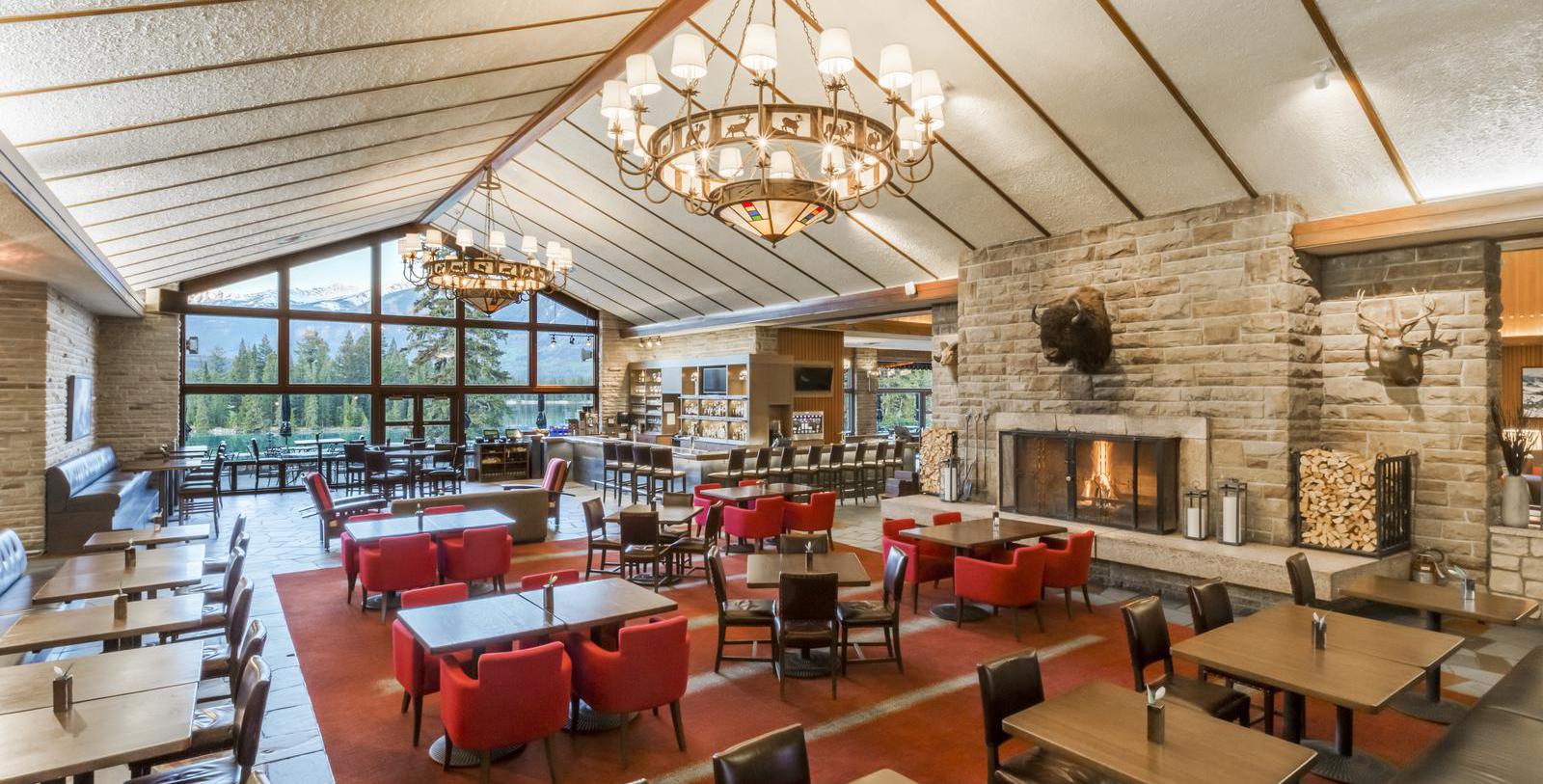
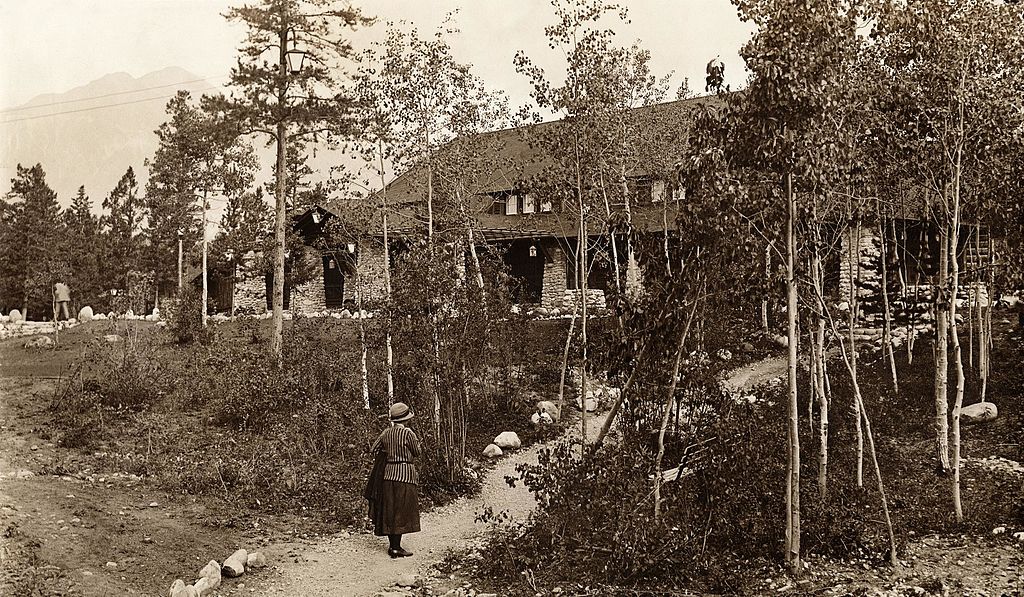
A member of Historic Hotels Worldwide since 2017, Fairmont Jasper Park Lodge has enthralled guest for more than a century. Its origins harken back to a series of tents known locally as “Tent City.” Developed by the now-defunct Grand Trunk Pacific Railway in 1915, the tents provided temporary housing for guests interested in exploring the environs of the newly created Jasper National Park. Yet, the Grand Trunk Pacific Railway went bankrupt only some five years later, with most its assets absorbed by Canadian National Railway. The President of the Grand National Railway, Sir Henry Thornton, decided to completely reconstruct “Tent City” into a magnificent resort complex suitable for contemporary travelers. Construction began in earnest in 1921, which saw the development of eight log cabins on the grounds. Named as the “Jasper Park Lodge,” the work took nearly two years and some C$461,000 to complete. But Canadian National Railway continued developing dozens of other wooden structures shortly after the resort debuted, including the resort’s iconic main building. Some 70 distinctive structures occupied the grounds, including a massive dance hall, several restaurants, and around a half-dozen staff dormitories. The resort’s celebrated 18-hole golf course also opened around this time, too, which was designed by renowned landscape architect Stanley Thompson. Built with Thompson signature “natural artistry,” each fairway twisted through the forest and offered spectacular views of the nearby mountains.
New construction did not occur at the Jasper Park Lodge until 1952, when Canadian National Railways instituted a massive rehabilitation of the resort’s main building. The project saw the installation of the structure’s current steel frame, as well as the creation of its Emerald Lounge. The company continued its renovations well into the 1960s and 1970s, developing such new facilities like tennis courts, lakeside accommodations, and an outdoor heated pool. Fresh cedar replaced the aging wood at the 36 cabins that proliferated throughout the grounds, granting them a new lease on life. Yet, despite its successful management of the resort, Canadian National Railways nonetheless went through its own period of bankruptcy by the end of the 1980s. Its competitor, Canadian Pacific Railway, absorbed most of its assets, including the Jasper Park Lodge. Canadian Pacific Railway subsequently transferred the resort over to its subsidiary, Canadian Pacific Hotels. It then continued the renovations, transforming the Jasper Park Lodge into a full-service, year-round vacation retreat in 1988. Canadian Pacific Hotels eventually became Fairmont Hotels around a decade later, renaming the resort as the “Fairmont Jasper Park Lodge” in the process. Today, Fairmont Jasper Park Lodge is owned by the Ontario Municipal Employees Retirement System, although it is still part of the Fairmont family of hotels and resorts.
Ever since its grand debut in 1921, the Fairmont Jasper Park Lodge has hosted all kinds of international luminaries. Major movie stars have graced the resort over the years, including Marilyn Monroe Jimmy Stewart, and Robert Mitchum. Bing Crosby particularly adored the golf course, who was often sighted walking its fairways whenever he booked a trip to the resort. He even went on to win the Jasper Park Lodge’s Totem Pole Tournament in 1947, which the resort honors today with the Crosby Cabin. Jasper Park Lodge has done more than simply host Hollywood entertainers, though, as it has also served as the site for a few feature-length films! Starting in 1935 with the filming of Rose Marie, several motion pictures were shot at the resort, including Under Suspicion, The Emperor Waltz, and River of No Return. But its storied guestlist has also featured members of the British Royal Family, as well. In 1939, King George VI and Queen Elizabeth The Queen Mother relaxed inside the resort’s Outlook Cabin amid their famous royal tour across Canada. Both of their children would spend considerable amounts of time at the Outlook Cabin in the future, too. Princess Margaret, Countess of Snowdon, was the first, who spent ten days inside the cottage. Her more famous sister, Queen Elizabeth II, followed in her footsteps some three decades later. The queen and her husband, Prince Philip, reserved the space during their own royal review of the country in 2005. To commemorate its affiliation to the British Crown, Fairmont Hotels and Resorts has renamed the cabin as the “Royal’s Retreat.”
Hotel Timeline
The Location
Fairmont Jasper Park Lodge resides along Lac Beauvert, a beautiful glacier-fed lake that once covered the entire Jasper Valley thousands of years ago. A brilliant trail extends for more than two miles around its shoreline, offering guests a fantastic way to tour the surrounding countryside. Lac Beauvert itself is located deep within Jasper National Park of Canada, which UNESCO declared a World Heritage Site in 1984. Originally founded in 1907, the park is one of the many destinations that constitute the Canadian Rocky Mountains Park System. It is specifically positioned just north of Banff National Park on the eastern end of the Canadian Rockies. The park is named after Jasper Hawes, a merchant who operated a remote trading post on behalf of the North West Company during the early 19th century. Known as the “Jasper House,” the fort supplied provisions to those interested in traversing the area’s rugged geography as a means of reaching the Pacific Northwest. The Jasper House ceased operating by the 1880s though, as new railroads made travel through the Canadian Rockies far less arduous. Eventually, the Grand Trunk Pacific Railway demolished the location to make way for its transcontinental route. The site of Hawes’ important trading post was nonetheless preserved as a National Historic Site of Canada.
Jasper National Park of Canada spans some 4,200 square miles and attracts nearly two million visitors every year. While most of the park is located within Front Ranges of the Canadian Rockies, a significant portion also extends deep inside the Continental Divide. As such, the park is home to several towering mountaintops, including Mount Columbia—the tallest peak in all of Alberta. It is also the site of numerous ancient glaciers that first formed during the last Ice Age, with the most notable being that of the Columbia Icefield. The largest glacier in the province, the Columbia Icefield is the primary source for all the major bodies of water that flow into the Pacific and Arctic Oceans, as well as the Hudson Bay watershed. Some of the park’s other celebrated attractions include Mount Edith Cavell, Pyramid Lake, and the Tonquin Valley. Jasper National Park of Canada is now a paradise for outdoor enthusiasts, offering access to fishing, kayaking, and miles of hiking trails. The area is also a major location for skiing and other winter sports in the colder months. Wildlife viewing is another cherished pastime within the park, as it hosts many fascinating species, such as bighorn sheep, moose, and a specific kind of elk known as a “wapiti.”
The Architecture
Fairmont Jasper Park Lodge was the brainchild of Sir Henry Thornton, President of the Canadian National Railway. He desired to develop a proper wilderness retreat within Jasper National Park that would adequately incentivize contemporary travelers to use his company’s services. To that end, he tasked the railroad’s chief architect J.S. Schofield to transform “Tent City” into a magnificent resort complex. Construction began in 1921 on eight wonderful log cabins that would replace the previous ten tents that constituted “Tent City.” Taking nearly two years to complete, the entire project cost the Canadian National Railway C$461,000—an astronomical number for the time! The company quickly added several more wooden structures to the site immediately thereafter, including the resort’s iconic main building. When it finally debuted in 1923, the main building was billed as the largest, single-story log structure in the entire world. Many of the log cabins were designed as guest bungalows, which the Canadian National Railway laid out in a camp-like fashion. The main building functioned as the center of the resort complex, offering visitors access to a luxurious compliment of guestrooms and suites.
The Canadian National Railway continued to expand the resort to the point where 70 distinctive log structures occupied the site by the beginning of the 1930s. Among the new buildings that resided within Jasper Park Lodge were a massive dance hall, several restaurants, and around a half-dozen staff dormitories. The resort’s celebrated golf course also debuted around this time, which was designed by renowned landscape architect Stanley Thompson. With a price tag of several hundred thousand dollars, its development was a mammoth undertaking. It took a team of some 200 men just to layout the first nine holes! They even constructed dam on nearby Signal Mountain, just so the course would have an adequate supply of water. No further construction transpired at the resort until 1952, when the Canadian National Railway significantly rehabilitated its main building. A team of 400 men installed the structure’s current steel frame, while also adding a fabulous facility known as the Emerald Lounge. Additional work occurred throughout the 1960s and 1970s, in which new lakeside accommodations, tennis courts, and an outdoor heated pool appeared on site. More recently, Fairmont Jasper Park Lodge underwent an extensive C$16 million renovation in 2015. Lasting for the better part of two years, the project preserved the resort’s historic guestrooms and suites.
The specific architectural style that characterized the Jasper Park Lodge’s overall appearance is best defined as “rustic.”
When wilderness retreats began appearing thought North America in large numbers at the height of the Victorian Era, they embraced the aesthetic of frontier log cabins and lodges. The hope was that the tranquil ambiance cast by the fresh wood would better connect guests to the surrounding countryside. Those destinations also designed their layouts to resemble a remote camp in a vein similar to the European chalets that populated the Swiss Alps at the time. The first locations to incorporate such an architectural approach were the large summer camps of New York’s Adirondack region. Soon enough, wealthy American businesspeople began copy the style in their own respective states, setting off a trend that lasted for several decades. The style also became incredibly popular within the United States government, as the National Park Service began using it for its own structures. Now known as “National Park Service Rustic,” the form quickly defined the many structures that proliferated throughout the country’s many national parks during the early 1900s.
The use of such rustic architecture even migrated north into Canada, where it found a popular audience among the nation’s railroad executives. A rival of the Canadian National Railway—the Canadian Pacific Railway—started using the style for its railway stations and remote lodges before adopting it for some of its premier railroad hotels. Other companies then followed suit, including the Canadian National Railway and the Jasper Park Lodge. But the adoration for “rustic” architecture eventually abated across the continent by the middle of the 20th century, with the emergence of newer design philosophies. Today, many of the surviving structures that convey such a pastoral ambiance are protected as national historic sites in both the United States and Canada. They still maintain their popularity as vacation retreats, as well, with thousands of visitors gracing their accommodations every year.
Famous Historic Events
Royal Tour of Canada (1939): King George VI of the United Kingdom and his wife, Queen Elizabeth The Queen Mother, went on a grand journey of Canada prior to World War II. Their trip was part of a great strategy to reinforce the cultural ties that bound Canada and the United Kingdom together, as well as to emphasize the former’s increasing independence from the latter. While many other royal tours had occurred in Canada previously, this one was unprecedented in its size and scale. Thousands lined the streets of every major city that the royal entourage visited, with entire roads shutdown just to manage the crowds. King George IV and Queen Elizabeth arrived in Québec City on May 17 and started traveling west along the transcontinental railway.
The Royal Family had arrived in the Canadian Rockies by the end of the month, stopping in the vicinity of Jasper toward the end of the month. As such, the royal couple rested at the Jasper Park Lodge, resting within the fabulous confines of the Outlook Cabin. The royal procession then proceeded to British Columbia, arriving in Vancouver on May 30. Afterward, the King and Queen headed east to visit additional cities and towns in Atlantic Canada, as well as Newfoundland. The two also briefly traveled through the United States en route to the maritime provinces, which marked the first time a British monarch had ever stepped foot inside the country. On June 15, King George VI and Queen Elizabeth The Queen Mother ended their extravaganza in Halifax and boarded a ship back to the United Kingdom.
Famous Historic Guests
- Marilyn Monroe, actress known for her roles in Bus Stop and Some Like It Hot.
- Jimmy Stewart, actor known for his roles in The Philadelphia Story and It’s a Wonderful Life, and The Man Who Shot Liberty Vance.
- Robert Mitchum, actor known for his roles in such films like El Dorado, The Night of the Hunter, and Cape Fear.
- Dinah Shore, actress and singer remembered for her top-charting singles in the 1940s, as well as The Dinah Shore Show.
- Bing Crosby, singer and actor known for his roles in Going My Way and The Bells of St. Mary’s.
- Princess Margaret, Countess of Snowdon
- Prince Phillip, Duke of Edinburgh, and consort to Queen Elizabeth II of the United Kingdom.
- Queen Elizabeth of tte United Kingdom, The Queen Mother
- King George VI of the United Kingdom (1936 – 1952)
- Queen Elizabeth II of the United Kingdom (1952 – 2022)
Film. TV and Media Connections
- The Country Beyond (1936)
- Rosie Marie (1936)
- The Human Beast (1938)
- The Emperor Waltz (1948)
- The Far Country (1955)
- Destiny Ridge Striker’s Mountain (1987)