
History
Discover Fairmont Le Château Frontenac, which has been among Canada’s most prominent holiday destinations for more than a century.
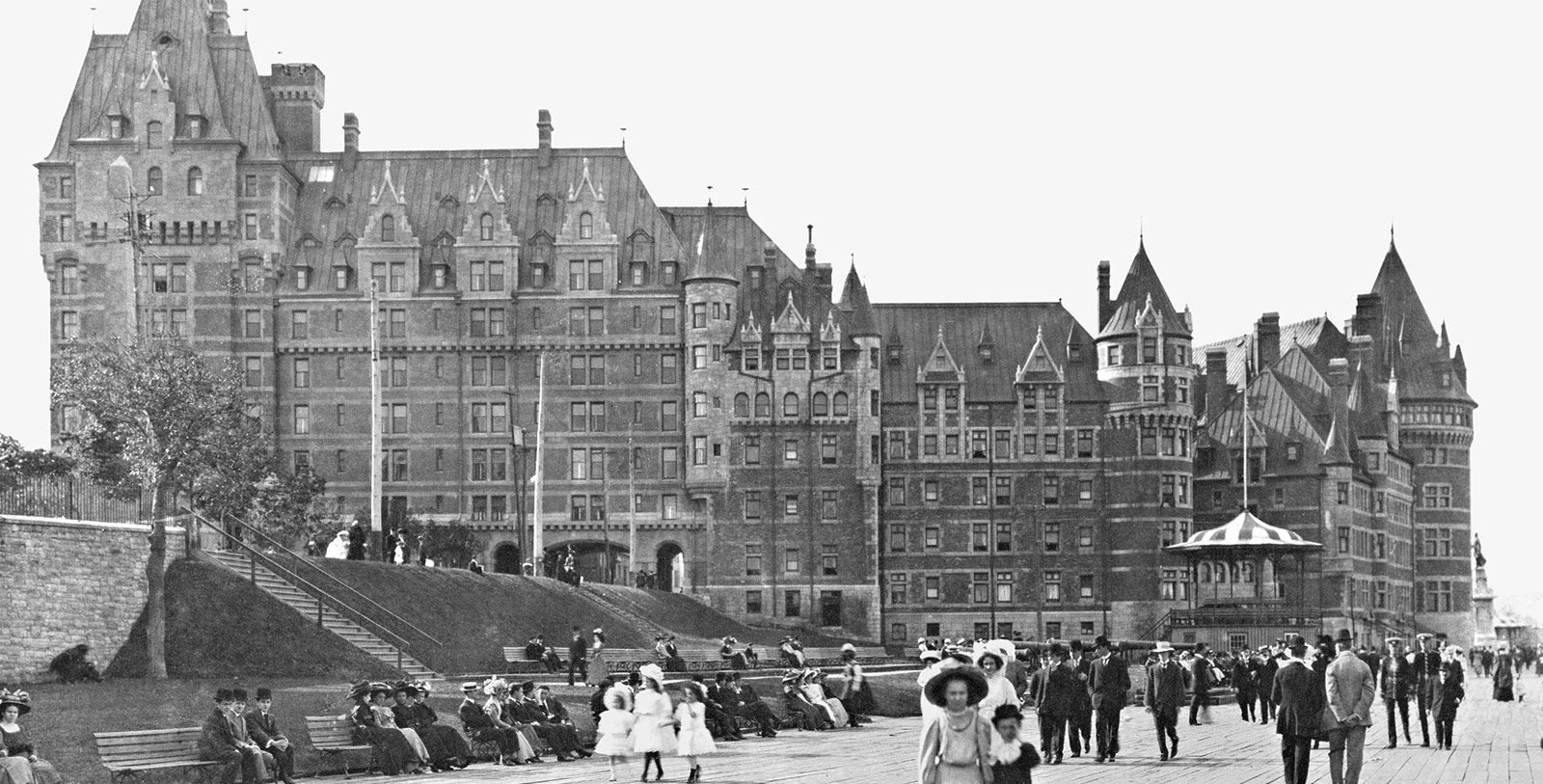
Listed as a National Historic Site of Canada, Fairmont Le Château Frontenac is among the nation’s most celebrated historic landmarks. This spectacular retreat is located in the heart of Old Québec, which served as the seat of colonial French power in North America over the better part of two centuries. It was from this location that France presided over thousands of acres that stretched from the Great Lakes to the bayous of Louisiana. Old Québec then became the headquarters in Canada for the British when they wrestled control of the region away from France during the Seven Years’ War. Fairmont Le Château Frontenac resides on the grounds of the former Château St. Louis, which functioned as the main administrative office for both the French and British colonial governments in Québec City until it burnt down in 1834.
William Van Horne, President of the Canadian Pacific Railway, chose the site of the former Château St. Louis as the location for an extravagant hotel. The ambitious railroad magnate had hoped to spur travel along his company’s new rail lines by developing a series of ornate lodgings that could appeal to upscale travelers. As such, he decided to construct what would become Fairmont Le Château Frontenac in downtown Québec City for just that purpose. Van Horne hired the renowned American architect Bruce Price to create the building’s design and construction began shortly thereafter in 1892. Price had used a special architectural style known as “Châteauesque,” which borrowed heavily from Revivalist and French Renaissance design aesthetics. As such, the new hotel resembled a grand historic manor native to France’s Loire Valley. When it finally debuted a year later, Van Horne chose to name the building as the “Château Frontenac Hotel” in honor of the region’s legendary colonial governor, Louis de Buade de Frontenanc.
Fairmont Le Château Frontenac has since emerged as one of the world’s preeminent holiday destinations. Countless international luminaries have stayed at this spectacular hotel over the years, including military aviator Charles Lindberg, Princess Grace Kelly of Monaco, and French President Charles de Gaulle. Even Queen Elizabeth II of the United Kingdom visited Fairmont Le Château Frontenac in the past. The hotel’s magnificent architecture and beautiful décor also inspired the famous film director, Alfred Hitchcock, to shoot portions of his classic thriller, I Confess, onsite in 1953. But Fairmont Le Château Frontenac has been the site of major historical events as well, such as the Quebec Conferences of World War II. Held between 1943 and 1944, these meetings were chaired by U.S. President Franklin Delano Roosevelt, British Prime Minister Winston Churchill, and Canadian Prime Minister William Lyon Mackenzie King. Together, they discussed invasion plans for Western Europe, as well as the shape of the postwar world. Fairmont Le Château Frontenac is a member of Historic Hotels Worldwide.
Hotel Timeline
The Location
Fairmont Le Château Frontenac is located along the eastern section of Québec City’s historic Upper Town. Upper Town is one of the neighborhoods that constitute Old Québec, which UNESCO designated a World Heritage Site in 1985. Old Québec is among the most historic communities in North America, as its roots trace all the way back to the founding of Fort Saint Louis some 400 years ago. In fact, French explorer Samuel de Champlain led the first French colonists to the area in 1608—roughly one year after the English established Jamestown in the Colony of Virginia. Fort Saint Louis would eventually grow into the epicenter of the Colony of New France before the British acquired it—as well as the rest of Canada—after France’s defeat in the Seven Years’ War. Fairmont Le Château Frontenac has paid homage to this lineage throughout its entire existence as its name is a derivative of Louis de Buade de Frontenac, who served as Governor General of New France for many years. Buade de Frontenac is historically remembered throughout Québec City as a successful guerrilla fighter who miraculously saved the colony against a massive British invasion during King William’s War.
Today, most of the historic structures in the Upper Town originate from the late 19th century when developers in Québec City demolished most of the earlier buildings. Yet, a number of those landmarks from the city’s formative years still survive, nevertheless. Fairmont Le Château Frontenac is close to a few of these sites, including the Old Port, La Citadelle de Québec, Château St. Louis, the Plains of Abraham, and the Place Royale. Two of Old Québec’s most celebrated landmarks—La Citadelle de Québec and the Plans of Abraham—are only a few blocks from the hotel’s front door. La Citadelle de Québec is actually a British structure built in 1820, which represented the British Crown’s efforts to protect Canada following the War of 1812. It is still an active military base and functions as Queen Elizabeth II’s “official” residence in the country. The Plans of Abraham is just to the south of La Citadelle de Québec and marks the site of a great battle during the French and Indian War. Known officially as the Battle of the Plains of Abraham, the contest saw the British seize control of Québec City from the French in 1759.
The Architecture
Fairmont Le Château Frontenac is one of Canada’s iconic Châteauesque Grand Dame hotels. Like many of its fellow Châteauesque-style hotels, Fairmont Château Le Frontenac resembles the type of grand French manor that emerged in the Loire Valley throughout the late 15th to the early 17th centuries. This unique architectural style blends elements of Revivalist and French Renaissance design aesthetics to achieve its distinctive appearance. Buildings constructed in such a way are also known to incorporate pitched roofs and elaborate towers that borrow heavily from Gothic and Italian Renaissance architecture. (In the case of Fairmont Le Château Frontenac, the architectural team avoided using Italian Renaissance-style architecture entirely in favor of Gothic.) Many historians today consider Fairmont Le Château Frontenac to be among the best examples of Châteauesque-style architecture in the entire world.
When William Van Horne, President of the Canadian Pacific Railway Company, initiated the construction of Fairmont Le Château Frontenac, he hired the renowned American architect Bruce Price to create its design. An innovator of the “Shingle Style,” Price’s work later influenced many famous architects, including Frank Lloyd Wright. Starting in 1892, Price would oversee the development of the hotel’s famous look over the next three years. His plan called for a layout reminiscent to that of a horseshoe, made of four irregular wings that he would connect at obtuse angles. Most of its public spaces would occupy the first two floors, while the remaining dozen or so would feature hundreds of accommodations. He used grey stone ashlar and Glenboig brick cladding as the primary building material for the façade. Inside, Price and his team employed mahogany paneling, wrought iron, and carved stone to masterful effect. One of the most striking features of Price’s design involved the hotel’s front entrance. He constructed this portion of the building by crafting several porte-cochère that contained large dormers and a cupola. The porte-cochère led guests directly into the grand courtyard, as well as access to the main lobby. Guests today will notice a 300-year-old stone bearing the Cross of Malta as they walk through into the lobby from the porte-cochère.
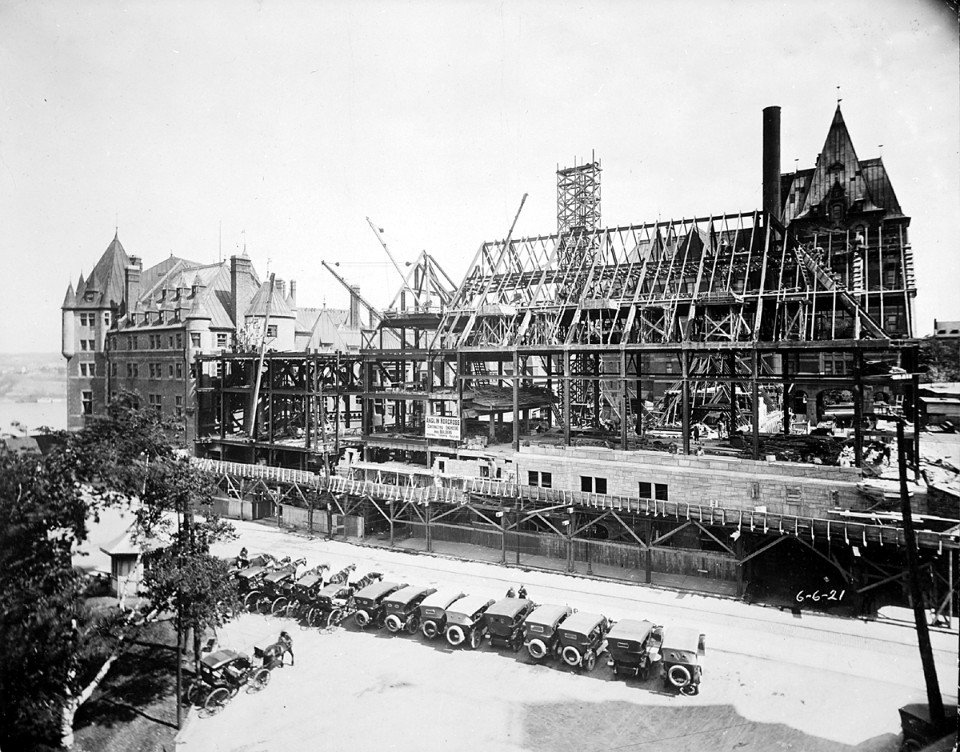
The hotel underwent a handful of expansions since its debut in 1893, the first of which transpired six years later with the addition of the Citadel Wing. Architect William Sutherland Maxwell would preside over the next two construction projects, culminating with his work the hotel during the 1920s. Working alongside his brother, Edward, Maxwell created a marvelous central tower that caused the hotel to stand some 260 feet in length. As such, Fairmont Le Château Frontenac was the tallest building in Québec City until 1930. Another fabulous addition made during the Maxwell’s last renovation was the creation of the Verchères Space’s historic ceiling. The original sketch for the structure was drawn by William Maxwell himself. Hand-painted, the ceiling included designs of leaves and flowering vines embellished with cartouches and monochrome motifs. Its palette featured hues of blue and green cast against an exquisite background of yellow. Palm stenciling was also used on every column installed within the room, as the first name for the Verchères Space was the “Palm Court.” These images are still visible in the Verchères Space to this very day.
More recently, Fairmont Le Château Frontenac received two extensive renovations in 1993 and 2011. The first of these renovations involved the architectural firm Arcop, a Montréal-based company that had previously designed such buildings like the Place Ville Marie and the Place des Arts. Despite having worked with more modern structures, Arcop wonderfully modernized Fairmont Le Château Frontenac while also preserving its rich, architectural character. The highlight of the restoration was the then-cutting-edge Claude-Pratte Wing. The structure featured such wonderful facilities, like an indoor swimming pool, fitness center, and a magnificent exterior terrace. The renovations that occurred in 2011 were just as comprehensive, as they focused on refurbishing the hotel’s restaurants, its grand lobby, and nearly three-fifths of its available accommodations. But the greatest area of work concerned the iconic Châteauesque-style roof. A fair amount of the $66 million renovation budget went toward replacing the building’s prominent copper pitched roofs, so that many more guests could appreciate them for generations to come.
Famous Historic Events
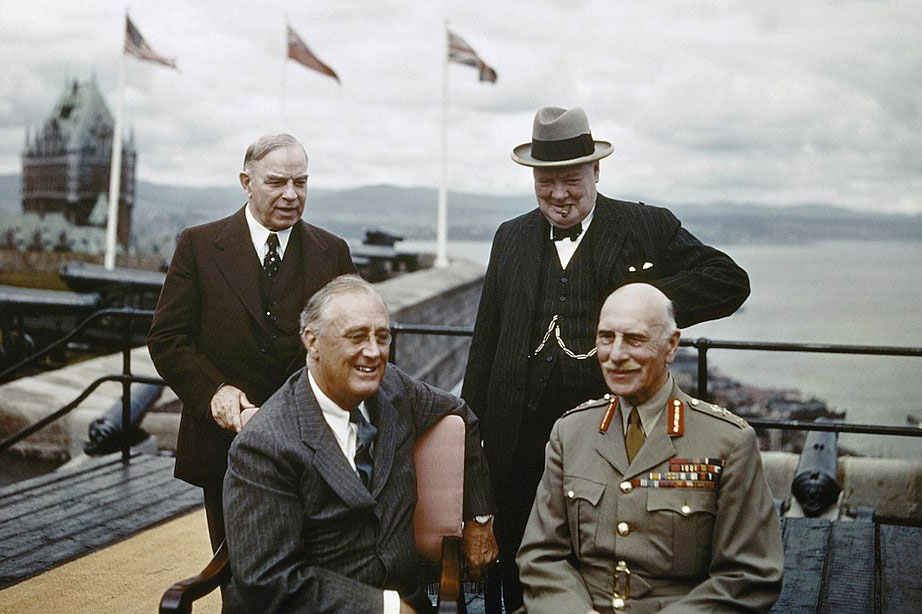
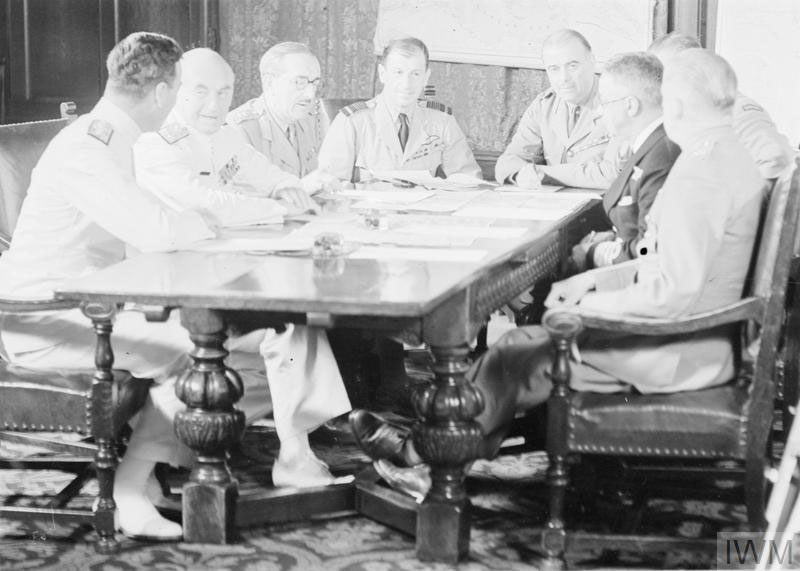
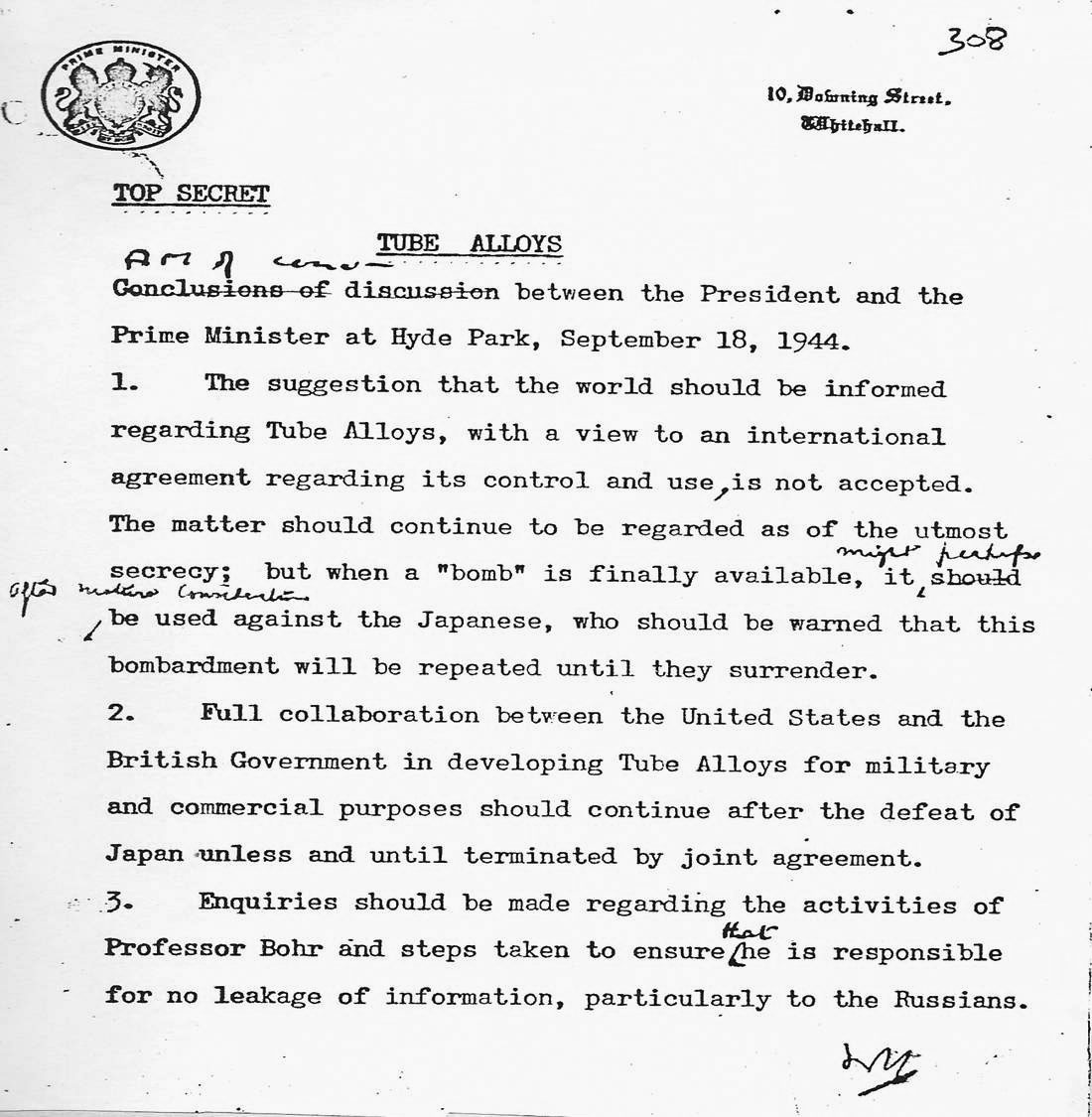
First and Second Quebec Conferences (1943 and 1944, respectively): Referred collectively among historians as the Quebec Conferences, these two important historical events were a series of highly confidential meetings in which the Western Allies planned the invasion and subsequent occupation of Western Europe during World War II. In each of these meetings, U.S. President Franklin Delano Roosevelt, British Prime Minister Winston Churchill, and Canadian Prime Minister William Lyon Mackenzie King specifically led the conversation. During the first conference in August of 1943, the three politicians planned the invasion of Normandy, scheduled tentatively for the following spring. The men represented the three Western nations that would make the greatest contribution to the upcoming assault. Then in September of 1944, the statesmen met at the Second Quebec Conference to mainly discuss the shape of postwar Europe. They also addressed plans to defeat the Japanese Empire, including the proposed use of atomic weaponry.
Famous Historic Guests
- Charles Lindbergh, historic aviator and military officer.
- Alfred Hitchcock, influential filmmaker of such classics like Vertigo, North by Northwest and Psycho.
- Princess Grace Kelly of Monaco, famous American film actress known for Mogambo and wife of Prince Rainier III.
- Québec Premier Maurice Duplessis (1936 – 1939; 1944 – 1959)
- Charles de Gaulle, World War II leader and President of France (1959 – 1969)
- Prime Minister William Lyon Mackenzie King of Canada (1921 – 1926; 1926 – 1930; 1935 – 1948)
- Queen Elizabeth II of the United Kingdom (1952 – 2022)
- Prime Minister Winston Churchill of the United Kingdom (1940 – 1945; 1951 – 1955)
- Franklin Delano Roosevelt, 32nd President of the United States (1933 – 1945)
Film, TV and Media Connections
- I Confess (1953)
- Blizzard (2003)
- Taking Lives (2004)
- Guardian: The Lonely and Great God (2016)
Guest Historian Series
Listed as a National Historic Site of Canada, the Fairmont Le Château Frontenac is among the nation’s most celebrated historic landmarks. This spectacular retreat is located in the heart of Old Québec, which served as the seat of colonial French power in North America over the better part of two centuries. It was from this location that France presided over thousands of acres that stretched from the Great Lakes to the bayous of Louisiana. Old Québec then became the headquarters in Canada for the British when they wrestled control of the region away from France during the Seven Years’ War. Fairmont Le Château Frontenac resides on the grounds of the former Château St. Louis, which functioned as the main administrative office for both the French and British colonial governments in Québec City until it burnt down in 1834.
American William Van Horne, President of the Canadian Pacific Railway, chose the site of the former Château St. Louis as the location for an extravagant hotel. The ambitious railroad magnate had hoped to spur travel along his company’s new rail lines by developing a series of ornate lodgings that could appeal to upscale travelers. As such, he decided to construct what would become the Fairmont Le Château in downtown Québec City for just that purpose. Van Horne hired the renowned American architect Bruce Price to create the building’s design and construction began shortly thereafter in 1892. Price had used a special architectural style known as “Châteauesque,” which borrowed heavily from Revivalist and French Renaissance design aesthetics. As such, the new hotel resembled a grand historic manor native to France’s Loire Valley. When it finally debuted a year later, Van Horne chose to name the building as the Château Frontenac Hotel” in honor of the region’s legendary colonial governor, Louis de Buade de Frontenac.
Continue Reading