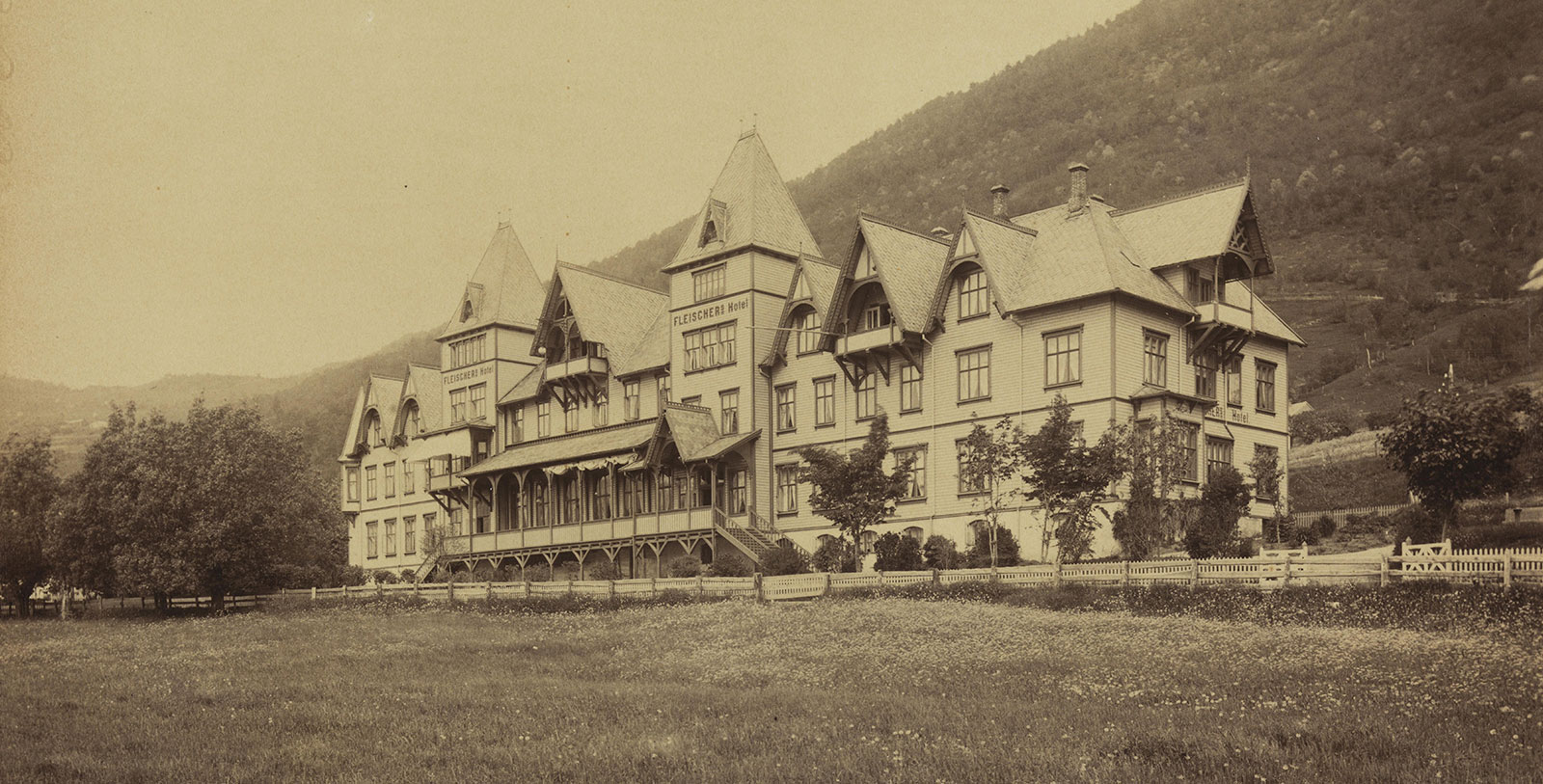
a large building with a lawn and trees

History

Discover Fleischer’s Hotel, which has been a favorite destination for European royalty since the 19th century.

Fleischer's Hotel was constructed during the historic reign of the United Kingdom’s famed Queen Victoria, who sat on the British throne from 1837 to 1901.

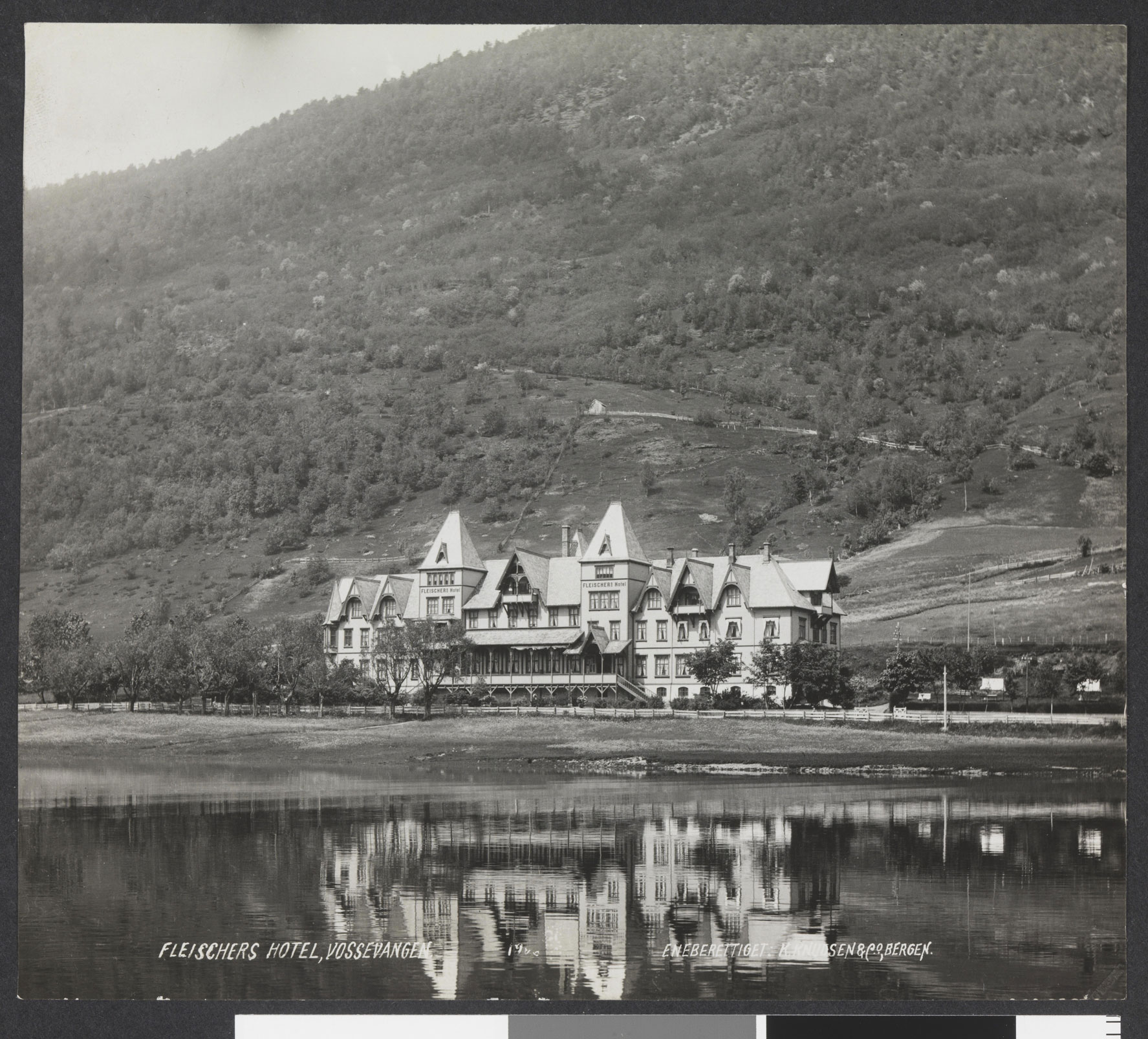
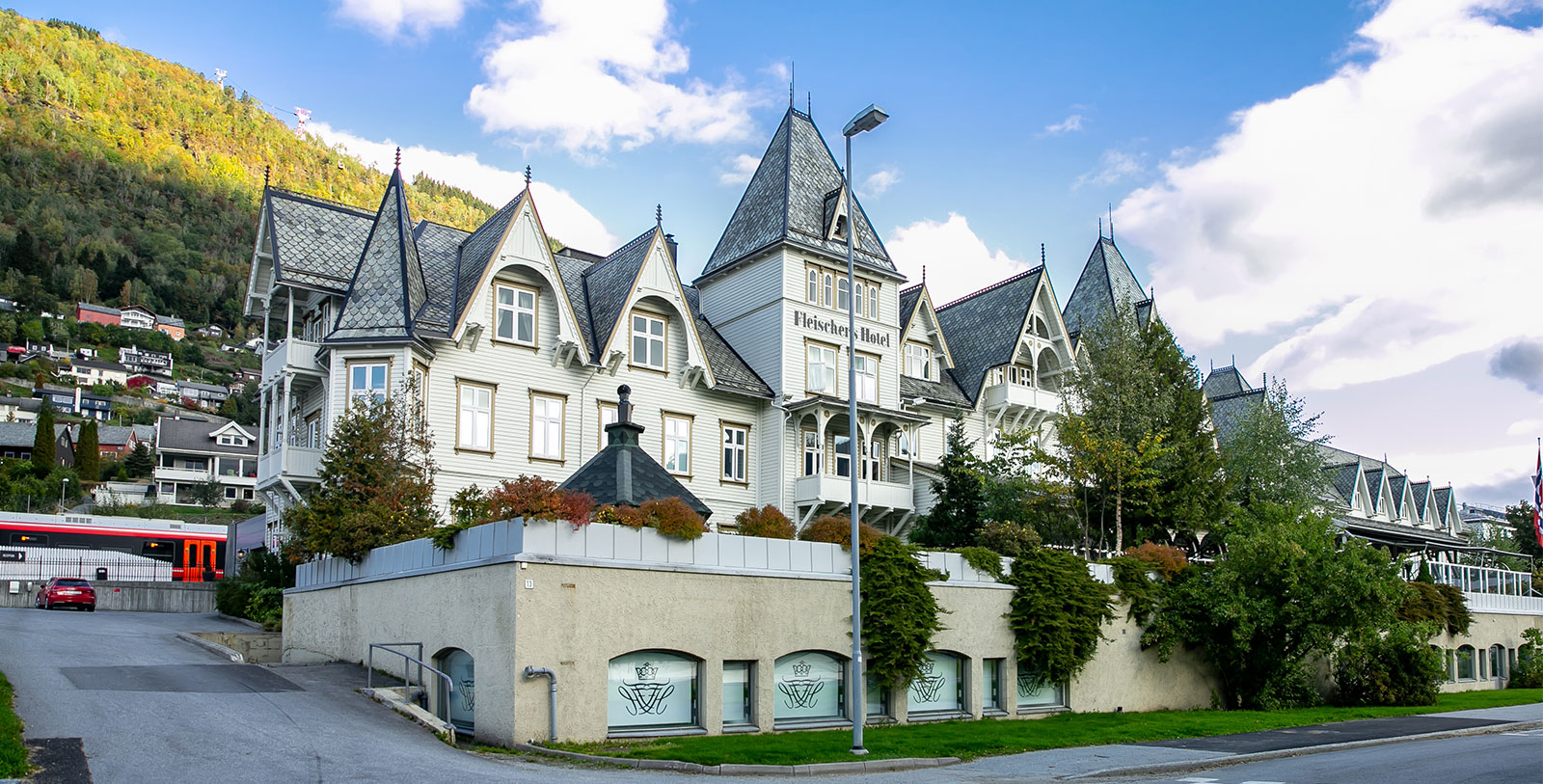
Established in 1864, Fleischer’s Hotel was opened by Fredirk Lyth Ørum Fleischer and his wife Magdalene. By 1883, the Voss line was built providing easier access for visitors coming from Bergen, the second largest city and port of Norway. The new line validated the successful gateway for increased guests at Fleischer’s Hotel resulting in a need for the hotel's expansion. When a fire destroyed the buildings in 1888, the Fleischers took the opportunity to start fresh. Well-known architect Peter Andreas Blix rebuilt the hotel as it stands today with its distinctive Swiss-style spires and balconies.

At the turn of the century, Kings, Kaisers, Emperors, and other prominent guests from all corners of the world frequented the guestrooms of Fleischer’s Hotel proving the success and popularity of the hotel. Today, the hotel corridors are adorned with documentation of the aristocratic visits with displays that include an original guestbook, ornate diplomas, King Leopold of Belgium’s gold tiepin decorated with diamonds, and the private toilet of Emperor Wilhelm II of Germany.

In 1938, the hotel went through a larger expansion adding on a larger veranda, kitchen, pantry, reception area, entrance and cellar. Popular lounges and 13 of the guestrooms were upgraded to include private baths. During World War II, Fleischer’s Hotel was occupied by the Germans. Fortunately, the hotel was among the few buildings in Voss that were not destroyed by bombs and remained in good condition. By the 1950s, Olaf Fleischer Tønjum, the 4th generation of Fleischer management, took over the hotel. Over the next 50 years Olaf oversaw further expansion and redecoration of the hotel. A new wing, conference rooms, swimming pool, restaurants, a bar, and guestrooms were added and decorated to the standards as it is today.
a building next to a body of water

Hotel Timeline

Philanthropist Mary Emery established the Village of Mariemont as a nationally recognized model community designed to provide an attractive, well-planned environment for residents. The future Mariemont Inn was envisioned as a key component of the village center.

Architects Harry Hake Zettel and Edwin Rapp commenced construction of the Mariemont Inn. Designed in the Tudor Revival style, the building was among the largest structures developed by the Mariemont Company. The original plans called for a much larger V-shaped complex than was ultimately completed.

The Mariemont Inn opened as a 58-room Tudor-style hotel and community gathering place. The inn was intended to serve travelers, residents, and business visitors while reinforcing the village's pedestrian-oriented design. The Mariemont Company relocated its offices to the inn complex. In addition to hotel accommodations, the building housed retail and office space, making it a centerpiece of village life.

The Mariemont Company relocated its offices to the inn complex. In addition to hotel accommodations, the building housed retail and office space, making it a centerpiece of village life.

Philadelphia businessman Lawrence Jones began leasing the property from the Mariemont Company, marking the first significant transition in management.

Lawrence Jones purchased the Mariemont Inn from the Mariemont Company for $125,000, ending more than two decades of original ownership.

The inn was sold to new owners, initiating another chapter in its operational history while preserving its role as Mariemont's signature lodging establishment.

The property joined the Best Western system while maintaining its historic Tudor architecture and independent character.

Best Western Premier Mariemont Inn was inducted into Historic Hotels of America, the official program of the National Trust for Historic Preservation.

The Village of Mariemont received designation as a National Historic Landmark, further elevating the historical importance of the inn and its surrounding community.

The inn underwent an extensive two-year renovation and modernization program. Historic Tudor features, original fireplaces, artwork, and architectural elements were preserved while guest rooms and public spaces were upgraded.

1923
1925
1926
1929
1943
1945
1962
1980s
2003
2007
2008
Famous Historic Guests
  • King Leopold II of Belgium (1865 – 1909)
  • Emperor Wilhelm II of Germany (1888 – 1914)
Ghost Stories

In the early 90s, when the Fleischer’s Hotel attic was being renovated to add new guestrooms, it was rumored that Magelene Fleischer’s ghost moved into room 407. Because she was such a friendly woman with a hospitable nature, hotel associates and patrons have never felt threatened by her presence.

a building with a fence and trees