
History
Discover Hotel Union Geiranger, which has is located along the UNESCO-recognized Geirangerfjord.
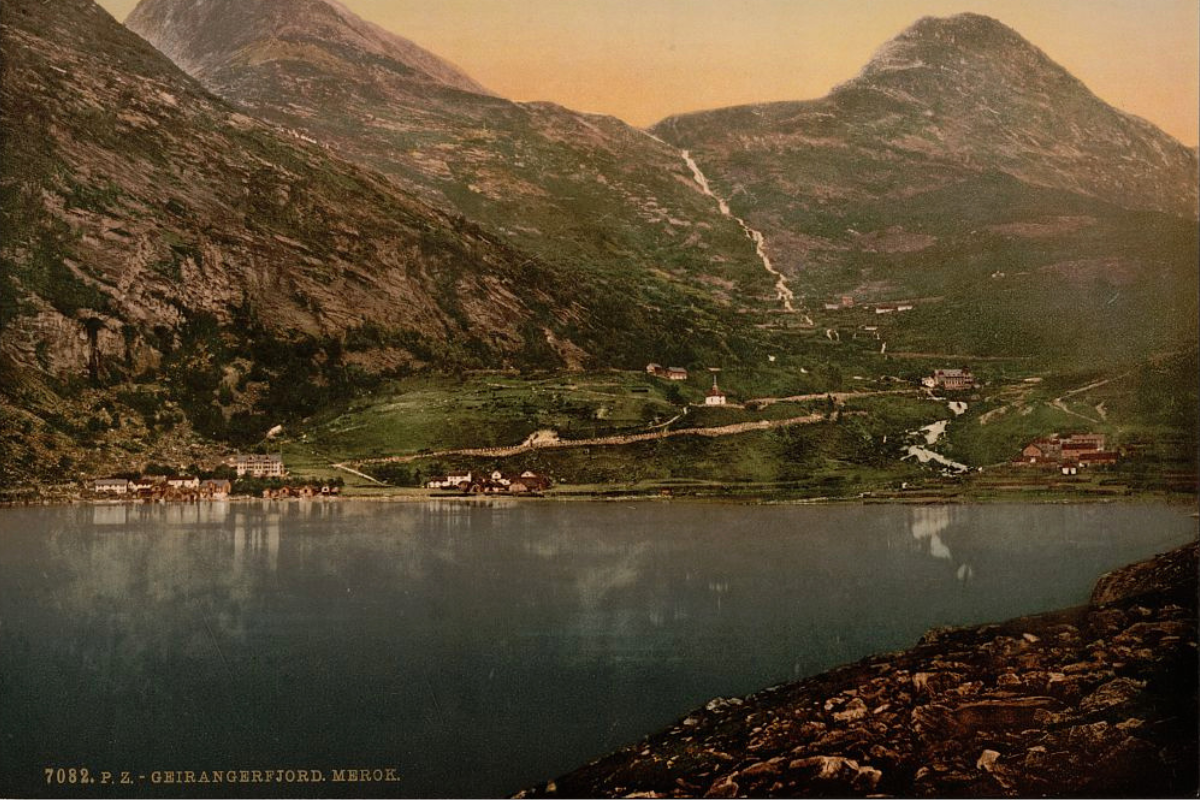
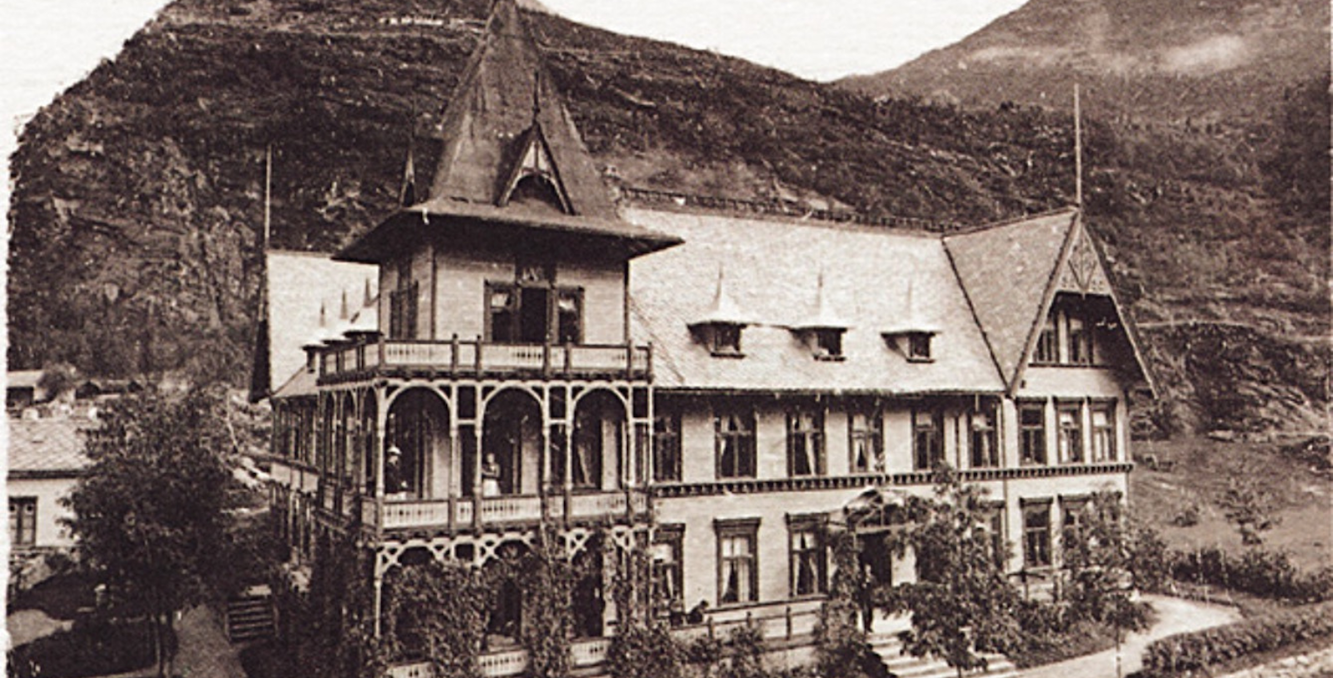
Beginning in the mid-19th century, European cruise lines ferried hundreds of curious onlookers to the winding coast of Western Norway. Among the most popular attractions for those seafaring travelers was the magnificent Geirangerfjord—a gorgeous waterway lined with verdant flora and towering mountain peaks. The vessels navigated the beautiful fjord for miles before finally anchoring near a quaint agricultural village called “Geiranger.” Rushing to accommodate the new tourists, the people of Geiranger set about opening small inns and hotels throughout the local countryside. However, ambitious hoteliers from elsewhere in Norway recognized the economic potential of Geiranger’s budding tourism industry and debuted their own businesses. One enterprising hospitality company, in particular, decided to construct a gorgeous multistory building just a few moments away from the shores of the Geirangerfjord in 1891. Known as the “Hotel Union Geiranger,” the structure was designed to mimic the appearance of another location the company had built earlier in Øye. (This other location was named the “Hotel Union Øye,” and it has been a member of Historic Hotels Worldwide since 2012.) Each building featured an eclectic combination of Norwegian vernacular architectural forms, specifically the deeply pitched roofs and Norse iconography that characterized the country’s unique Dragestil style. But the hoteliers also implemented several novel designs that made aspects of Hotel Union Geiranger resemble a pastoral Swiss chalet in the hopes it could more dramatically reflect the region’s distinctive alpine environment.
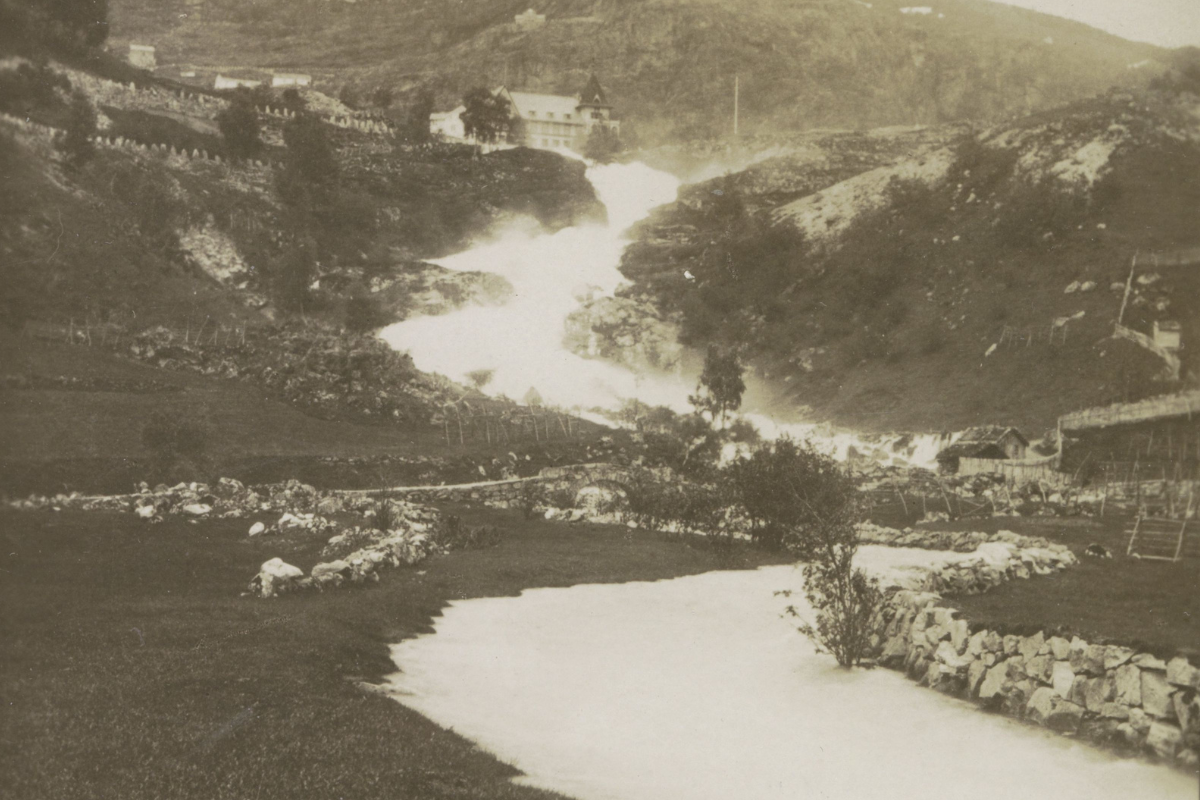
The hospitality company eventually sold the Hotel Union Geiranger to married couple Julie and Karl Mjelva eight years later. The Mjelvas were accomplished hoteliers themselves, having worked together at the respected Grand Hotel in Åndalsnes for some time. Julie and Karl strove to improve the hotel’s available services in an ambitious attempt to elevate the business into one of the area’s premier destinations. The task proved to be incredibly difficult though, as the tourist season only lasted for a few weeks during the summer months. To overcome that economic obstacle, the Mjelvas subsequently pursued many creative strategies to enhance the hotel’s appeal and profitability. In 1907, the family actually built their own hydroelectric powerplant on land that they had purchased at a waterfall nearby. Amazingly, the facility generated enough electricity to power the Hotel Union Geiranger, as well as several other businesses throughout the neighborhood. The Mjelvas then reinvested the excess profits the powerplant earned into starting a factory, which manufactured heaters, stoves, and baking ovens that wound up at the hotel. Perhaps their most impressive feat involved the partnership they formed with German automaker Adam Opel. They specifically collaborated with the manufacturer to create a vehicle called the “Geiranger Opel,” which could easily traverse the steep roads surrounding Geiranger. Debuting right before World War I, the Mjelva family ultimately operated a fleet of those cars as guest cabs from their special hotel garage.
Thanks to the ingenuity of Julie and Karl Mjelva, the Hotel Union Geiranger experienced immense prosperity. It quickly established a reputation for its unrivaled services, becoming one of the most beloved holiday retreats in all of Western Norway. The hotel had even allured many illustrious European aristocrats and royals, including Alexandra of Denmark, who was queen consort to King Edward VII of the United Kingdom. Julie and Karl’s children—Målfrid and Hans—continued to uphold the high standards they founded, even as major geopolitical events like World War II wrought havoc on Norway’s national economy. In fact, the Hotel Union Geiranger emerged stronger than ever from the conflict and reached greater heights of popularity. Thrilling live performances started to appear on-site regularly, with even the renowned Glenn Miller and his band arriving to play a show. The newfound success also enabled the Mjevla family to initiate an extensive series of renovations that further augmented the hotel’s fantastic services. The most momentous change to occur transpired during the 1970s when the Mjevla family oversaw the transformation of the entire structure as a means of revitalizing the whole guest experience. Hotel Union Geiranger has since remained one of Norway’s most exciting vacation destinations, with the Mjevlas continuing to act as its dedicated steward. Indeed, the family is currently enjoying its fourth generation of ownership and is primed to turn over managerial responsibilities to a fifth in several years.
Hotel Timeline
The Location
Located in the picturesque municipality of Stranda, Geiranger is a tranquil, bucolic village that sits right in the heart of historic Western Norway. Its most well-known historical era coincided with the rise of the Vikings—a seafaring people active throughout Europe during the Middles Ages. Technological innovations in Norway’s western counties effectively increased local agricultural activity, and thus the size of its population. New land to distribute became increasingly rare, forcing the inhabitants to look to the sea for opportunity. Using a uniquely slim, single-mast vessel known now as the “Scandinavian longship,” hundreds of people subsequently departed Western Norway to distant destinations. One common practice of the Vikings was to raid the shoreline of Europe for resources. Some of those warriors succeeded in carving out feudal fiefdoms—including powerful kingdoms—within the areas they conquered. But many others peacefully interacted with different European societies, establishing trading posts all over the continent. The Vikings were even known to harbor merchant colonies as far away as central Russia and the Middle East. A few adventurous bands of Vikings also sailed for long distances to remote landmasses like Iceland and Greenland, which they settled starting in the 10th century. In fact, modern archeological evidence has revealed that the Vikings managed to colonize Newfoundland, calling the location “Vinland” in contemporary accounts.
While the age of the Vikings has long since ended, many sites around Western Norway still preserve the rich history that they left behind. One of the most enduring landmarks to this heritage site is the medieval Urnes Stave Church, located at the end of the Sognefjord. A UNESCO World Heritage Site, the Urnes Stave Church was first built during the 12th century. Many scholars believe the building is among the best surviving examples of Viking culture, especially as it evolved throughout the High Middle Ages. (The church is still occasionally used for special events, although it stopped providing regular services in the 19th century.) Nevertheless, modern Western Norway is also a popular tourist attraction due to its wealth of natural wonders. Indeed, the region is widely celebrated for its fjords—long, deep waterways that receding masses of ice cut into the earth eons ago. Known for their beauty, the fjords are the region’s most enduring physical feature. The United Nations has even identified two of the largest fjords in the area—Geirangerfjord and Nærøyfjord—as one if its highly respected UNESCO World Heritage Sites. In fact, the head of the awe-inspiring Geirangerfjord lies right next to the village of Gieranger! Guests today can access this beautiful natural wonder from the Hotel Union Gieranger, which is replete with many terrific places to go hiking and sightseeing. Perhaps some of the most popular destinations within the greater Geirangerfjord are two waterfalls known as the “Seven Sister Falls” and the “Suitor.”
The Architecture
When the Hotel Union Geiranger first debuted at the end of the 19th century, architect Christian Thams specifically chose Norwegian vernacular architecture to help craft its appearance. Indeed, Thams had incorporated nearly the same exact designs used to build another hotel that had been developed around the same time in Øye. Both buildings displayed a brilliant blend of architectural themes—referred to colloquially as “byggeskikk”—that hailed from building techniques originally founded centuries prior. He made use of design motifs from Norway’s medieval period, namely the process of raising an interlocking timber frame latched together with corner notches. In some cases, the structure was supported via a “post and lintel” system, in which widely spaced vertical posts supported horizontal ones. Steeply pitched roofs reinforced by several intricately laid beams topped the building, while wallboards known as “pilli” constituted the exterior walls. Christian Thams also incorporated ancient Norse iconography throughout the façade, too, including the busts of mythological creatures like dragons and serpents. Known as “Dragestil,” this practice was part of a much larger Romantic movement within Norway toward the end of the 19th century. Architects like Thams had hoped the utilization of such historic symbolism would help preserve the past in the face of rapid modernization. In turn, the unique architecture would then support a shared sense of national identity that could further bind the country together. Nevertheless, the Hotel Union Geiranger’s rich appearance ultimately played a key role in the development of its reputation as a premier holiday retreat.
However, Thams had also constructed the Hotel Union Geiranger to resemble aspects of a Swiss chalet. Swiss chalets were once rustic cottages that first emerged as seasonal farmhouses around the height of the Middle Ages. Indeed, the chalet was a refuge for Swiss cattle herders, who would bring their livestock up into the Alps during the warmer months. The house itself functioned as a secondary home, within which the farmers would create a variety of dairy products for trade. But the chalets lost their original purpose as time passed, gradually turning into quaint seasonal vacation homes. The main reason behind the transformation was the emergence of the Alps as a popular tourist destination in the 19th century, specifically among the British and the French. They eventually discovered the many chalets scattered around the country and began buying them up in great numbers. The foreigners subsequently renovated the chalets to reflect their romanticized views of alpine life in Switzerland. Soon enough, the new iteration of the chalet had swept across the country. Many natives went as far as to alter their own homes to resemble the aesthetic, essentially making the architecture “Swiss” in the process. Many large-scale commercial buildings in Switzerland eventually showcased the style, too, including restaurants, storefronts, and hotels. A few Swiss construction companies even created premade chalets for people in other nations throughout Europe, especially in Scandinavian countries like Norway. The chalets—and their spinoffs—were typically very beautiful, despite the rusticity of their layout. Set upon a rectangular foundation, the buildings were most easily recognized for their gabled roofs and facades of carved, wooden details.
Famous Historic Guests
- Roald Dahl, children’s literature author known for books like Charlie and the Chocolate Factory, James and the Giant Peach, and Matilda
- Glenn Miller and His Orchestra, a big band known for songs like “In the Mood,” “String of Pearls,” and “Moonlight Serenade”
- Alexandra of Denmark, Queen of the United Kingdom (1901 – 1910)