Hotel Union Geiranger
Geiranger, Norway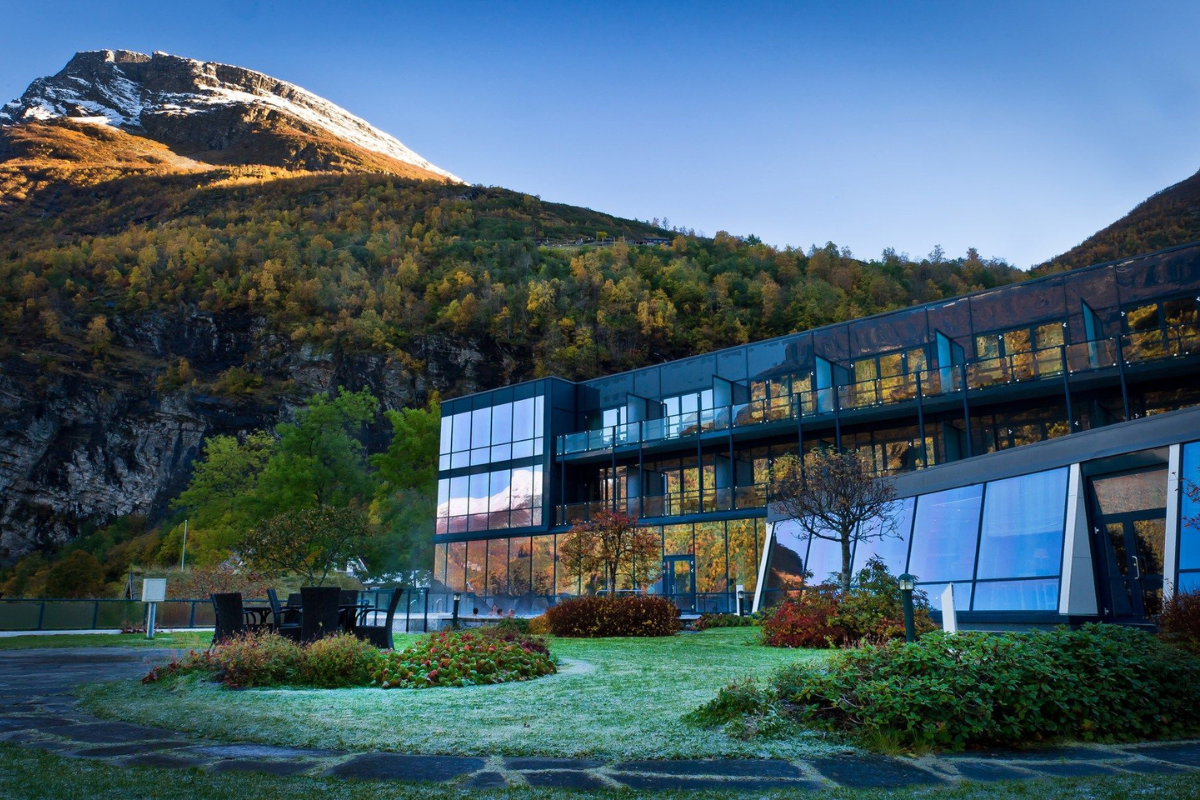
 Geirangervegen 100, Geiranger, Norway, 6216
Original Property Opened in 1891
Historic Hotels Worldwide member since 2023
Geirangervegen 100, Geiranger, Norway, 6216
Original Property Opened in 1891
Historic Hotels Worldwide member since 2023
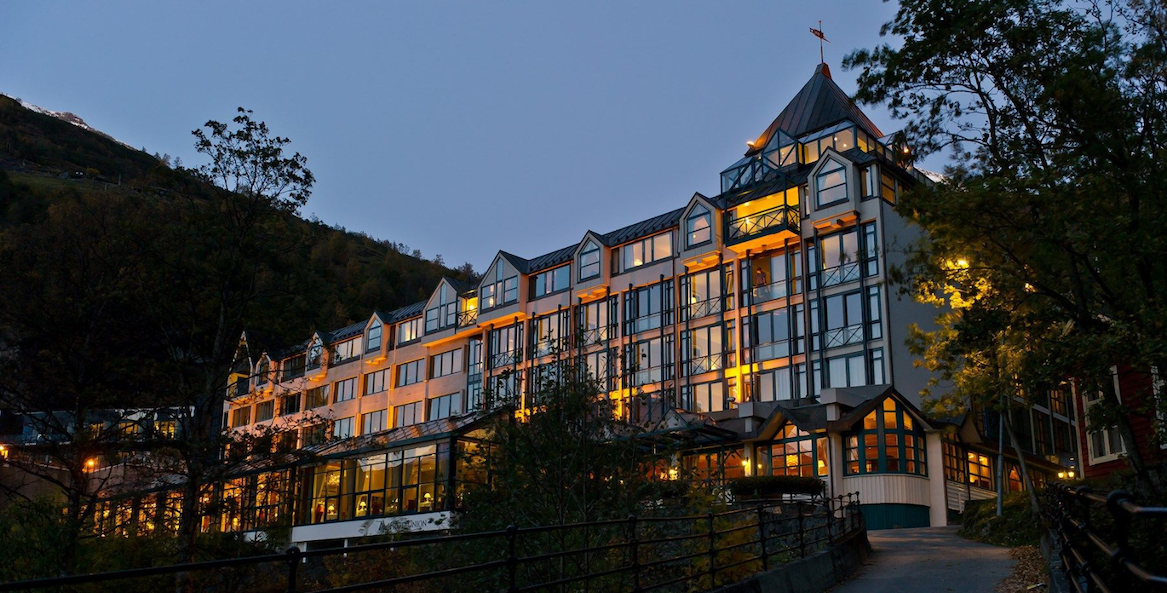
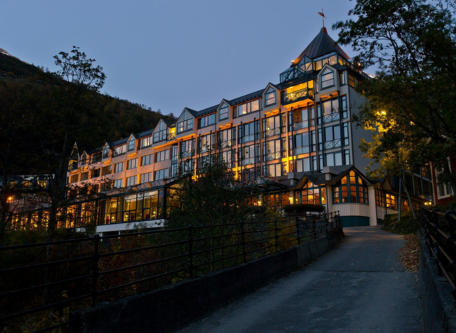
Gazing out at the storybook landscape of the Geirangerfjord, a UNESCO World Heritage Site, Hotel Union Geiranger boasts incomparable vistas, a fascinating history, and a longstanding tradition of offering warm, family-led hospitality. From its lofty mountainside perch in the bucolic village of Geiranger, this Swiss chalet-style hotel rests mere steps from wild waterfalls, dwarfed by the forested, snow-capped peaks that rise around it. Welcoming travelers to the Geirangerfjord since 1891, Hotel Union Geiranger has been owned and operated by the Mjelva family for four generations, ever since it was purchased by Julie and Karl Mjelva in 1899. Consummate hoteliers, they strove to dream up ways to mitigate operation costs and elevate the hotel and the rest of Geiranger into the renowned destination that it is today. In fact, during the course of their stewardship, they went on to establish a waterfall-fueled hydroelectric powerplant that powered both the hotel and several other neighborhood businesses and an appliance factory that manufactured ovens and heaters which outfitted the hotel. They also established a partnership with German automobile maker Adam Opel to develop a fleet of vehicles capable of traversing the treacherous roads of the Geirangerfjord, some of which can still be seen on site to this day.
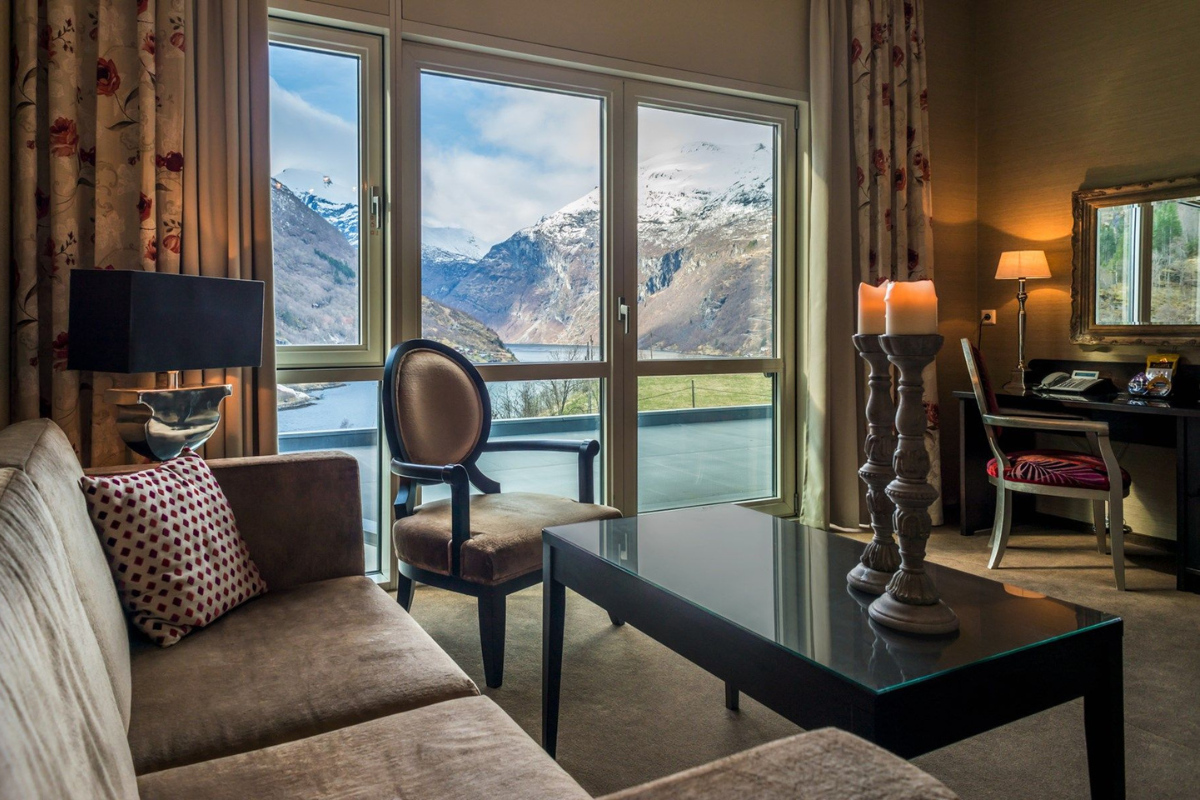
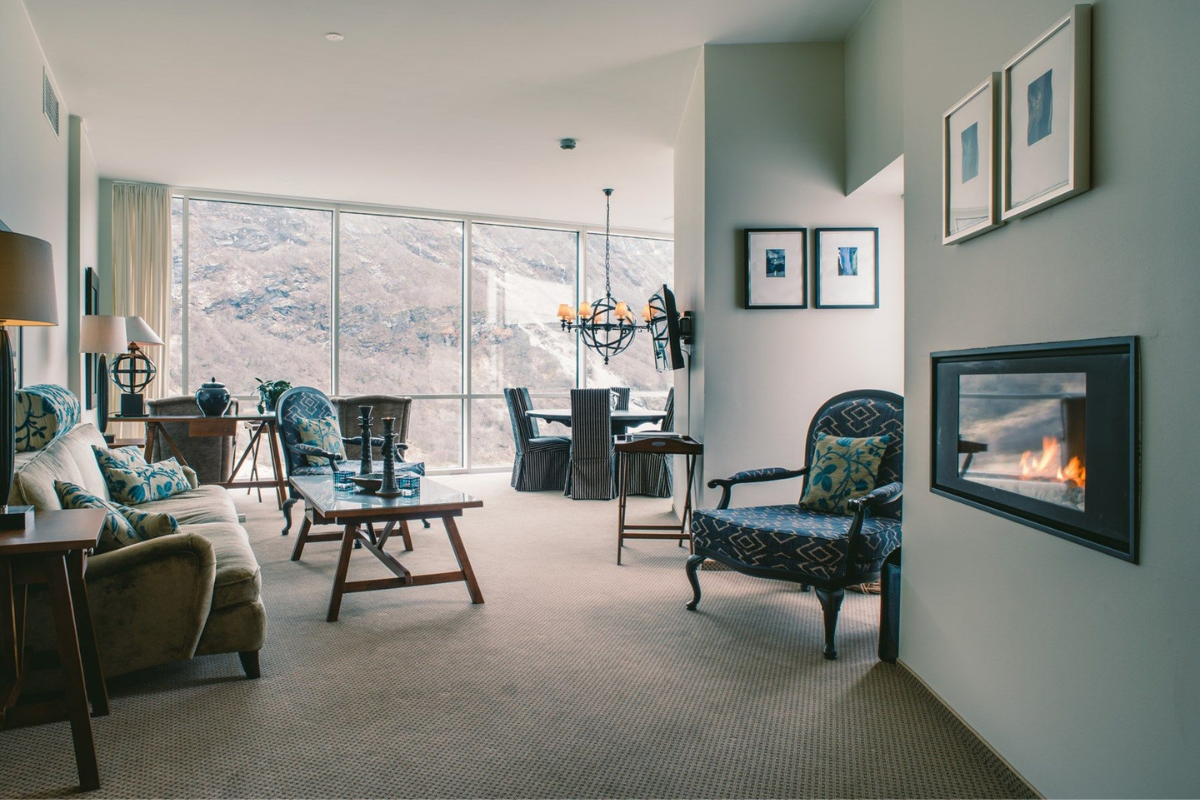
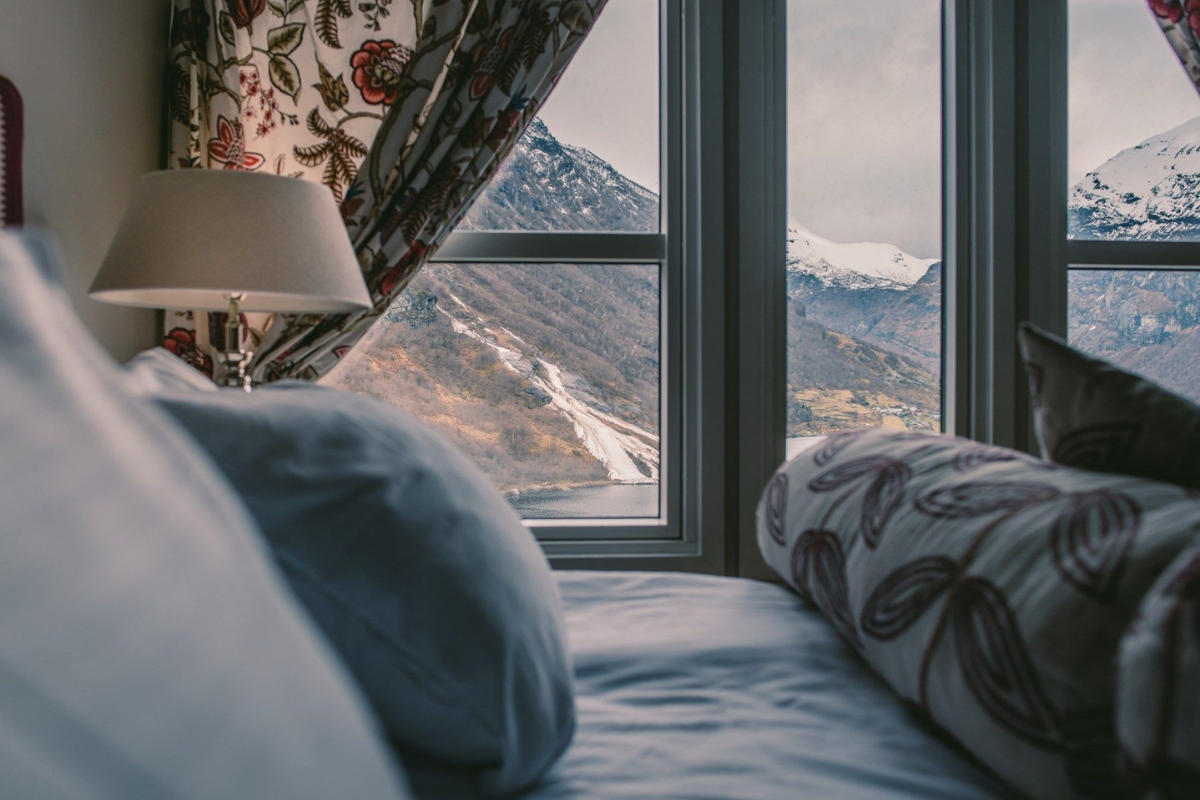
Under the care of Julie and Karl Mjelva, the hotel’s gracious hospitality soon earned it quite a reputation, drawing European royals and aristocrats and internationally known writers, actors, and musicians to stay there. Today, guests visiting Hotel Union Geiranger enjoy the stunning views the Geirangerfjord is famous for, as well as indoor and outdoor fjord-facing pools, a massive spa with 28 treatment rooms and a mountain-view sauna and relaxation rooms, a handful of dining outlets, and even a collection of vintage cars, which can still be hired out with a chauffeur. Just as hospitable are the hotel’s 197 guestrooms (including 21 suites), each comfortably appointed and offering beautiful views of the surrounding area. Hotel Union Geiranger is open all year round.
Discover
- Discover the Swiss chalet-inspired architecture of Hotel Union Geiranger. When it first made its debut during the late 19th century, this historic hotel was crafted in wood and featured a medley of two distinctly European architectural styles: Swiss chalet and Norwegian Dragestil, or “dragon style,” the latter of which took the form of carved wooden busts of mythical Norse creatures like serpents and, of course, dragons. Though the hotel has gone through some changes in the intervening decades, replacing the timber exterior—and, with it, its more dramatic, stave church-like characteristics—with modern construction materials, Hotel Union Geiranger’s Swiss chalet-style aesthetic remains, an architectural nod to its alpine setting.
- Marvel at the resplendent natural beauty that envelopes the hotel. Thanks to its impressive setting, Hotel Union Geiranger enjoys stunning views of the Geirangerfjord and surrounding mountains, with breathtaking overlooks available throughout much of historic hotel, including from the dining venues, pools, spa, and many guestrooms.
- Luxuriate in the warm Norwegian hospitality that has been graciously offered by the Mjelva family for four generations, while also admiring the ambitious ingenuity of the first generation of innkeepers. Julie and Karl Mjelva started their family’s hotelier tradition back in 1899, when they bought Hotel Union Geiranger. Due to what was then a very short tourist season, spanning only a few weeks during summertime, they dreamed of turning both the hotel and the village of Geiranger into premiere tourist destinations and increasing profitability overall. Their quest, in turn, resulted in a hydroelectric powerplant fed by a waterfall capable of running the entire hotel, a kitchen appliance factory, which has since evolved into an Italian-owned brand named Hoover Grepa, and a fleet of specially made cars.
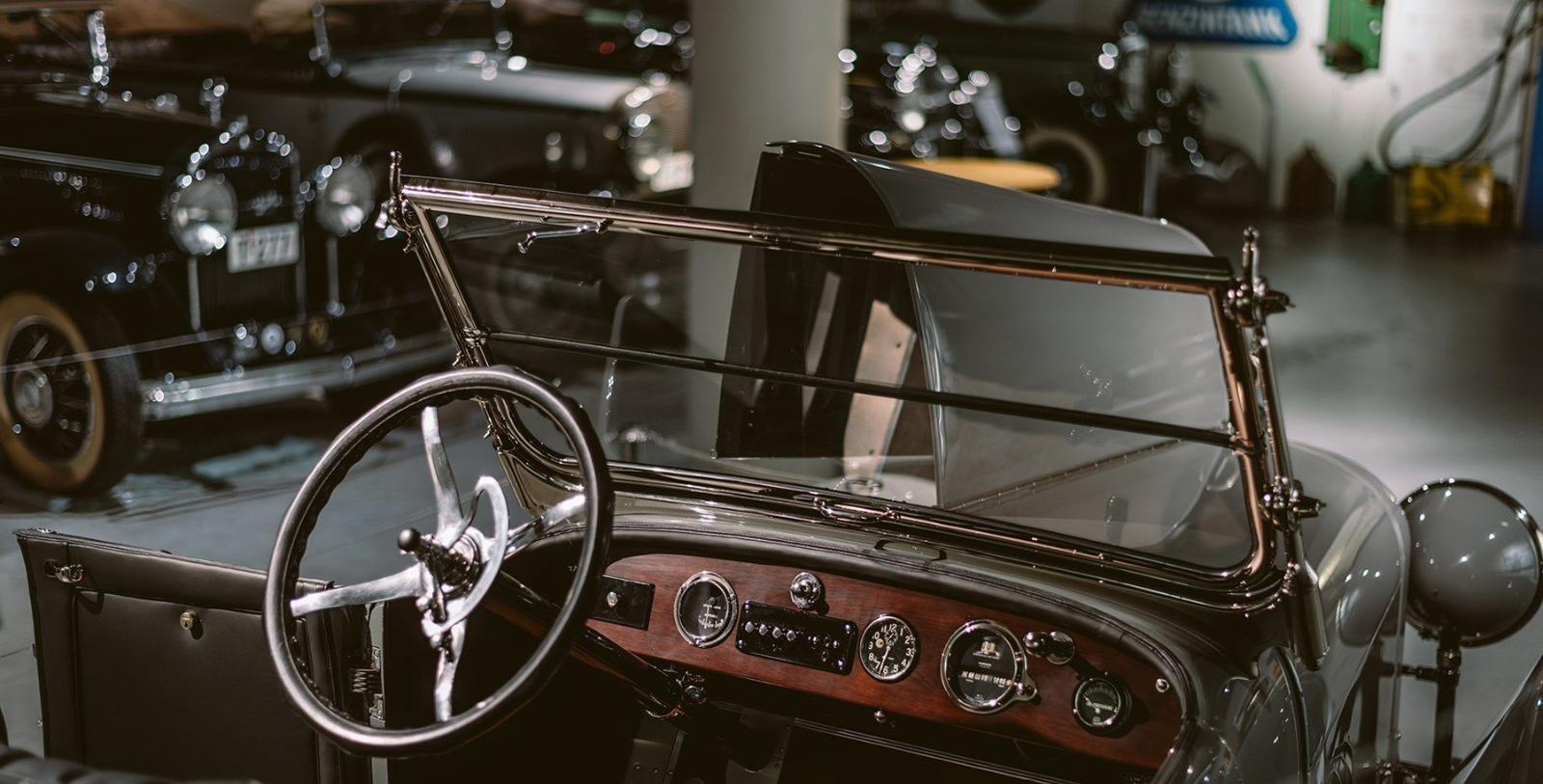
- Cruise into the past at the hotel’s vintage car collection. Known as the “Geiranger Opel,” due to the Mjelvas’ collaboration with German automaker Adam Opel, these sturdy vehicles were developed to tackle the steep roads and hairpin turns found throughout the region, boasting an improved turning radius and more robust engines. They first took to the streets of Geiranger right before World War I, ferrying hotel guests around the area. At their peak during the 1930s, around 50 of the hardy automobiles were in use in the village. Sadly, the cars caught the eye of occupying forces during World War II and much of the fleet was seized, leaving under a dozen in operation. The Mjelva family took great pains to track down and restore the wayward vehicles, and guests staying at Hotel Union Geiranger can appreciate their efforts today. In fact, ten of these vintage cars remain operational and can still be hired out for a chauffeur-guided drive around the village.
Explore
- Explore the untamed wilds of the Geirangerfjord, from its thundering waterfalls to its thick mountainside forests crowned by snow-covered peaks. Recognized as a UNESCO World Heritage Site in 2005 for its exemplary fjord features and unparalleled beauty, the Geirangerfjord is the true epitome of this dramatic geographical formation. With its steep, crystalline rock walls that soar skyward nearly a mile or more (1,600-1,700 meters) and plunge to a depth of as much as 853 feet (260 meters), this archetypic fjord is a majestic monument to a glacier’s plodding, landscape-shaping march millennia ago. The best ways to take in this stunning scene are either from the water during a boat or kayak tour or from one of the area’s several overlooks, like Flydalsjuvet and the Geiranger Skywalk on Dalsnibba mountain.
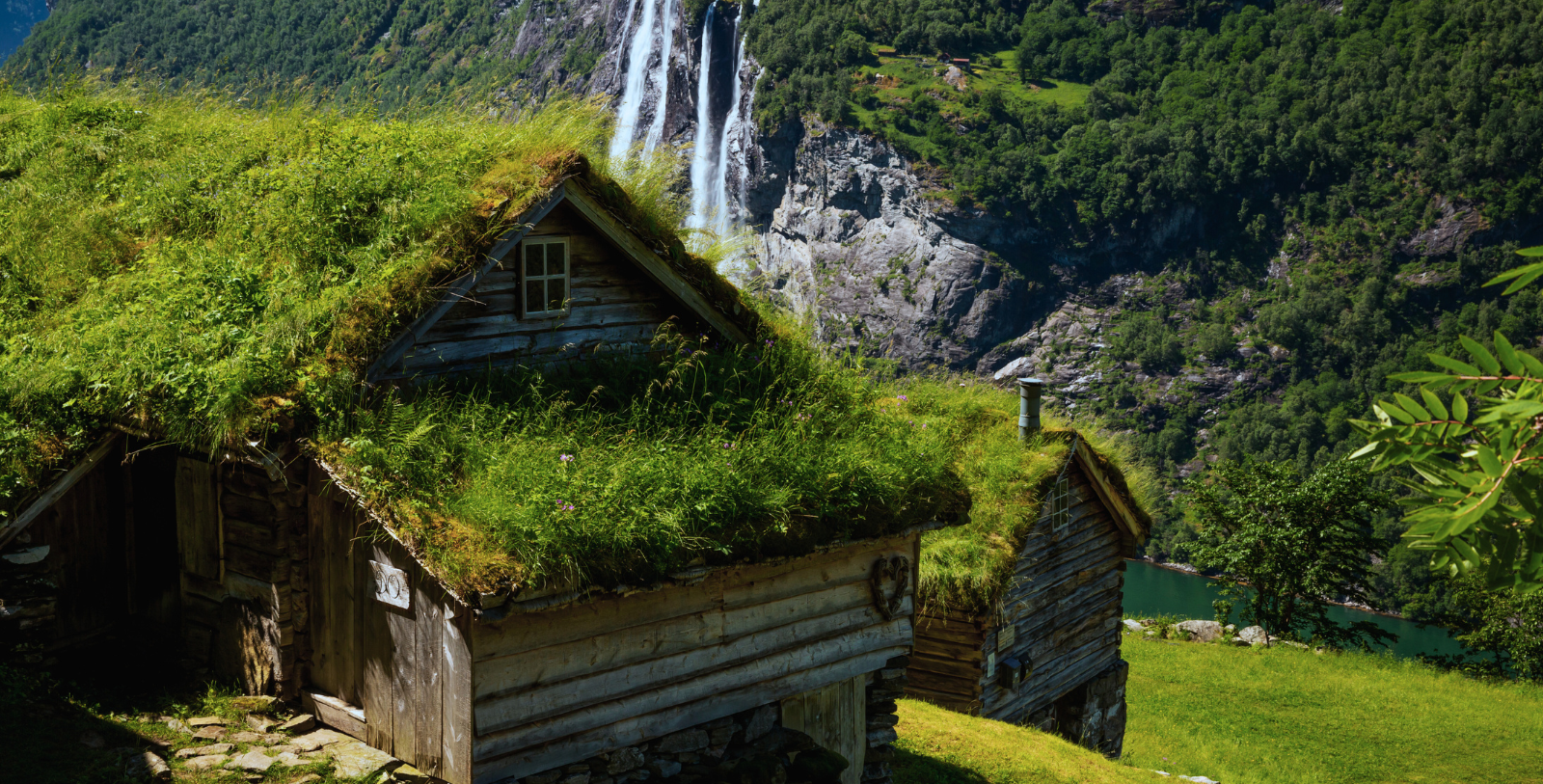
- Wander through the pastoral village of Geiranger. This quaint hamlet at the head of the Geirangerfjord is well worth exploring. Charming wooden homes lend a sense of time and place, while various shops offer the perfect place to search for a memento of one’s adventures. One place visitors certainly won’t want to miss is Geiranger Sjokolade, the local chocolate factory. Housed in historic boathouses crafted out of timber, with enchanting rooftops covered in grass and flowers, it makes for a sweet stop for a snack and some souvenirs.
- Witness the remnants of the Geirangerfjord’s agricultural past, as well as the tenacity of humankind when faced with adversity, at long-abandoned fjordside farms. Clinging to the mountainsides like the nimble goats that once called them home, these forsaken farms offer a glimpse into a simpler yet incredibly challenging way of life. Although there are a handful of forgotten mountain farms in the area, which were settled as early as the late Middle Ages and then later deserted due to their treacherous locations, two of the most popular are Knivsflå and Skageflå. The aptly named Knivsflå, roughly meaning “field on a sharp mountain edge,” sits 820 feet (250 meters) above the fjord, neighboring the Seven Sisters Waterfall, and was vacated in 1898. Directly across the fjord at the same lofty height rests Skageflå, a formerly wealthy goat farm that was left behind in 1916. Both are reachable by an arduous, uphill hike. However, those who are up to the challenge will be handsomely rewarded with breathtaking views of the fjord, along with an atmospheric tableau of moss-covered farm buildings reclaimed by Mother Nature.
- Uncover the natural and cultural history and environmental resilience of the Geirangerfjord at the Norwegian Fjord Center. Located just a few minutes walk across the river from Hotel Union Geiranger, this visitor center and education hub offers a fascinating look at the ecological, geographical, and social significance of Western Norway’s famed fjords, with exhibits covering the geological processes that carved the Geirangerfjord’s impressive landscape, its biological diversity, and the people who have lived there.
Experience
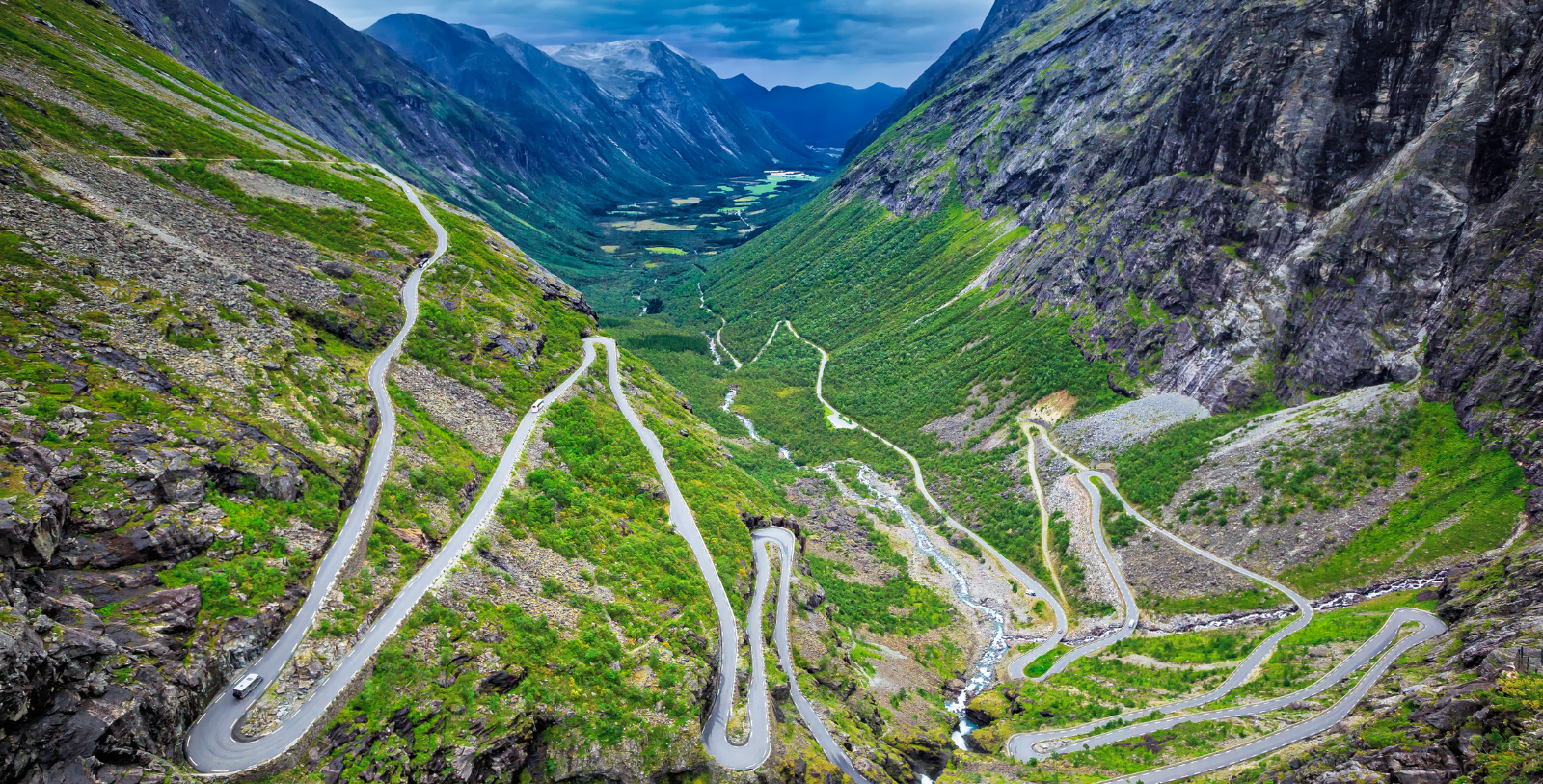
- Experience the twists and turns of life in Fjord Norway on the Geiranger – Trollstigen Tourist Road, or “The Troll Path.” One of the country’s official scenic routes, and arguably its most famous, Trollstigen’s dizzying hairpin bends (11 altogether) through the mountains are equally as iconic as the breathtaking views it offers. This serpentine mountain pass opened in 1936 and has been drawing wanderlusting road warriors, intrepid travel writers, and car commercial filmmakers ever since. Along the way, be sure to enjoy a pitstop at Ørnesvingen, meaning “The Eagle’s Bend.” Located along a stretch of the route known as Ørnevegen (or “The Eagle Road”), this panoramic overlook touts a sweeping vista of Geiranger and the fjord beyond.
- Feel the mist of Geirangerfjord’s waterfalls as they thunderously careen down the cliff face. Several waterfalls call the Geirangerfjord home, most notably “The Seven Sisters,” De Syv Søstre in Norwegian, “The Suitor,” or Friaren, and “The Bridal Veil,” or Brudesløret. The Seven Sisters gets its name from the waterfall’s seven separate streams that are said to resemble the hair of seven maidens. As the story goes, each of the sisters is unmarried, and “The Suitor,” which pours into the water on the opposite side of the fjord, does his best to court them and win the heart of one lucky lady. Nearby, “The Bridal Veil” waits patiently, dropping delicately over the edge of the cliff like a dainty veil laid over the rocks. The best way to take in either of these waterfalls is from the water below during a boat or kayak tour. Alternatively, those wanting a different perspective of Geirangerfjord’s waterfalls can also go in search of Storseterfossen. Though not as jaw-droppingly impressive as some of the other waterfalls in the area, this slightly hidden gem is the only waterfall in the area that hikers can actually walk behind. Fascinatingly, one pathway that leads there was made by sherpas from Nepal and features hundreds of stone steps.
- Get out on the water and drink in the majesty of the Geirangerfjord during a fjord cruise, RIB tour, or kayak adventure. There is no better way to experience the fjord’s untouched beauty than from the heart of it all. From leisurely cruises through three distinctive fjords to adrenaline-pumping fjord safaris on a high-speed RIB (rigid inflatable boat) to arm-powered sea kayaks that can get paddlers up close and person with the likes of the “Seven Sisters” waterfall, there is an on-the-water expedition to suit travelers and itineraries of all sorts. Lucky boaters may even enjoy an appearance by an extra-special tour guide or two: porpoises!
Taste
- Taste the bounty of Geirangerfjorden at Hotel Union Geiranger’s onsite dining venues. Serving since 1970, Restaurant Fjorden is the hotel’s resident buffet, featuring a bottomless feast of homemade Norwegian cuisine made with seasonal, locally sourced products. Right next door, Restaurant Julie, named for one of the hotel’s original stewards, Julie Mjelva, offers elegantly plated à la carte dishes with a side of spectacular fjord views. Café Løsta, meanwhile, serves up locally brewed beer and cider poolside, along with light bites perfect for a laidback lunch.
- Indulge in something sweet from Geiranger Sjokolade, the village’s quaint chocolate shop. This award-winning chocolate factory crafts made-from-scratch chocolates inspired by Norway’s famous fjords and produced with local ingredients, all lovingly made in the shop’s boathouse basement to ensure conditions are right for chocolatiering. Even the packaging that many of the chocolates come in is shaped like the country’s mountain peaks. Be sure to try some of the factory’s most celebrated flavors, like Norsk Akevitt (made with aquavit and marzipan), Kraftkar (made with melted blue cheese), and the caramelly Vesterås (made with melted Norwegian brown cheese and summer honey from a local farm).
- Start the day with sveler, or Norwegian pancakes. Prominently served onboard ferries, as well as cafés throughout Norway’s west coast, the svele can be eaten warm or cold and are traditionally filled with a selection of toppings, like buttercream, sweet brown cheese, jam, sour cream, honey, or sugar before folding in half to enjoy alongside a cup of coffee. Sveler are as historic as they are delicious. Hailing from the 1300s, these quintessential Norwegian treats were once made by poor farming families as a tasty way to make use of leftover sour milk from their cows before it went bad, mixing it with flour and perhaps other surplus ingredients like breadcrumbs or porridge before frying them.
- Savor stunning bird’s-eye views of the Geirangerfjord while tucking into fantastic farm-to-table dishes at a working, centuries-old mountain farm. Perched on a mountainside overlooking Geiranger and the fjord, Westerås Farm has been in the same family since 1603, passed down from father to son. The meal takes place in an old wooden barn made with boards hand-hewn by an axe, although some outdoor seating is also available, and features a small menu made with ingredients grown right there at the farm. During the visit, take some time to explore the farm, which still functions in the traditional manner passed down through the generations. Not only do goats, sheep, and llamas call the farm home, grazing upon the grass to preserve the landscape, but the farm is also the starting point for several hikes throughout the area, including the route that runs behind the Storseterfossen waterfall.

FEATURED ACCOMMODATIONS
Featured Offer
Book the Best Available Rate at this property on HistoricHotelsWorldwide.com and receive a complimentary one-year family membership (a $30 value) to the National Trust for Historic Preservation in the United States, a member of the International National Trusts Organisation.