History
Discover Le Grand Hôtel Cabourg-MGallery, which was once one of Marcel Proust’s most favorite holiday destinations.
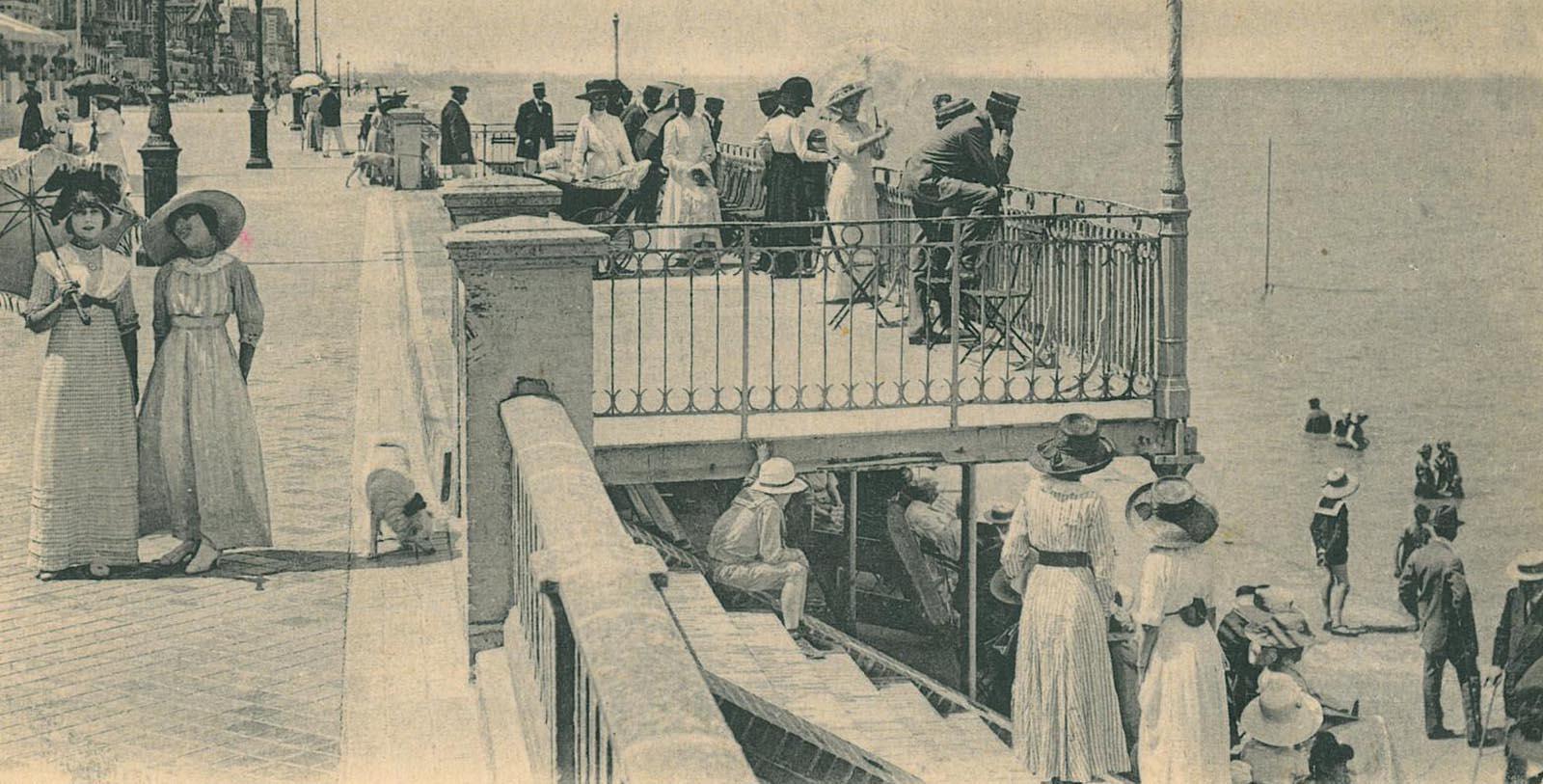
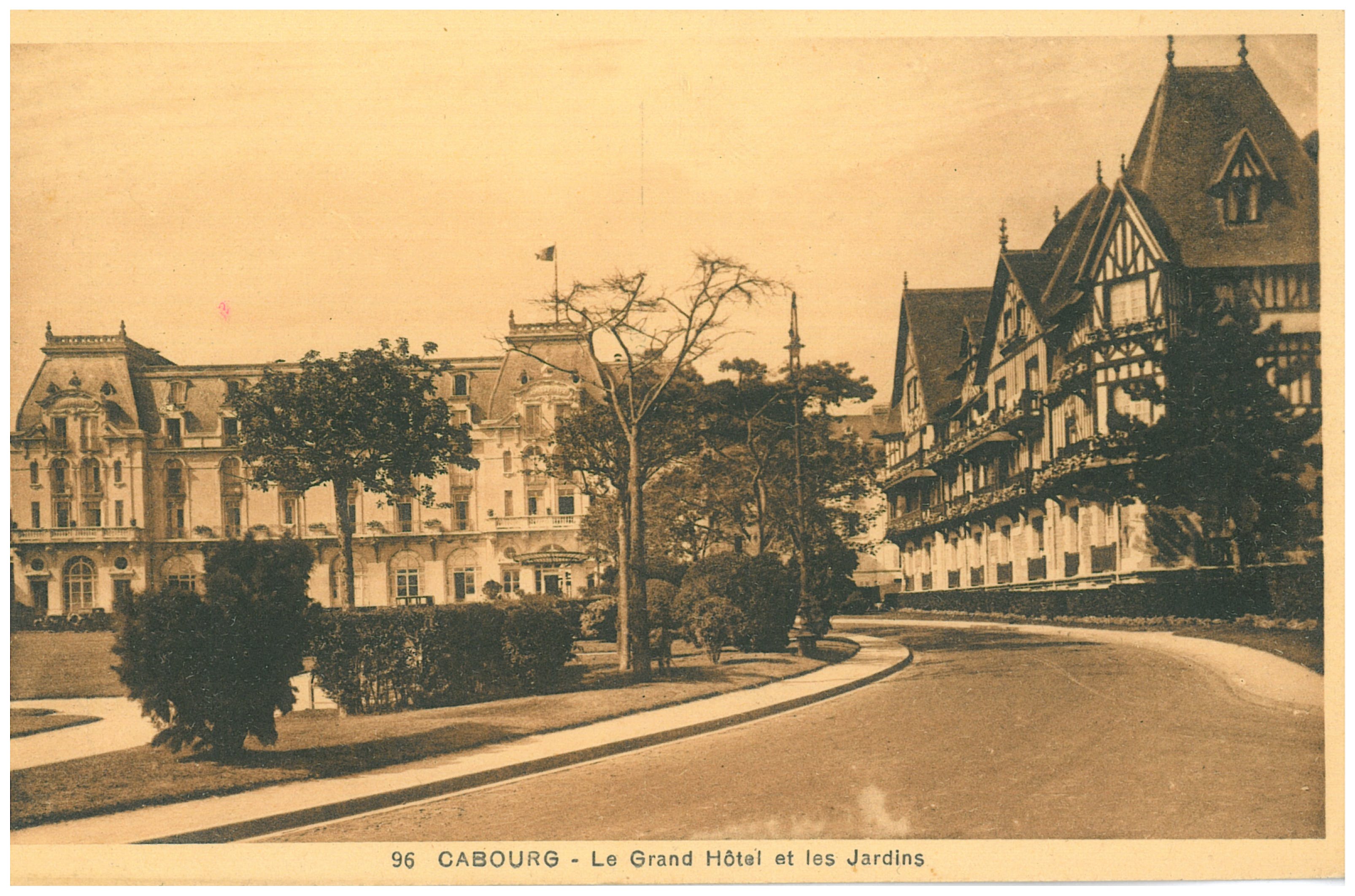
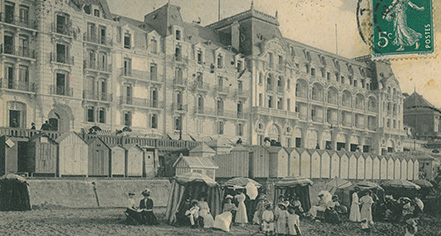
A member of Historic Hotels Worldwide since 2018, Le Grand Hôtel Cabourg-MGallery has entertained guests from across the world for more than a century. Its history harkens back to the early 19th century, when greater numbers of people began vacationing in the town of Cabourg due to its charming ambiance and intimate beaches. Ambitious hoteliers subsequently built the “Hotel de la Plage” during the 1860s as a means of better serving the village’s flourishing tourist population. But its ownership decided to completely reconstruct the building from the bottom up, reopening it as “Le Grand Hôtel” in 1907. Designed by architects Lucien Viraut and Émile Mauclerc, many hailed the new Le Grand Hôtel as an architectural masterpiece. Word of the luxurious building spread quickly, attracting many creative people to the hotel. The most famous among them was the world-renowned French author, Marcel Proust. Having first learned of the destination during his youth, Proust became regular guest from the time the building reopened until the eve of world War I. He regularly resided in one room on the fourth floor, Room 414, although he occasionally on the fifth floor for better warmth and privacy. Proust often strolled along Le Grand Hôtel's neighboring beaches for long walks, drawing literary inspiration from both the building and its gorgeous scenery. The hotel left a clear impact upon his life, too, as it as the basis for a fictional seaside resort that appeared in his celebrated novel, In Search of Lost Time. In the book, a resort called the “Grand-Hôtel at Balbec” was strikingly similar to Le Grand Hôtel, right down to its imaginary architectural details. Due to the profound influence, it left on Marcel Proust, the French Ministry of Culture registered the Grand Hôtel as a historic monument in 1993. The building is one of the best-preserved examples of Belle Époque-style architecture in France, with its original façade astounding visitors to this day. The Grand Hôtel is now part of the AccorHotels’ family of luxury holiday destinations, specifically its esteemed “MGallery by Sofitel” collection.
Hotel Timeline
The Location
Straddling the Côte Fleurie in the historic French region of Normandy, Cabourg is a bucolic seaside hamlet that has existed for centuries. This quaint, charming village has existed since the time of William the Conqueror, who used Cabourg as a military staging ground in his fight to rule the area. (Since William was also born out of wedlock, he spent much of his early life fighting against rebellious vassals who wished to see him deposed as the Duke of Normandy.) But outside of its brief connection to the future King of England, Cabourg remained a quiet fishing village for generations. In fact, the town was only home to around 200 people at the height of the French Revolution. It would not be until the mid-19th century that the skyline of modern Cabourg began to emerge. In the 1850s, a visionary businessman named Henri Durand-Morimbau traveled to the sleepy hamlet, whose arrival heralded great change for Cabourg. Recognizing that the Norman coast possessed the ability to become a popular vacation destination, Durand-Morimbau scoured the countryside in pursuit of the perfect place to accommodate a wonderful boutique hotel. He soon found Cabourg and decided to erect the “Hotel de la Plage” through his organization, the Société des Bains de Mer. Many other tourist attractions subsequently debuted in the decades that followed, including dozens of spas, storefronts, fine restaurants, and newer hotels. A beautiful casino called the “Casino de Cabourg” even opened right next door to the magnificent Hotel de la Plage, which was completed remodeled into the “Le Grand Hôtel” in 1907.
By the dawn of the 20th century, Cabourg had been reborn as a thriving resort community. Its picturesque, tree-lined streets and gentle ocean air allured hundreds of guests each year. At first, only wealthy Parisians made the trip out to experience the town’s country charm. But as train travel became far more ubiquitous, scores of French families from middle-class backgrounds journeyed out to Cabourg regularly. Still, the village continued to attract all kinds of illustrious individuals from across the world, such as Edouard Thierry and Louis Hart. Even the great Casino de Cabourg hosted many entertainers over the years, too, such as Edith Piaf, Gilbert Becaud, and Charles Aznavour. Yet, Cabourg’s most celebrated guest was the famed French author, Marcel Proust. Originally vacationing in the nearby village of Illiers as a child, Proust began frequenting Cabourg after completing a brief stint in the French military during the late 1880s. He fell in love with the Hotel de la Plage and its successor, Le Grand Hôtel, often spending long amounts of time in the latter from 1907 to 1914. Guests often caught sight of Proust strolling along the Plage de Cabourg deep in thought or musing around the interior of the Casino de Cabourg. In fact, Cabourg had left such an impression upon the author that he used it as the inspiration for the fictional town of Balbec in his renowned novel, In Search of Lost Time.
Today, Cabourg continues to be a popular holiday destination, with thousands of people making the trek out to the town’s brilliant shoreline. Central to the town’s prestige is Le Grand Hôtel and its proximity to its many amazing beaches. Local businesses in Cabourg also offer a variety of outdoor activities to try, such as parasailing, windsurfing, and canoeing. Additional attractions, like mini-golf and go-karting, are located nearby, too. But the town itself possesses many more exciting cultural destinations. Casino de Cabourg is still open and continues to host many enthralling musical acts. The Hippodrome de Cabourg—founded in the 1920s—stages electrifying horse races year-round, as well. Visitors will also gain spectacular views of the surrounding shoreline from the magnificent Marcel Proust Boardwalk, named in honor of Cabourg’s most cherished adopted resident. Cabourg is even the home to an exciting film festival for years, which has been attended by the likes of Isabelle Adjani and Vanessa Paradis. Cultural heritage travelers can also venture out into the surrounding Pays d’Ague valley to visit the many medieval villages that dot its landscape. From there, they can then head over to the numerous landmarks scattered across the region, such as Dives-sur-Mer, the ancient city of Caen, and the D-Day invasion sites. Only two hours away from Paris, the Grand Hôtel Cabourg is a wonderful place to start an unforgettable vacation.
The Architecture
Designed by architects Lucien Viraut and Émile Mauclerc, Le Grand Hôtel Cabourg - MGallery is among the finest examples of Belle Époque architecture in Dijon. Ambitious hoteliers had originally constructed Le Grand Hôtel during the 1860s as a means of better serving Cabourg’s flourishing tourist population. But its ownership decided to completely reconstruct the building from the bottom up in 1907, entrusting Viraut and Mauclerc with its design. To that end, the men chose the unique architectural aesthetics of France’s Belle Époque period. The architectural style of the Belle Époque was quite ubiquitous across France—specifically Paris—at the height of the Victorian Era. Belle Époque architectural actually drew its inspiration from a range of earlier forms that included Moorish Revival and Renaissance Revival-style architecture. More recent architectural styles also constituted aspects of Belle Époque architecture, such as the palatial designs of 17th and 18th century French châteaus. Perhaps the most famous style to emerge within the greater umbrella of Belle Époque architecture was that of Art Nouveau. Defined by its ornate interior designs, Art Nouveau was best represented by Hector Guimard’s wonderful Castel Béranger in 1898. The name “Belle Époque” specifically referred to a time in European history marked by its technological advances, pristine artwork, and relative peace. While the Belle Époque is a historical period relevant to most Western countries, it specifically applies to France and the life of the French Third Republic (1870 – 1914). Belle Époque architecture was eventually phased out during the 1920s in favor of a new style known as “Art Deco.” Its emphasis on modernity seemed to better represent Western culture as it emerged from the aftermath of World War I.
Famous Historic Guests
- Marcel Proust, author best remembered for his novel, In Search of Lost Time.
Film, TV and Media Connections
- La Boum (1980)