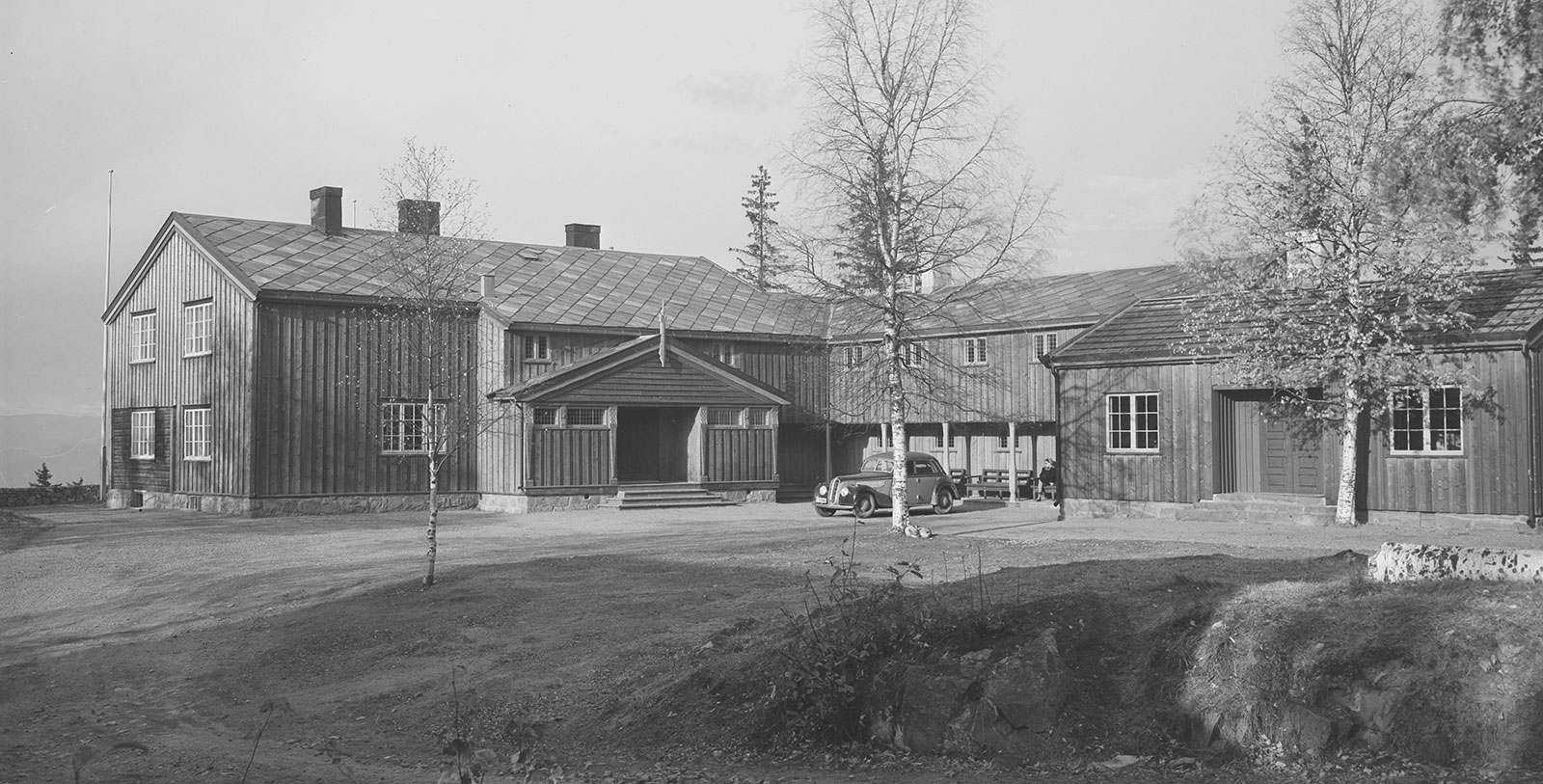

a car parked in front of a building

History

Discover Lysebu, which was originally built during World War I by architect Magnus Poulsson.

Lysebu was constructed in the years following World War II, in which the United States was defined by the Civil Rights Movement and the Cold War.

Lysebu was originally built during World War I by architect Magnus Poulsson and belonged to famous Norwegian ship owner Anton Fredrik Klaveness. With Poulsson’s supervision, the location was renovated after World War II to serve as the new site for The Danish-Norwegian Cooperation Fund. Danish Admiral Carl Hammerich and his Norwegian wife, Borghild Hammerich, began collecting money from Danish socialites in order to send food to Norway during World War II. After the war ended, the remaining donations were used to establish The Danish-Norwegian Cooperation Fund on March 1, 1946. Today, the organization raises cultural awareness of the relationship between Denmark and Norway by several educational mediums. Among these activities include courses on culture, history, and language; seminaries; providing scholarships; participating in exhibitions and tradeshows showcasing Danish-Norwegian history and culture; and publications with relevant material.

Lysebu was given to The Danish-Norwegian Cooperation Fund as a gift in the spirit of brotherhood on September 6, 1947. It was declared as a haven to, “provide all Danish and Norwegian men and women of all professions a home to work or study in.” It was launched with a strong emphasis on youth as well as members of the educational system, such mainly teachers, librarians, and journalists. Shortly thereafter, the organization purchased its second location, Schæffergården, to serve the same purpose. In order to fund the organization, The Danish-Norwegian Cooperation Fund constructed and modernized Lysebu and Schæffergården to include a conference and meeting center. Today, the two building’s still fund the organization with its cultural awareness pursuits.
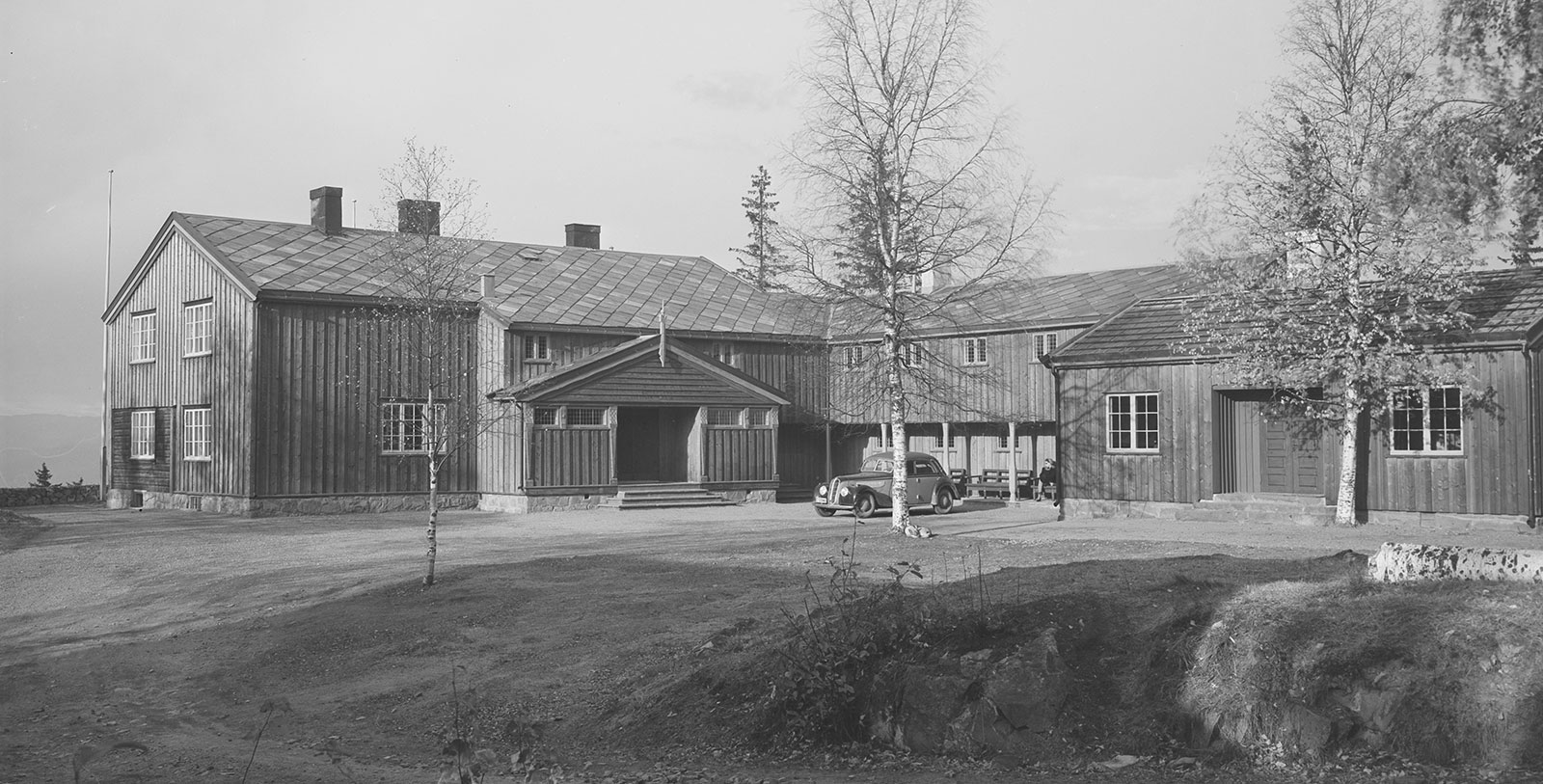
a car parked in front of a building

Hotel Timeline

The original Skogstuen, now considered the beginning of Lysebu, was built north of Voksenkollen Sanatorium. A detailed building history identifies Thorvald Astrup as the architect of this earliest structure.

The property was separated out and transferred to lawyer Herman Krag, who was connected to Voksenkollen Sanatorium.

Herman Krag is credited with giving the property the name Lysebu. Under his direction, a cross-wing was added to the north side of Skogstuen, transforming the modest forest lodge into a more substantial villa-like residence.

Norwegian shipowner Anton Fredrik Klaveness purchased Lysebu from Herman Krag. From this period, architect Magnus Poulsson became closely associated with Klaveness family projects and was commissioned to design the guesthouse wing known as Kavalerfløyen.

Klaveness transferred Lysebu to his son.

During World War II, the property was taken by Norwegian Nazis and used as a recreation home for Norwegian front fighters under the name Soldatheim Ragnar Berg.

A Norwegian fundraising appeal began to create a thank-you gift to Denmark for Danish aid sent to Norway during World War II. The fundraising committee settled on Lysebu as the appropriate thank-you gift to Denmark. A written offer of 200,000 kroner was made for Lysebu and was accepted. A committee was appointed to oversee Lysebu’s furnishings and expansions so the property could serve its new cultural purpose.

The Danish-Norwegian Cooperation Fund used remaining wartime-relief donations to strengthen cultural ties between the two nations. Lysebu’s deed was transferred to Takkefondet til Danmark, and its postwar renovation proceeded under architect Magnus Poulsson and builder Martin Olsen.

Magnus Poulsson prepared architectural plans for Lysebu before the estate was formally gifted to the Danish-Norwegian Cooperation Fund in gratitude for Denmark’s wartime aid to Norway.

A new two-story Study Wing was built, containing 10 rooms for scholarship recipients. The main building was also altered with a new entrance, expanded hall, dining room, kitchen area, bathrooms, and showers.

New expansion plans for Lysebu were reported, again with Magnus Poulsson responsible for the architectural work.

Further expansion work continued, including a new wing with 21 guest rooms and changes to Kavalerfløyen for meeting and social spaces.

Lysebu’s wine cellar received Wine Spectator’s Best of Award of Excellence, listed as held since 2005.

Lysebu became a member of De Historiske Hotel og Spisesteder and also received Olavsrosa from Norwegian Cultural Heritage.

Lysebu was inducted into Historic Hotels Worldwide. Historic Hotels Worldwide is a prestigious collection of historic treasures, including more than 300 legendary historic hotels including many former castles, chateaus, palaces, academies, haciendas, villas, monasteries, and other historic lodging spanning ten centuries.

1916
1917
1918
1920
1939
1942
1945
1946
1947
1951
1955
1956
2005
2007
2011