
History
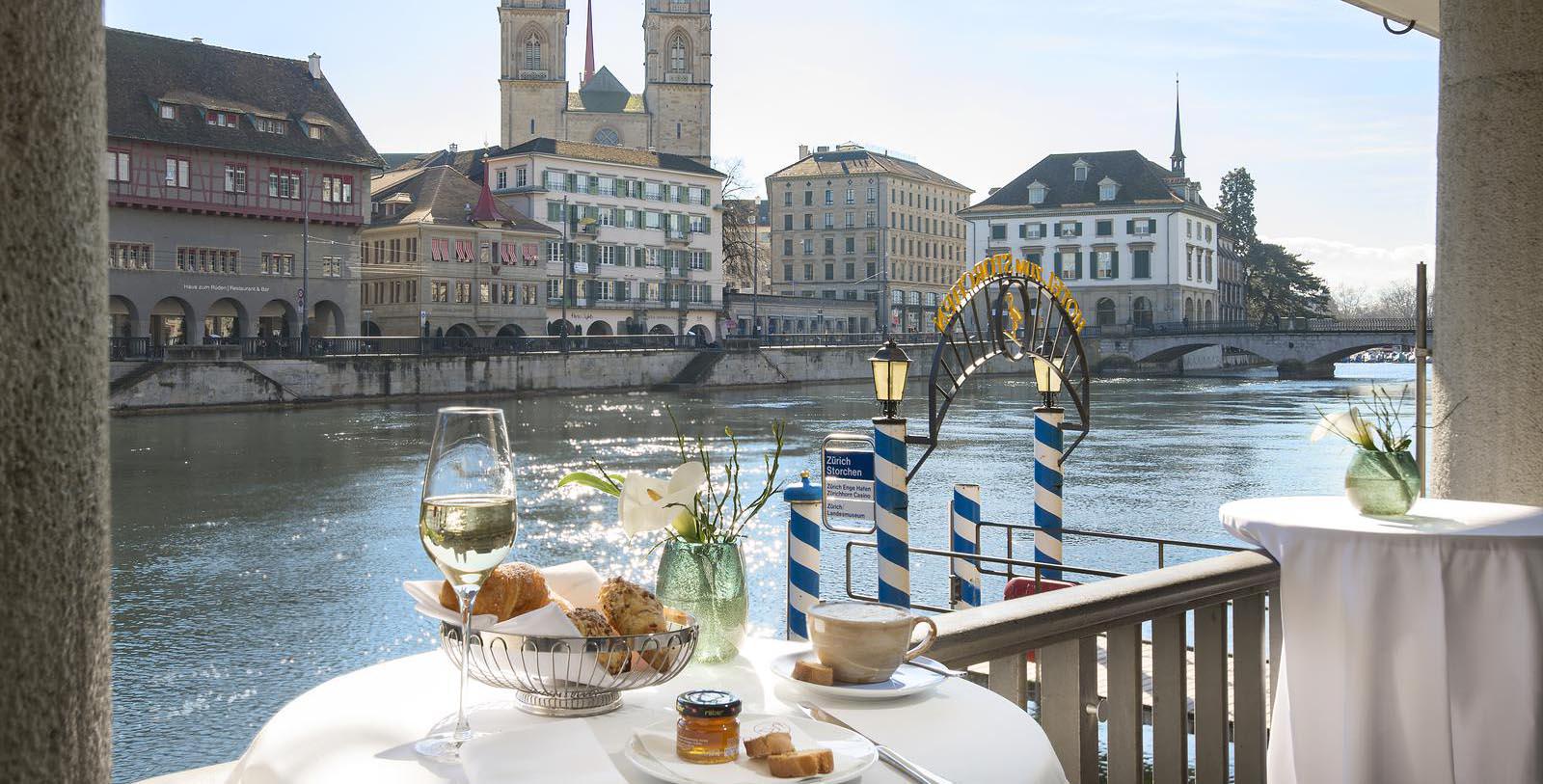
Discover the Storchen Zürich, which derives its name from a legend that suggests a black stork nested on top of its roof.
Storchen Zürich was constructed when mighty kings and towering castles ruled Europe for centuries following the fall of the Western Roman Empire. The Storchen on Zürich’s Weinplatz has been renowned for its hospitality for the better part of seven centuries. Legend says that "zum Storchen" received its name from a rare black stork that was breeding on the Storchen’s roof. It is certain that the "Hus zum Storchen" was mentioned in the tax records of the city of Zürich for the first time in 1357, and a little more than 100 years later, it was explicitly identified as a hotel. The location of the Storchen Zürich is not a coincidence, either. The Limmat was at its narrowest near the hotel, and therefore was the prime location to ford the river. Soon, many different trade routes that linked Italy and Germany intersected mere steps away from the Storchen Zürich. The city’s port soon became filled with merchants, and the newfound trade encouraged local investment. As such, the Storchen Zürich routinely remained in business as it catered to the large population of transient businesspeople that had set up shop in the city.
The Location
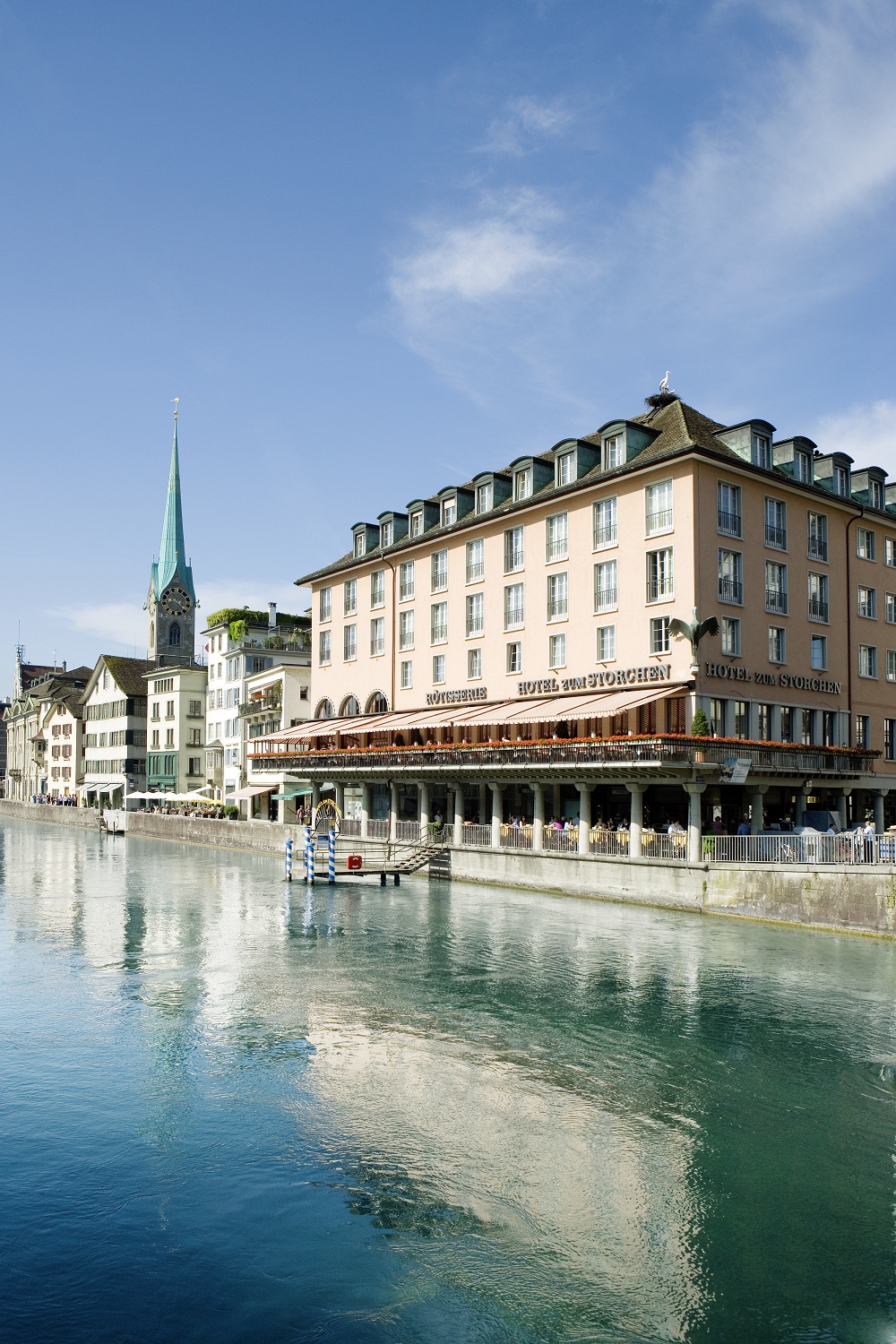
Zürich's origins date back to 15 B.C., when the Roman post of Turicum was founded as a customs station to oversee goods traveling to and from Italy. Despite the settlement being continuously inhabited, it wasn't until the 9th century that the first mention of the Teutonic town of Zürich appeared. By the 10th century, the town had acquired the status of a city, and went on to become the center of the Swiss Protestant Reformation. The motto “pray and work” was to have a profound effect on the shaping of the city, which, by the 19th century, had grown into the commercial and financial center of Switzerland. Today, most of Zürich's historic and cultural sights lie within the compact area surrounding Storchen Zürich on either side of the River Limmat. The churches and burgher houses of the Old Town are clustered in this area, as are the elegant shops of the Bahnhofstrasse. Many of the city’s impressive historic churches are within walking distance of the hotel, such as the Grossmünster, Fraumünster, and St Peterskirche.