
History
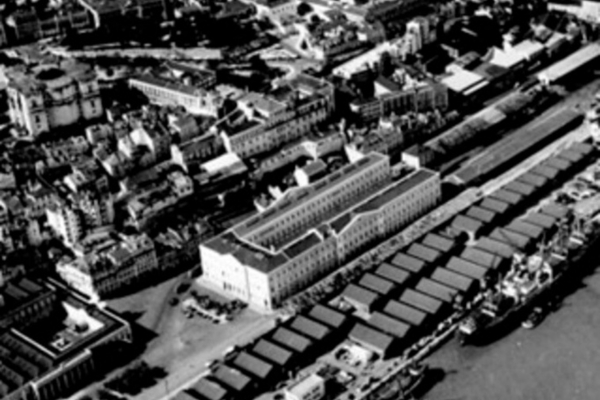
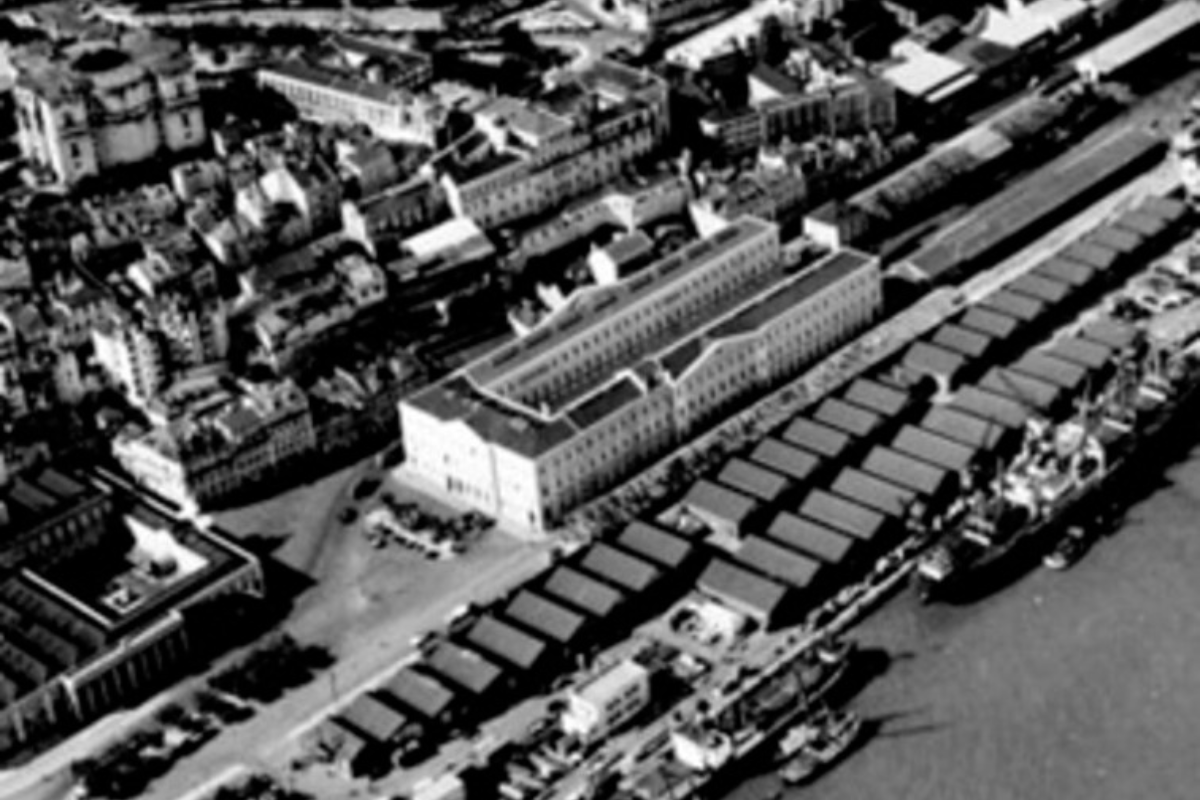
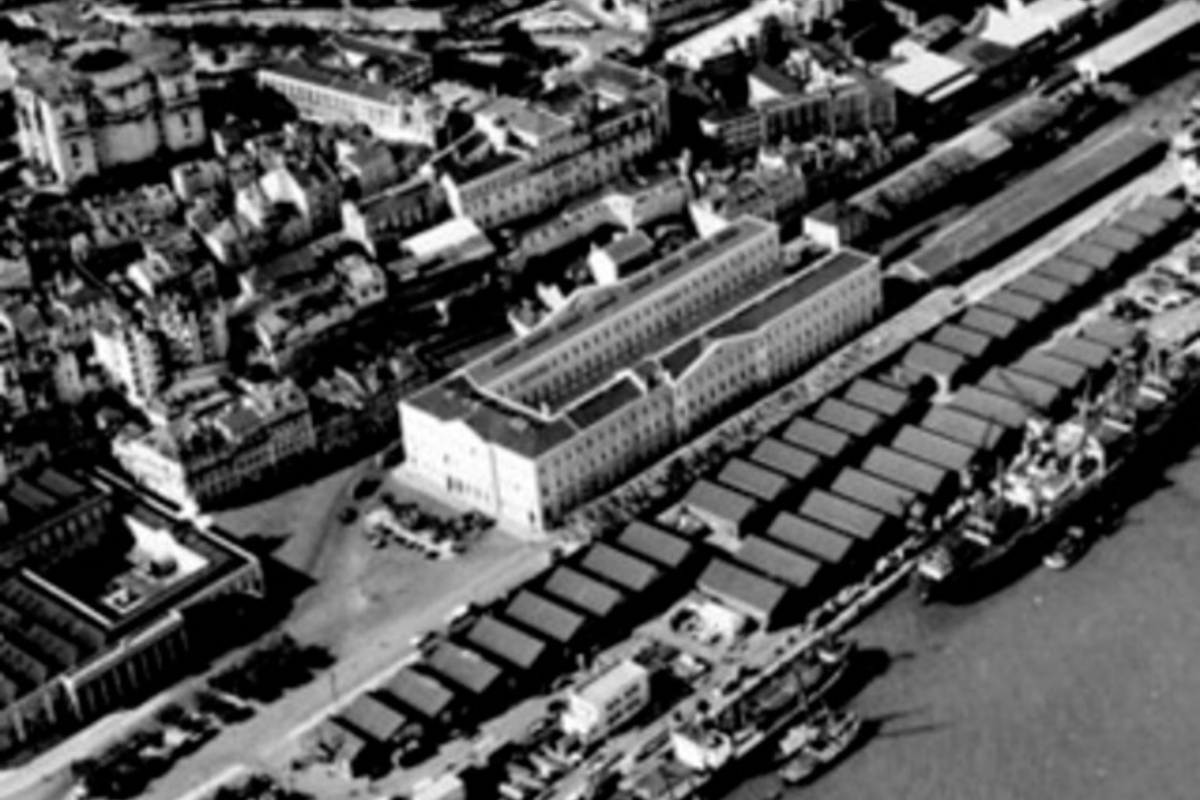
Discover The Editory Riverside Santa Apolónia Lisboa which is located within Lisbon’s most historic train complex, Santa Apolónia Station.
Traveling to Lisbon was a difficult endeavor during the first half of the 19th century. Unprecedented amounts of people had begun to enter the Portuguese capital regularly, flooding its historic thoroughfares with widespread traffic. Journeying by sea was often no better, since the local ships had a reputation for being slow and unreliable. To remedy the situation, a nobleman named José Bernardo da Costa Cabral began championing for the creation of a national railway capable of enhancing access to Lisbon. In 1844, he specifically founded the Companhia das Obras Públicas (Public Works Company of Portugal) to oversee the completion of such a project. At the center of this massive railroad network was to be a sprawling train station located right in the heart of the city. Cabral and his colleagues hoped that the facility would possess an intermodal nature, too, allowing for guests to reach Lisbon via locomotive before boarding a nearby ship destined to head overseas. However, disagreements soon arose over the exact place where the construction would commence. Originally intended to debut at the Cais dos Soldados, a chorus of engineers and architects began to advocate for the use of larger areas in other parts of the city. Among the most notable critics was Thomaz Rumball, who wished to see the prospective compound built near the Fundição de Lisboa or the Largo do Intendente. Meanwhile, Harcourt White gained considerable support for his calls to construct the station next to the Igreja dos Anjos.
An executive committee subsequently met to resolve the dispute, which settled upon the site of a former convent located along the banks of the Tagus called the “Convento de Santa Apolónia.” Official government approval for the project arrived in 1854, coinciding with the greater work taking place to develop the rail line that the station would service. (This track was called the “Caminho de Ferro do Leste,” or “Eastern line.”) Nevertheless, construction on the train station had yet to begin when the railway opened two years later. In fact, municipal leaders had to hurriedly organize a makeshift depot to service downtown Lisbon. Work finally began in 1862, with director João Evangelista de Abreu supervising its execution. Coordinating closely alongside a chief engineer, Abreu managed an impressive team featuring hundreds of laborers recruited from the surrounding villages. (Two businesses named “Opperman et. C. Constructeurs” and “M.J. de Salamanca” had arranged most of their contracts, although a steel firm run by James Blair had provided the workers responsible for making the station’s metal frame.) Together they built a sprawling 384-foot, U-shaped structure based on the plans of respected architect Angel Arribas Ugarte. Gorgeous Neoclassical design motifs characterized the station’s gorgeous facade, such as a prominent pediment, a grand portico, and visible round-arch supports. The best materials had been used as well, including limestone and wrought iron. Indeed, the new train station was quickly celebrated for its appearance before construction had even ended.
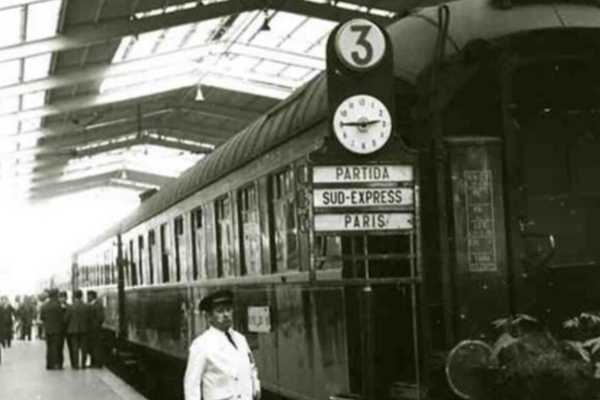
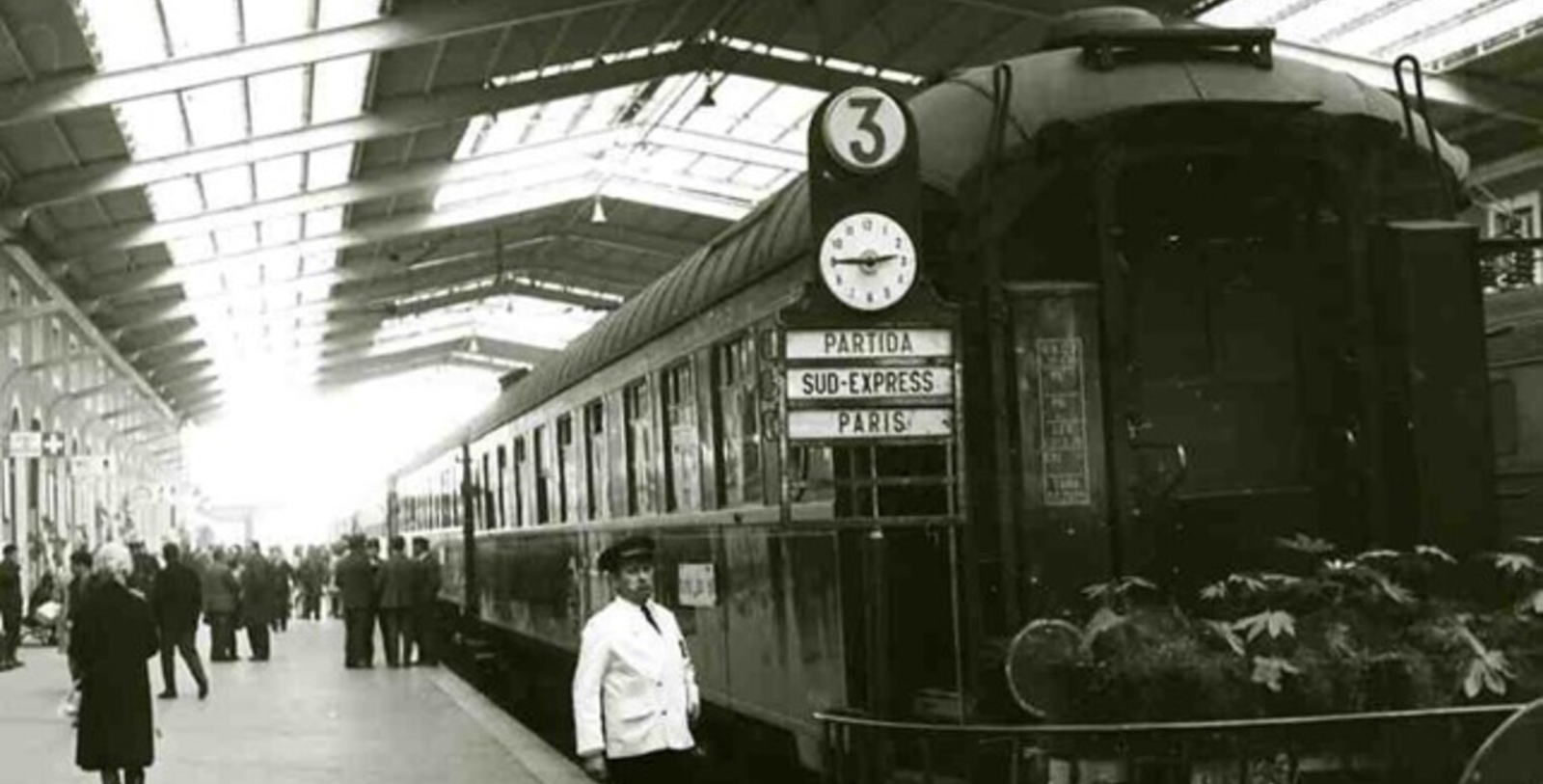
Inaugurated formally as the “Santa Apolónia Station” in 1865, the facility soon became the site of incredible economic activity throughout the remainder of the century. The state-owned company Comboios de Portugal operated a giant fleet of passenger trains known as “American cars” from inside the station, which ferried thousands of travelers across Lisbon, Portugal, and the rest of the Iberian Peninsula. Visitation continued to rise, prompting the Comboios de Portugal to connect several other popular routes to the Santa Apolónia Station, like the Cascais Line. This prosperity even led to the significant expansion of the facility several times during the 1910s, 1930s, and 1950s. The historic Santa Apolónia Station was among the most important transportation hubs in all Portugal by the beginning of the 21st century, specifically functioning as the country’s third most utilized train depot. To better accommodate the contemporary passengers visiting the Santa Apolónia Station, Sonae Capital gained the approval to convert the structure’s southern wing into a stunning, five-star hotel. Taking three years to fully renovate, this historic Portugal hotel debuted as “The Editory Riverside Hotel” to great acclaim in 2022. Offering 126 outstanding guestrooms and an upscale dining establishment called the “Impulso Restaurante,” this amazing destination has since emerged as one of Lisbon’s finest hotels. The Editory Riverside Santa Apolónia Lisboa also acts as a wonderful time capsule for the adjacent Santa Apolónia Station, as many guests can still feel the latter’s institutional heritage when staying on-site.
Hotel Timeline
The Location
While Lisbon today is among the most historic metropolises in Europe, its origins are a bit of a mystery. Historical evidence is scant regarding its founding, although recent archeological findings suggest the region was inhabited as far back as the Iron Age. Additional excavations in the heart of Lisbon have uncovered more artifacts that indicate a Phoenician presence dating back to the 12th century B.C. Those objects have enabled scholars to determine that Lisbon most likely formed as a Phoenician trading post that existed under the name “Olisipo.” Even though no record specifically cites the reasoning behind the title, some think that it was an homage to the legendary Greek hero Odysseus. Nevertheless, historians further believe that the village gradually grew into a massive city called “Felicitas Julia” following the Roman conquest of the Iberian Peninsula. The community served as the main bastion of power for the Roman Empire in the area, who developed imposing fortifications along the local waterway, the Tagus River. Those battlements specifically safeguarded the deep-water port at the river’s mouth, which had begun to flourish under Roman rule. But when the Roman Empire collapsed during the 5th century A.D., the settlement passed through various hands before finally getting captured by the Visigoths. They, in turn, lost control of the city to the Moors several centuries later. The Moors subsequently reinforced the city’s defenses, transforming the locale into an imposing bastion against European knights who wished to take it back. Their work reinforcing Lisbon was masterful, as the fortifications were able to blunt numerous attacks for decades.
In 1147, the Moorish defenses were put to the ultimate test when the Portuguese king Afonso I attempted to seize the city amid the Second Crusade (and the greater Portuguese Reconquista). At the head of a massive army, Afonso I managed to wrestle control away from the Moors following a dramatic four-month-long siege. Now known as “Lisbon,” the city quickly emerged as an important commercial center in the nascent Kingdom of Portugal. Despite its rising economic status, the Portuguese Royal Family held its official court several hundred miles away in Coimbra. But King Afonso III decided to relocate the royal residence to Lisbon in the mid-13th century, thus making it the capital for the entire kingdom. Lisbon thrived due to its newfound political significance, with successive generations of Portuguese monarchs investing heavily into its continued development. Some of the most notable projects involved King Dinis I’s creation of the Studium Generale and the massive renovations that King Fernando I did to the ancient Castelo de São Jorge. Perhaps the greatest work to transpire occurred during the reign of King Manuel I, who oversaw the widespread urbanization of Lisbon. Among the best structures that he commissioned at the time included the Torre de Belém (Belém Tower) and the Paço da Ribeira (Ribeira Palace). Manuel had obtained much of the wealth to finance the construction via the great riches that had begun to flow into Lisbon’s harbor from Portugal’s newly created distant colonies. The amount of trade conducted became so great that Lisbon eventually established itself as one of Europe’s greatest cities by the end of the 16th century.
This renaissance came to an unfortunate end when a massive earthquake caused catastrophic damage throughout the city in 1755. Undeterred, the residents banded together to rebuild most of Lisbon in a matter of years. Spearheading the revitalization efforts was Sebastião José de Carvalho, Portugal’s prime minister. He worked closely with a team of architects to redesign much of Lisbon’s historic districts, creating many new buildings in a simple, yet gorgeous style of Baroque architecture that became known as “Pombalino.” (The moniker was an homage to Carvalho, whose royal title was the Marques de Pombal.) Lisbon resumed its place as a prominent European community for many years, even as war, political instability, and economic depression periodically impacted Portugal in the 19th and 20th centuries. In fact, the city only continued to grow, as epitomized by the creation of a magnificent new thoroughfare that bisected the heart of Lisbon called the “Avenida de Liberdade.” (The boulevard specifically debuted at the height of Europe’s Belle Epoque period in the 1890s.) Following the country’s integration into the European Union at the start of the 21st century, Lisbon has solidified its standing as an elite, internationally renowned metropolis. Its rich character has inspired thousands of contemporary travelers to visit every year, placing it on par with other popular destinations throughout the Mediterranean Basin like Venice and Rome. Indeed, Lisbon’s many fascinating historic sites—including the Torre de Belém, the Paço da Ribeira, and the Castelo de São Jorge—have been essential toward maintaining this incredible international interest. Most of those historic sites have also contributed to the creation of Lisbon’s spectacular UNESCO World Heritage Site, which encompasses large tracts of its downtown core.
The Architecture
The Editory Riverside Santa Apolónia Lisboa today stands as a brilliant example of Classical Revival-style architecture. Also known as “Neoclassical,” Classical Revival architecture itself is among the most common architectural forms seen throughout the world today. This wonderful architectural style first became popular in Paris, specifically among French architectural students that studied in Rome in the late 18th century. Upon their return, the architects began emulating aspects of earlier Baroque design aesthetics into their designs, before finally settling on Greco-Roman examples. Over time, the embrace of Greco-Roman architectural themes spread across the world, reaching destinations like Germany, Spain, and Great Britain. As with the equally popular Revivalist styles of the same period, Classical Revival architect found an audience for its more formal nature. It specifically relied on stylistic design elements that incorporated such structural components, like the symmetrical placement of doors and windows, as well as a front porch crowned with a classical pediment. Architects would also install a rounded front portico that possessed a balustraded flat roof. Pilasters and other sculptured ornamentations proliferated throughout the façade of the building, as well. Perhaps the most striking feature of buildings designed with Classical Revival-style architecture were massive columns that displayed some combination of Corinthian, Doric, or Ionic capitals. With its Greco-Roman temple-like form, Classical Revival-style architecture was considered most appropriate for municipal buildings like courthouses, libraries, and schools. But the form found its way into more commercial uses over time, such as banks, department stores, and of course, hotels. Examples of the form can be found throughout many major cities, including London, Paris, and Lisbon. Architects still rely on Classic Revival architecture when designing new buildings or renovating historic ones, making it among the most ubiquitous architectural styles in the world.
Film, TV and Media Connections
- Night Train to Lisbon (2013)