History
Discover The Fullerton Hotel Sydney, an internationally renowned architectural marvel that was once Sydney’s iconic General Post Office building.
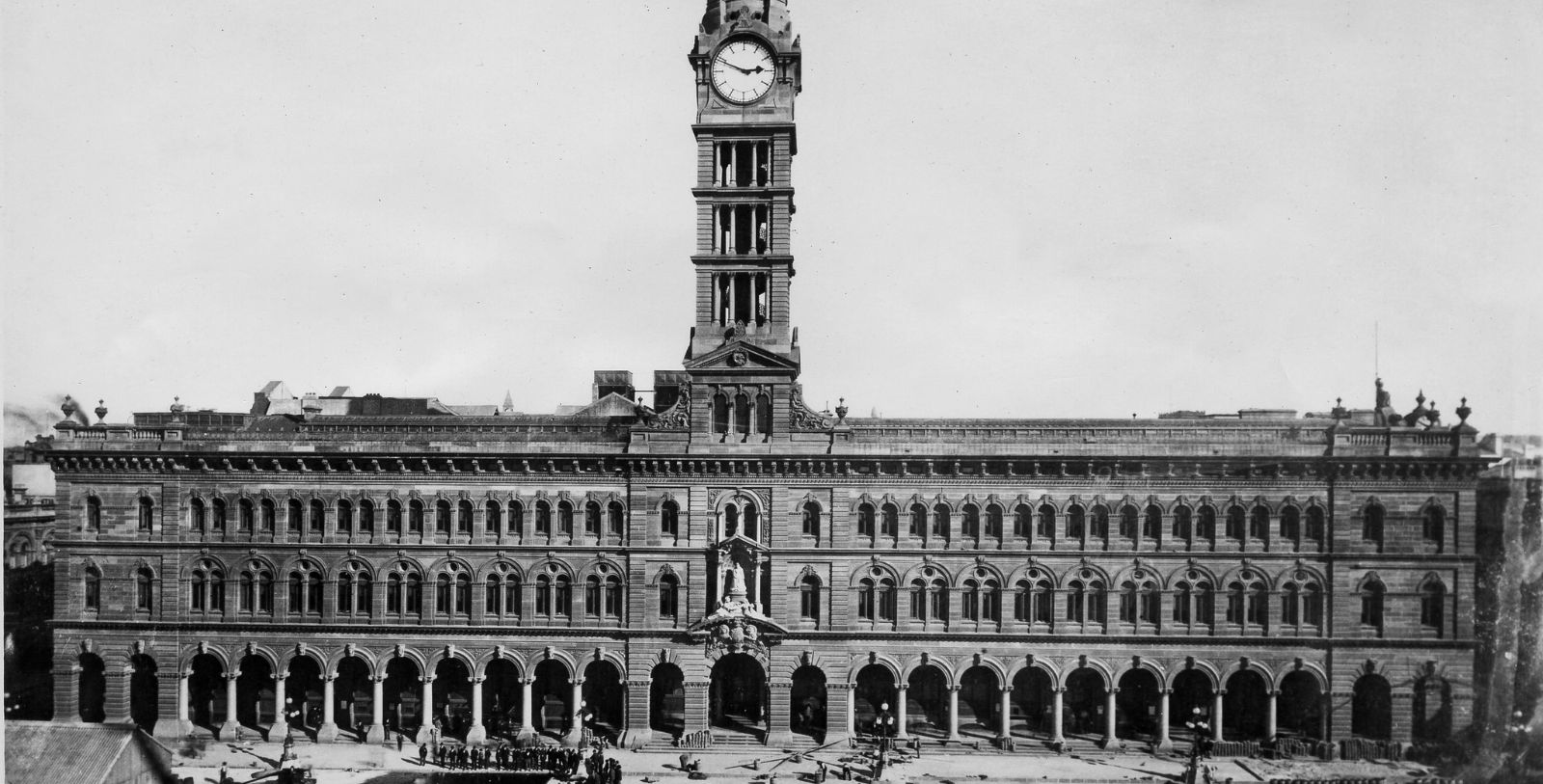
Around the beginning of the early 19th century, Sydney, Australia, was just a remote frontier outpost in the developing New South Wales colony. The settlement specifically functioned as the regional administrative center, providing many kinds of integral civil services for countless settlers. One of the most important responsibilities was the transportation of mail, then the lone way the colony’s inhabitants could communicate with the outside world. To that end, community leaders opened a rudimentary post office inside the home of a Sydney resident before finally establishing a more formal office during the 1830s in a police station. The post office was quickly inundated distributing the colony’s mail. This activity only increased as Sydney’s population steadily grew to greater numbers. The facility became very cramped as a result, its staff gradually coming to feel overwhelmed by the confining nature of the rooms on-site. While city officials eventually installed a couple of additions onto the post office, it nonetheless remained ill-equipped to handle the surging demand for mail. In 1862, the colonial government determined another facility was needed to appropriately resolve the situation. Temporarily moving all postal activities to a wooden structure elsewhere in Sydney, the officials commissioned the first Colonial Architect of New South Wales, James Barnet, to spearhead the design of the second building.
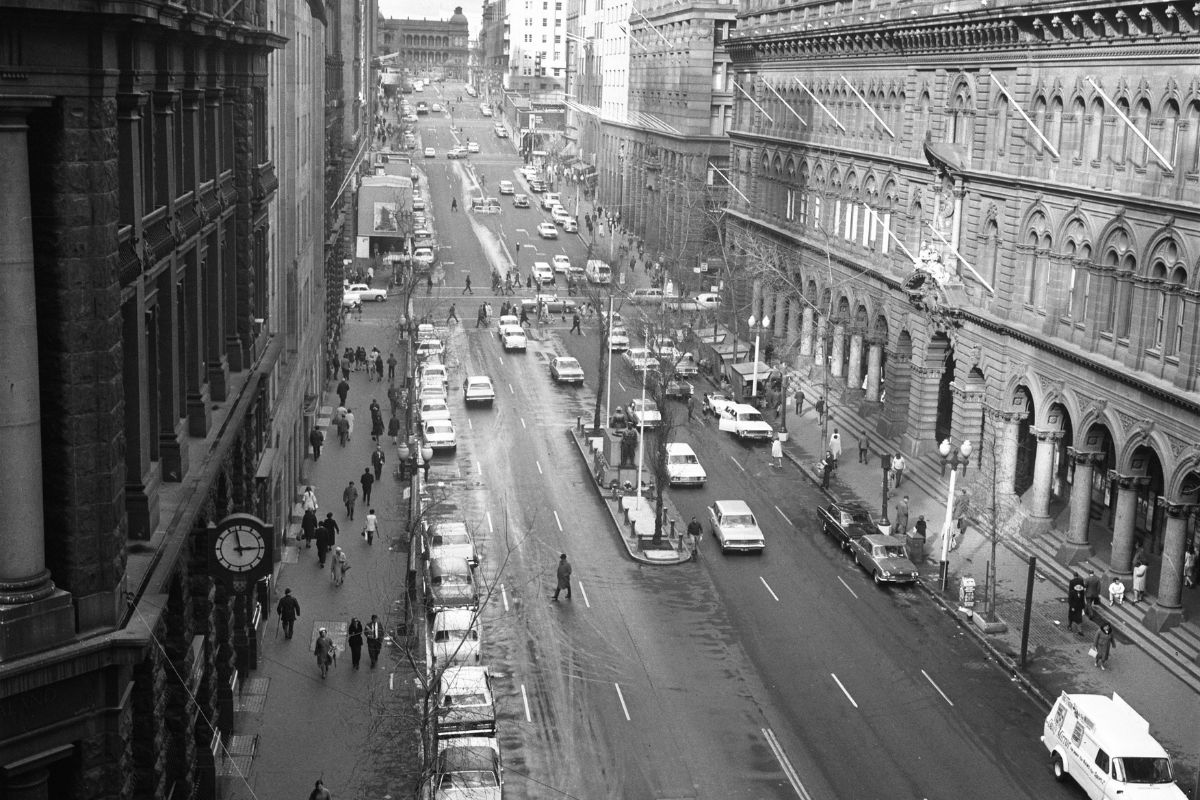
Barnet created a magnificent multistory compound meant to revolutionize Sydney’s skyline. He looked to the Italian Renaissance for inspiration, drafting his schematics to resemble the palazzos found in Florence and Venice. Impressed, the New South Wales legislature approved Barnet’s blueprints and permitted construction to start in the mid-1860s. Working in tandem with a contractor named John Young, Barnet spent the next several years developing his masterpiece in the heart of downtown Sydney. Hundreds of laborers were soon scurrying across the structure’s enormous scaffolding, meticulously setting the beautiful Pyrmont sandstone that constituted the exterior walls. Over time, the building came to possess a gorgeous arcade, as well as intricately carved mezzanine galleries and expertly crafted domed vaults. Barnet’s team installed stunning classical aesthetics inside the structure, such as lavish Greco-Roman columns, evocative bass reliefs, and ornate ceiling coffers. When the first portion of Barnet’s new General Post Office made its much-anticipated debut in 1874, Australians hailed him for its ingenious design. Nevertheless, Barnet continued to enhance the site’s layout, initiating a larger expansion that saw its size doubled along an accompanying public square called “Martin Place.”
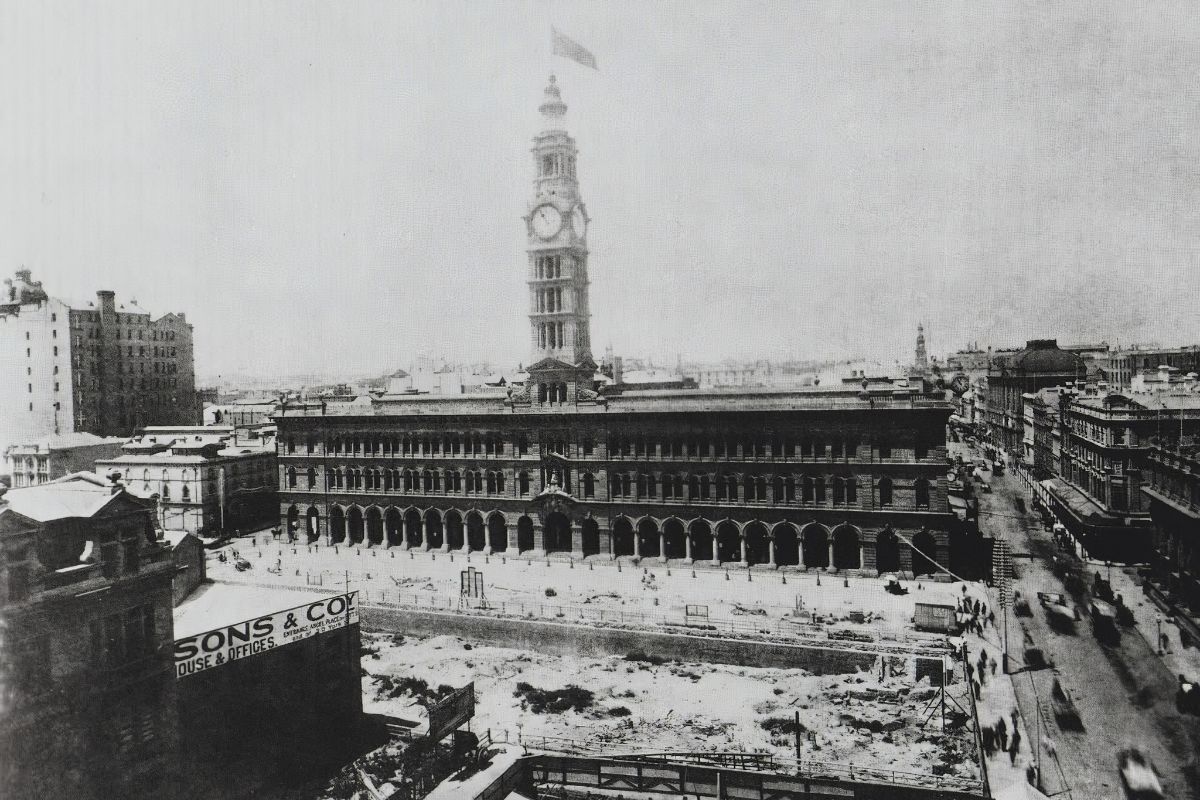
Central to this extension was the creation of a marvelous colonnade, which featured a breathtaking array of sculptures that noted English artist Thomas Vallance Wran had mounted amid the early 1880s. Numbering two dozen in total, the figurines depicted fictional personifications of various nations as a way of symbolizing the General Post Office’s ability to transcend distance when ferrying the mail. (Other spandrel statues of Italian sculptor Tommaso Sani accompanied Wren’s work as well, although they were seen as controversial due to their comical representations of real-life personalities.) The most noteworthy addition to the General Post Office was the campanile Barnet affixed toward the center of the complex. Standing almost 230 feet in height, the picturesque tower epitomized the architectural vision Barnet had conceived for the building. The edifice was even engineered to hold functional bells and a fully operational clock! While work on the entire structure concluded in 1891, the colonial government still instituted periodic renovations throughout the following decades. The General Post Office arose as a cherished landmark in Sydney at the same time, too, with its distinctive architectural composition becoming a source of endearment among the local population.
The building’s clock tower was a particularly popular community icon because of its accurate timekeeping and meteorological forecasts. (A crew inside the tower hung colored flags from the structure, which reported incoming weather events.) In 1901, the General Post Office took on the role as headquarters for the whole national mail service in the wake of Australia’s unification. Referred to as the “Australian Post,” the agency subsequently occupied the historic General Post Office for the rest of the century until its privatization in the 1990s. In consequence, Australian politicians leased the compound to the enterprising Sino Group, retaining only a single space to act as a neighborhood post office. The new owners went about diligently transforming the structure into a brilliant hotel, taking great pains to ensure that its architectural integrity remained perfectly intact. (The preservation of the building’s architecture eventually led to its inclusion in Australia’s Commonwealth Heritage List in 2009.) Known as “The Fullerton Hotel Sydney” today, the complex has earned an enviable reputation as one of the finest places to visit in Sydney. Its rich heritage continues to be an especially fascinating part of its identity, attracting travelers from across the planet. Few places in Sydney are truly better for a memorable vacation experience than this renowned historic destination.
Hotel Timeline
The Location
Currently Australia’s largest city, Sydney is a metropolis with a fascinatingly rich heritage. Its history harkens back millennia to the Aboriginal Australians, who had lived around modern-day Sydney for some 30,000 years. Making significant use of the region’s deep natural harbor, the Aboriginal Australians developed a network of small coastal communities that thrived on fishing. The villages themselves were arranged via a clan system, which observed uniquely different sets of cultural practices, beliefs, and languages. Among the most prominent clans to exist around the Sydney area were the Dhaurg and Dharawal people, who dominated the local political landscape for generations. It was a branch of the greater Dharawal clan that met British explorer James Cook when he “discovered” the site in the late 18th century. Although they were unsuccessful in establishing peaceful relations with the local Aboriginal Australians, Cook and his men nonetheless recorded their interactions. They also collected a variety of plant life and charted the undulating geography, making some of the first maps of the region. Calling the location “Botany Bay,” Cook and his crew left to report their findings to British Parliament after spending several days in the area.
The research inspired a second expedition led by Arthur Phillip in 1788. Finding Cook’s original landing spot unsuitable for a prospective settlement, Phillip sailed his fleet of 11 ships further into the harbor to a place he called “Port Jackson.” He founded a small community along the shoreline that he named “Sydney” after the sponsor of the trip, Thomas Townshend, 1st Viscount Sydney. The little community then emerged as the nucleus of a colony referred to as “New South Wales.” However, the city’s population was convicts since New South Wales was meant to function as a penal colony. Sydney’s colonial administrators directed Sydney to be small in stature as such, surviving just on subsistence agriculture. British authorities forbade the presence of large industry especially shipbuilding. The imposed economic conditions and harsh environment made life in early Sydney difficult, resulting in periodic famines that could only be resolved through infrequent trade with Great Britain. Relations with the local Aboriginal Australians remained tense, leading to episodic bouts of conflict. Bands of convicts and free settlers harbored their own hostilities to the colonial government in Sydney, spawning a few short-lived rebellions that called for increased autonomy.
The situation in Sydney turned for the better in the early 19th century, once adventurous pioneers managed to find a path to the fertile plateaus that laid west beyond the surrounding Blue Mountains. Having access to lucrative farms, Sydney finally enjoyed a stable food supply that encouraged more settlement. International trade soon flourished, incentivizing even more British settlers to relocate to Sydney. Helping to spur this development was a new colonial governor named Lachlan Macquaire, who oversaw a series of public building projects that raised dozens of hospitals, churches, and schools. Macquaire received significant help from Francis Greenway, a convict-turned-architect who created the Georgian-style motifs that defined most of Sydney’s historic downtown for decades. Macquaire refined the local legislative codes that gave more civil rights to the residents living in Sydney, regardless of their criminal background. These legislative changes continued after Macquaire’s departure in 1821, culminating with the elimination of forced convict migrations during the 1840s. Sydney was then declared a city, thereafter, functioning as the home for the New South Wales Legislative Council.
Sydney’s economy continued to expand throughout the rest of the century, leaving it in constant competition with Melbourne. Additional construction projects commenced that created iconic structures like the University of Australia, the Australian Museum, and the General Post Office. Sydney grew eclipsing over one million residents by the early 20th century. Despite its considerable influence, Sydney did not become the national capital when all the Australian colonies officially federated into the state of “Australia” in 1901. Nevertheless, the city maintained its prestigious reputation for years to come, eventually becoming one of the foremost communities in the British Empire and its successor, the Commonwealth of Nations. Its citizens even played an integral role fighting for the Allies during both World Wars, with many enlisting to serve in the legendary ANZAC Corps.
Sydney is still one of Australia’s most illustrious communities, continuing to act as the primary cultural center of the entire country. It is the destination for cultural heritage travelers when they go to Australia, finding its distinctive historical landmarks to be incredibly interesting. The most noteworthy sites include The Rocks, Darling Harbour, the Sydney Harbour Bridge, the Royal Botanic Garden Sydney, and the UNESCO-recognized Sydney Opera House.
The Architecture
The Fullerton Hotel Sydney today stands as one of the finest historical examples of Italian Renaissance Revival architecture in all Sydney. Italian Renaissance Revival architecture is a subset of a much larger group of styles known simply as “Renaissance Revival.” Renaissance Revival architecture—sometimes referred to as "Neo-Renaissance”—is a group of architectural revival styles that date back to the 19th century. Neither Grecian nor Gothic in their appearance, Renaissance Revival-style architecture drew inspiration from a wide range of structural motifs found throughout Early Modern Western Europe. Architects in France and Italy were the first to embrace the artistic movement, who saw the architectural forms of the European Renaissance as an opportunity to reinvigorate a sense of civic pride throughout their communities. Those intellectuals incorporated the colonnades and low-pitched roofs of Renaissance-era buildings, with the characteristics of Mannerist and Baroque-themed architecture. The greatest structural component to a Renaissance Revival-style building involved the installation of a grand staircase in a vein like those located at the Château de Blois and the Château de Chambord. This feature served as a central focal point for the design, often directing guests to a magnificent lobby or exterior courtyard. However, the vague nature of Renaissance Revival architecture meant that its appearance varied widely across the world. Historians often find it difficult to provide a specific definition for the architectural movement. Renaissance Revival architecture nonetheless remains among the most admired on the planet, with many government agencies taking great pains to ensure that they continue to be protected for future generations.
In addition, elements of the building highlight aspects of Classical Revival-style design. Also known as “Neoclassical,” Classical Revival architecture is among the most common architectural forms seen throughout the world today. This wonderful architectural style first became popular in Paris, among French architectural students who had studied in Rome during the late 18th century. Upon their return home, the architects began emulating aspects of earlier Baroque aesthetics into their own designs before finally settling on Greco-Roman examples. Over time, the embrace of Greco-Roman architectural themes spread across the globe, reaching destinations like Germany, Spain, and Great Britain. As with the equally popular Revivalist styles of the same period, Classical Revival architecture found an audience for its more formal nature. It specifically relied on stylistic design elements that incorporated components like the symmetrical placement of doors and windows, as well as a front porch crowned with a classical pediment. Architects would install a rounded front portico that possessed a balustraded flat roof. Pilasters and other sculptured ornamentations proliferated across the façade of the building, too. The most striking feature of buildings designed with Classical Revival-style architecture were massive columns that displayed some combination of Corinthian, Doric, or Ionic capitals. With its Greco-Roman temple-like form, Classical Revival-style architecture was considered most appropriate for municipal buildings like courthouses, libraries, and schools. But the form found its way into more commercial uses, including banks, department stores, and hotels. Examples of the form can still be found throughout many major cities including London, Paris, and New York City.