
History
Discover The Landmark London, which was originally established by Sir Edward Watkins as the Grand Central Hotel in 1899.
Sir Edward Watkin, "The Last King of the Railways," was the chairman of several rail lines and wanted to combine the lines to create the Great Central Railway, Marylebone Station, and a luxury hotel. Against fierce opposition, Watkin prevailed but not without a significant toll on his finances and his health. He suffered a heart attack before construction began in 1894 and the serving Vice Chairman, Edward Montagu, took over the project. Watkin attended the opening of Marylebone station and the hotel in 1899 but died two years later. Not initially a financial success, The Great Central Railway was sold to Sir John Blundell Maple, the chairman of furniture and upholstry manufacturing company Maple & Co, who hoped to utilize it for his company. Threatened by the emerging Warings Furniture company, Maple saw this investment as a way to ensure Maple & Co remained the leader in fitting out hotels. Maple installed a company shop in Marylebone station, as well. The hotel itself was designed by Colonel Robert Edis, whose previous work included a ballroom for the Prince of Wales' estate. Designed with a large courtyard, dramatic entrance, and contemporary amenities, such as a cycle track on the roof, the property outdid its competitors in style and class.
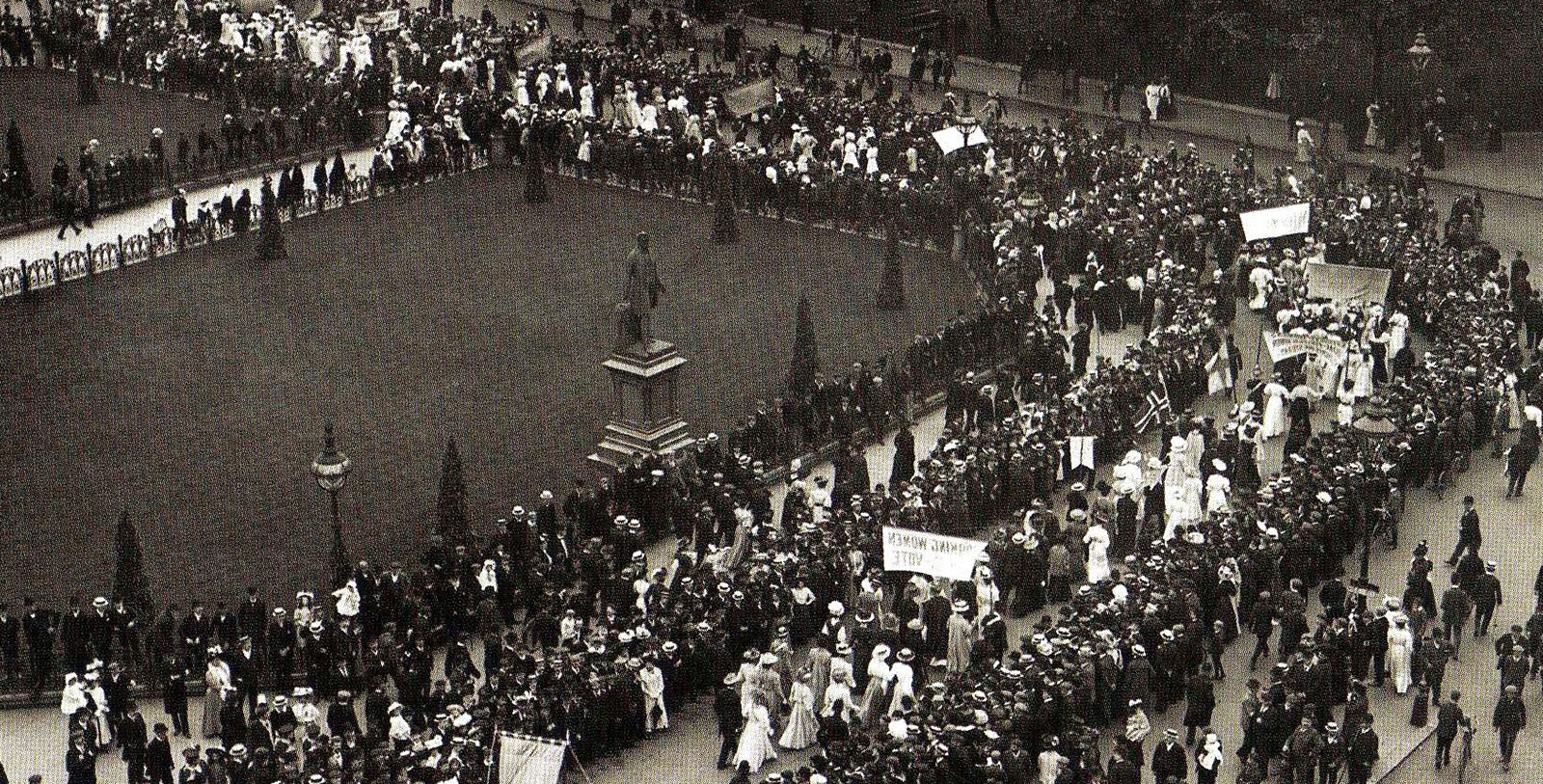
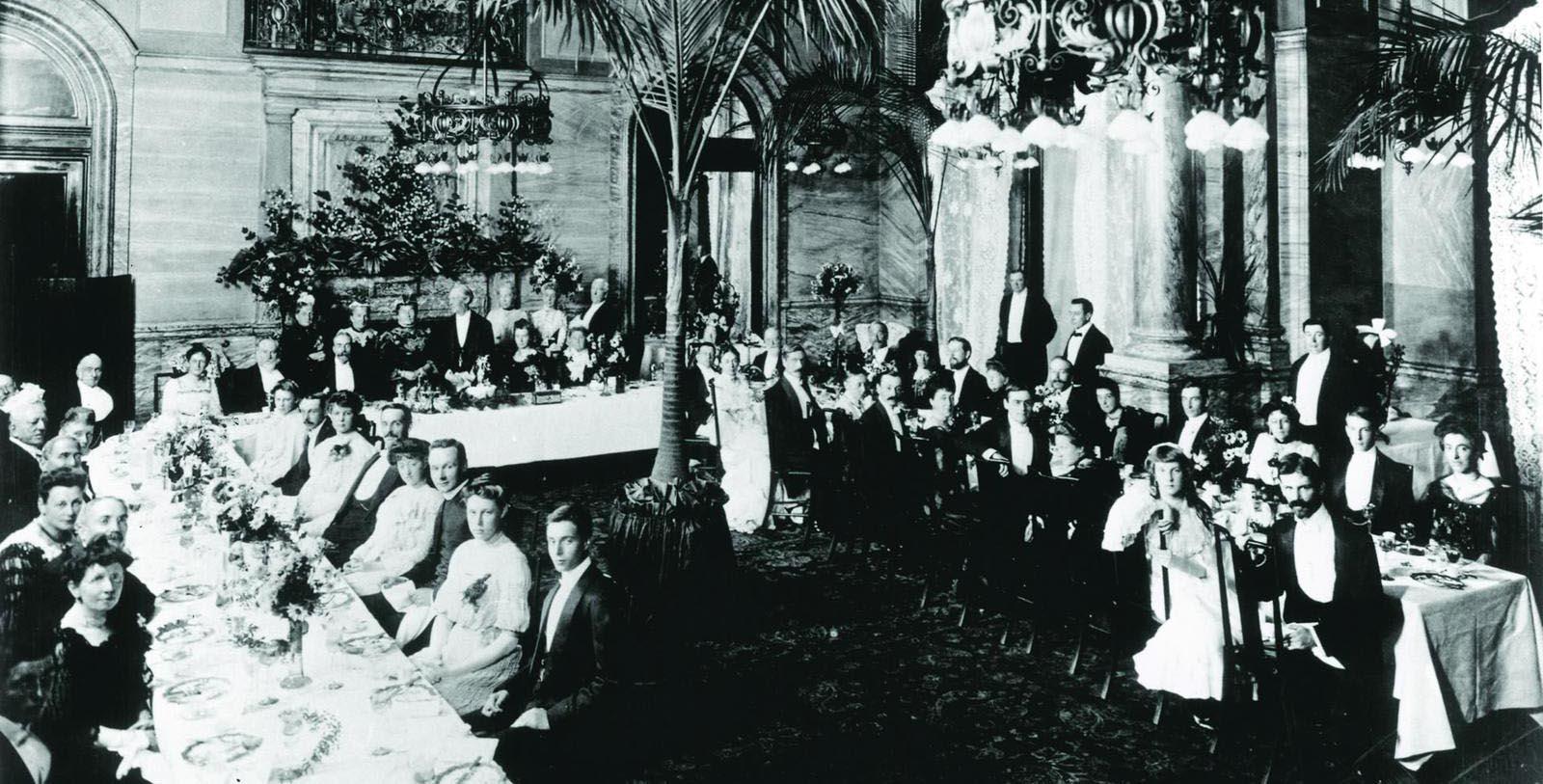
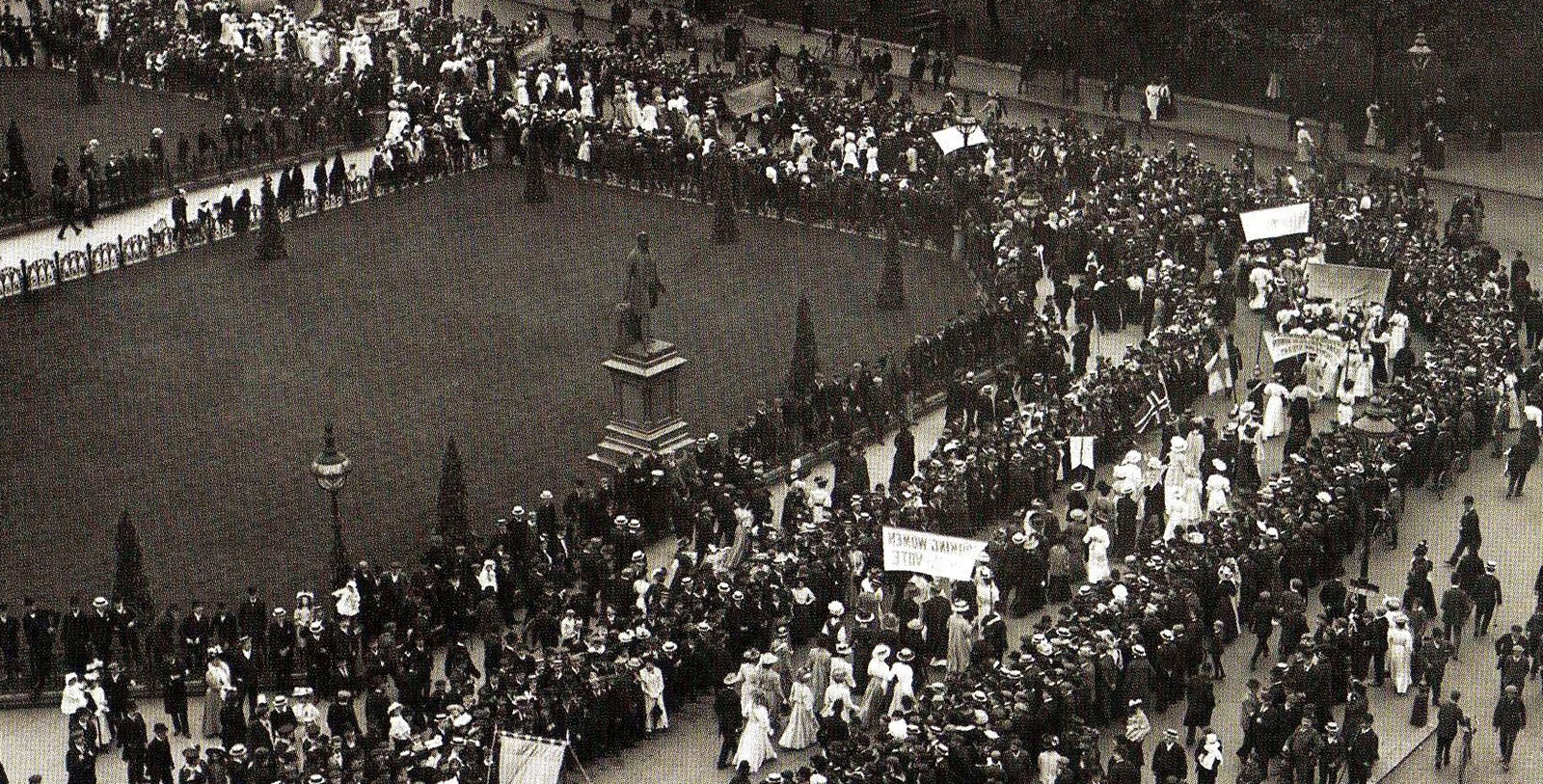
The Great Central Railway opened for use in March 1899, while Watkin’s hotel opened later that June. Watkin and his fellow business colleagues christened the building as the “Grand Central Hotel,” and threw a massive celebration to commemorate the event. Called the "Streets and Squares Bazaar," the opening ceremony was nothing but spectacular. The party was attended by some of London’s most prominent citizens, including Princess Louise, the Duchess of Fife and daughter to the future King Edward VII. While Sir Edward Watkin staged the event, his failing health meant that Sir Edward Montagu—his successor—had to preside over most of the ceremony. Guests began arriving in July of 1899 to stay in elegant guestrooms for three-and-sixpence a night. Its unrivaled allure quickly placed it at the center of some of the city’s greatest events. In 1902, the first service of Reform Judaism was held in the building’s Wharncliffe Rooms with policemen posted to guard against any civil unrest. This service would go on to become the Union of Liberal and Progressive Synagogues, which still exists today. And in 1908, suffragists from across the city threw a lavish breakfast inside the hotel to celebrate the release of their leader, Emmeline Pankhurst, from jail.
By the start of the First World War, the hotel had been requisitioned for use as a convalescent home for returning officers. By 1918, the hotel was back to its original business. Paul Paquot then managed the hotel throughout the 1920s, and into the beginning of the Great Depression. Due to his great personal financial losses, Paquot declared bankruptcy in 1930 and was found dead five years later. During the Second World War, several British officials, fed up with false propaganda put forth by their enemies, organized the Army Film and Photographic Unit. This organization would provide a much-needed counterbalance to the blatant propaganda peddled by Nazi Germany. The Great Central Hotel also served as the meeting place for the unit to interview, recruit, and billet soldiers while field training commenced nearby at Green Park and Pinewood Studios. After changing hands several times, the Lancaster Hotel Company purchased the building in 1995 and renamed it “The Landmark London.” Now a member of Historic Hotels Worldwide, it continues to be one of London’s most sought-after vacation getaways.
Hotel Timeline
The Location
The earliest known references to London’s Marylebone neighborhood dates to the reign of William the Conqueror, who first arrived in England in the latter-half of the 19th century. According to the medieval survey manuscript known as the Domesday Book, the area of Marylebone was once a rustic settlement called “Tyburn” and “Tybourne.” This remote community rested along the banks of a small stream, hence the origin of its original name. (The word “bourne” roughly meant “stream” in Old English). Inhabited by just a few dozen people, the village was not particularly known for being prosperous. In fact, the only time “Tyburn” ever appeared again in the historical record was when it was used for as an execution site by the English Crown. Various nobles presided over the land throughout the Middle Ages, with the most notable being Robert de Vere, 3rd Earl of Oxford. The earl constructed a magnificent manor, which served as the primary residence for the Earl of Oxford for the next several centuries. In time, the estate fell into the ownership of Thomas Hobson in 1544, whose son subsequently sold it to King Henry VIII of England. King Henry transformed the manor and the surrounding grounds into a marvelous deer park, a portion of which served as the nucleus for today’s Regent Park.
Despite the King’s death some three years later, the area remained under Crown control until 1614 when King James I sold it to Edward Forest. Around 110 acres of King Henry’s deer park became the property of Sir William Portman, Lord Chief Justice. He quickly constructed his own magnificent palace called “Portman Estate,” which still exists today. The rest of the manor then passed into the ownership of the Austen family, who gradually leased most of its land to various dairy farmers. John Holles, Duke of Newcastle, eventually purchased the manor itself in 1710 for a sum of £17,500. His daughter, Lady Henrietta Cavendish Holles, recognized the need for housing to accommodate London’s growing population, and commissioned engineer John Prince to create a grid system of several new streets. It was at this point that the area started to gain its familiar metropolitan appearance. Soon enough, many brilliant townhouses started to proliferate throughout the region. Meanwhile, the estate proper passed into the Harley family, which was the house of Lady Holles’ husband, Sir Edward Harley. The final heiress to the Harley family fortune, Lady Margaret Cavendish Harley, then married William Bentinck, 2nd Duke of Portland. As such, many of the most iconic landmarks in the area—like Cavendish Square and Portland Place—reflect the lasting influence that the Harleys and Bentincks had on the neighborhood.
The 5th Duke of Portland died without issue toward the end of the 19th century, so the estate went to the family of his sister, Lucy Joan Bentinck, the Baroness Howard de Walden. Some 92 acres of her estate are still present, preserved for future generations to appreciate. Yet, around the time of the Duke’s passing, the surrounding community had begun to thoroughly industrialize. More modern buildings from the Victorian Era soon defined the local skyline, as several of its streets became major thoroughfares in northwestern London. The locale attracted some of the city’s most renowned residents at the time, such as author Charles Dickens, who lived with his father on Welbeck Street during the 1830s. James Smithson also wrote the will that created the Smithsonian Institution from his home in the area. Elizabeth Barrett Browning wrote some of her amazing poetry during her time in the neighborhood, while Frédéric Chopin composed his wonderful music before moving to Mayfair. The expansion of its population eventually forced its designation as a formal county borough in 1899—a distinction that it retained for the next six decades. And later during the 20th century, the area became closely connected to The Beatles. It was at the home of Paul McCartney’s girlfriend Jane Asher that John Lennon wrote the lyrics to their band’s famous song, “I Want to Hold Your Hand.” Today, Marylebone is among London’s most cultural vibrant destinations.
The name Marylebone is actually derived from a 15th-century church dedicated to Saint Mary. Its accompanying parish was soon called “St. Mary la Bourne,” before gradually becoming “St. Mary at the Bourne.” Over time, the locals started corrupting the name to “Mary-la-bonne,” “Marybourne,” “Marybone,” and eventually, “Marylebone.” By the beginning of the 19th century, the name of the church had permanently become “St. Marylebone Parish Church.” Yet, the surrounding community had also assumed the moniker of “Marylebone.” Many local attractions had reinforced this change in identity, too, such as the Marylebone Gardens and the Marylebone Fields. Several major thoroughfares also reflected the prominence of the name “Marylebone” throughout the local community, including Marylebone Lane and Marylebone High Street.
The Architecture
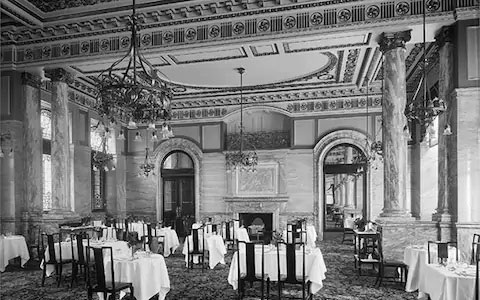
The Landmark London Hotel was originally designed by Colonel Robert Edis. A native of Cambridgeshire, Edis had studied at the Aldenham School in his youth before apprenticing under architects Edward and William Gilbee Habershon in London. He managed to break into the industry formally by serving as the assistant to Anthony Salvin, helping to restore historic medieval buildings throughout England. Edis eventually established his own career and built a strong reputation for his work with Gothic Revival and Queen Anne architectural styles by the middle of the 19th century. His primary work still involved the restoration of private houses and public buildings, although he occasionally worked on developing new structures every so often. As such, when Edis accepted the job to create Sir Edward Watkin's hotel, he borrowed heavily from his experiences with medieval design aesthetics. Relying primarily on Gothic-inspired architecture as the source of his inspiration, Edis developed what he hoped would become one of the city’s most prestigious destinations. As hoteliers in London constantly sought to outdo one another at the height of the Victorian Era, Edis specifically crafted the building to rival The Savoy and the Hotel Cecil. The hotel was designed around a vast, glazed courtyard (twice as large as The Savoy), which allowed light and air into all the bedrooms. Edis also installed a cycle track on the roof so that businessmen of the day could exercise and recover from the stresses of life.
Gothic Revival-style architecture itself was born from the Romanticism that swept through Europe in the Victorian Age. This demarcated a distinctive break from the Neoclassicism of the century prior, which drew its architectural inspiration from the Greco-Roman civilizations of antiquity. The desire for the medieval design principles of Gothic Revival architecture reflected a broader trend within Western societies—particularly in Europe—to preserve the past in some meaningful way. As such, architects took to preserving the surviving buildings from the period, while also creating new ones that mirrored the aesthetic. The most common structural elements incorporated into buildings developed with Gothic Revival style was the pointed arch. This profound feature manifested in windows, doors, and rooftop gables. Yet, it also influenced the development of entire substructures, causing the creation of such features like mock parapets, conical towers, and high spires. Other characteristics associated with Gothic Revival-style architecture included a special kind of wooden trimming known as either vergeboards or bargeboards. Porches also featured turned posts or slender columns, while the roof was often deeply pitched and lined with dormers. Architects typically used this style for rural buildings set within a historic village or town, although some in the field—such as Colonel Edis—chose it for commercial structures from time to time. Churches were perhaps the building that featured Gothic Revival style the most, as their natural layout were well-suited to showcase the best of the form.
Famous Historic Events
Army Film and Photographic Unit (1941): By 1941, the Axis nations were at the height of their power. Joseph Goebbels, the Reichsminister of Public Enlightenment and Propaganda, exaggerated their victories on the battlefield by unleashing a torrent of media across occupied Europe that overstated the might of Nazi Germany. The British military had been reluctant to engage the Germans in this war of words, for they did not wish to show the corpses of dead soldiers before the public. Furthermore, they disdained the idea of documenting their tactical blunders for the whole world to see. Yet, Prime Minister Winston Churchill calmed those nerves out of a greater fear that the Nazi propaganda may be working to stomp out the hope of liberation. To that end, the Prime Minister ordered the War Office to find a way to get professional photographers and filmmakers to the front line, where they could capture all the good that the Allied forces had achieved—and would achieve in the future. The War Office realized quickly that it was incredibly dangerous to insert those media professionals into a combat zone with no training or oversight. As such, it established the Army Film & Photographic Unit that October.
Lieutenant Colonel Hugh St. Clair Stewart selected Pinewood Studios as his headquarters, although it would take some time to make the company’s facilities ready to house military personnel. Lieutenant Colonel Stewart, thus, used the Great Central Hotel as his makeshift base of operations. The lieutenant colonel and his staff proceeded to interview their first applicants inside the building. Afterward, their chosen candidates were then billeted at the Great Central Hotel for the next four months while they completed their basic training. Soon enough, dozens of combat photographers and journalists arrived in all the major theaters of the war. Perhaps their greatest work was the motion picture entitled Desert Victory, which showcased the British Commonwealth stopping Erwin Rommel’s Afrika Korps at the First Battle of El Alamein. The film was a popular sensation, rising to become the third most watched film of the year. It even won an Academy Award in 1943. Churchill was delighted with the film, having said that: ‘It excited the greatest admiration and enthusiasm throughout the Allied world and brought us all closer together in our common task.’
Famous Historic Guests
- Lily Montagu, President of the World Union for Reform Judaism (1955 – 1959)
- Emmeline Pankhurst, founder of the Women's Social and Political Union
- Princess Louise, Duchess of Fife
Women in History
Lily Montagu: Lilian Helen “Lily” Montagu was the first person to play a major role in Progressive Judaism. Otherwise known as “Liberal Judaism,” the denomination stressed a belief in a continuous revelation linked closely to the ever-changing nature of faith. It also expressed less importance on the ritual aspects of the Jewish religion, advocating instead for a greater observation of external progressive values. While the roots of this movement originally emerged in Germany during the late 19th century, it was Montagu and her associates who helped introduce the idea of Progressive Judaism to the United Kingdom. Even though Lily grew up in a relatively Orthodox home, her family had a long history of philanthropy that served to help the poor. Her father, Samuel, for instance, was a Liberal politician who served in the House of Commons for the better part of two decades. Two of Lily’s cousins also became Liberal MPs—Herbert Samuel and Sir Stuart Samuel—as did her younger brother, Edwin. Louis Samuel—her older brother—spent years working as a political activist, going on to create the League of British Jews. Lily carried on the family torch, becoming heavily involved in various progressive movements centered around unemployment, unionization, and public housing reform. She was also a founding member of the Jewish League for Women’s Suffrage, where she sat on its executive committee and led its meetings in prayer.
Early in her life, Lily was under the tutelage of biblical scholar Dr. Claude Montefiore, a reform-oriented philanthropist and scholar. Together, they championed the spread of Progressive Judaism throughout London. The two laid the groundwork for what they called the “Jewish Religious Union” from her sister Henrietta’s house. The Jewish Religious Union would essentially function as the vehicle in which their message of Progressive Judaism would reach a wider audience. As such, the two began looking for a venue to host their organization’s first service, although they were rebuffed by the United Synagogues. Undeterred, Montagu and Montefiore reserved space inside the Great Central Hotel’s Wharncliffe Rooms in 1902. With a guard of some 300 police officers onsite to protect from any civil unrest, the two began to preach about their liberal interpretation of the Jewish faith. The service was the first of many in the city, helping to give rise to the Movement to Reform Judaism. Today, the Movement to Reform Judaism is part of the much larger World Union for Reform Judaism, which presides over an international body of some 1.8 million worshippers. Montagu herself was an important figure in the World Union for Reform Judaism, briefly serving as its president from 1955 to 1959.
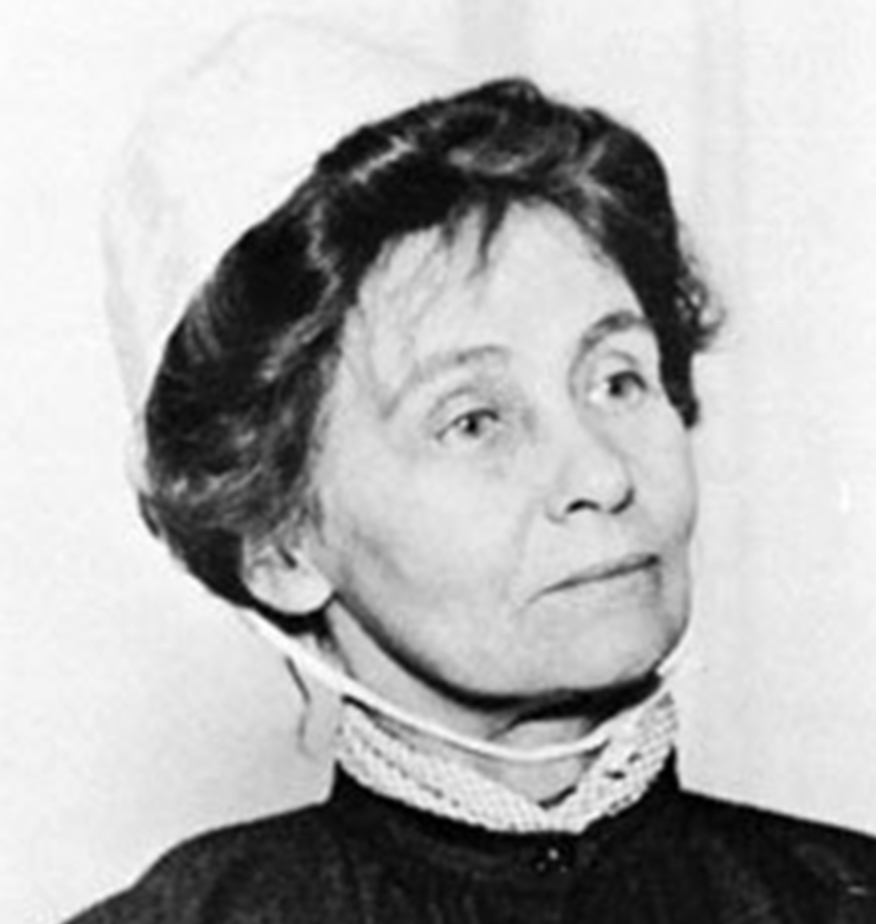
Emmeline Pankhurst: Born Emiline Goulden, Emmeline Pankhurst was a British suffragette who helped gain women the rights to vote in the United Kingdom. She became involved in the politics of women’s suffrage from an early age, joining the Women’s Franchise League at 14. When that organization fell apart, Pankhurst and her friends from the group—including socialist Keir Hardie—attempted to become members of the Independent Labour Party. However, they were all denied membership based on their sex. Undaunted, Pankhurst created her own political organization in 1903 called the “Women’s Social and Political Union,” otherwise known by its abbreviations WSPU. It was an all-women suffrage advocacy group that operated under the creed of “deeds, not words.” As such, the organization built a reputation for its ostentatious—and controversial—political actions that included assaulting police officers. Pankhurst and her contemporaries often received prison sentences for their actions, where they staged prolonged hunger strikes. In many cases, the protestors ended up being force fed by the guards. It was following one of those prison stints that the WSPU threw a magnificent breakfast feast for Emmeline Pankhurst at the Great Central Hotel. Called the “Welcome Back from Prison” breakfast, the celebration involved several keynote speeches by those in attendance.
While Pankhurst’s eldest daughter Christabel became the leader WSPU, Emmeline still emitted significant influence throughout the movement. Nevertheless, the WSPU briefly encountered a crisis in 1913, as several prominent members left the organization. Led by her two younger daughters, Adela and Sylvia, Emmeline Pankhurst became enraged when they advocated for the group to assume a more moderate way to protest. The rift in the family never healed, as Adela and Sylvia eventually went their own way. Humbled by the experience, Pankhurst called a stop to the organization’s militant suffragism upon the outbreak of World War I. She aligned her group’s support of the British government’s stand against what she called the “German Peril.” Furthermore, Pankhurst called for women to help on the Home Front, whether it involved factory work or medical care. By the end of the war, Pankhurst and the WSPU had become central figures in the White Feather Movement. The conflict produced some benefits for the Women’s Social and Political Union, though, as British Parliament passed the Representation of the People Act in 1918. This law allowed for men over the age of 21 the right to vote, as well as women over the age of 30.
As the war came to a close, Pankhurst transformed the Women’s Social and Political Union into the Women’s Party. While Christabel continued to champion the socialist policies of the rising Labour Party, Emmeline Pankhurst became increasingly more concerned with the rise of Bolshevism across Europe. As such, Pankhurst joined the Conservative Party. The Women’s Party itself did not last long—despite running several close elections, it formally ceased operating in June 1919. Emmeline Pankhurst continued to campaign for the conservatives toward the end of her life, calling for the preservation of the British Empire in the face of international communism. She was even selected to run as the Tory candidate for the Whitechapel and St. Georges in 1927. Nonetheless, Pankhurst never abandoned the push to expand the right to vote to all women in the United Kingdom. Emmeline Pankhurst ultimately died on June 14, 1928, just weeks before Parliament voted to pass the Representation of the People Act. This new law allowed for all women over the age of 21 the right to vote. In honor of her work in women’s suffrage, a statue of her likeness was raised in Victoria Tower Gardens. Historians today remain divided over her use of militant advocacy, although nearly all concede that she played a crucial role in the advancement of women’s suffrage in the United Kingdom. Time magazine has even identified Emmeline Pankhurst as one of the “100 Most Important People of the 20th Century.”