History
Discover Beekman Arms and Delamater Inn, as Franklin Delano Roosevelt began each of his four successful campaigns on the front porch.
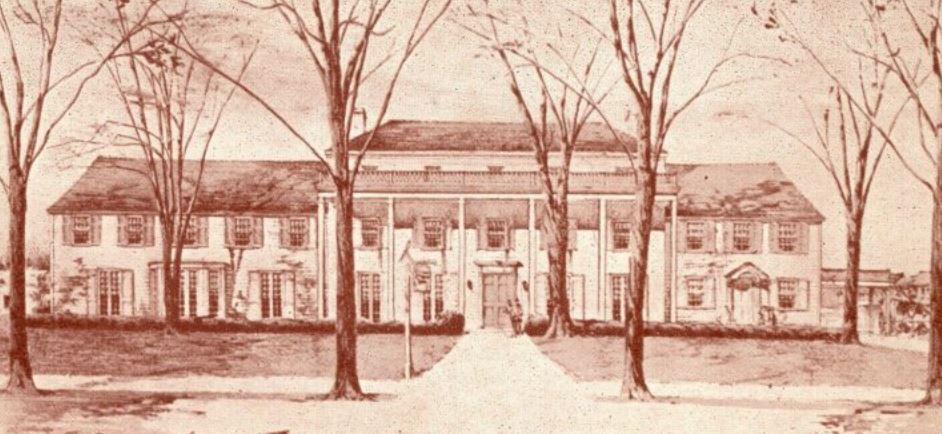
In 1704, William Traphagen established a traveler's inn, the Traphagen Tavern, at the town crossroads. Rhinebeck was then just a small settlement carved out of the forests initially inhabited by the Sepasco Native Americans. The area had been colonized since the 1680s by the Dutch, where the King's Highway—now known as Route 9—intersected the Sepasco Trail, winding its way down to the Hudson River. The Beekman Arms was added to the original tavern in 1766 and has been operating ever since. The Beekman Arms was named after the Beekman family. At the time, Judge Henry Beekman numbered prominently among the original British landowners in the Hudson Valley. Colonel Henry Beekman Jr. expanded his father's land holdings and populated them with refugees from Europe's Palatine-Rhine region. Bogardus Tavern—as the building was known during the last third of the 18th century—helped host the American Revolution. The 4th Regiment of the Continental Army performed drills on the front lawn in preparation for the war. A sturdy timber and stone building originally built to withstand possible Native American attacks, the Bogardus Tavern served similar purposes during the war with the British Crown. The townsfolk took refuge here while the British burned the state capital, Kingston, across the river. George Washington, Philip Schuyler, Benedict Arnold, and Alexander Hamilton all slept, ate, drank, argued, and laughed here throughout the American Revolutionary War.
The year 1804 saw an intense race for the governorship of New York State, with both candidates hosting their headquarters in Rhinebeck. General Morgan Lewis was based inside the Beekman Arms, while Vice President Aaron Burr was located further down the street at the Kip Tavern. By July, Aaron Burr had killed Morgan Lewis's friend and Philip Schuyler's brother-in-law, Alexander Hamilton, in a duel over a quarrel that had begun in the tavern. Nevertheless, Rhinebeck continued to grow in the early 19th century in both size and popularity as a stop between New York City and Albany. It was also the center of the town's civic growth serving as the town hall, post office, theater, and newspaper publisher. The tavern hosted lodge meetings, tea parties, public auctions, and even religious services conducted by traveling preachers. The famous newspaper editor Horace Greeley was a frequent guest. Senator William Jennings Bryan grandly orated from a second-story window to an enthusiastic gathering on the front lawn. In 1888, Benjamin Harrison and his running mate, Levi P. Morton, assembled in the tavern with their supporters, where they learned the convention had picked them to run for the presidency. (By this point, the business as a whole had started operating as an “inn.”) Harrison would later win the election that year, becoming the 23rd President of the United States.
Amid the prosperous years between the Civil War and World War I, many prominent and wealthy New York families built country estates on the banks of the Hudson River. Luxurious private railroad cars terminated at the Rhinecliff Station, a handsome building erected under the influence of former Vice President Morton and Colonel John Jacob Astor IV, who perished on the Titanic shortly thereafter. A rail line connected Rhinecliff and Connecticut, greatly easing travel to the area. Travelers called it the Hucklebush Line, as the train's engineer was known to stop the train at one of the many berry-picking patches along the way. Rhinebeck became known as the Parlor of Dutchess County due to its shaded streets, village hospitality, gracious homes, and grand estates. The local farms' black angus and greenhouses' violets gave the small-town national attention. Horses and buggies gradually gave way to automobiles, and the Beekman Arms kept its doors open to the surrounding community and to the travelers moving through the Hudson Valley. In 1918, the inn underwent extensive renovation—including the addition of today's ballroom—under the ownership of Tracy Dows. His son, Olin Dows, was a well-known painter whose murals recreated the town's beginnings on the walls of the Rhinebeck post office. His Harvard classmate and close friend, Thomas Wolfe, frequently visited. Thomas' prolonged retreats at the Beekman Arms planted the seeds for what became his 1935 novel, Of Time and the River.
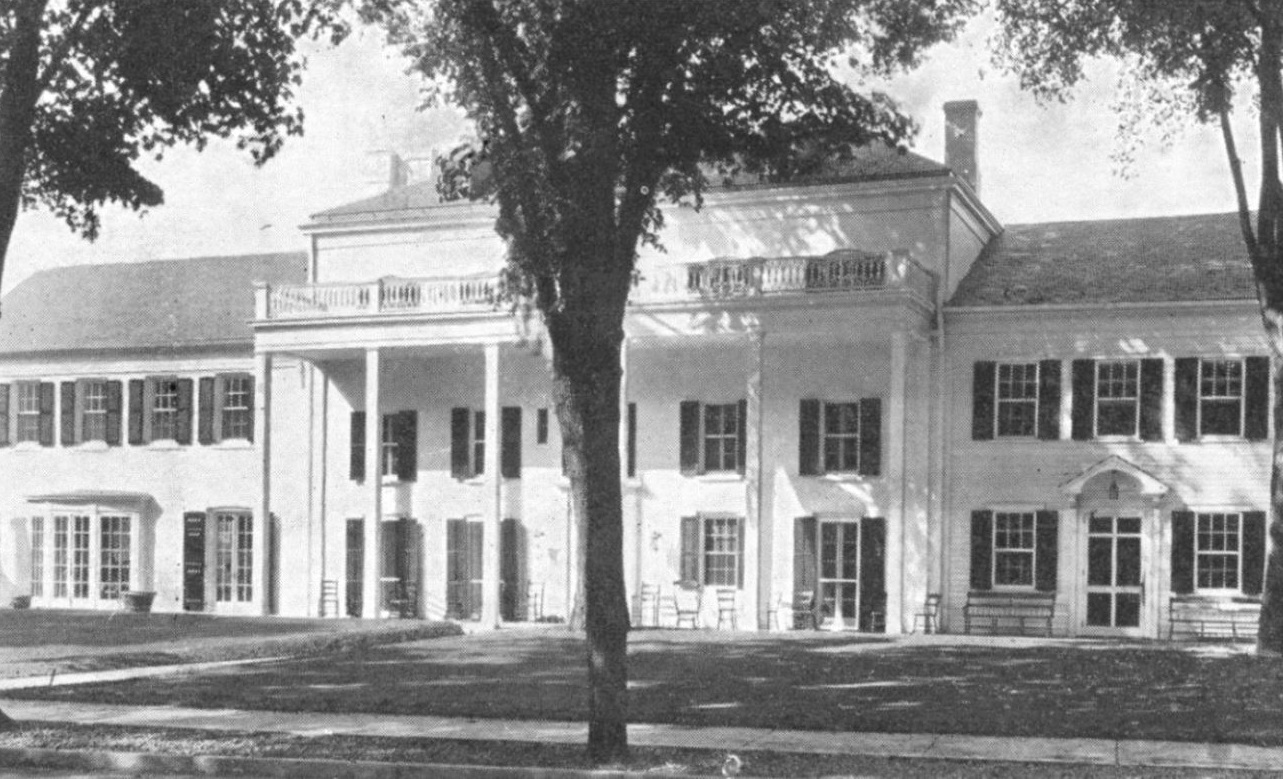
Throughout the 20th century, The Beekman Arms continued to be the center of social and civic life for Rhinebeck. It hosted thousands of town and service club meetings, weddings, all varieties of parties, and leisurely Sunday brunches. In the 1930s, young ladies training to be nurses relaxed at the inn after their hospital shifts. Firefighters and World War II soldiers paraded and posed for photographs on the surrounding lawn and streets. President Franklin Delano Roosevelt was a frequent guest at the Beekman Arms, too. He concluded each of his four political campaigns for governor and president talking from the front porch. As an avid stamp collector and an amateur historian, President Roosevelt was responsible for the construction of the Rhinebeck Post Office, which was built by the Works Progress Administration. The post office is a replica of a portion of the Hendrick Kip house, the earliest known structure in Rhinebeck. In 1958, Charles LaForge bought the inn, becoming the longest running owner of the Beekman Arms. Then in the 1980s, LaForge added the greenhouse to the front of the ballroom. He purchased the nearby Delamater Inn and renovated much of the grounds. He even began adding more guestrooms when he constructed the Courtyard Complex behind the Delamater Inn. In 2002, George Banta Sr. purchased the Beekman Arms and Delamater Inn from LaForge. The Banta family have continued the work of their predecessors, guaranteeing that both institutions remain for future generations to appreciate. A member of Historic Hotels of America since 2006, the Beekman Arms and Delamater Inn have continued to be among the best places to stay in New York’s Hudson Valley.
Hotel Timeline
The Location
Located in the picturesque Hudson Valley, Rhinebeck resides just an hour south of Albany along the banks of the Hudson River. The community is one of several that are located throughout Dutchess County, which first formed as one of New York’s original 12 counties during the 17th century. Rhinebeck is also quite historic, as its heritage harkens back decades before the founding of the nation. The first group of European settlers arrived in the area when a group of Dutch colonists forded the river from the vicinity of today’s Kingston in 1686. They subsequently negotiated to settle the land with the native Sepasco people, who had lived in the region for generations. The Dutch settlers erected small farms, although large-scale settlement in the form of organized towns remained sparse. Several years later, an English colonist named Henry Beekman received a grant to develop a huge segment of the locale. Together with a miller and carpenter, Beekman proceeded to start several building projects throughout the area. Perhaps the greatest work they undertook was the creation of King’s Highway, better known today as Route 9. In 1706, one of the men working alongside Beekman, William Tarphagen, purchased a small tract from Beekman’s landholdings and constructed his own cottage upon the site. The building formed the nucleus of Rhinebeck village, which grew gradually after Henry Beekman’s son, Henry Beekman Jr., relocated several families of German Palatines that had fled religious persecution in Europe.
Trade generated by the river traffic made Rhinebeck a prosperous little community for decades, even in the wake of the American Revolution. It was a popular gathering spot for prominent New Yorkers, especially among those making their way toward the state assembly in Albany. Indeed, Rhinebeck was the site of the political headquarters for Morgan Lewis and Aaron Burr, as the two battled for New York’s governorship in 1804. By the middle of the 19th century, Rhinebeck had developed a reputation as a center for all kinds of specialized woodworking. The town’s name became synonymous with fine hand-crafted wooden furniture and carriages. But despite the industrious nature of its population, Rhinebeck nonetheless remained pastoral in character. Contributing to this charm was the emergence of a robust violet farming industry that reached its height during the Gilded Age. This quality attracted the attention of many affluent individuals from New York City and Albany. Enchanted by its rolling hills and verdant flora, those influential Americans moved their families into sprawling manors that dotted the landscape. One of the best was a mansion called “Wilderstein,” which wealthy real estate developer Thomas Holy Suckley had built in 1853. Many more mansions continued to open well into the early 20th century, making Rhinebeck one of the most beautiful communities in the entire Hudson Valley. It has since retained its historic, luxurious identity, often being cited as among the best places to visit in the region.
Rhinebeck is also a part of the stunning Hudson River Historic District, a U.S. National Historic Landmark that covers 22,205 acres of the Hudson Valley. Its borders mainly follow the Hudson River closely, starting from Staatsburg and down to Germantown. Amazingly, only two percent of the buildings in the district by acreage are not counted as “historic” by the U.S. Department of the Interior. The most historic structures date to the colonial era, when the prominent Livingston family first settled the land. The Livingstons would prove instrumental in fomenting the American Revolution, with one of its scions—Robert R. Livingston—even helping to write the Declaration of Independence. Most of the historic structures debuted throughout the 19th century, however, after the romanticized art of the Hudson River School inspired numerous Americans to move to the valley. Numerous hamlets around the area became home to sprawling mansions that still stand today. Among the most beautiful were Lyndhurst (home to railroad tycoon Jay Gould), Kykuit (John D. Rockefeller’s estate), and the Vanderbilt Mansion. (Scholars count Wilderstein within that prestigious group, too.) Other fascinating historic sites are located near Rhinebeck as well, including President Franklin Delano Roosevelt’s ancestral home “Springwood” in Hyde Park. Preserved as the “Home of Franklin D. Roosevelt National Historic Site,” the entire estate functions as a museum dedicated to his life and achievements.
The Architecture
The Beekman Arms and Delamater Inn stand today as a brilliant example of American colonial architecture. Architectural historians today generally define American colonial architecture as covering a wide berth, subdividing it into categories like First Period English, French Colonial, Spanish Colonial, and Dutch Colonial. But most professionals in the field believe that the aesthetics embraced by English—and later British—colonists to be the most ubiquitous, given their widespread cultural influence during America’s infancy. It dominated the architectural tastes of most Americans at the time, until the Federalist design principles overtook them in the 19th century. The style was especially predominant in New England, which quickly saw the creation of another set of two unique subtypes—Saltbox and Cape Cod-style. A different take of English colonial architecture appeared within the southern colonies, as well, which some experts refer to as “Southern Colonial.” The building style resembled the general trends embraced by other colonists in British America, although they differed in that they constructed a central passageway, massive chimneys, and a parlor. Nevertheless, all of the buildings shared strikingly similar qualities. American homes of the age were uniformly simple, and made use of either wood, brick, or stone. Rectangular in shape, they typically extended two to three stories in height. All of the formal parts of the home were located on the first floor, while the family bedrooms occupied the upper levels of the building. The floorplans were also fairly limited in scope, designed to fill each level with just a couple of rooms. This simplicity was slowly modified by the arrival of Georgian-style architecture from Great Britain toward the end of the 18th century. Architects subsequently relied more upon mathematical ratios to achieve symmetry in their designs, and used elements of classical architecture for ornamentation.
Famous Historic Guests
- Frank Sinatra, singer and actor part of the famous Rat Pat known for selling 150 million records worldwide
- Kirk Douglas, actor known for his roles in Spartacus, Paths of Glory, and The Bad and the Beautiful.
- Paul Newman, actor known for his roles in such films like Cool Hand Luke, The Sting, and Butch Cassidy and the Sundance Kid.
- Elizabeth Taylor, actress known for her roles in Cleopatra and The Taming of the Shrew.
- Angela Lansbury, best remembered for her role in the television series, Murder, She Wrote.
- Lauren Bacall, actress known for her roles in such films like The Big Sleep, Key Largo, and To Have and Have Not.
- Van Johnson, actor known for his roles in Thirty Seconds Over Tokyo, A Guy Named Joe, and The Human Comedy.
- Pat O’Brien, actor known for his roles in Knute Rockne, All American, Angels with Dirty Faces, and Some Like It Hot.
- Burgess Meredith, actor known for his roles in the Batman and Twilight Zone television series, as well as the film franchise Rocky.
- Evelyn Keyes, actress best remembered for her work in the film, Gone with the Wind.
- E.G. Marshall, actor best remembered for his work in the television series, The Defenders.
- Jean Stapleton, actor best remembered for his work in the television series, All in the Family.
- Robert Vaughn, actor best remembered for his work in the television series, The Man from U.N.C.L.E.
- Sid Caesar, comic actor and writer best remembered for his work creating Your Show of Shows and Caesar’s Hour.
- Adolph Green, lyricist and playwright best remembered for his work creating Singin’ in the Rain.
- Betty Comden, lyricist and playwright best remembered for his work creating Singin’ in the Rain.
- Charles Addams, artist and cartoonist best remembered for creating the fictional Addams Family.
- Thomas Wolfe, author known for his novels Look Homeward Angel, Of Time and River, and You Can’t Go Home Again.
- Norman Mailer, author best known for his novels, The Naked and the Dead, Armies of the Night, and The Executioner’s Song.
- Gore Vidal, author and essayist known for his novels, Julian, Burr, Lincoln, and The City and Pillar.
- James Beard, first chef to popularize cooking on television and namesake for the renowned James Beard Award.
- James Lovell, command module pilot for the Apollo 8 mission, which was the first manned spaceflight to reach the Moon.
- Neil Armstrong, commander of the Apollo 11 mission who was one of the first two people to land on the Moon.
- Horace Greeley, noted abolitionist and founder of the prominent New York Tribune newspaper.
- Walter Cronkite, broadcast journalist best known for hosting CBS Evening News during the 1960s and 1970s.
- David Brinkley, broadcast journalist best known for working on The Huntley—Brinkley Report and NBC Nightly News.
- Hugh Downs, news anchor best known for his work on Today, 20/20, and Tonight Starring Jack Paar.
- Bob Feller, Hall of Fame pitcher who played for the Cleveland Indians.
- Brooks Robinson, Hall of Fame third basemen who played for the Baltimore Orioles.
- Fred Lynn, baseball center fielder who won Major League Baseball’s Most Valuable Player award in 1975.
- George Blanda, quarterback who played 26 seasons in the American Football League and National Football League—the most in the sport’s history.
- Joe Louis, world heavyweight boxing champion from 1937 to 1949 and regarded as one of the best to ever pursue the sport.
- Cus D’Amato, professional boxing manager who worked with Mike Tyson, Floyd Patterson, and José Torres.
- Arnold Palmer, winner of 7 major golf championships that include the PGA Championship and the Masters Tournament.
- Gene Sarazen, winner of 7 major golf championships that include the U.S. Open, the British Open, the PGA Championship, and the Masters Tournament.
- Stirling Moss, Formula One driver hailed as among the best to ever compete in the sport.
- Red Barber, sportscaster who commented games for the Cincinnati Reds, Brooklyn Dodgers, and New York Yankees.
- Vincent Astor, successful businessman and philanthropist who was a scion of the prominent Astor family.
- James Farley, politician and businessman best remembered for helping to create President Franklin Delano Roosevelt’s career.
- James Cash Penney, founder of the famous department store, JCPenney.
- Mitch Miller, musician best remembered for successfully running A&R at Columbia Records during the 1950s and 1960s.
- John Kenneth Galbraith, economist known for his books, American Capitalist, The Affluent Society, and The New Industrial State.
- Richard Montgomery, major general in the Continental Army during the American Revolutionary War.
- Benedict Arnold, hero of the American Revolution before his betrayal during the conflict.
- Robert R. Livingston, drafter of the Declaration of Independence.
- Gilbert du Motier, Marquis de Lafayette, French General who was a hero of the American Revolution.
- W. Averell Harriman, 48th Governor of New York (1955 – 1958)
- Malcolm Wilson, 50th Governor of New York (1973 – 1974)
- Tip O’Neill, 47th Speaker of the U.S. House of Representatives (1977 – 1987)
- William J. Brennan Jr., Associate Justice of the Supreme Court of the United States (1956 – 1990)
- John Armstrong, Jr., 7th U.S. Secretary of War (1813 – 1814)
- Alexander Hamilton, 1st U.S. Secretary of the Treasury (1789 – 1795)
- Hamilton Fish, 26th U.S. Secretary of State (1869 – 1877)
- William Jennings Bryan, 41st U.S. Secretary of State (1914 – 1815)
- Aaron Burr, 3rd Vice President of the United States (1801 – 1805)
- Levi P. Morton, 22nd Vice President of the United States (1889 – 1893)
- Nelson Rockefeller, 41st Vice President of the United States (1974 – 1977)
- Al Gore, 45th Vice President of the United States (1993 – 2001)
- George Washington, 1st President of the United States (1789 – 1797)
- Benjamin Harrison, 23rd President of the United States (1889 – 1893)
- Franklin Delano Roosevelt, 32nd President of the United States (1933 – 1945)
- Bill Clinton, 42nd President of the United States (1993 – 2001)
Guest Historian Series
Hotel History: Beekman Arms and Delamater Inn (1766), Rhinebeck, New York*
In the early 1700s, William Traphagen established a traveler's inn in Ryn Beck, which was a small settlement carved out of a forested area initially inhabited by the Sepasco Indians and colonized since the 1630s by the Dutch. In 1766, William Traphagen's son, Arent, relocated Traphagen Tavern to the town crossroads, where the King's Highway intersected the Sepasco Trail, winding its way down to the river. The Beekman Arms has been at the center of Rhinebeck ever since.
Bogardus Tavern, as the inn was known during the last third of the 18th century, helped host the American Revolution. The 4th Regiment of the Continental Army drilled on its front lawn before the war, in 1775. It was on the main road through the Hudson Valley, and its neighbors played major roles in the creation of the United States. A sturdy stone building originally built to withstand possible Indian attacks, the Bogardus Tavern served similar purposes against the vicissitudes of waging war on the British Crown. George Washington, Philip Schuyler, Benedict Arnold and Alexander Hamilton slept here and probably ate, drank, argued, and laughed here during the Revolutionary War.
Continue Reading