History
Discover Bienville House, whose name pays homage to Jean Baptiste Le Moyne, sieur de Bienville, the founder of New Orleans.
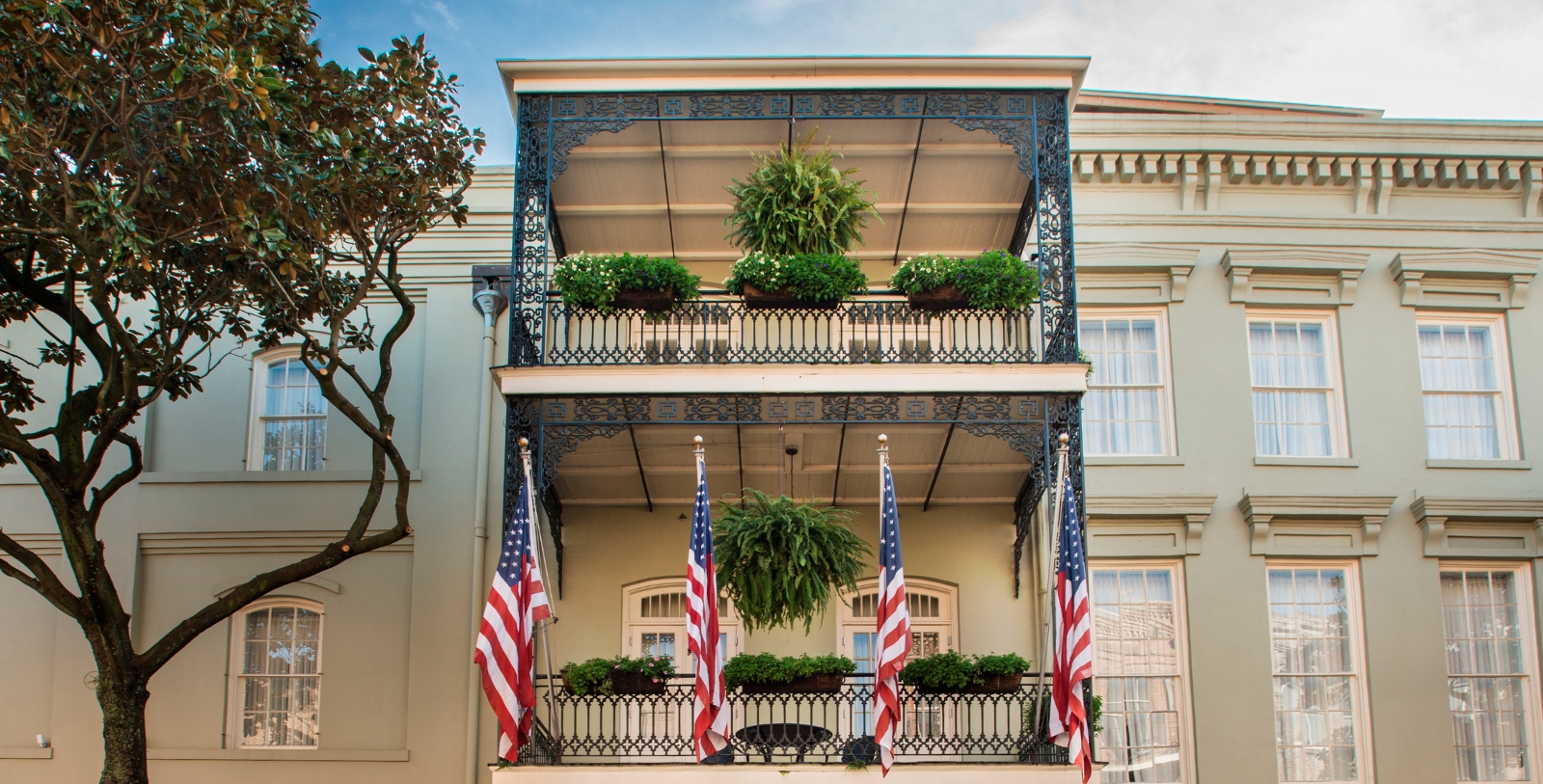
A member of Historic Hotels of America since 2006, the Bienville House has been one of New Orleans’ most exclusive getaways for decades. Indeed, the hotel’s luxurious ambiance and central proximity in the French Quarter have endeared it among many contemporary travelers. But this fantastic destination has not always been a spirited hotel. On the contrary, the Bienville House originally debuted as a mill during the 1830s. New Orleans had rapidly emerged as America’s busiest port that possessed a vibrant maritime economy worth millions of dollars. While the city was known for its cotton and sugar exports, other cash crops—such as rice—were widely shipped, too. It was within this environment that the first iteration of the Bienville House appeared as the “Planters Rice Mill.” Built in 1835, the facility specifically removed the white kernel from the raw rice plants that regularly arrived in New Orleans. The building did not remain a rice mill for long, however. Indeed, the trade in sugarcane proved to be too great of an economic lure to ignore, prompting the owners of the Planters Rice Mill to install a syrup processing plant on-site. (The building, thus, reopened as “Thompson’s Rice Mill and Southern Syrup.”) But the location changed yet again just two years later, this time debuting as a small boutique hostelry called the “North American Hotel.” Outfitted with brilliant Neoclassical architecture, the hotel subsequently developed a strong reputation for its hospitality and amenities. In fact, many throughout New Orleans thought of the hotel as a “delightful summer residence for Ladies and Gentleman.”
The building nonetheless continued to experience periodic changes to its identity, becoming a fire station, an apartment complex, and even a boarding house named the “Royal Bienville.” Among its last transformations occurred nearly a century later during the 1960s, when a couple hoteliers operated it as a “motor hotel” for the regional tourists who had started to visit New Orleans by car. The fate of the Bienville House changed forever after the Monteleone family acquired the whole site in 1972. The proprietors of the storied Hotel Monteleone, the Monteleones quickly set about revitalizing the historic structure’s many outstanding accommodations. Inside, they specifically created a fantastic European-style eclectic that complemented the surrounding atmosphere of the French Quarter perfectly. But the family also endeavored to rehabilitate its once radiant historical architecture, which had diminished somewhat under the previous owners. Taking months to complete, the project was an incredibly comprehensive undertaking. Nevertheless, the work succeeded in masterfully restoring the historic structure back to its former glory, while also turning it into an exciting boutique hotel called the “Bienville House.” Still under the ownership of the Monteleone family today, the Bienville House has since earned a prestigious reputation for its tranquil environment, unrivaled luxury, and extreme comfort. Its patrons have also adored its central location to many famous attractions, like Jackson Square, Preservation Hall, and St. Louis Cathedral.
Hotel Timeline
The Location
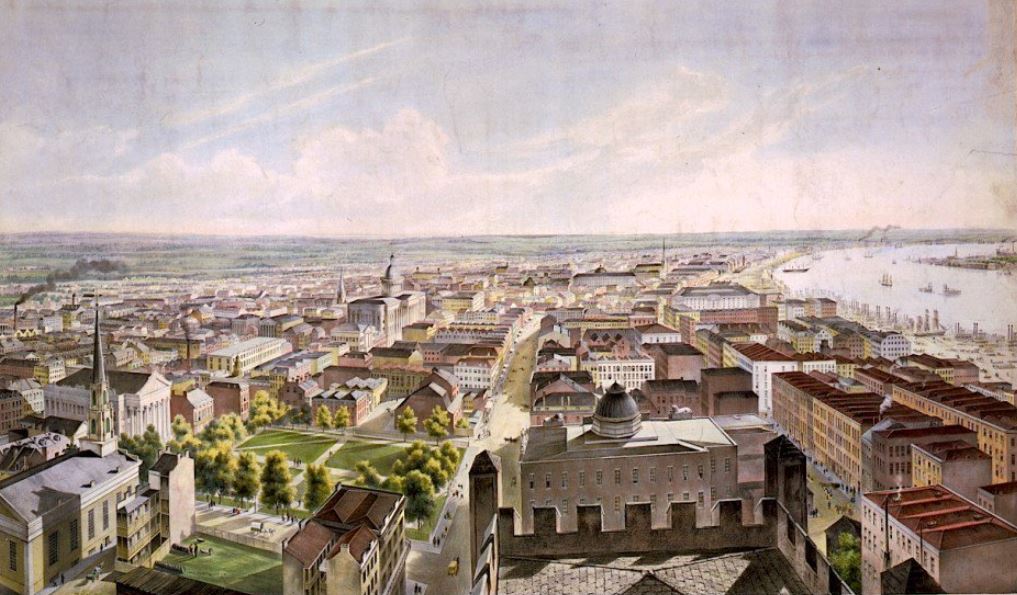
Bienville House is located in the heart of the Vieux Carré, otherwise known more popularly as the French Quarter. A National Historic Landmark, the French Quarter was first established in 1718 by French colonials under the direction of the Mississippi Company. These aspiring settlers were specifically led to the region by Jean-Baptiste Le Moyne de Bienville, who would go on to serve as the local colonial governor throughout much of the early 18th century. The French Crown intended for the nascent settlement to operate as an important regional port that controlled trade throughout the Mississippi Delta. After navigating the local coastline for several weeks, Bienville and his compatriots found a section of high ground above the Mississippi River that offered natural protection from flooding waters, as well as incursions against English and Spanish privateers. They named their new community “La Nouvelle-Orléans” in honor of the Duke of Orleans, a nephew of King Louis XIV.
La Nouvelle-Orléans eventually evolved into New Orleans, the capital of the French colony of Louisiana. France lost control over the city for a time during the late 18th century, when the French were forced to cede the colony to the Spanish following the Seven Years War. Yet, the Spanish gave New Orleans back to the French in 1800 at the height of the Napoleonic Wars. The town and the surrounding parishes were then part of the Louisiana Purchase, in which Emperor Napoléon Bonaparte sold 828,000 square miles of French-controlled territory in central North America to U.S. President Thomas Jefferson. The city subsequently became the capital for the new state of Louisiana in 1812, rapidly evolving into the most important port in the southern United States. This growth was offset temporarily with the outbreak of the War of 1812, with New Orleans itself becoming a battleground. It was the site of the famous Battle of New Orleans, where future president Andrew Jackson defeated the British in an incredibly lopsided victory.
New Orleans’ significance as a commercial port made it a highly valuable strategic point of interest for both the Union and Confederacy during the American Civil War. Both armies fought over the city early in the war, with the United States Navy forcing local Confederate units from the area in early 1862. It subsequently became the base for future operations by the Union in the Mississippi Delta for the duration of the conflict. Following the cessation of hostilities between the two sections in 1865, New Orleans resumed its national status as a premier port city. It even served as an integral part to the national war effort in World War II, where it became the site for the development of the crucial Higgins Boat. New Orleans has since emerged as one of the nation’s most popular tourist destinations, with millions visiting every year. The most popular attraction is the original French Quarter and its celebrated landmarks, such as Jackson Square, St. Louis Cathedral, and Bourbon Street. All of these fantastic sites wonderfully represent the original French heritage of the Vieux Carré.
The Architecture
Bienville House displays a brilliant blend of Classic Revival-style architecture. Also known as “Neoclassical,” Classic Revival design aesthetics are among the most common architectural forms seen throughout the United States. This wonderful architectural style first became popularized at the World’s Columbian Exposition, which was held in Chicago in 1893. Many of the exhibits displayed architectural motifs from ancient societies like Rome and Greece. As with the equally popular Colonial Revival style of the same period, Classical Revival architect found an audience for its more formal nature. It specifically relied on stylistic design elements that incorporated such structural components like the symmetrical placement of doors and windows, as well as a front porch crowned with a classical pediment. Architects would also install a rounded front portico that possessed a balustraded flat roof. Pilasters and other sculptured ornamentations proliferated throughout the façade of the building, as well. Perhaps the most striking feature of buildings designed with Classical Revival-style architecture were massive columns that displayed some combination of Corinthian, Doric, or Ionic capitals. With its Greco-Roman temple-like form, Classical Revival-style architecture was considered most appropriate for municipal buildings like courthouses, libraries, and schools. Yet, the form found its way into more commercial uses over time, such as banks, department stores, and of course, hotels. The celebrated architectural firm McKim, Meade and White produced some of the most noteworthy buildings that utilized Classical Revival architecture, with most of their work appearing during the early 20th century. Examples of their portfolio can be found in many of American’s major cities, such as Philadelphia and New York City.
Guest Historian Series

In the heart of the French Quarter between Decatur and N. Peters Street, the historic Bienville House Hotel is located. This French Quarter boutique hotel had humble beginnings, starting as Planters Rice Mill in 1835 and converting to Thompson's Rice Mill and the Southern Syrup factory. After decades as a manufacturing plant, the owners capitalized on the prime location and transformed the building into the North American Hotel. It became known as “a delightful summer residence for Ladies and Gentlemen.”
New Orleans is a storehouse of memories from as early as 1718, when it was founded by Governor Bienville to become the southern outlet for the French Empire in North America. Control of the area transferred between the French and Spanish several times before being acquired by the United States as part of the Louisiana Purchase in 1803. The blending of French and Spanish cultures along with the Cuban, Irish, Italian, Anglo, African American and the distinctive Cajun influence has created a city unlike any other in the United States. The Bienville House Hotel is one of many historic buildings in the French Quarter which has been preserved and enhanced.
Continue Reading