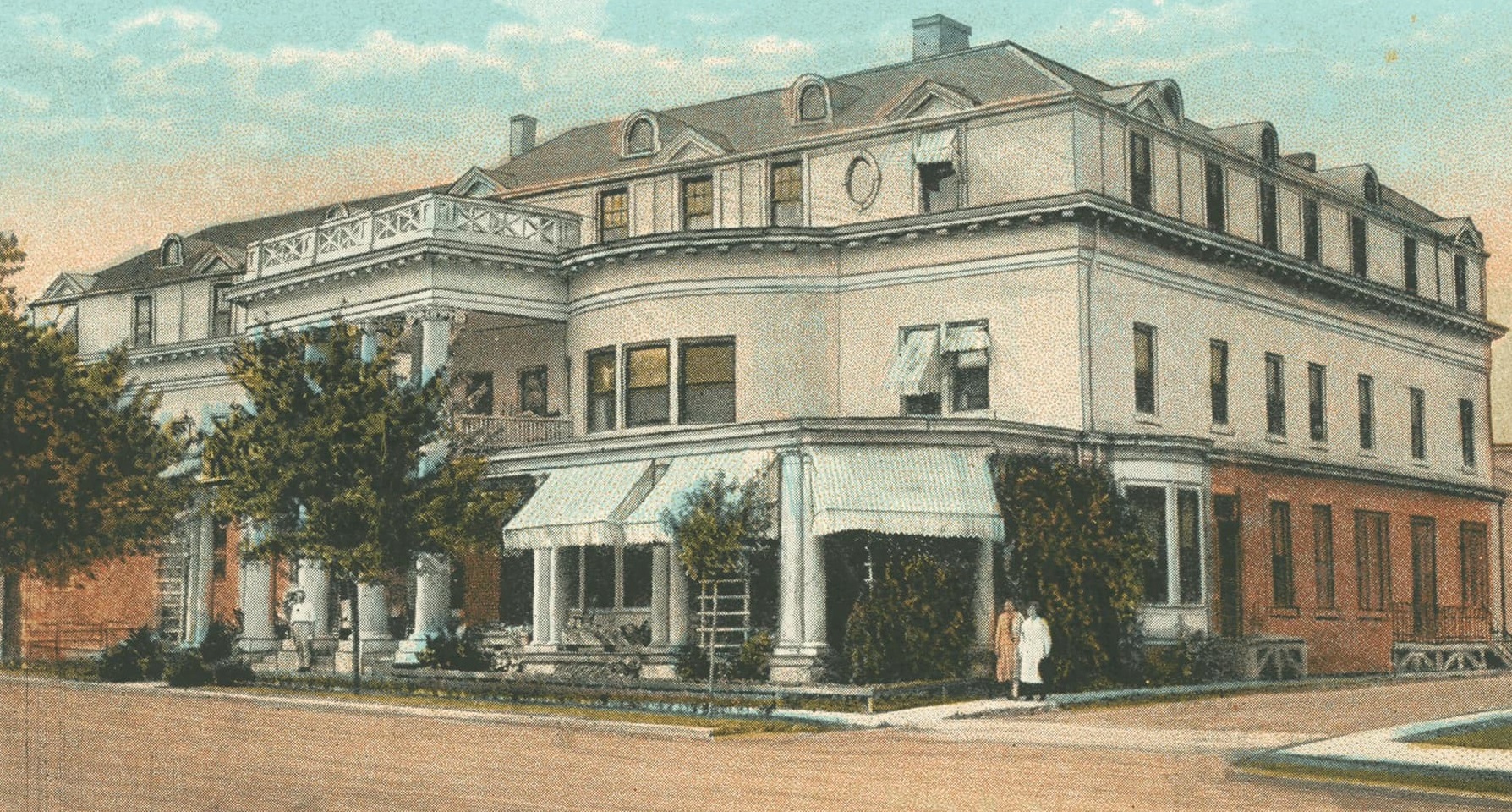
History
Discover Boone Tavern Hotel of Berea College, which was built on the old Dixie Highway and named after early Kentucky explorer Daniel Boone.
Restored by the National Trust for Historic Preservation, Boone Tavern is known as one of the most prominent historic hotels in America and is listed on the National Register of Historic Places. Boone Tavern at Berea College is among one of the most renowned historic holiday destinations in all of Kentucky. The historic hotel was originally constructed at the behest of Eleanor Frost, a socialite married to the President of Berea College, William G. Frost. Eleanor was concerned by the fact that all the guests who came to the university were typically hosted at the President’s House for lodging and meals. But as the reputation of the college grew, so did the number of visitors that the Frost family received. At one point, Eleanor and William were stuck entertaining well over 300 people in just a single summer. To alleviate the strain, Eleanor Frost pitched to her husband that Berea College needed a magnificent hotel that would impress all who stepped inside it. Sparing no expense, William convinced the school’s administration to sponsor the development of a beautiful new building on the campus grounds. The construction itself finally began in 1907, based on designs submitted by the New York-based architectural firm “Cady & See.” The blueprints cost some $20,000 to produce and called for the development of a gorgeous, Colonial Revival-style edifice. Students in the college’s brickyard supplied the building materials for the project, while its Woodwork Department provided most of the labor. After two years of continuous work, the building debuted as the “Boone Tavern Hotel and Restaurant” to great local acclaim. Berea College had decided to name the business after Appalachian hero Daniel Boone. Yet, the “Tavern” portion of the title was derived from the historic definition that referred to a public inn for travelers, rather than the modern definition regarding the sale of alcohol.
Boone Tavern Hotel’s location on College Square was in the heart of Berea, specifically at an intersection of the historic Dixie Highway that bisected the center of town. Many travelers passing through Berea stayed at the hotel, in addition to the throngs of guests who continued to visit the college. But the quality of its service separated the business from its competitors, with word of its luxury spreading across the country. The students themselves were largely responsible for creating such an atmosphere, as many worked as clerks, bellhops, and servers within the hotel’s restaurant. Both Eleanor and William desired for the hotel to provide a learning environment that would help young professionals develop the necessary business skills to thrive in the hospitality industry. (Berea College itself was founded on the principle that labor was not just a means of support, but of education, too. As such, students at Berea College were—and still are—required to work somewhere on-site as part of its work-study program.) Over time, Boone Tavern developed something of a national reputation, with some famous patrons stopping by at one point or another. Among the distinguished guests have included the likes of Henry Ford, Maya Angelou, and former first Lady Eleanor Roosevelt. Perhaps the greatest individual to make an appearance at Boone Tavern was President Calvin Coolidge, and his wife, First Lady Grace Goodhue Coolidge. Boone Tavern today continues to maintain its status as a world-class vacation getaway. The first LEED-certified hotel in Kentucky features some of the finest amenities and guest accommodations throughout the whole commonwealth.
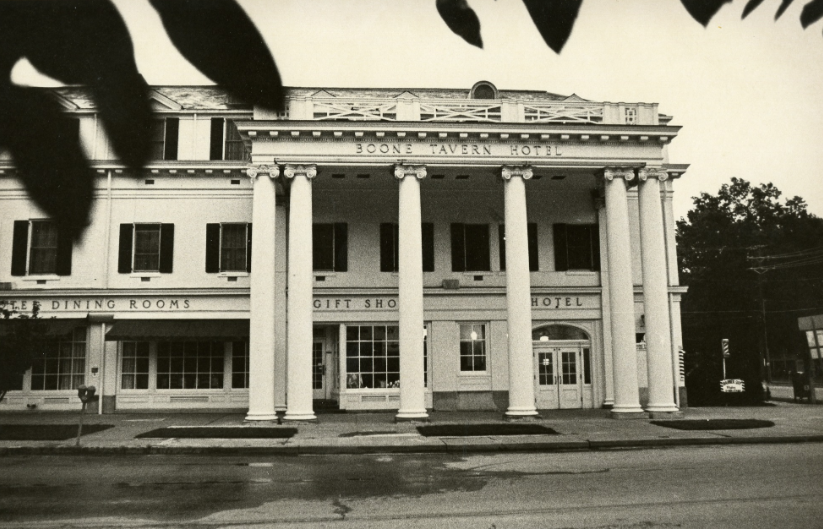
Hotel Timeline
The Location
The Boone Tavern Hotel is owned and operated by Berea College, one of Kentucky’s most prestigious institutions of higher education. Founded in 1855 by Reverend John Gregg Fee—a noted abolitionist—the school was the first non-segregated, coeducational facility to operate in the southern United States. Another noted anti-slavery activist named Cassius Marcellus Clay granted Fee the land upon which to construct the new university, which Fee called “Berea” after the biblical community referenced in the Bible. Starting out as a one-room schoolhouse that doubled as a church, Berea gradually grew in size until it featured several accompanying facilities. By 1869, it had become a fully recognized college with its first bachelor's degrees awarded several years later. Blacks and whites attended class regularly, even as the rest of Kentucky was culturally torn asunder due to the ongoing sectional crisis of the mid-19th century. Fee had hoped that his college would facilitate equality through the shared experience of education among men and women of all races. But the school was not without its hardships. Proslavery sympathizers had actually driven Fee and his fellow staff members from Berea in 1859, with only a handful returning alongside the reverend once the American Civil War had ended. New state regulations at the beginning of the 20th century forbade any interracial education centers to exist within the commonwealth’s borders. Berea College even challenged the legislation in a U.S. Supreme Court case called Berea College v. Kentucky, although it ultimately lost the decision. Nevertheless, the school resisted the verdict in many other ways, the most prominent of which involved the distribution of funds to open the Lincoln Institute for all the black students who could no longer attend. Fortunately, the infamous “Day Law” that prohibited interracial schooling was repealed in 1950, allowing Berea College to resume its original mission.
Berea College is famous for its renowned work-study program, too. Fee and his associates also founded the college, in part, to experiment with the use of “labor” as a tool for education. At the time, similar schools across the nation embraced the novel idea that career training was an effective way to strengthen the spirit and broaden the mind. Among the most prominent institutions to explore the idea included the Oneida Institute, Oberlin College, and the Lane Theological Seminary. But many of those programs closed down within a matter of years, leaving the one at Berea the sole survivor from the period. A major reason Berea College’s work-study curriculum endured through the ages was that the institution excelled at finding wonderful economic prospects for its student body. Perhaps the greatest of those opportunities was the chance to work at Berea College’s Boone Tavern Hotel in the early 1900s. In fact, the student body had built the building itself, with the Woodwork Department providing most of the labor. (Bricks came from the college’s brickyard, as well.) Many other students served a variety of roles inside the hotel, working as bellhops, clerks, waiters, and a dozen other occupations. Soon enough, Berea College was offering a Hotel Management major through its Department of Economics that became renowned across the country. Richard T. Hougen was one such hotelier who invested himself greatly into the program’s success. A graduate of Columbia University, Hougen began managing the Boone Tavern Hotel in 1940. His guidance ensured that most of his graduates moved onto lucrative careers in the hospitality industry. (Hougen also acted as an authority on the culinary arts and transformed the facility into one of Kentucky’s leading fine dining establishments.) Berea College’s work-study program remains fully active today. Students work several hours each week in exchange for free tuition and professional experience.
The Architecture
Architects J.C. Cady of the architectural firm “Cady and See” designed the Boone Tavern Hotel at Berea College at the start of the 20th century. Cady was an accomplished architect at the time, having worked on various aspects of the Old Metropolitan Opera House and the American Museum of Natural History in New York City. The hotel itself bears the distinction of being the first commercial building in Berea to feature Colonial Revival-style architecture. Colonial Revival architecture today is perhaps the most widely used building form in the entire United States. It reached its zenith at the height of the Gilded Age, where countless Americans turned to the aesthetic to celebrate what they feared was America’s disappearing past. The movement came about in the aftermath of the Centennial International Exhibition of 1876, in which people from across the country traveled to Philadelphia, Pennsylvania, to commemorate the American Revolution. Many of the exhibitors chose to display cultural representations of 18th-century America, encouraging millions of people across the country to preserve the nation’s history. Architects were among those inspired, who looked to revitalize the design principles of colonial English and Dutch homes. This gradually gave way to a larger embrace of Georgian and Federal-style architecture, which focused exclusively on the country’s formative years. As such, structures built in the style of Colonial Revival architecture featured such components as pilasters, brickwork, and modest, double-hung windows. Symmetrical designs defined Colonial Revival-style façades, anchored by a central, pedimented front door and simplistic portico. Gable roofs typically topped the buildings, although hipped and gambrel forms were used, as well. This building form remained immensely popular for years until petering out in the late 20th century. Nevertheless, architects today still rely upon Colonial Revival architecture, using the form to construct all kinds of residential buildings and commercial complexes.
Famous Historic Guests
- Eleanor Roosevelt, First Lady to former U.S. President Franklin Delano Roosevelt (1933 – 1945)
- Grace Goodhue, First Lady to former U.S. President Calvin Coolidge (1923 – 1929)
- Henry Ford, founder of the Ford Motor Company
- Maya Angelou, civil rights activist and poet known for such works like I Know Why the Caged Bird Sings.
- The Dalai Lama, world-renowned spiritual leader considered to be a living incarnation of Buddha.
- Calvin Coolidge, 30th President of the United States (1923 – 1929)
Famous Historic Guests
Eleanor Roosevelt: The Boone Tavern at Berea College has hosted countless luminaries throughout its history, ranging from Hollywood celebrities to notable politicians. Among those illustrious individuals who stayed at the inn on numerous occasions was former First Lady Eleanor Roosevelt. Born as Anna Eleanor Roosevelt in 1884, she was the daughter of Elliott and Anna Hall Roosevelt. A member of the “Oyster Bay” branch of the Roosevelt dynasty, Elliott himself was the brother of U.S. President Theodore Roosevelt. Roosevelt’s immediate family cherished community service, although she received reinforcement from other people in her life. For instance, her intellectually progressive outlook on life was further solidified by Marie Souvestre, who was Roosevelt’s principal during her time at London’s prestigious Allenswood Boarding Academy. She kept al those personal influences close to her heart and used them as the foundation for her future work as a social activist. Indeed, some of her earliest work involved tending to the overcrowded tenement houses in New York City’s Lower East Side.
Around the same time, she began courting her distant cousin, Franklin Delano Roosevelt. They eventually married in 1905 and had six children together. Yet, the marriage was strained by their two dueling personalities, as well as the demands of her husband’s early political career. Roosevelt often felt her responsibilities as a “political wife” were tedious, especially after Franklin’s appointment as the Assistant Secretary of War shortly before the outbreak of World War I. Their marriage further deteriorated in 1918, when Eleanor discovered that Franklin had an affair with their mutual friend, Lucy Mercer. Roosevelt, thus, vowed to throw herself fully back into her political activism. But the two had a strong understanding that their fates remained intertwined and aspired to support one another going forward. It was Eleanor who encouraged Franklin to remain in politics when he was beset with polio in 1921. As such, Eleanor Roosevelt was incredibly instrumental in aiding her husband’s election as the Governor of New York in 1928, as well as his subsequent rise to the Presidency four years later. She often gave numerous speeches in public on his behalf that galvanized thousands of people. Roosevelt also became a central figure at his campaign events, serving as her husband’s voice whenever he could not attend.
But Eleanor Roosevelt still established her own vibrant political career as the First Lady of the United States. Historians today consider her actions to have fundamentally transformed the role that the First Lady traditionally held within the national government. Roosevelt used her position to advance a number of causes close to her heart, including gender equality, civil rights, and housing reform. She specifically arranged a massive celebration at the nearby Lincoln Memorial to protest the racist decision of the Daughters of the American Revolution to not let Marian Anderson—an African American opera singer—perform at Constitution Hall. On another occasion, she privately lobbied for the passage of the Costigan-Wagner Bill, which would have made lynching a federal crime. Roosevelt also held exclusive press conferences at the White House for female journalists to help enable women to break into the field. She even attempted to create an experimental community in West Virginia called “Arthurdale,” where homeless miners would have a chance at achieving a new, independent life. Although considered a failure, it was testimony to her commitment to enhance the lives of countless others.
Eleanor Roosevelt’s historic career continued well after her time at the White House ended in 1945. She played a significant role in turning Hyde Park into a museum dedicated to her late husband’s legacy, which set a precedent for future presidential libraries to follow. She also served as a delegate to the United Nations Commission on Human Rights, becoming its chairperson in 1947. Roosevelt remained with the organization until 1953, and her political insight proved integral toward drafting the Universal Declaration of Human Rights. After working to reform New York politics throughout the remainder of the decade, Roosevelt eventually worked to support the campaign of John F. Kennedy. While she initially rebuffed Kennedy for his refusal to denounce McCarthyism, Roosevelt relented on the grounds that she believed he had the best chance of leading the nation into the future at the time. When Kennedy won in 1960, she became his representative to such organizations like the National Advisory Committee to the Peace Corps. Then, in 1961, Kennedy appointed her as the First Chair of the Presidential Commission on the Status of Women. But Roosevelt would not see the commission come to fruition, as she died mere months after it was organized. Eleanor Roosevelt has since been revered as one of the most influential figures in 20th-century American history and is esteemed across the world today for her years of advocacy.
Maya Angelou: Of the many luminaries to visit the Boone Tavern over the years, few are as distinguished as American poet, actress, and civil rights activist Maya Angelou. The author of seven autobiographies, three books of essays, and countless other forms of literature, Angelou’s spectacular career lasted for some 50 years. Many today consider her most critically acclaimed work that she produced was I Know Why the Caged Bird Sings. The first in her seven-part autobiographical series, the book is a first-hand account of her childhood and adolescence. It is a classic “coming-of-age” story that demonstrated how the strength of the spirit can overcome the obstacles of trauma. Her evolution specifically illustrated her growth from a victim of racism to a strong woman capable of confronting prejudice. She went on to have a diverse career as a young adult, working in occupations that ranged from being a nightclub dancer to serving as a fry cook. Angelo even spent time as a cast member for the operatic troupe, Porgy and Bess.
But she soon found herself immersed in the Civil Rights Movement of the mid-20th century, acting as a coordinator for the Southern Christian Leadership Conference. Soon enough, Angelou was protesting alongside the likes of Malcom X and Martin Luther King Jr. But Angelou never stopped writing. She continued to create all kinds of literary productions, including a ten-part television series called Black, Blue, Black. Aired in 1968, it explored the influences of African cultural on American society. Angelou also built a formidable reputation as an actress, receiving a Tony Award nomination for her performance in Look Away. In testimony for her great contributions to the arts, Maya Angelou earned countless accolades throughout her life. For instance, Wake Forest University made her a professor of its American Studies program during the early 1980s. She also was invited to be the first poet since Robert Frost to speak at a presidential inauguration, performing her poem “On the Pulse of Morning” in 1993. Her other honorary speaking engagements included commemorating the 50th Anniversary of the United Nations and elegizing the death of Nelson Mandela. Perhaps the greatest honor bestowed upon her was the Presidential Medal of Freedom, which she received shortly before her death in 2014.
Guest Historian Series
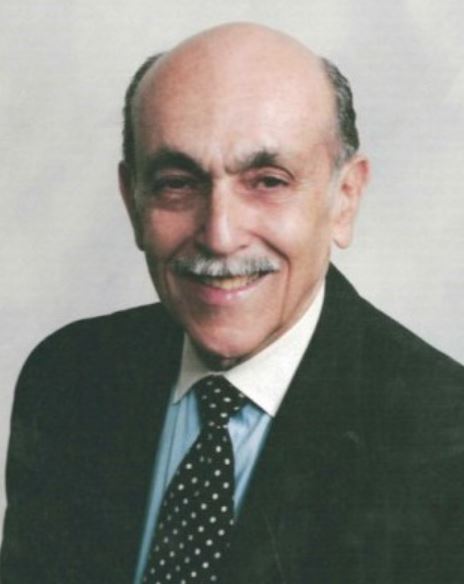
Hotel History: Boone Tavern Hotel at Berea College (1909), Berea, Kentucky*
Built on the old Dixie Highway and named after Kentucky explorer Daniel Boone, the historic Boone Tavern Hotel is located on College Square in Berea, Kentucky. The hotel is owned by Berea College and operated with student workers from the College Labor Program. Students earn money for books, room and board but do not pay tuition (valued at $25,500 per year), thanks to the generosity of donors who support Berea College's mission of providing a free high quality education for students primarily from Appalachia who have high academic potential and limited financial resources.
Berea College was founded in 1855 by abolitionists John Gregg Fee and Cassius Marcellus Clay* as a liberal arts work college which charges no tuition. Berea was the first college in the southern United States to be coeducational and racially integrated. It has a full-participation work-study program where students are required to work at least 10 hours per week in campus and service jobs in over 130 departments.
Continue Reading