History
Discover Eagle Mountain House, which was transformed from farmland to become one of New Hampshire’s premier resorts and golf clubs.
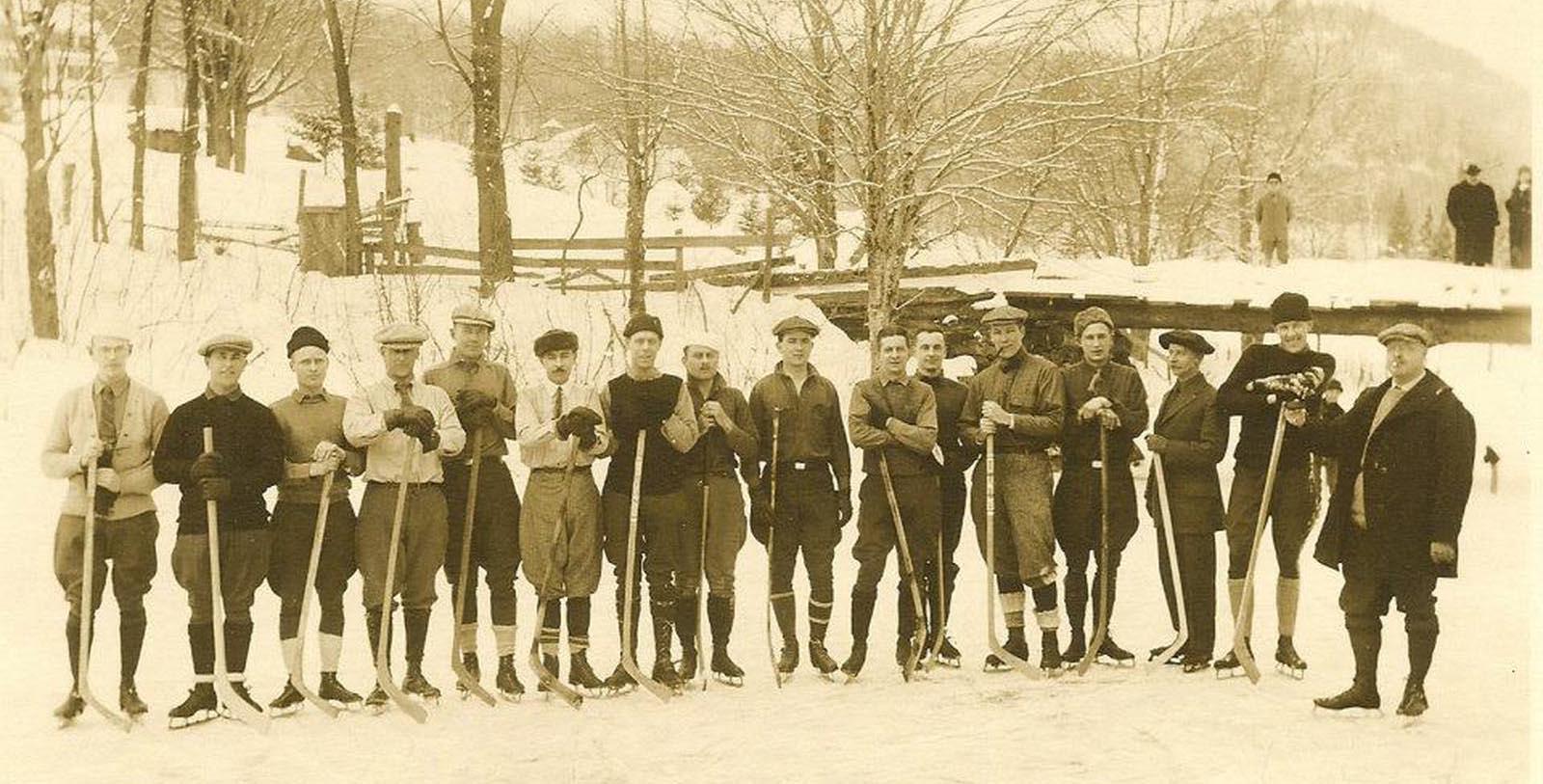
A member of Historic Hotels of America since 1996, Eagle Mountain House stands today as one of New England’s preeminent holiday destinations. It has offered elite hospitality since its debut over a century ago. The building first opened its doors at the start of the Gilded Age, when the surrounding White Mountains were rapidly transforming into a premier vacation hotspot. Artists in particular were among the people to visit the most frequently, often staying in barns while seeking unique natural landmarks to paint. Recognizing the economic potential all those tourists represented, local entrepreneurs began to construct their own inns and hotels. Two people to pursue this line of work were Cyrus and Marcia Gale, who converted their family’s farmhouse in Jackson, New Hampshire, into a hotel called the “Eagle Mountain House” during the 1870s. The Gale’s farm quickly became one of the most popular places to stay in the region, especially since it was located deep in the wilderness. In fact, most guests could only reach the retreat after following a trail that cut deep through the verdant woodland outside of downtown Jackson. To host the sheer number of travelers interested in staying at the Eagle Mountain House, the Gales eventually enlarged the building considerably to the point where it could entertain some 125 tenants. In fact, the Eagle Mountain House had expanded into an actual resort, which offered all kinds of recreational activities to experience on-site. Some of the events included dance parties that the hotel organized with its own orchestra. It even managed to be self-sufficient, with the Gales using the surrounding farmland as a reliable source for food.
In 1916, the Gales’ son, Arthur, took over the family business. He immediately left a significant impact on the building’s identity, overseeing a massive renovation that rebuilt the structure from the ground up. In doing so, he gave the Eagle Mountain House its well-known colonial-inspired appearance. Over the following years, Arthur Gale continued to enhance the appeal of the Eagle Mountain House as its national reputation grew stronger. Indeed, he specifically commissioned yet another massive renovation on the eve of the Great Depression that practically doubled the size of the building. (Other changes he implemented involved installing such iconic features like the expansive verandah and historic elevator.) But Arthur’s momentous stewardship of the Eagle Mountain House came to an unfortunate end with his death in 1957. His sister, Marcia Gale Chadbourne, and her family carried on his legacy for the next few decades, until her retirement during the 1970s. The Chadbournes subsequently sold their interest in the resort to a new ownership group, thus marking the end of nearly 90 years of continuous operation by the same family. Nevertheless, the Eagle Mountain House managed to preserve its fantastic reputation. Perhaps the greatest testimony to its enduring prestige was when the U.S. Secretary of the Interior listed the Eagle Mountain House on the U.S. National Register of Historic Places in 1990. The Eagle Mountain House remains one of the country’s best retreats, thanks in large part to the dedication demonstrated by its current owner, The Heaton Companies. The future of this fantastic location has never looked brighter.
Hotel Timeline
The Location
The quaint New England village of Jackson, New Hampshire resides within the shadow of Mount Washington, a celebrated national landmark that defines the landscape of White Mountain National Forest. The location possesses the highest point in the entire northeastern United States, with an elevation of more than 6,000 feet. Originally called “Agiocochock” by local Native American tribes, Mount Washington was named after George Washington shortly following the conclusion of the American Revolutionary War. The use of his name began a tradition in which the names of other U.S. presidents would be applied to the neighboring mountains. In all, seven other mountains bore the names of various presidents, forming a geographic location known as the “Presidential Range.” Those individuals are as follows:
- John Adams, 2nd President of the United States
- Thomas Jefferson, 3rd President of the United States
- James Monroe, 4th President of the United States
- James Madison, 5th President of the United States
- John Quincy Adams, 6th President of the United States
- Franklin Pierce, 14th President of the United States and New Hampshire’s only native son to sit in the Oval Office
- Dwight D. Eisenhower, 35th President of the United States
But local officials continued to name neighboring mountains after other prominent national figures, including Senators Henry Clay and Daniel Webster, as well as Founding Father Benjamin Franklin. The Presidential Range is one of the central features within White Mountain National Forest and can be navigated by traveling along the Presidential Traverse.
Mount Washington itself has attracted curious travelers for years due to its dominant command over the entire area. In fact, John Sebastian Cabot—one of the first Europeans to explore the New England coastline—could even see the mountain’s peak from the Gulf of Maine miles away. Americans have continuously visited Mount Washington ever since, as many have hiked through the region to experience its flora and fauna. Mount Washington today serves as a training ground for experienced hikers who plan to climb such harrowing destinations as Mount Everest and K2. In order for nature enthusiasts to traverse the steep topography of Mount Washington and the greater the Presidential Range, local outdoorsmen cut several massive trails throughout the countryside. Among the most historic of those trails is the Crawford Path, which was first developed by Ethan Allan Crawford in 1819. The pathway navigates the Crawford Notch to reach the summit of Mount Washington. Yet, there are many other novel ways to access the mountain, including the Victorian-era Mount Washington Cog Railway. Founded in 1868, it is the world’s first mountain-climbing cog railway!
Jackson itself is quite an interesting place, too. Its own history harkens back to the 18th century, when the first local settlers arrived from the neighboring settlement of Madbury. Granted the land from colonial governor John Wentworth, the colonists decided to establish a quaint little hamlet called “New Madbury” upon the site. The region became important after a couple pioneers cut a road through the nearby Pinkham Notch. As such, New Madbury was one of the few locations that was near a safe route through the towering White Mountains. In 1800, the community’s residents decided to rechristen it in honor of President John Adams, who was a popular figure throughout New England at the time. Nevertheless, the name was permanently changed a final time some two decades later after another American president, Andrew Jackson. Over time, Jackson gradually developed a reputation for the beauty of its surrounding geography. Artists were among the most responsible for creating this perception, particularly those belonging to the influential White Mountain School. Their romantic pictures of the area enticed even more people to travel north to Jackson. The town had thus become an incredibly popular tourist destination by the height of the Gilded Age. Jackson has since retained its identity as a fantastic wilderness retreat. It has also been visited regularly by enthusiastic alpinists, who enjoy using it as a base to further explore the Presidential Range. (Jackson is home to many unique attractions, too, such as the covered Honeymoon Bridge.)
The Architecture
When Arthur Gale completely redesigned the Eagle Mountain House in 1916, he chose Colonial Revival style architecture as the main sources of his inspiration. Colonial Revival architecture itself is perhaps the most widely used building form in the entire United States. It reached its zenith at the height of the Gilded Age, where countless Americans turned to the aesthetic to celebrate what they feared was America’s disappearing past. The movement came about in the aftermath of the Centennial International Exhibition of 1876, in which people from across the country traveled to Philadelphia, Pennsylvania, to commemorate the American Revolution. Many of the exhibitors chose to display cultural representations of 18th-century America, encouraging millions of people across the country to preserve the nation’s history. Architects were among those inspired, who looked to revitalize the design principles of colonial English and Dutch homes. This gradually gave way to a larger embrace of Georgian and Federal-style architecture, which focused exclusively on the country’s formative years. As such, structures built in the style of Colonial Revival architecture featured such components as pilasters, brickwork, and modest, double-hung windows. Symmetrical designs defined Colonial Revival-style façades, anchored by a central, pedimented front door and simplistic portico. Gable roofs typically topped the buildings, although hipped and gambrel forms were used, as well. This building form remained immensely popular for years until largely petering out in the late-20th century. Nevertheless, architects today still rely upon Colonial Revival architecture, using the form to construct all kinds of residential buildings and commercial complexes. Many buildings constructed with Colonial Revival-style architecture are even identified as historical landmarks at the state level, and the U.S. Department of the Interior has even listed a few of them in the U.S. National Register of Historic Places.
Guest Historian Series
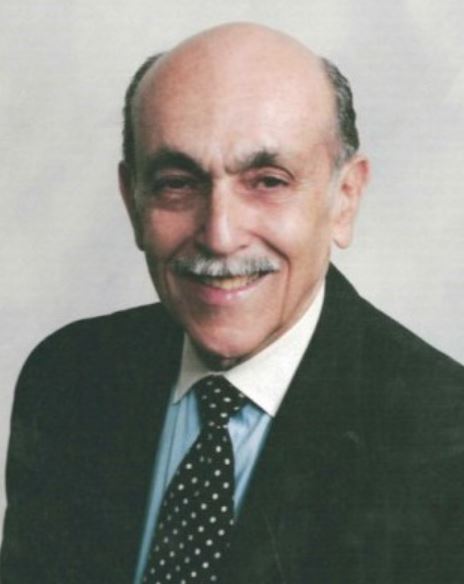
Hotel History: Eagle Mountain House (1879), Jackson, New Hampshire*
In 1879, the original Eagle Mountain House was created from a New England farm house which accommodated 12 guests. Cyrus and Marcia Gale operated the inn and a working farm which produced much of the food enjoyed by their guests. Late in the 1880s, the Gales built a few holes of golf which was the latest fad from Scotland. In 1915, the inn was consumed by fire but was rebuilt by Arthur P. Gale, son of Cyrus and Marcia Gale in 1916 with 75 guestrooms. World-famous photographer Clifton Church photographed many scenes around the inn in a darkroom created for him on the premises. In 1928-29, Gale doubled the size of the Eagle House and added sixty new guestrooms, a new private dining room, and an extended veranda on two levels.
Continue Reading