
History
Discover Fairmont Copley Plaza Boston, which is one of the architectural landmarks of Copley Square in Boston's historic Back Bay.
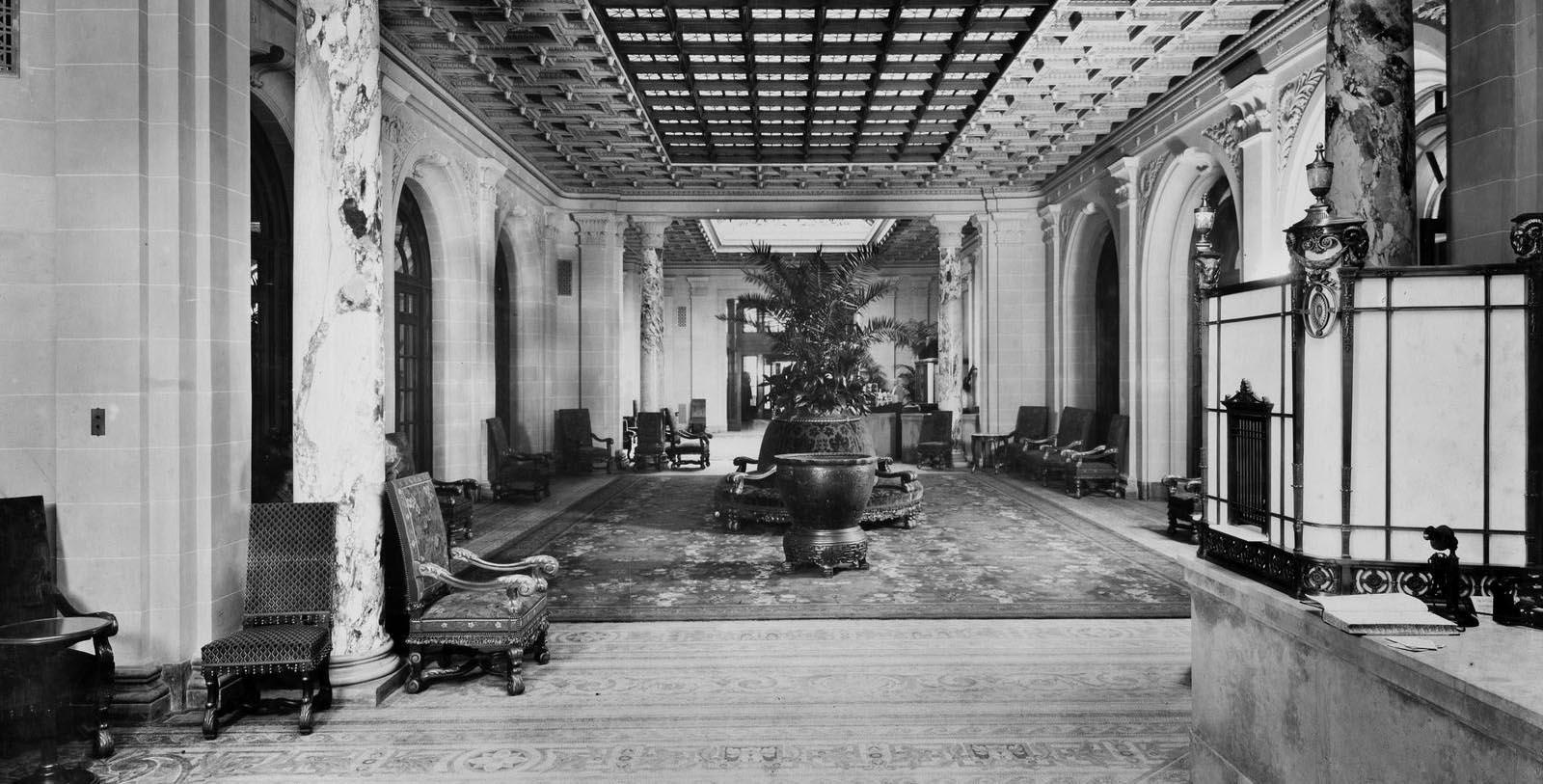
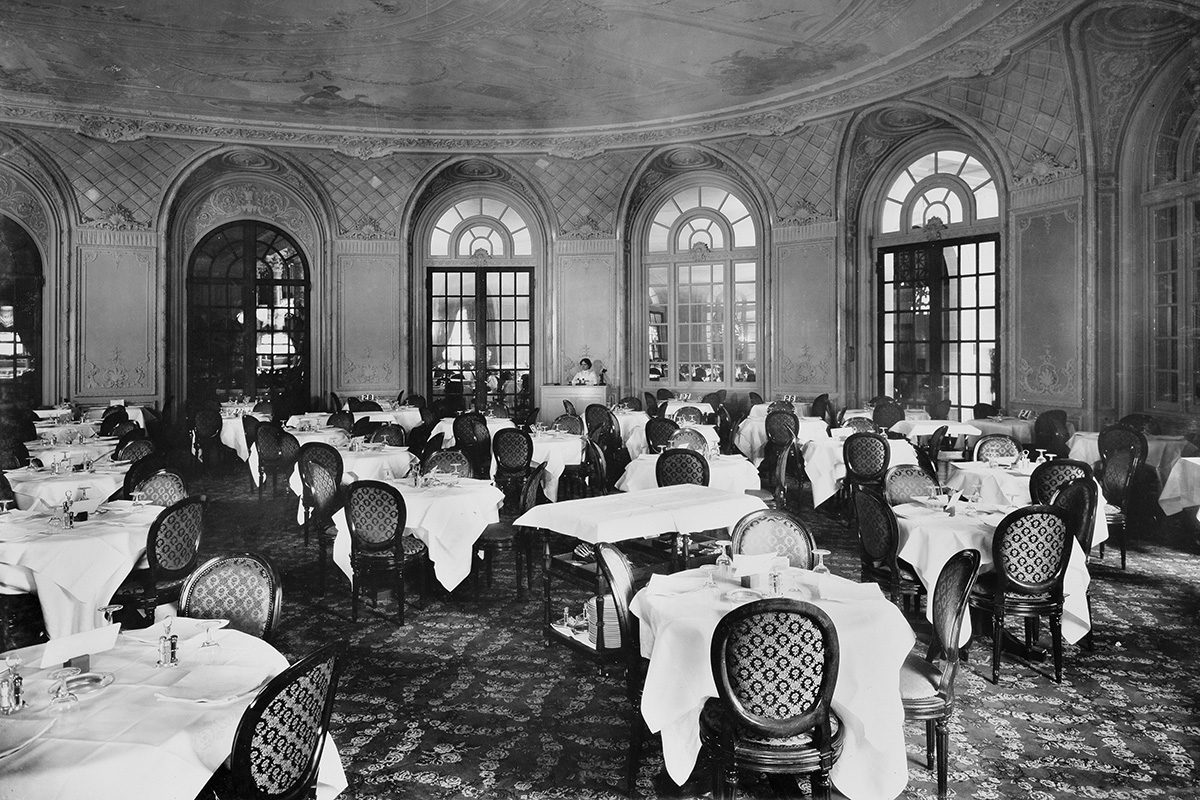
Named after John Singleton Copley, the Fairmont Copley Plaza Boston resides on the site of the originally Museum of Fine Arts. This magnificent historic destinations was designed by the great Henry Janeway Hardenbergh, who had designed other brilliant buildings like The Plaza in New York City and the Willard Hotel in Washington, D.C. What Hardenbergh created was nothing short of spectacular. When the hotel finally debuted in 1912 as the “Copley Plaza Hotel,” it was one of the finest examples of Renaissance Revival-style architecture in all of Boston. Costing some $5.5 million to complete, it stood as a beautiful seven-story structure made with limestone and buff brick. The hotel rested on a unique “E-shaped” foundation that was supported by pilings driven 70 feet deep. Its interior radiated an elegance allure, as they featured lavish décor and fascinating structure elements. Perhaps the greatest space inside the Copley Plaza Hotel was its 5,000-square-foot-lobby, Peacock Alley. Its stunning Second Empire-style crystal chandeliers and Italian marble columns awed all who laid their eyes upon them. Yet, the Copley Plaza Hotel also offered the most cutting-edge amenities of its day, becoming the first facility of its kind to have air-conditioning, an international booking engine, and a fully functional credit card system.
Since its opening, the Fairmont Copley Plaza Boston operated as a cultural hub for Boston’s social elite. In 1913, for instance, Hamilton Fish, Jr., held a “Lenten Dance,” where community leaders from the major metropolitan centers of the northern United States danced through the early hours of the morning. Artist John Singer Sargent practically lived at the hotel in its earliest years, painting several of his masterpieces while staying there. He even used one of the hotel’s elevator operators—Thomas McKeller—as the model for the Greek god Apollo in his renowned mural, Boston’s Apollo. Then, in 1935, local patrons hosted a dinner to celebrate Babe Ruth’s return to the Boston, having spent the previous 16 years of his baseball career with the New York Yankees. But countless other luminaries have stayed at the Copley Plaza Hotel throughout its history, including the likes of John Lennon, Lena Horne, and Frank Sinatra. Elizabeth Taylor and Richard Burton chose the hotel for their second honeymoon, as well, in 1975. Every U.S. President since William Howard Taft have graced the building with their presence, too, as have royalty from such countries like Belgium, Denmark, and the United Kingdom.
Soon enough, Sheraton Hotels and Resorts purchased the Copley Plaza Hotel in 1944, which renamed the business as the “Sheraton-Plaza Hotel” some nine years later. The building continued to operate under that name until 1973, when it was sold to John Hancock Insurance. Reverting back to its previous identity, John Hancock Insurance handed control over to a hospitality management firm called “Hotels of Distinction.” The Copley Plaza Hotel experienced another economic renaissance, as it became one of Boston’s most prestigious fine dining establishments during the 1980s. Its restaurants were some of the best in the city, employing such renowned chefs like Lydia Shire, Jasper White, and Gordon Hamersley. John Hancock Insurance eventually sold the hotel to Harvard University in 1989, which, in turn, hired Wyndham Hotels and Resort to manage it as the “Wyndham Copley Plaza.” Harvard then struck a deal to sell the hotel to Fairmont Hotels and Resorts in 1996. Rechristened as the “Fairmont Copley Plaza,” it remained under Fairmont’s control until it subsequently sold it to FelCor Lodging Trust for $98.5 million 14 years later. While Fairmont Hotels and Resorts no longer owned the business, it did retain the rights to manage it on FelCor’s behalf. Fairmont has since managed the hotel, even after it had changed hands several times over the last couple of years. Today, the Fairmont Copley Plaza Boston is among the most luxurious historic destinations in all of Boston.
Hotel Timeline
The Location
Like the Fairmont Copley Plaza Boston, Copley Square is named after artist John Singleton Copley. Prior to 1883, the area had actually been known as “Art Square,” due to the many cultural institutions that occupied the space at the time. As such, Copley Square became a center for cultural innovation in Boston throughout the late 19th century. Among the fascinating organizations to call Copley Square home then were the Museum of Fine Arts, the New England Museum of Natural History, the Boston Public Library, and the American Academy of Arts and Sciences. Prestigious schools, in particular, resided near the location, as well, including the likes of Boston University, Emerson College, and the Massachusetts Institute of Technology. Several renowned historic sites are also located nearby, like the New Old North Church and Trinity Church. Today, Copley Plaza continues to captivate the imagination of people throughout Boston, as it remains one of the most popular places in the city. It has even hosted the famous Boston Marathon every single year since 1986. A glorious monument commemorating the centennial anniversary of the event can be found in Copley Square near the corner of Boylston and Dartmouth streets.
Copley Plaza itself is part of Boston’s celebrated Back Bay neighborhood. But Before Back Bay emerged as one of Boston’s most famous regions, it was once a tidal basin that entertained local fisherman for generations. In 1814, the Boston and Roxbury Mill Corporation began constructing a milldam just south of Boston Neck. Not only did the dam serve as a toll road that directly connected Boston to Watertown, it also helped regulate the flow of the local tidewater in Back Bay. As such, the area became friendlier to commercial and residential development. Nevertheless, the project was considered an economic failure by the 1850s, due to the high cost in running the construct. In the end, local civic leaders started dredging the area enclosed by the dam in 1857. The firm Goss and Munson built additional railroad tracks through the neighborhood for that exact purpose, delivering fill from quarries in Needham some nine miles away. City officials initiated another round of dredging in 1882, adding more land in what is now Kenmore Square and The Fens over the next two decades. The entire scheme was one of the largest land reclamation projects in American history, which had led the U.S. Department of the Interior to designate Back Bay as a national historic landmark.
The Architecture
The Fairmont Copley Plaza Boston itself displays some of the finest Renaissance Revival architecture in all of Boston, specifically French and Venetian styles. Renaissance Revival architecture—sometimes referred to as "Neo-Renaissance”—is a group of architecture revival movements that date back to the 19th century. Neither Grecian nor Gothic in their appearance, Renaissance Revival-style architecture drew inspiration from a wide range of structural motifs found throughout Early Modern Western Europe. Architects in France and Italy were the first to embrace the artistic movement, who saw the architectural forms of the European Renaissance as an opportunity to reinvigorate a sense of civic pride throughout their communities. As such, those intellectuals incorporated the colonnades and low-pitched roofs of Renaissance-era buildings, with the characteristics of Mannerist and Baroque-themed architecture. Perhaps the greatest structural component to a Renaissance Revival-style building involved the installation of a grand staircase in a vein similar to those located at the Château de Blois and the Château de Chambord. This particular feature served as a central focal point for the design, often directing guests to a magnificent lobby or exterior courtyard. Yet, the nebulous nature of Renaissance Revival architecture meant that its appearance varied widely across Europe. As such, historians today often find it difficult to provide a specific definition for the architectural movement.
Henry Janeway Hardenbergh led the design team in charge of creating the Fairmont Copley Plaza Boston's iconic appearance. Born to a Dutch family in 1847, Hardenbergh attended the Hasbrouck Institute in Jersey City, New Jersey. He then apprenticed under Detlef Lienau in the 1860s before opening his own practice in 1870. Through family connections, Hardenbergh quickly obtained contracts to work on three buildings at Rutgers College, specifically Alexander Johnston Hall, Geology Hall, and the Kirkpatrick Chapel. Incredibly talented, he acquired additional work to design Vancorlear, which was New York City’s first apartment hotel. At the height of the Gilded Age, Hardenbergh received countless commissions to construct various apartment complexes, the vast majority of which were located in downtown New York City. Within his portfolio of work were the Dakota Apartments in Central Park West. Yet, he continued to work on hotels on several occasions, including Waldorf and its neighboring Astoria in the 1890s. But perhaps his most recognizable hotels were The Plaza in Manhattan and the new Willard Hotel further south in the nation’s capital. At the same time, Hardenbergh joined the American Institute of Architects, as well as the National Academy of Design. He was even a founding member of the American Fine Arts Society, and served as president of the Architectural League of New York. Today, Hardenbergh was remembered as one of the most influential architects of America’s Gilded Age.
Famous Historic Guests
- Richard Burton, actor known for his roles in Cleopatra and Where Eagles Dare.
- Elizabeth Taylor, celebrated actress known for her roles in Cleopatra and The Taming of the Shrew.
- Lena Horne, actress and civil rights activist remembered for her roles in Stormy Weather, Cabin in the Sky, and The Wiz.
- Frank Sinatra, singer and actor part of the famous Rat Pat known for selling 150 million records worldwide.
- John Lennon, lead vocalist and rhythm guitarist for the legendary rock band, The Beatles.
- John Singer Sargent, considered by many to be the “leading portrait painter of his generation.”
- Luciano Pavarotti, one of the most famous Italian opera singers of the 20th century.
- Babe Ruth, outfielder for the New York Yankees that is regarded as being the best baseball player in the sport’s history.
- William Howard Taft, 27th President of the United States (1909 – 1913) and 10th Chief Justice of the United States (1921 – 1930)
- Woodrow Wilson, 28th President of the United States (1913 – 1921)
- Warren G. Harding, 29th President of the United States (1921 – 1923)
- Calvin Coolidge, 30th President of the United States (1923 – 1929)
- Herbert Hoover, 31st President of the United States (1929 – 1933)
- Franklin Delano Roosevelt, 32nd President of the United States (1933 – 1945)
- Harry S. Truman, 33rd President of the United States (1945 – 1953)
- Dwight D. Eisenhower, 34th President of the United States (1953 – 1961), and Supreme Allied Commander Europe during World War II.
- John F. Kennedy, 35th President of the United States (1961 – 1963)
- Lyndon B. Johnson, 36th President of the United States (1963 – 1969)
- Richard Nixon, 37th President of the United States (1969 – 1974)
- Gerald Ford, 38th President of the United States (1974 – 1977)
- Jimmy Carter, 39th President of the United States (1977 – 1981)
- Ronald Reagan, 40th President of the United States (1981 – 1989)
- George H.W. Bush, 41st President of the United States (1989 – 1993)
- Bill Clinton, 42nd President of the United States (1993 – 2001)
- George W. Bush, 43rd President of the United States (2001 – 2009)
Film, TV and Media Connections
- The Brinks Job (1978)
- Starting Over (1979)
- The Firm (1993)
- Blown Away (1994)
- Next Stop Wonderland (1998)
- The Boondock Saints (1999)
- Stolen! (2005)
- Bride Wars (2008)
- My Best Friend’s Girl (2008)
- The Company Men (2010)
- Zookeeper (2011)
- That’s My Boy (2012)
- American Hustle (2013)
- The Forger (2014)
- Live by Night (2017)
- The Equalizer 2 (2018)
- Little Women (2019)
Guest Historian Series
The Copley Plaza Hotel opened in August 1912 on the original site of the Boston Museum of Fine Arts. It was named in honor of John Singleton Copley (1738-1774), the great American painter. It was designed by Henry Janeway Hardenburgh who was the architect for the Plaza Hotel in New York and the Willard Hotel in Washington, D.C. The grand opening attracted celebrities, socialites and dignitaries such as Boston Mayor John F. Fitzgerald, grandfather of President John F. Kennedy.
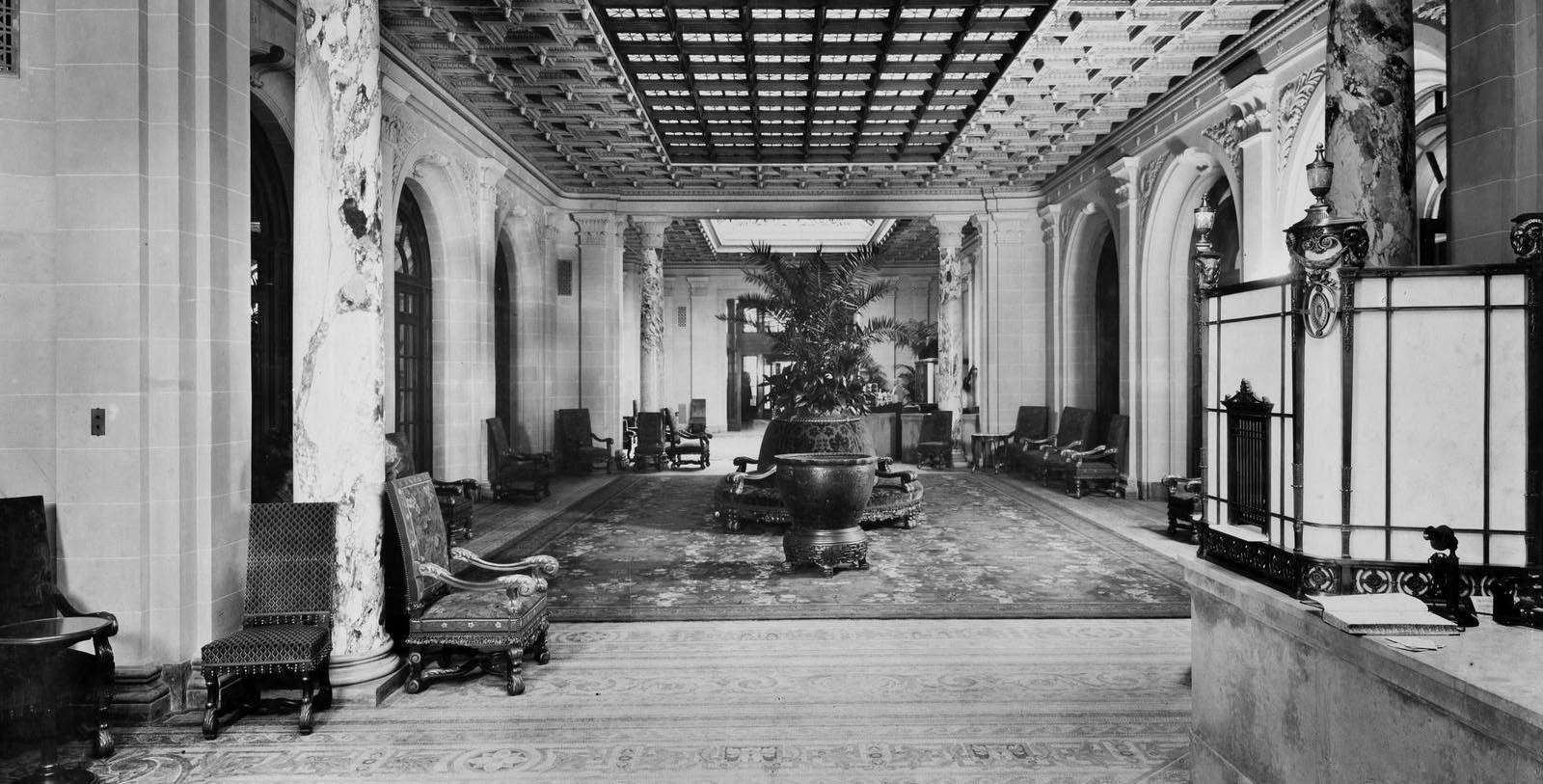
The entrance hallway has been called Peacock Alley since the 1920s (after the famous showplace in the original Waldorf-Astoria in New York). The 5,000 square-foot lobby has a 21-foot high gilded coffered ceiling with matching Empire style crystal chandeliers and Italian marble columns. Much of the classical architecture and decor have been preserved, including the back-to-back "P" monogram. The hotel is known for these industry firsts: the first completely air conditioned hotel in Boston, the first hotel with an international reservation system and the first to accept credit cards.
CONTINUE READING