History
Discover Hawthorne Hotel, which was named after Nathaniel Hawthorne and because of its location on the newly widened Hawthorne Boulevard.
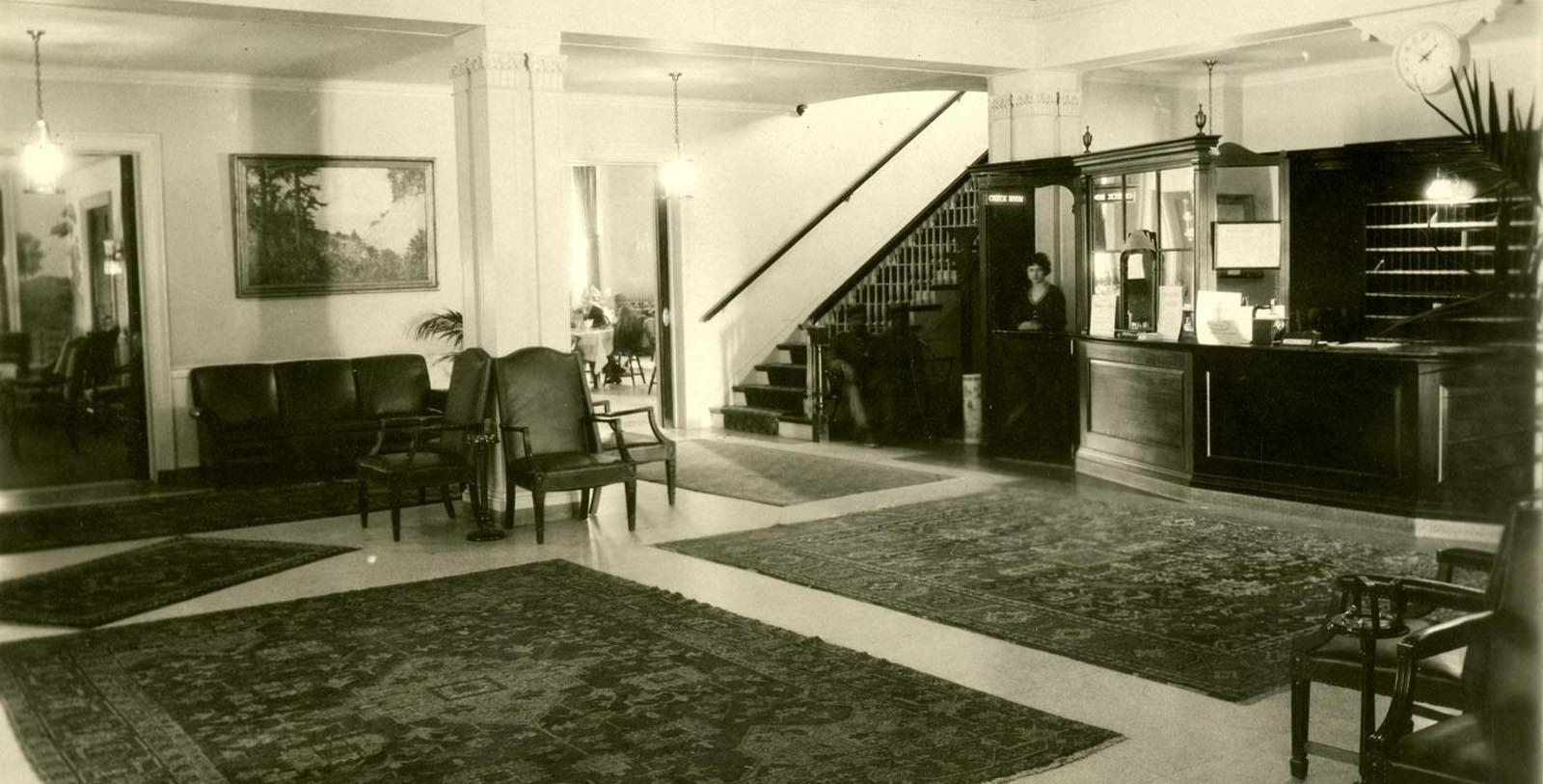
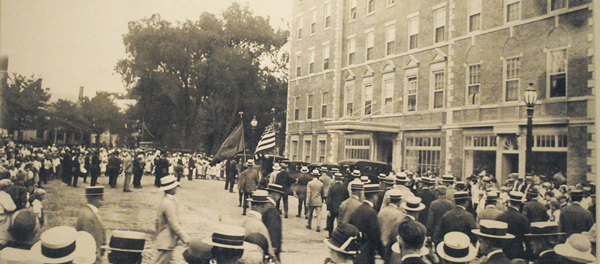
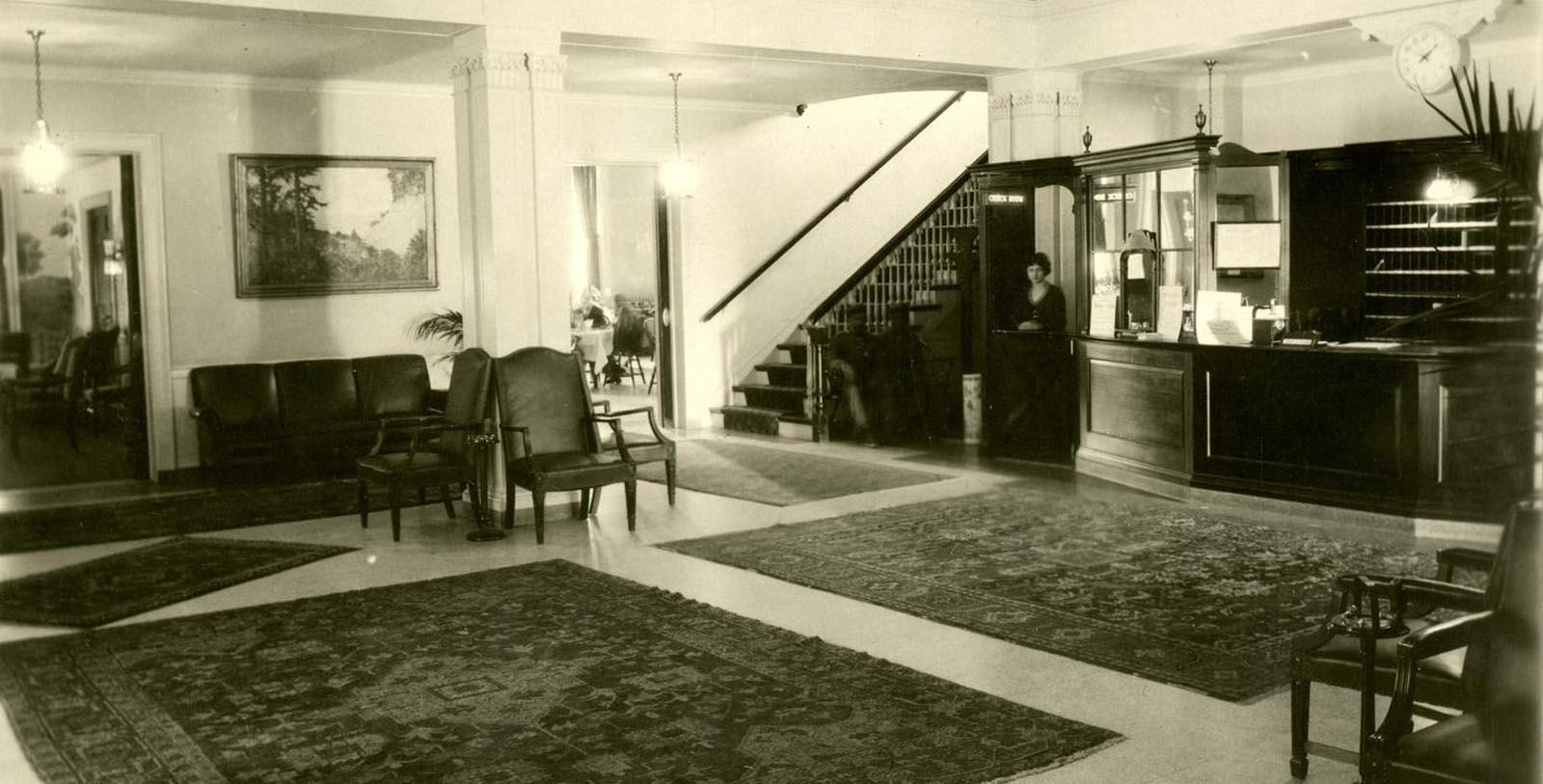
A member of Historic Hotels of America since 1991, Hawthorne Hotel in Salem, Mass. has been one of the most cherished landmarks in Salem for a century. In the 1920s, the town’s business community embarked upon a journey to build, “Salem’s own hotel…to meet the particular needs of Salem, its guests, and visitors.” They quickly formed the Salem Hotel Company and elevated Sylvania founder and North Shore native Frank Poor to serve as its first president. Together with the Salem Chamber of Commerce and the Salem Rotary, the Salem Hotel Company raised over $500,000 for the construction of the hotel through the sale of public stock. The location chosen for the new hotel was at the intersection of Hawthorne Boulevard and Washington Square West, which sat adjacent to the beautiful Salem Common. The site was near three buildings with connections to Nathaniel Hawthorne: the Mall Street home where he wrote the Scarlet Letter; the Herbert Street home where he grew up and began writing; and his birthplace on Union Street, which was later moved to the House of the Seven Gables complex. Also taken into consideration was the location’s close proximity to the Peabody Museum, the Essex Institute, the House of the Seven Gables, and the downtown retail center. During the final push for fundraising, the hotel group had raised an extra $10,000 to move the famous statue of Nathaniel Hawthorne to Hawthorne Boulevard from its prior location at the Museum of Fine Arts in Boston. The ownership group even decided to name the business after the author, ultimately calling it the “Hawthorne Hotel.” Debuting before thunderous applause in July of 1925, the new magnificent destination offered 150 outstanding guestrooms, as well as a two-story lobby complete with a mezzanine and balcony.
To meet the demand of the growing number of automobiles, the Hawthorne changed its name to the “Hawthorne Motor Hotel” during the 1950s. In an effort to appear more modern, the owners temporarily covered the beautiful Palladian windows in the Grand Ballroom, replaced the second-floor balcony with meeting space, and enlarged many of the guestrooms. Nevertheless, the hotel remained a fixture in the local community for decades thereafter. It even attracted scores of illustrious guests, including the likes of Bette Davis, Vanessa Redgrave, and Johnny Cash. But it was the television sitcom Bewitched that brought the Hawthorne Hotel its greatest fame. In 1970, Elizabeth Montgomery, her real-life husband Bill Asher, and the rest of the cast and crew stayed at the Hawthorne Hotel while filming episodes for the program. The hotel was flooded with calls asking if it was the “Bewitched Hotel” for years after “The Salem Saga” first aired. This amazing historic hotel continues to be a choice destination for some of the most noteworthy people in America. It has entertained many powerful figures in recent years, including General Colin Powell, as well as presidents George H.W. Bush and Bill Clinton. Hollywood greats Robert de Niro, Jennifer Lawrence, and Bradley Cooper also filmed scenes at the hotel for their Golden Globe-winning movie Joy. The hotel has even hosted the reality stars of the hit television program, Real Housewives of New York. Truly few places can claim to possess such a rich heritage than the spectacular Hawthorne Hotel. In fact, Historic Hotels of America has even awarded the Hawthorne Hotel its Award of Excellence for “Best City Center Historic Hotel” in 2015!
Hotel Timeline
The Location
Located a half-hour north of Boston at the mouth of the Naumkeag River, Salem, Massachusetts, is one of America’s most historic towns. It was among the first permanent settlements established in the United States, having been founded by a band of Puritan fisherman. Under the direction of Roger Conant, the colonists quickly erected a small village upon the site of an abandoned Native American trading post. They called their new community “Naumkeag” at first, only to change it to “Salem,” an anglicized version of the Hebrew word for “peace.” Yet, the town languished for several years thereafter, which eventually forced John Endicott to assume control over the area via the Massachusetts Bay Company. Thanks to Endicott, Salem quickly became one of the most important settlements in colonial Massachusetts. Its shoreline emerged as a bustling seaport, filled with small fishing sloops and cutters that busily mined the ocean for all kinds of cod and haddock. Salem also featured the first official Congregational Church in the “New World,” with the great Roger Sherman serving as one of its pastors. (Sherman would later be expelled from Massachusetts for his religious views, fleeing south to create a new colony called “Rhode Island” around Narraganset Bay.) Local residents constructed Fort Pickering on nearby Winter Island, as well, which proceeded to guard the town’s harbor for the next two centuries. John Endicott himself was even elected as a colonial governor, working from inside a municipal structure known as the “Great House” throughout the duration of his term. Yet, Salem’s tranquility was eventually shattered by one of the most explosive events in American history: The Salem Witch Trials.
In 1692, two young girls named Abigail Williams and Elizabeth Perry began having uncontrollable fits of rage that were uncharacteristic of their normal temperament. When a local doctor diagnosed witchcraft as a possible aliment, several more women started to act similarly. They eventually claimed that three other women in the community had summoned the devil to bewitch them, thus, attempting to damn their souls. The girls specifically accused a homeless pauper, a destitute widower, and slave girl called “Tituba” as the culprits. Those women, in turn, were brought before two local magistrates—Jonathan Corwin and John Hathorne—for judgment in Salem’s courthouse. But while two of the women professed their innocence, Tituba confessed in a misguided gesture to gain the court’s mercy. Her revelation was made all the most incendiary when her supposed victims continued to writhe in the presence of Corwin and Hathorne during the trail. Yet, Tituba also claimed that other residents in Salem had practiced dark magic, inciting a hysteria that lasted for several months among the region’s deeply religious population. By the summer of that year, nearly 200 other people were accused of witchcraft. The flood of cases became so overwhelming that the colonial governor of Massachusetts, William Phips, had to arrange a special tribunal to handle the matter. The judiciary even decided to execute 19 of the condemned, although several died in prison beforehand. One of the convicted—a man named Giles Corey—was even pressed to death for refusing to submit to a plea. The public increasingly grew tired of the trials over time, though, with even the great preacher Cotton Mather denouncing the prosecutions. Governor Phips eventually ceased the entire inquiry when his wife became a suspect, pardoning all of the guilty in 1693.
As the fires of revolution spread throughout Massachusetts in the 1760s and 1770s, local patriots band together to support the cause of independence. Salem itself quickly emerged as a popular haven for privateers—a role it maintained when America and Great Britain went to war again four decades later in 1812. Town officials even managed to organize the militia to prevent the British from seizing ammunition housed in Salem on the eve of the Battles of Lexington and Concord. Salem remained an important port in the years that followed the American Revolution, developing both a lucrative fishing and shipbuilding industry. Yet, its maritime commerce eventually declined when foreign investors opted to move their shipments to deeper harbors around the middle of the century. Salem’s entrepreneurial class subsequently turned to manufacturing as an alternative, opening all kinds of factories and mills that produced such wares as textiles, shoes, and leather goods. Its most celebrated citizen, Nathaniel Hawthorne, was also born around the same time, too. A noted author, Hawthorne spent his formative years living in the community, before returning later in his life with his wife, Sophia. The community had left such a profound impact on Hawthorne that he used one of its most celebrated landmarks—a colonial home known as the “House of the Seven Gables”—for the setting for his now-famous novel of the same name. Today, Salem has retained its rustic colonial charm, which allures hundreds of curious visitors every year. It is home to many fantastic cultural attractions, too, including the Salem Willow Park, the Salem Witch Museum, and the Salem Maritime National Historic Site.
The Architecture
The Hawthorne Hotel today stands as a brilliant example of Colonial Revival-style architecture. Architectural historians today generally define American colonial architecture as covering a wide berth, subdividing it into categories like First Period English, French Colonial, Spanish Colonial, and Dutch Colonial. Yet, most professionals in the field believe that the aesthetics embraced by English—and later British—colonists to be the most ubiquitous, given their widespread cultural influence during America’s formative years. It dominated the architectural tastes of most Americans at the time, until the Federalist design principles overtook them in the 19th century. The style was especially predominant in New England, which quickly saw the creation of another two unique subtypes—Saltbox and Cape Cod-style. A different subset of English colonial architecture appeared within the southern colonies as well, which some experts refer to as “Southern Colonial.” The building style resembled the general trends embraced by other colonists in British America, although they differed in that they constructed a central passageway, massive chimneys, and a hall and parlor. Nevertheless, all of the buildings shared strikingly similar qualities. American homes of the age were both simple and symmetrical, and made use of either wood, brick, or stone. Rectangular in shape, they typically extended two to three stories in height. All of the formal parts of the home were located on the first floor, while the family bedrooms occupied the upper levels of the building. The floorplans were also fairly limited in scope, favoring to fill each level with just a couple of rooms. This simplicity was slowly modified with the arrival of Georgian-style architecture from Great Britain toward the end of the 18th century. Architects subsequently relied more upon mathematical ratios to achieve symmetry in their designs, and used, albeit with restraint, elements of classical architecture for ornamentation.
Famous Historic Guests
- Bette Davis, actress known for her roles in All About Eve, Jezebel, and What Ever Happened to Baby Jane?
- Vanessa Redgrave, actress known for her roles in such films like Julia, Camelot, and Morgan: A Suitable Case for Treatment.
- Alan Alda, actor best known for his role as “Hawkeye Pierce” on the television series, M*A*S*H
- Elizabeth Montgomery, actress best remembered for her role as “Samantha Stephens” on the sitcom, Bewitched.
- Dick Sargent, actor best remembered for his role as “Darrin Stephens” on the sitcom, Bewitched.
- Johnny Cash, country music musician known for such singles like “I Walk the Line,” “Ring of Fire,” “Get Rhythm, and the “Folsom Prison Blues.”
- Walter Cronkite, broadcast journalist best known for hosting CBS Evening News during the 1960s and 1970s.
- Shimon Peres, 8th Prime Minister of Israel (1995 – 1996) and 9th President of Israel (2007 – 2014)
- Colin Powell, retired four-star general and first African American to serve as Secretary of State (2001 – 2005)
- Barbara Bush, First Lady to former U.S. President George H.W. Bush (1989 – 1993)
- George H.W. Bush, 41st President of the United States (1989 – 1993)
- Bill Clinton, 42nd President of the United States (1993 – 2001)
Film, TV and Media Connections
- Bewitched: The Salem Saga (1970)
- Ghost Hunters: Lyceum Restaurant & Hawthorne Hotel (2007)
- Joy (2015)
- Real Housewives of New York (2020)