
History
Discover Hotel Shattuck Plaza, which was originally constructed to honor the legacy of Francis Kittredge Shattuck, one of Berkeley’s founders.
By the middle of the 19th century, California had become a major destination for scores of Americans looking for exciting economic opportunities. Indeed, the onset of the eponymous California Gold Rush had captivated the minds of countless people across the country, who yearned to cultivate their own significant fortunes. Among the many ambitious individuals to pursue such a dream was a young Yankee schoolteacher named Francis Kittredge Shattuck. In 1850, Shattuck and his brother-in-law George Blake headed west for San Francisco, intent on opening several mines out in the surrounding countryside. They subsequently formed a partnership with two other men—William Hillegass and James Leonard—to acquire four adjoining 160-acre strips of land within what is now downtown Berkeley. But while the group had initially hoped to immediately start their mining operation, they soon saw better financial prospects in the village of Berkeley that was forming nearby. Leasing the land for commercial development, the men became immensely wealthy in just a handful of years. Shattuck had taken a lead role on a variety of projects, including the establishment of a valuable Central Pacific Railroad train depot. His personal prosperity had even granted him considerable political influence, coming to serve as both mayor of neighboring Oakland and councilor for the Alameda County Board of Supervisors around the eve of the American Civil War. Shattuck found creative ways to display his affluence, too, such as creating an ornate manor that he built in the heart of Berkeley in 1868.
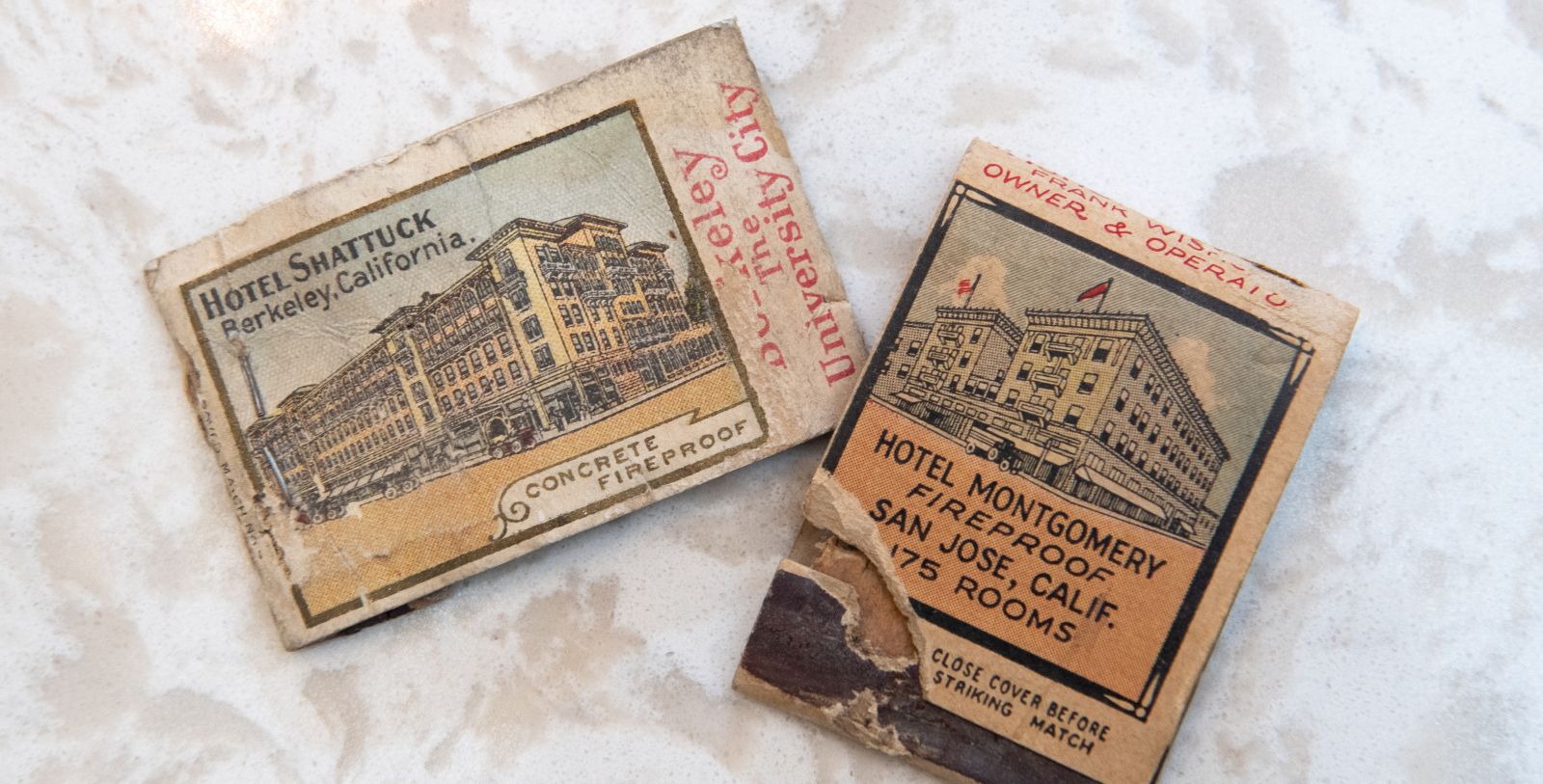
Francis Kittredge Shattuck remained invested in the future growth of the region for the rest of his life, with many fellow residents hailing him as an important civic leader. Unfortunately for the community, Shattuck unexpectedly passed away during the late 1890s, leaving his family and friends profoundly heartbroken. In the wake of his death, his widow—Rose Shattuck—began to consider ideas to potentially honor his legacy and came to embrace a plan to construct a luxurious hotel upon the site of the couple’s home in Berkeley. The scheme had been the brainchild of the Shattucks’ nephew, John W. Havens, who—along with a few trusted partners—started raising funds to create the building in 1907. Amid the fundraising campaign, Havens and his colleagues proceeded to organize an expansive design competition, which the talented local architect Benjamin G. McDougall won. Work then officially commenced, taking several months and some $500,000 to finish. Residents throughout Berkeley celebrated the stunning hotel as an architectural masterpiece, finding McDougall’s imaginative use of Mission Revival style motifs to be breathtaking. Furthermore, the structure incorporated design concepts considered ingenious for the time, such as the incorporation of an internal fireproofed skeleton. When the “Hotel Berkeley” made its debut in 1910, it gained a prestigious reputation as being one of the best in the whole San Francisco Bay region.
The structure’s renowned architectural appearance and noted hospitality made it a premier social gathering spot in downtown Berkeley within a mere handful of months. Occupancy remained full most days of the week, while grand soirees of all kinds were regularly held inside the extravagant meeting spaces. In fact, its popularity grew so great that Havens and his cohort expanded the building to offer another 120 guestrooms in 1914! (Interestingly, many of the first guests to reside within the new wing were attendees of the iconic Panama Pacific International Exposition, which was being held in San Francisco.) Although ownership eventually changed during the 1920s, the business would preserve its vaunted reputation. Now known as “Hotel Shattuck Plaza,” this magnificent historic structure has still managed to endure as an incredible vacation getaway. Current owners Radiate Hospitality have endeavored to maintain this standard after becoming the steward in 2007, investing heavily to ensure that the building’s offerings continue to provide the best in contemporary comfort. However, the company has striven to protect the building’s heritage, especially given its rich connection to Berkeley’s early history—as well as one of its esteemed founders. The best symbol of Radiate Hospitality success has been the building’s continued designation as an important historic site by the City of Berkeley Landmarks Preservation Commission. Not only are guests guaranteed to appreciate the rich amenities of Hotel Shattuck Plaza, but they are certain to enjoy its historical elegance, too.
Hotel Timeline
The Location
Long before European settlers arrived, the site of Berkeley, California, was originally inhabited by the Ohlone people. Those indigenous inhabitants lived in small hamlets, thriving on the region's abundance of rich natural resources. More specifically, they were skilled hunters, fishers, and gatherers, who possessed deep spiritual connections to the countryside. However, the history of the area changed forever once a group of Spanish explorers encountered the territory during the late 18th century. Led by Juan Bautista de Anza, the expedition set about exploring the wider San Francisco Bay until establishing the Presidio of San Francisco near the Golden Gate. Among the soldiers accompanying Juan Bautista de Anza was Luis Peralta, who eventually received a vast stretch of land for his services to the Spanish Crown. The grant proved to be incredibly expansive, incorporating hundreds of acres that included the location of modern Berkeley. Nevertheless, Peralta subsequently referred to his domain as the “Rancho San Antonio,” and went on to develop a ranch that raised countless livestock. Peralta then subdivided the estate between his four sons, with most of present-day Berkeley falling within the portion given to Domingo Peralta. But while the Peralta family's landholdings continued to exist under Mexican sovereignty after the Mexican War of Independence, the Rancho San Antonio was occupied by foreign prospectors at the start of the California Gold Rush.
Now a part of the newly formed American state of California, the area’s new residents proceeded to form numerous settlements across the former Rancho San Antonio, including a village called “Berkeley.” Although initially located inside the township of Oakland, Berkeley began to possess its own autonomy following the founding of the University of California, Berkeley, in the wake of the American Civil War. Thanks to the emergence of the college, the entire area underwent a prolonged period of expansion that lasted through the height of the Gilded Age. Various corporations became encouraged to conduct business within Berkeley, such as the prominent transcontinental Central Pacific Railroad, which opened an exclusive branch right in the heart of the community. But the presence of the school motivated all kinds of intellectuals to relocate to Berkeley, like artists, writers, and scientists. This development in turn helped push Berkeley to reach the size of an actual city, obtaining an official charter from the California state government in 1909. Although the Great Depression briefly stunted its growth for a time, Berkeley still remained one of the most important communities in all of California throughout the 20th century. For instance, Berkeley saw an influx of workers for newly minted local munitions factories during World War II, while the University of California, Berkeley’s faculty spearheaded many unique scientific projects on behalf of the Allied armies.
In fact, one noted professor, renowned physicist J. Robert Oppenheimer, even went on to serve as director for the consequential Manhattan Project! The area continued to maintain its cultural importance well after the end of the conflict, with the University of California, Berkeley, emerging at the center of the Countercultural movement of the 1960s. Indeed, the school was soon host to a historic group of political activists remembered as the “hippies,” who vehemently backed the Free Speech Movement and anti-Vietnam War protests of the era. Large public demonstrations routinely occurred on the University of California, Berkeley, campus, which ultimately galvanized support for those social campaigns on a national level. Berkeley has since preserved its identity as a dynamic, eclectic city, celebrated for its progressive values, diverse population, and vibrant setting. It has become an extremely popular vacation hotspot due to the many fascinating cultural institutions that call Berkeley home, like the Thorsen House, the Berkeley Botanical Gardens, and the Berkeley Art Museum and Pacific Film Archive (BAMPFA). The University of California, Berkeley, has maintained its status as an elite educational institution, earning an international reputation in recent years for its contemporary focus on the STEM disciplines. The city's journey through time truly reflects the broader social, cultural, and technological changes that have shaped both California and the United States. As Berkeley looks to the future, it continues to be a beacon of innovation and creativity in the present.
The Architecture
Hotel Shattuck Plaza stands today as a brilliant example of California Mission Revival. An offshoot of the larger Spanish Colonial Revival-style, California Mission Revival first emerged in the United States during the Gilded Age. The movement enjoyed its greatest popularity from 1890 to 1915, although it continued to be used by architects well into the late 20th century. The California Mission Revival style of architecture—and subsequent Spanish Colonial Revival style—have a historical and cultural predominance in the southwestern United States, as it is a common sight throughout that region of the country. Franciscan monasteries built across California during the 1700s were the main inspiration for California Mission Revival-style architecture. In a manner reminiscent to those monasteries, buildings developed with California Mission Revival architecture embraced design principles that focused on necessity and security. As such, California Mission Revival-themed blueprints featured structures centered around an enclosed courtyard with massive adobe walls. The walls had broad, unadorned stucco surfaces containing limited fenestration, red clay tiling, and low-pitched roofing. Other prominent structural components to California Mission Revival-style buildings included an enfilade of interior spaces, semi-independent bell-gables, and curved “Baroque” gables installed on the primary façade. Many of these architectural components can still be seen inside surviving Mission Revival-style structures today, such as stucco walls, open archways, and red tile roofing.
Film, TV and Media Connections
Oppenheimer (2024) - When Oppenheimer was filmed, the Hotel Shattuck Plaza's Crystal Ballroom served as the 'Green Room' for the production while the crew did the videography at the UC Berkeley Campus.