History
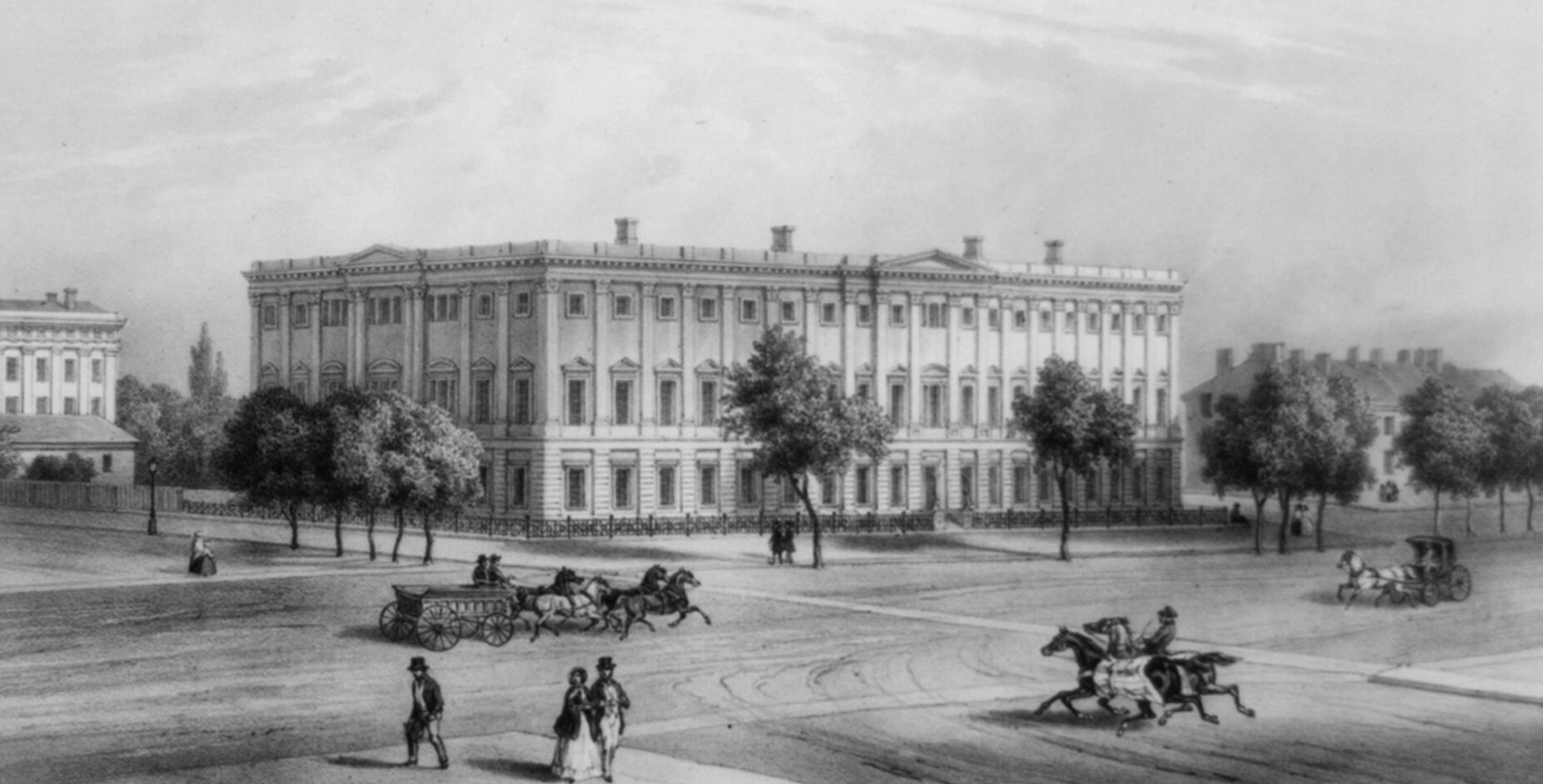
Discover the Kimpton Hotel Monaco Washington, D.C., which was once the General Post Office building in Washington, D.C.
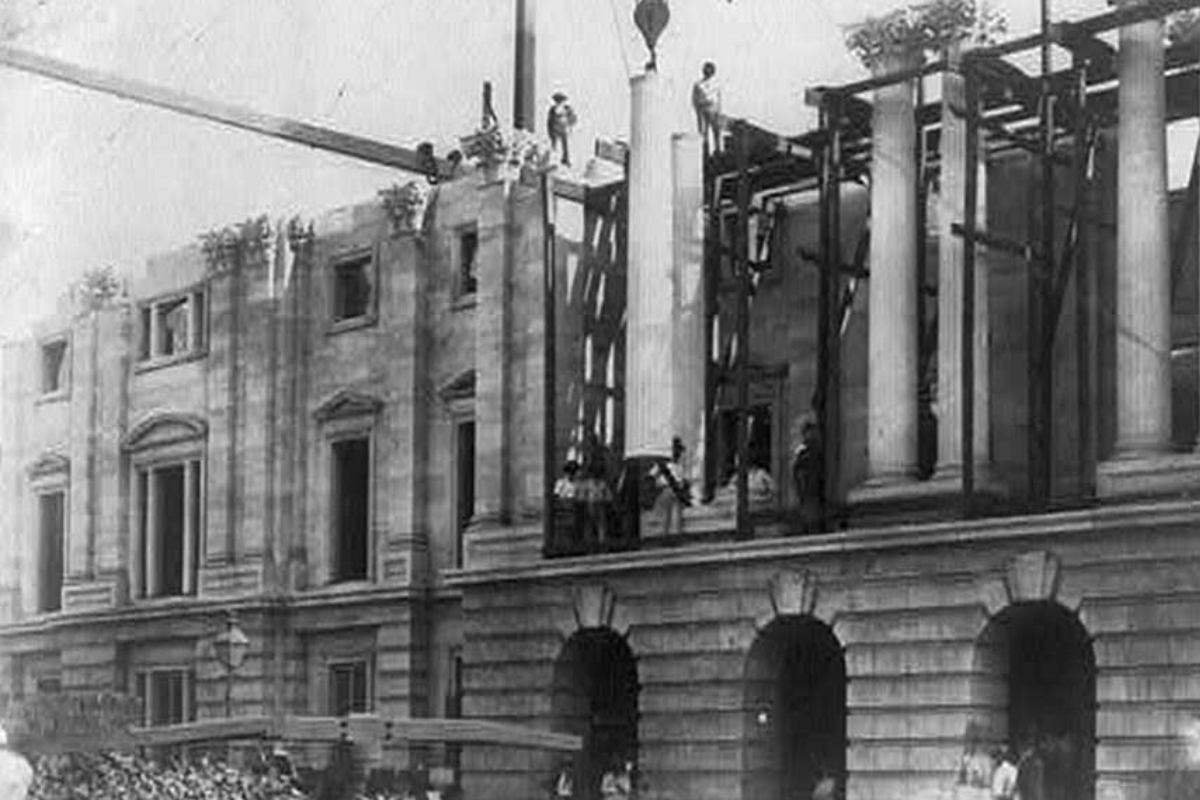
By the beginning of the 19th century, the U.S. Post Office Department was in dire need of a new home capable of housing its ever-expanding responsibilities. More specifically, the agency required a structure that was both spacious and secure, guaranteeing the protection of the mail charged to its care. U.S. President Andrew Jackson commissioned the construction of a replacement edifice in 1836, tasking the renowned architect Robert Mills to oversee the design process. Completed six years later, Mills’ building possessed a revolutionary configuration. He laid an ingenious U-shaped foundation for the site, which supported a superstructure that featured nearly a dozen interconnected wings. Gorgeous Neoclassical motifs molded the building’s stunning appearance, such as replica Corinthian pilasters, arcaded recesses, and peaked window lintels. The interior layout contained its own striking aesthetics, like barrel-vaulted corridors, rounded alcoves, and cantilevered granite staircases. The most remarkable architectural feat was Mills’ ability to incorporate marble throughout the entire exterior, making it the first all-marble building of its kind to debut in the District of Columbia. But as the city grew, so did the need for even more efficient postal services. Thus in 1855, Thomas Ustick Walter, best known for planning the dome of the U.S. Capitol around the same time, was appointed to oversee the building’s expansion. Walter extended the length of the structure to reach 19 bays, in turn enlarging it to encompass a whole city block. However, his addition was in sync with Mills’ vision, having used native Maryland marble to complement the original masonry.
Referred to simply as the “General Post Office,” the structure became central to the daily operations of the federal government. Thousands of parcels departed from the facility for many years, heading out to the numerous civil servants stationed throughout Washington, D.C. Several innovative postal techniques were even developed on-site, including the first door-to-door mail delivery system to be implemented in the country. The General Post Office eventually decided to vacate the premises in 1897, renting it primarily to two smaller organizations instead: the U.S. General Land Office and the U.S. Bureau of Education. The National Service Selection Board was stationed within the structure during World War I as well, with General John J. Pershing using its available office space to write his final report about the wartime experiences of the American Expeditionary Force. Then in 1932, the forebearer of the current U.S. International Trade Commission, the U.S. Tarriff Commission, became the primary tenant of the historic General Post Office building. The U.S. Trade Commission would gradually occupy the entire grounds over the next five decades, utilizing the structure in its mission to supervise an important array of regulations involving intellectual property rights and commercial import practices. Despite its continued use, the building began to show signs of aging. In consequence, the U.S. International Trade Commission ultimately vacated the premises during the late 1980s. Recognizing its great cultural significance, the General Services Administration (GSA) sought a renewed purpose for the site and signed a lease with Kimpton Hotels & Restaurants in 2000.
A comprehensive adaptive reuse project then commenced, costing a total of $32 million to finish. The renovations proved to be extremely meticulous, turning the building into a breathtaking hotel called the “Kimpton Hotel Monaco Washington, D.C.” The library space of the Postmaster General was creatively reimagined to be a stunning ballroom, while the original courtyard contained a stylish, upscale dining establishment. Former offices were reborn as marvelous guestrooms and suites retaining noteworthy traits like their historic 16-to-22-foot-high domed ceilings. After two years of hard work, the Kimpton Hotel Monaco Washington, D.C. triumphantly opened to incredible acclaim. Although the Kimpton Hotel Monaco Washington, D.C. soon earned an enviable reputation due to its luxurious offerings, the building received an impressive array of accolades for the quality of its preserved architecture. For instance, the Washington, D.C. Mayor’s Award for Historic Preservation, the GSA Heritage Award for Adaptive Use, and the GSA Heritage Award for Conservation and Restoration were among the honors eventually bestowed onto the hotel. Now a widely celebrated U.S. National Historic Landmark, the Kimpton Hotel Monaco Washington, D.C. has remained an iconic destination thanks to the dedicated stewardship of the Pebblebrook Hotel Trust. (Pebblebrook Hotel Trust began overseeing the building on behalf of the GSA in 2010, intent on ensuring that its heritage would endure for future generations.) Yet, this fantastic historic hotel also continues to be a living monument, its rooms and corridors acting as a collective time capsule embodying the very essence of Washington, D.C.’s extensive civic history.
Hotel Timeline
The Location
Washington is among the nation’s most historic cities, having been founded more than two centuries ago by the Founding Fathers. In 1790, Congress specifically passed the “Resident Act” after James Madison, Thomas Jefferson, and Alexander Hamilton agreed to create a permanent national capital in the southern United States. Known as the “Compromise of 1790,” the men decided to place the future settlement somewhere in the South in exchange for the federal government paying off each state’s debt accrued via the American Revolutionary War. George Washington—who was serving his first term as President—then carefully looked for the site of the new city in his role as the country’s chief executive. He spent weeks searching for the perfect spot before finally settling upon a plot of land near the mouth of the Potomac River. Washington had felt that the location was in a terrific spot, for it was still roughly in the middle of the nation. Furthermore, he hoped its proximity near major seaports would further bind the emerging western states with the more established Atlantic coastline. Maryland and Virginia subsequently donated around 100 acres at Washington’s site, although Virginia would later rescind its donation in 1847.
Nevertheless, work on the capital began a year later and lasted for the duration of the decade. At the start of the project, the three federal commissioners in charge of supervising its progress decided to name the nascent settlement after the President himself. (They also named the federal district surrounding the city as “Columbia,” a feminine adaptation of Christopher Columbus’ name.) Noted French architect Charles L’Enfant spearheaded the city’s new design, and presented a bold vision that featured a layout reminiscent of his native Paris. But despite L’Enfant’s grand plans for Washington, only the first iterations of the United States Capitol, the White House, and a couple other prominent governmental structures appeared at the time. Barely any other buildings stood in the city when the entire federal apparatus relocated from Philadelphia to Washington in 1800. Life in early Washington was hard, too, for its residents were constantly beset by disease, poor infrastructure, and local economic depressions. What few residents remained in the city year-round endured the worse hardships during the War of 1812, when the British notoriously ransacked the community. In fact, the British had even torched the Capitol, the Treasury, and the White House.
Washington did not finally start to develop into an actual city until the middle of the 19th century, after investment in its upkeep increased dramatically. While additional federal buildings—including the General Post Office and the Patent Office—first appeared in the 1830s, a wave of municipal and residential construction flourished in the wake of the American Civil War. But much of the construction was conducted under the auspices of a territorial government that initiated dozens of new buildings projects, including the development of schools, markets, and townhouses. Streets were also paved for the first time, while modern sanitation systems were created for the many new neighborhoods debuting throughout the city. Congress even contributed to the local construction, especially after the territorial government bankrupted itself shortly after its founding. But the federal government had also created some of the city’s most iconic structures on its own at the same time, such as the Washington Monument, the National Mall, the Library of Congress complex, and a new United States Capitol. The climax of all this construction work materialized with the Senate Park Commission—remembered more commonly as the “McMillan Commission”—which offered a comprehensive series of plans to beautify the entire city.
It would take years to complete the recommendations of the McMillan Commission, though. Buildings and landscape designs that reflected the commission’s research appeared throughout the first half of the 20th century, especially once the federal government became more involved in international affairs after World War I. Dozens of art galleries, storefronts, and restaurants proliferated, transforming Washington into one of the nation’s most esteemed cultural capitals. Many new embassies also debuted within the city along Massachusetts Avenue, as well, giving rise to its iconic area of Embassy Row. Dozens of new monuments appeared throughout Washington, too, such as the iconic Lincoln Memorial. Some of the most significant construction transpired during the administration of Franklin Delano Roosevelt, which helped spur the creation of an official U.S. Supreme Court building, The Pentagon, and the famous Federal Triangle. Washington nonetheless fell into a brief period of decline around the start of the Cold War that was only reversed with the committed efforts by Presidents John F. Kennedy and Lyndon B. Johnson to invest heavily into its upkeep. Today, Washington, D.C., is now among the most powerful cities in the whole world, as well as one of its most gorgeous. Thousands of people from all over flock to the city each year to take in its prestigious culture and heritage.
The Architecture
Kimpton Hotel Monaco Washington DC stands today as one of the finest examples of Classical Revival architecture in the entire District of Columbia. Also known as “Neoclassical,” Classic Revival design aesthetics are among the most common architectural forms seen throughout the United States. This wonderful architectural style first became popularized at the World’s Columbian Exposition, which was held in Chicago in 1893. Many of the exhibits displayed architectural motifs from ancient societies like Rome and Greece. As with the equally popular Colonial Revival style of the same period, Classical Revival architects found an audience for their more formal nature. It specifically relied on stylistic design elements that incorporated such structural components as the symmetrical placement of doors and windows, as well as a front porch crowned with a classical pediment. Architects would also install a rounded front portico that possessed a balustraded flat roof. Pilasters and other sculptured ornamentations proliferated throughout the façade of the building, as well. Perhaps the most striking feature of Classical Revival-style architecture was its massive columns that displayed some combination of Corinthian, Doric, or Ionic capitals. With its Greco-Roman temple-like form, Classical Revival-style architecture was considered most appropriate for municipal buildings, including courthouses, libraries, and schools. But the aesthetic found its way into more commercial use over time, such as banks, department stores, and of course, hotels.