
History
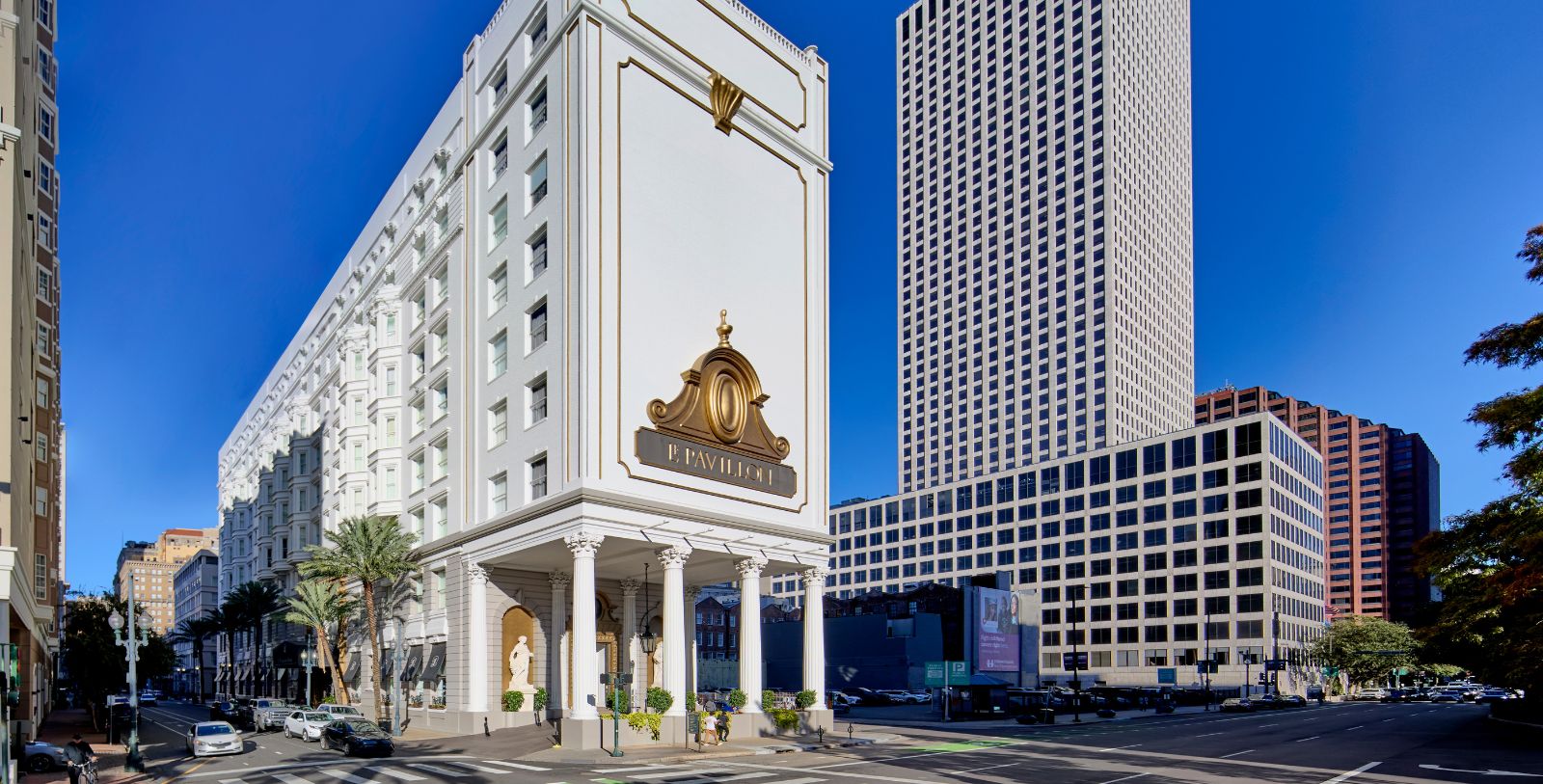
Discover the Le Pavillon, New Orleans, a Tribute Portfolio Hotel with its blend of New Orleans charm, elegant interior craftsmanship with early 20th century detail.
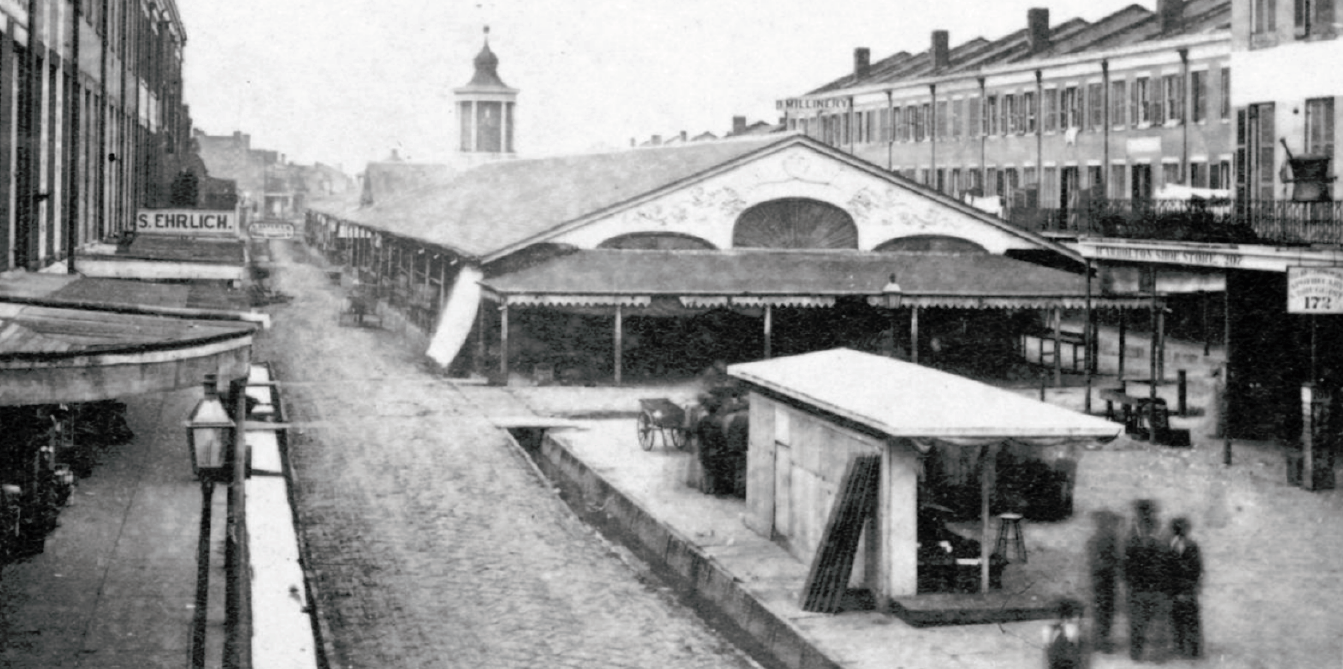
A contributing structure within the New Orleans Lower Central Business District, the fantastic Le Pavillon, New Orleans, a Tribute Portfolio Hotel has been a member of Historic Hotels of America since 1994. Its history is quite extensive, harkening back to the twilight of the Gilded Age. In 1899, La Baronne Realty Company bought a plot of land along Poydras Street with the intent of developing an upscale boutique hotel. But the construction did not begin in earnest until 1905 and took another two years to complete. Nevertheless, the company managed to create a magnificent structure that displayed some of the finest Renaissance-inspired architecture in all of New Orleans. Indeed, its iconic design made it one of the most defining edifices in downtown New Orleans at the time. Justin Denechaud subsequently acquired the location when the project concluded in 1907 and renamed it as the “New Hotel Denechuad.” Under Denechaud’s stewardship, the New Hotel Denechuad quickly became among the best hotels in the city with its cutting-edge amenities and opulent services. In fact, the building developed a considerable reputation as a popular gathering spot for New Orleans’ social elites. Denechaud nonetheless sold the New Hotel Denechaud to new hoteliers right before the onset of World War I, who renamed it as the “DeSoto Hotel.” Despite the change in ownership, the business managed to maintain its prestige as an exclusive vacation getaway.
This repute endured for many years thereafter, even as events like the Great Depression and World War II negatively affected the local economy. Indeed, the hotel staff thought of innovative ways to keep the business solvent. During Prohibition, for instance, the DeSoto Hotel operated an underground escape tunnel that led straight to an exit over a block away. (The tunnel was activated in case law enforcement arrived on-scene to break up any illicit parties.) Then in the 1970s, new owners acquired the site and relaunched it as “Le Pavillon, New Orleans, a Tribute Portfolio Hotel.” The proprietors soon focused on redeveloping Le Pavillon into an outstanding showplace for the city. The search began in Europe, yielding most of the décor that grace the halls today. Among the items collected included massive exterior columns and oversized sculptures that were carved by Italian artisans to the owner’s specifications. Eleven glistening crystal chandeliers were also purchased from Czechoslovakia and installed throughout the redesigned lobby. Various French paintings and furnishing even arrived, such as the unique marble railings that once resided in Paris’ Grand Hotel. All helped accentuate Le Pavillon, New Orleans, a Tribute Portfolio Hotel's historic roots, while also elevating its character for a modern audience. Le Pavillon, New Orleans, a Tribute Portfolio Hotel has since remained one of New Orleans’ most fabulous places to visit. Its grand European-inspired ambiance and warm hospitality have truly made it a wonderful destination to experience.
Hotel Timeline
The Location
Le Pavillon, New Orleans, a Tribute Portfolio Hotel is located just steps away from the Vieux Carré, otherwise known more popularly as the French Quarter. A National Historic Landmark, the French Quarter was first established in 1718 by French colonials under the direction of the Mississippi Company. These aspiring settlers were specifically led to the region by Jean-Baptiste Le Moyne de Bienville, who would go on to serve as the local colonial governor throughout much of the early 18th century. The French Crown intended for the nascent settlement to operate as an important regional port that controlled trade throughout the Mississippi Delta. After navigating the local coastline for several weeks, Bienville and his compatriots found a section of high ground above the Mississippi River that offered natural protection from flooding waters, as well as incursions against English and Spanish privateers. They named their new community “La Nouvelle-Orléans” in honor of the Duke of Orleans, a nephew of King Louis XIV.
La Nouvelle-Orléans eventually evolved into New Orleans, the capital of the French colony of Louisiana. France lost control over the city for a time during the late 18th century, when the French were forced to cede the colony to the Spanish following the Seven Years War. Yet, the Spanish gave New Orleans back to the French in 1800 at the height of the Napoleonic Wars. The town and the surrounding parishes were then part of the Louisiana Purchase, in which Emperor Napoléon Bonaparte sold 828,000 square miles of French-controlled territory in central North America to U.S. President Thomas Jefferson. The city subsequently became the capital for the new state of Louisiana in 1812, rapidly evolving into the most important port in the southern United States. This growth was offset temporarily with the outbreak of the War of 1812, with New Orleans itself becoming a battleground. It was the site of the famous Battle of New Orleans, where future president Andrew Jackson defeated the British in an incredibly lopsided victory.
New Orleans’ significance as a commercial port made it a highly valuable strategic point of interest for both the Union and Confederacy during the American Civil War. Both armies fought over the city early in the war, with the United States Navy forcing local Confederate units from the area in early 1862. It subsequently became the base for future operations by the Union in the Mississippi Delta for the duration of the conflict. Following the cessation of hostilities between the two sections in 1865, New Orleans resumed its national status as a premier port city. It even served as an integral part to the national war effort in World War II, where it became the site for the development of the crucial Higgins Boat. New Orleans has since emerged as one of the nation’s most popular tourist destinations, with millions visiting every year. The most popular attraction is the original French Quarter and its celebrated landmarks, such as Jackson Square, St. Louis Cathedral, and Bourbon Street. All of these fantastic sites wonderfully represent the original French heritage of the Vieux Carré.
The Architecture
The beautiful Le Pavillon, New Orleans, a Tribute Portfolio Hotel stands in downtown New Orleans today as a stunning example of Renaissance Revival architecture. Renaissance Revival itself architecture—sometimes referred to as "Neo-Renaissance”—is a group of architecture revival styles that date back to the 19th century. Neither Grecian nor Gothic in their appearance, Renaissance Revival-style architecture drew inspiration from a wide range of structural motifs found throughout Early Modern Western Europe. Architects in France and Italy were the first to embrace the artistic movement, who saw the architectural forms of the European Renaissance as an opportunity to reinvigorate a sense of civic pride throughout their communities. As such, those intellectuals incorporated the colonnades and low-pitched roofs of Renaissance-era buildings with the specific characteristics of Mannerist and Baroque-themed architecture. Perhaps the greatest structural component to a Renaissance Revival-style building involved the installation of a grand staircase in a vein similar to those located at both the Château de Blois and the Château de Chambord in France’s Loire Valley. This particular feature served as a central focal point for the design, often directing guests to a magnificent lobby or exterior courtyard. But the nebulous nature of Renaissance Revival architecture meant that its appearance varied widely across Europe and the Americas. As such, historians today sometimes find it difficult to provide a specific definition for the architectural movement. Regardless, Renaissance Revival architecture today remains one of the world’s most enduring, appearing in countless places across the globe.
Guest Historian Series

Le Pavillon, New Orleans, a Tribute Portfolio Hotel was originally the New Denechaud Hotel which was designed by architects Toledano and Wogan and built by the New York firm Milliken Brothers. It opened in January 1907 with 217 rooms and was known as the "Belle of New-Orleans". It achieved heights of elegance and innovation with the first hydraulic elevators and electric lighting ever to be installed in New Orleans.
Continue Reading