History
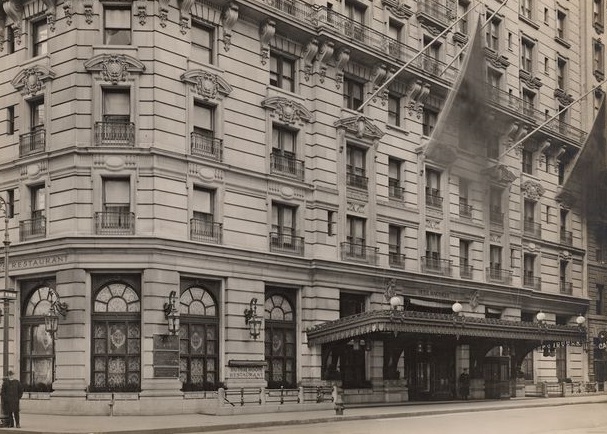
Discover Martinique New York on Broadway, which features exceptional French Renaissance detail designed by esteemed architect Henry Hardenbergh.
One of New York’s most exclusive holiday destinations, Martinique New York on Broadway, Curio Collection by Hilton, has been a member of Historic Hotels of America since 2010. This fantastic historic destination has stood as a cherished local landmark in Midtown Manhattan for well over a century, having hosted countless guests since its grand debut in the late 1890s. The hotel can trace its heritage all the way back to a business magnate named William R. H. Martin, who operated a popular men’s clothing store called “Rogers Peet.” Observing the wave of people flocking to the newly opened theaters and storefronts along the city’s famed thoroughfare, Broadway, Martin determined to create a brilliant holiday destination that would cater to their tastes. In 1892, he began purchasing plots of land near Broadway along 32nd and 33rd Streets to serve as the home for his prospective hotel. Sparing no expense, Martin commissioned the renowned Henry Janeway Hardenbergh to draw up its design. (Hardenbergh himself was among the most accomplished architects of his age, designing such renowned buildings in the city like The Dakota Apartments, the Waldorf Hotel, and the Astoria Hotel.) Looking to the grand chateaus of France’s Loire Valley for inspiration, Hardenbergh designed a brilliant towering skyscraper that featured some of the finest guestrooms in all of New York City. Calling it “Martinique” in honor of himself, Martin originally ran the new business as a lodging for long-term guests. (Interestingly, Martin also operated Rogers Peet from inside a portion of Martinique.)
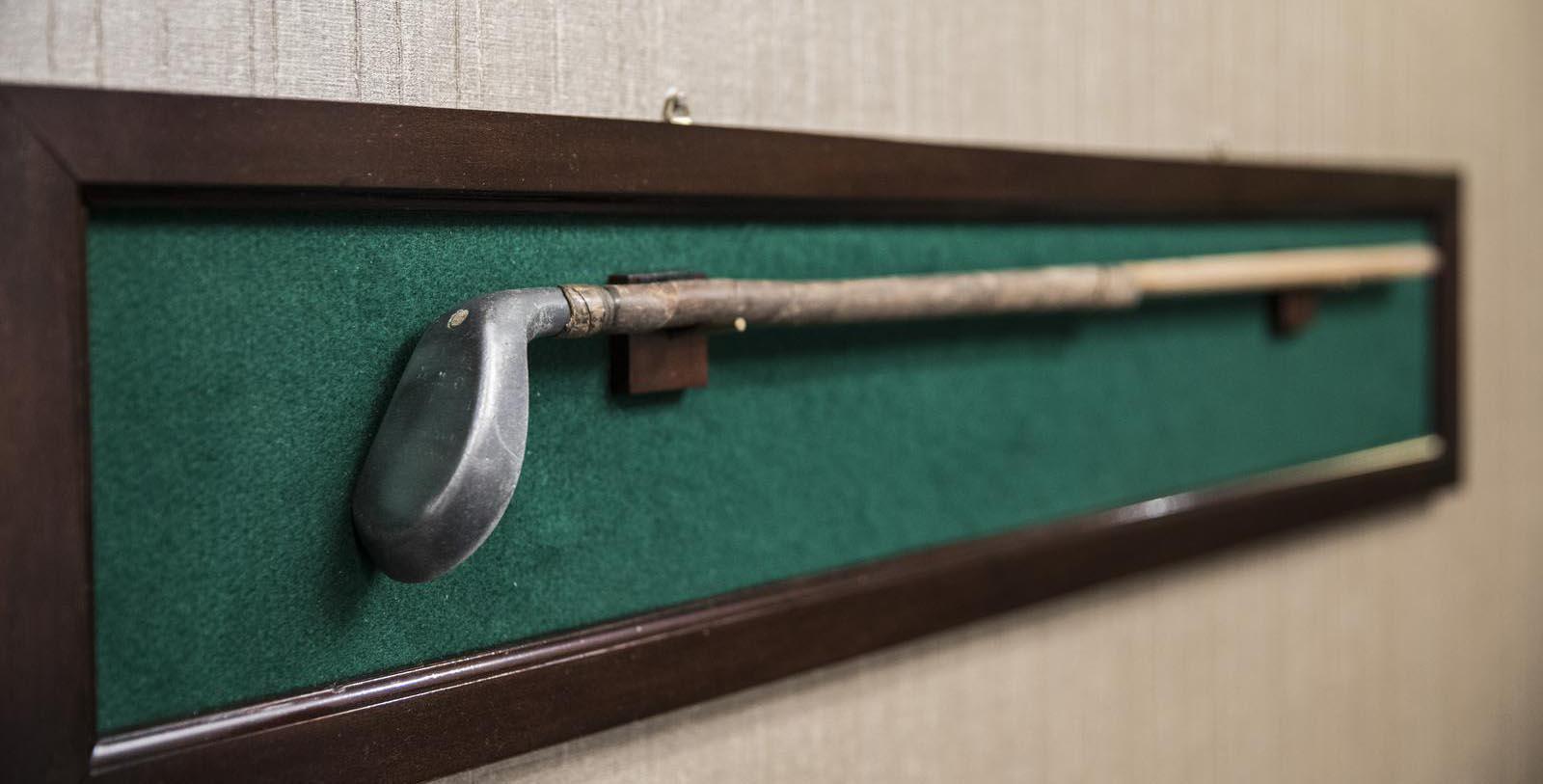
Yet, this all changed a decade later when a spate of additional buildings opened nearby, including Pennsylvania Station and Macy’s new flagship department store. Recognizing that those structures would attract even more clientele to his business, Martin hired Hardenbergh once again to add several more additions onto the hotel. Martin and Hardenbergh started building a small extension in 1901, only to pair it with a much larger wing in 1907. When the work finally concluded in December of 1910, the building was one of New York City’s most elite hotels. Many were astounded with Hardenburgh’s work, marveling at the building’s mosaic-tiled flooring and marble spiral staircase. Soon enough, Martinique became one of the most popular destinations in all of Manhattan. Many noteworthy luminaries of the day visited the hotel on occasion, including actor Henry F. Young and author George Barr McCutcheon. And the great vaudeville star and playwright Gus Edwards even began hosting various plays inside the hotel’s Pierrot Room twice a night. Perhaps the greatest testimony to its luxurious appeal was when close to 100 golf professionals met inside Martinique in 1916 to discuss the formation of the future Professional Golfers’ Association of America. Gathering together for a luncheon in January at the behest of Rodman Wanamaker and Tom McNamara, the attendees decided it was prudent to form an administrative body that would elevate golf to the professional level. In fact, the members agreed to hold a final meeting at Martinique some four months later to officially charter the group!
Unfortunately, the initial appeal of Martinique was not destined to last forever. By the 1950s, the concentration of New York’s many theatres moved several blocks away from the hotel to Times Square. Furthermore, its amenities had significantly fallen behind many of its competitors, with its guestrooms not even possessing their own separate baths. The lack of interest with the hotel became so great that the City of New York leased the building for use as a short-term homeless shelter. Living conditions inside the structure declined rapidly and the destination soon developed a notorious reputation throughout the entire city. In 1989, developer Harold Thurman purchased the ailing building after municipal officials relocated its tenants to another domicile. Yet, Martinique continued to sit dormant for several more years until it finally relaunched as part of the Holiday Inn brand in 1998. Reopening to great acclaim as the “Holiday Inn Martinique on Broadway,” it continued to function as a member of the company before rebranding as a Radisson hotel seven years later. Today, Hilton Worldwide operates this wonderful historic hotel within its prestigious Curio Collection, calling it “Martinique New York on Broadway, Curio Collection by Hilton.” This stunning historic hotel continues to attract hundreds of guests from across the globe due to its unrivaled elegance and spectacular service. Ownership has even done an amazing job preserving its heritage, making it one of the foremost historic hotels in New York City. Martinique New York has even received awards from Historic Hotels of America in recognition of its history of hospitality, earning the title of “Best Historic Hotel (Over 400 Guestroom)” in 2020 and “Best City Center Historic Hotel” in 2023. Their property historian, Tara Williams, won “Hotel Historian of the Year” in 2025.
Hotel Timeline
The Location
Martinique New York on Broadway, Curio Collection by Hilton, specifically resides in the heart of Midtown Manhattan, one of New York City’s most famous areas. Home to renowned landmarks like Central Park, Times Square, and Carnegie Hall, the locale is the central portion to the greater borough of Manhattan. Often described today as the cultural capital of the world, Manhattan’s origins are actually quite humble. The Lenape Native Americans had long inhabited the region for centuries, referring to it as “manaháhtaan,” or, “the place for gathering wood to make bows.” But in 1609, Henry Hudson—and English explorer working on behalf of the Dutch East India Company—became the first European to chart Manhattan’s coastline (which was also an island). The Dutch had hoped Hudson could locate the mythical “Northwest Passage,” a maritime route that was believed to cut through the North American landmass straight to China. Despite Hudson’s failure in locating the illusive body of water, the Dutch nevertheless took his findings to establish a colony in 1625. Building a citadel called “Fort Amsterdam” at the southernmost tip of the Manhattan, the Dutch eventually used the island to serve as the economic hub for their settlement of New Amsterdam. (According to one merchant, Pieter Janszoon Schagen, the first colonists to arrive apparently paid the Lenape for the island in exchange for a fixed sum of Dutch guilders.) New Amsterdam quickly emerged as an important hub for trade between the Caribbean, Europe, and several other North American colonies. It remained under Dutch authority for the next four decades, until the English managed to wrestle control away during the Second Anglo-Dutch War of the 1660s. Despite a brief moment in which the Dutch recaptured Manhattan a decade later, the island continued to be an English colony, becoming the heart of the newly created Province of New York. As such, the community on Manhattan Island was renamed as “New York City.”
Manhattan and the surrounding communities near New York Harbor steadily grew as a prosperous seaport under English rule. It became a focus for development in the “New World,” with both Columbia University and The King’s College being founded during the period. The area continued to play an important role in New York, especially during the American Revolution. The island became a hotbed for patriotic sentiment, with the Sons of Liberty organizing in the city to protest British efforts on taxation without representation. Dozens of revolutionaries even met in Manhattan to hold a Stamp Act Congress, which constituted the first formal effort by Americans to resist the colonial authorities. Its socioeconomic significance also made it an early military target of the United Kingdom when fighting finally broke out between the two sides in the mid-1770s. In fact, the British attempted to seize it in 1776 during the New York Campaign. George Washington and the Continental Army were unfortunately forced to abandon Manhattan and its bustling port at the climax of the campaign, which transpired with the defeats at the Battle of Fort Washington and the Battle of Long Island. Manhattan remained occupied by the British for the remainder of the war, functioning as the main headquarters for its various military expeditions active throughout the colonies. And once the fighting had stopped in the early 1780s, the region became the fifth national capital for the infant United States of America under the Articles of Confederation. Delegates to the Continental Congress subsequently met at New York City Hall in Lower Manhattan, which at the time was located inside a local business called “Fraunces Tavern.” Manhattan remained the capital of the nation once the U.S. Constitution was enacted in 1789, gathering inside the now famous “Federal Hall.” Federal Hall specifically served as the site where the federalized U.S. Congress and the U.S. Supreme Court met, as well as the place where both the Bill of Rights and Northwest Ordinances were ratified!
Even though Manhattan ceased serving as the nation’s capital a year later, it remained a vibrant economic center well into the 19th century. Thanks to the financial policies of Founding Father Alexander Hamilton (who also called New York City his home) and the development of the Erie Canal, New York City emerged as the main port for any goods heading toward either Canada or the American Midwest. The New York Stock Exchange on Wall Street matured greatly as a result, evolving into one of the nation’s leading financial institutions. Its population exploded, surpassing Philadelphia in both size and prosperity. Its wealth of economic opportunities made it a desirable destination for all kinds of immigrants, beginning first with German and Irish people and later Southern and Eastern Europeans. Manhattan thus became densely populated toward the end of the century, with hundreds of tenement houses lining most of its local neighborhoods. Yet, the presence of so many immigrant families in Manhattan led to the development of numerous ethnic enclaves—like Little Italy—as well as the perception that the island was a beckon for those wishing to gain a better life in the United States. (This vision even inspired the French to donate the Statue of Liberty to America in 1886.) Manhattan continued to attract waves of migrant peoples into the 20th century, as well, specifically African Americans who relocated to the area as part of the Great Migration of the 1920s. This led to the birth of the celebrated Harlem Renaissance, which was an intellectual movement that saw the cultural revival of African American art and literature in the United States. Although it was concentrated in the Manhattan neighborhood of Harlem, its influence was so great that it affected black artists, musicians, and writers across the globe.
With millions of people thus living in Manhattan by the late 1890s, city officials decided to unite the nearby communities in Brooklyn, Queens, Westchester, and Richmond counties to form the “City of Greater New York.” But the island became the site for another equally important historical development—industrialization. Around the same time that modern New York City emerged, many capitalists and entrepreneurs began financing the construction of massive factories and skyscrapers all over Manhattan. The island’s skyline transformed significantly during the first few decades of the 20th century, with such famous landmarks—including the Chrysler Building, Grand Central Terminal, and 30 Rockefeller Plaza—opening within that span of time. Yet, its most iconic feature was the Art Deco-inspired Empire State Building. (It is also located right down the road from Martinique!) Yet, Manhattan also saw the creation of many luxurious storefronts, restaurants, and art galleries, which started attracting tourists from across the country. Some of the most opulent buildings to debut were the theaters and concert halls along Broadway, one of Manhattan’s major thoroughfares. Soon known as the “Theatre District,” sections of Broadway quickly became synonymous with nightlife in the city. By the end of the 20th century, Manhattan and the rest of New York City had firmly established themselves as the most influential urban center in the whole United States. Today, Manhattan has maintained its prestigious status as a national cultural destination. It is home to many fantastic upscale apartment complexes and townhouses in such renowned neighborhoods like SoHo, the Upper West Side, the Upper East Side, and Greenwich Village (which is also home to the modern LGBT rights movement in America). Many prominent corporations, such as JP Morgan Chase, Bloomberg L.P., Deloitte, MetLife, and Viacom are headquartered in the borough. Four of the nation’s biggest television networks—ABC, CBS, FOX, and NBC—are also based in Manhattan, as well. Some of the best vendors also have stores on Fifth Avenue, too, making it a shopping paradise. Even the headquarters for the United Nations is based in Manhattan. Few other places can claim to possess such a heritage than either Manhattan or New York City as a whole.
The Architecture
William R. H. Martin spared no expense when he originally began constructing Martinique New York on Broadway, Curio Collection by Hilton. To ensure that it appeared as beautiful as possible, he commissioned the renowned Henry Janeway Hardenbergh to craft its magnificent design. Hardenbergh had already developed a strong reputation as an accomplished architect for his work on many other structures throughout the greater New York metropolitan area, including the likes of The Dakota Apartments, Hotel Albert, and the Schermerhorn Building. Many contemporaries regarded his designs for both the Waldorf Hotel and the Astoria Hotel in Midtown Manhattan to be his some of his best at the time. (Both buildings were eventually demolished to make way for the Empire State Building.) Hardenbergh decided to design Martinique with “French Renaissance Revival.” Sometimes referred to as “Neo-Renaissance,” Renaissance Revival architecture in general is a group of architecture revival styles that date back to the 19th century. Neither Grecian nor Gothic in their appearance, Renaissance Revival-style architecture drew inspiration from a wide range of structural motifs found throughout Early Modern Western Europe. Architects in France and Italy were the first to embrace the artistic movement, who saw the architectural forms of the European Renaissance as an opportunity to reinvigorate a sense of civic pride throughout their communities. As such, those intellectuals incorporated the colonnades and low-pitched roofs of Renaissance-era buildings, with the characteristics of Mannerist and Baroque-themed architecture. Perhaps the greatest structural component to a Renaissance Revival-style building involved the installation of a grand staircase in a vein similar to those located at the Château de Blois and the Château de Chambord. This particular feature served as a central focal point for the design, often directing guests to a magnificent lobby or exterior courtyard. Yet, the nebulous nature of Renaissance Revival architecture meant that its appearance varied widely across Europe. Historians today, thus, often find it difficult to provide a specific definition for the architectural movement.
Famous Historic Events
Creation of the Professional Golf Association (1916): Popularity with golf was reaching new heights at the start of the 20th century, as thousands of ordinary Americans began playing the sport at courses across the nation. Recognizing the economic potential that such interested possessed, amateur player Tom McNamara endeavored to create an organizational body that could help grow the sport in a professional manner. McNamara acted on his dream in January of 1916, convincing his business partner, Rodman Wanamaker, to sponsor a meeting where the topic could be discussed among a group of influential golfers. Wanamaker enthusiastically embraced McNamara’s idea as the perfect way to market his upscale department store in Midtown Manhattan. Wanamaker himself was specifically locked in a bitter battle over the sale of golf balls with A.G. Spaulding & Bros, and saw the gathering as a great marketing opportunity. The two decided to invite several dozen golfers to a special luncheon hosted by the Taplow Club, which McNamara operated on Wanamaker’s behalf inside his store. Many of the most well-known golf personalities attended, including Francis Ouimet, James Maiden, Alex Smith, and A.W. Tillinghast. When all the delegates had finally arrived, both Wanamaker and McNamara petitioned them to make golf a professional business governed by an administrative body. Furthermore, the two men believed that such an organization would enhance their social standing as professional athletes.
Wanamaker specifically proposed hosting a series of match-play tournaments that could showcase the combined talent of those who joined the group. To sweeten the proposition, Wanamaker stated that he would create an official trophy and donate some 2,500 dollars in prize money. All travel expenses for tournament participants would even be covered by Wanamaker himself. Concluding his argument, Wanamaker suggested that they call their new organization the “Professional Golfers’ Association of America” and the competition, the “PGA Championship.” While Wanamaker initially wished to have the group work closely in unison with the United States Golf Association, many in attendance voted to have the Professional Golfers’ Association of America to operate as a separate entity. All the members demonstratively shared McNamara’s and Wanamaker’s enthusiasm though, agreeing to meet again the following day to create the organization’s bylaws. Several more meetings transpired over the next several months, culminating with a final one at Martinique on April 10. Gathering inside the hotel’s second-floor boardroom, the delegates formally charted the Professional Golfers’ Association of America and elected 78 members to serve in various positions within the group. The Professional Golfers’ Association of America has since become one of the most august organizations for the sport of golf in the entire world, having grown to number 29,000 members at the present. The group was even responsible for creating the immensely popular PGA Tour, which it originally founded as a separate tournament in the late 1960s.
Famous Historic Guests
- Gus Edwards, prominent vaudeville actor and playwright.
- Walter Hagen, winner of 11 major golf championships that include the PGA Championship and the U.S. Open.
- Francis Ouimet, winner of the U.S. Open in 1913 and regarded as the “father of amateur golf.”
- A.W. Tillinghast, one of the most prolific golf course architects in American history.
- Henry F. Young, silent film actor known for his outrageous stunts.
- George Barr McCutcheon, novelist and playwright known for his book, Brewster’s Millions.
Guest Historian Series
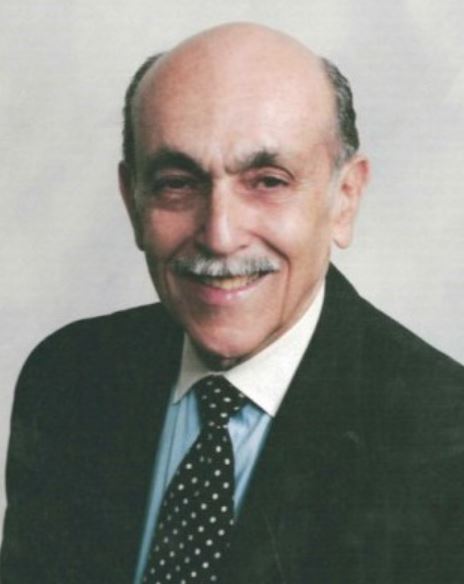
Hotel History: Martinique New York on Broadway, Curio Collection by Hilton (1896), New York, New York*
The Hotel Martinique (560 rooms) at the northeast corner of Broadway and 32nd Street was constructed in three phases in 1897-98, 1901-03 and 1909-11. Developer William R. H. Martin built and expanded his hotel because the center of theater life had moved up Broadway to 39th Street where the Metropolitan Opera House had been built in 1883. Martin hired the distinguished architect Henry Janeway Hardenbergh (1874-1918).
Hardenbergh, who began his own architectural practice in New York in 1870, became one of the city’s most distinguished architects. Recognized for their picturesque compositions and his buildings often took their inspiration from the French, Dutch, and German Renaissance styles.
Continue Reading