
History
Discover the Omni Parker House Boston with its gorgeous views of the Boston skyline.
Omni Parker House—a member of Historic Hotels of America—can trace its lineage all the way back to when a 20-year-old farmer named Harvey D. Parker first arrived in Boston in 1825. Working a variety of odd jobs throughout the city, the penniless Parker eventually saved up enough money to own his own successful restaurant. From there, he formed a lucrative business partnership with John E. Hunt to create a luxurious hotel that would operate on the “European Plan.” Parker’s strategy was novel among American hoteliers at the time, as it called for splitting fees for lodging and food. Not only would their hotel feature exquisite accommodations, but it could also cultivate a diverse culinary program not seen before in America. Their decision to make the room and dining experiences separate would eventually encourage the hotel’s chefs to concoct many outstanding dishes, including the Boston Cream Pie, the Parker House Roll, and Baked Boston Scrod.
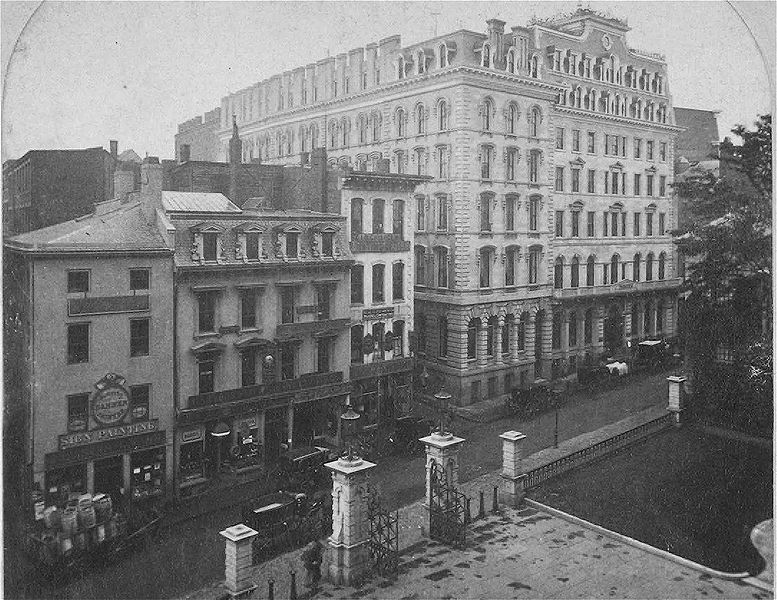
Parker and Hunt’s fabulous new hotel debuted in 1855 as the “Parker House.” Architect William Washburn designed the building’s beautiful exterior, using Italianate-style architecture as the source for his inspiration. Harvey D. Parker soon became its sole owner and proprietor, eager to make the hotel one of the nation’s most exclusive getaways. He did not have to wait long, as many of the world’s leading figures quickly flocked to the hotel. Among the most prominent individuals to visit frequently were the members of the Saturday Club. Composed of thinkers from across the country, the Saturday Club gathered at the Parker House to discuss the popular philosophical topics of the age. Its ranks included such renowned intellectuals like Nathaniel Hawthorne, Ralph Waldo Emerson, and Oliver Wendell Holmes Sr. Celebrated English author Charles Dickens even joined the group regularly during his literary tour of the United States of the late 1860s. Their conversations ultimately gave rise to The Atlantic Monthly, which is still published today as The Atlantic.
The hotel’s ascent as a preeminent holiday destination continued unabated for many years, even after Harvey D. Parker passed away in 1884. This success largely stemmed from the influence of hotelier J. Reed Whipple, who began managing the Parker House in 1891. By the mid-1920s, Whipple finally had enough capital to buy the hotel from Harvey D. Parker’s estate. He then began an extensive renovation of the building as soon as the sale had become final. He subsequently redeveloped the entire building with an extensive group of contractors, leaving just the 10-story annex open to the general public. Architect Henri Desmond completely redesigned the structure based on the principles of Classical architecture. The “new” Parker House was a magnificent sight to behold when it debuted in 1927. General manager Claude M. Hart even commemorated the event by flying over Boston Harbor in a private plane with his secretary, Alice Mulligan. The two then tossed the keys to the earlier hotel into the water, signifying rebirth of the Parker House.
The Sherrard family eventually acquired the hotel at the height of The Great Depression. Like many other hoteliers throughout the country, J. Reed Whipple could no longer afford to pay his hotel’s mortgage. As such, Glenwood Sherrard bought the Parker House from the bank for more than $3 million. Sherrard’s tenure as owner saw the fortunes of the Parker House reversed, as it once again became one of the most sought-after venues in Boston. Many famous celebrities were frequent guests, including Judy Garland, Ted Williams, and James Dean. Sightings of local politicians soon became commonplace, too, especially of John F. Kennedy. For instance, the young politician launched his first national political campaign from the Parker House in 1946, and later held his bachelor party inside the restaurant in 1953.
But while the hotel experienced something of a renaissance under Glenwood Sherrard’s management, his son, Andrew, could not keep the business afloat. The hotel nearly went bankrupt due to the bad business decisions made by Andrew Sherrard following his father’s death in 1958. Salvation fortunately arrived ten years later when the esteemed Dunfey Hotel Corporation purchased the Parker House from the Sherrards. Under Dunfey, the hotel experienced a thorough series of renovations that both restored its magnificent architecture while also modernizing the available accommodations to maximize their comfort. The hotel is now proudly owned by Omni Hotels and Resorts—a descendant of the Dunfey Hotels Corporation—and operates as the “Omni Parker House.” No place is truly better for a historic vacation in Boston than at the luxurious Omni Parker House.
Hotel Timeline
The Location
The Omni Parker House sits at the intersection of Tremont and School streets in Boston’s Beacon Hill neighborhood. Both roads are among the most heavily traveled throughout the entire city today. Tremont in particular is among the most significant streets in Boston, as it has served as a major thoroughfare since the late 1700s. A number of historic buildings are located along Tremont Street, including Boston Common, Tremont Temple, and King’s Chapel. George Washington actually attended services at King’s Chapel on October 27, 1789, sitting in the coveted Pew No. 30. And Abraham Lincoln lectured at the Tremont Temple in 1863, in which he gave his first public reading of the Emancipation Proclamation before a large crowd. School Street was once the site of the first public school in the United States. Known as the Boston Latin School, it operated from its headquarters on School Street throughout the 18th and 19th centuries. It specifically resided within a historic building called the “Mico Mansion,” which once functioned as the private residence of Oliver Wendell Holmes’ the great-grandfather. School Street is also entirely part of a famous pathway called the Freedom Trail. Stretching for two-and-a-half miles through downtown Boston, the Freedom Trail guides visitors to a series of historic sites that are closely connected to the founding of the nation. Consisting of 16 sites in total, the route takes its guests to such famous locations as the Old State House, Faneuil Hall, and the Bunker Hill Monument. Listed on the National Register of Historic Places, Beacon Hill itself is one of Boston’s most historic areas. While people first started developing the area as early as 1708, most of its historic buildings appeared at the beginning of the 1800s. Most of these structures are a variety of mansions and row houses that display some of the finest examples of Federal-style architecture from the Early Republic. Beacon Hill was historically the home for Boston’s most affluent citizens, too. A community of wealthy African Americans grew along its northern slope, founding prominent local institutions like the African Meeting House. The area became a center for the abolitionist movement, as well as a central stop along the Underground Railroad. As such, this section of Beacon Hill is commemorated today as the Boston African American National Historic Site.
The Architecture
Work on Harvey D. Parker’s new luxurious hotel began in earnest in April of 1854, when he began demolishing the Mico Mansion at the corner of Tremont and School streets. He then tasked architect William Washburn to design the Parker House in its stead. Washburn’s plans called for the creation of a beautiful five-story brick edifice with Italianate-style architecture. The first two floors of the Parker House displayed some of the finest marble flooring in the city, as well as a series of meticulously arched windows. As guests passed through the front doors of the hotel, they were greeted with an engraved inscription that simply read “Parker’s.” The lobby further inside featured thick ornate carpets and exquisite horse-hair divans. Harvey D. Parker then expanded the hotel in 1860, adding a six-story annex next door. The annex was once the site of Horticultural Hall, which had served as the campus for the historic Boston Latin School in the 18th and 19th centuries. Subsequent additions appeared later on when Parker added a second, 10-story annex in 1863 and a smaller third annex in 1866.
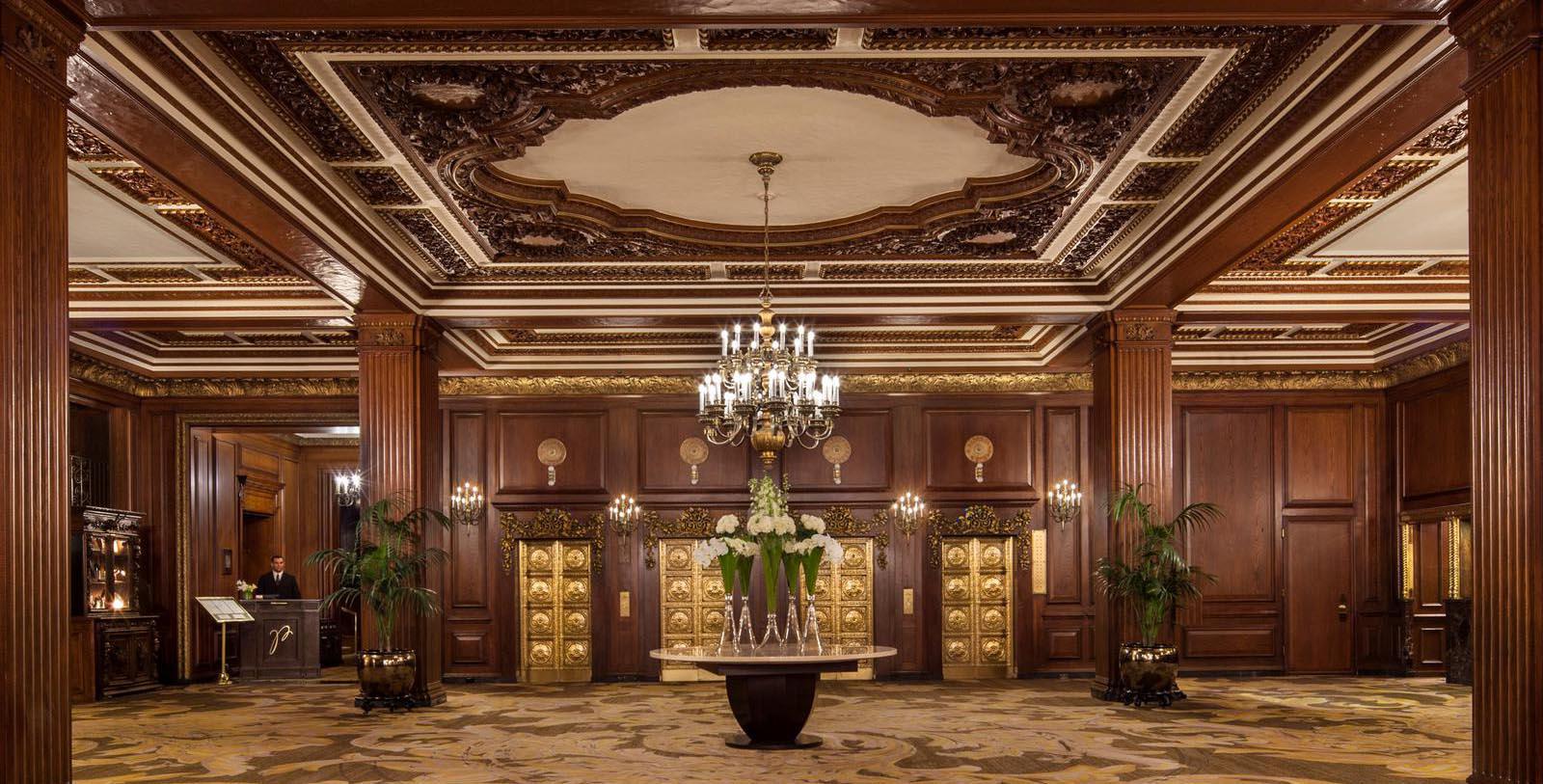
Construction on the “new” Parker House began in the mid-1920s, shortly following J. Reed Whipple’s purchase of the hotel from Harvey D. Parker’s estate. Architect G. Henri Desmond of Desmond & Lord Architects designed the second Parker House, which he created with Classical Revival-style aesthetics. The building stood 14-stories tall and featured 800 luxurious guestrooms. Desmond developed its exterior façade with polished black Quincy granite, topped with a combination of limestone and buff-colored brick near the roof. Some of the best craftsmen in the country installed ornate wood paneling and beautiful bronze-detailed doors, while also erecting a brilliant series of finely plastered ceilings. The Parker House was even fireproof and contained many lavish amenities. When it finally debuted in 1927, it stood as a brilliant example of Classical Revival architecture.
The Dunfey Hotel Corporation purchased the Parker House from the Sherrard family in 1968. This respected company was founded by five brothers in the Dunfey family who opened their first hotel in Hampton Beach, New Hampshire during the 1940s. The success of their first hotel galvanized the men to start their own hotel chain, which grew steadily over the course of the next 20 years. They added several luxurious hotels into their collection during this time, including the ailing Parker House. When the Dunfey Hotel Corporation eventually launched its luxury brand—Omni Hotels and Resorts—the Parker House became its flagship destination. The Parker House underwent many significant renovations as an Omni location, which saw it continuously modernized for contemporary travelers. Dozens of new meeting spaces appeared throughout the hotel, such the Kennedy Room and the Press Room. Eateries like the English Grille Room and The Last Hurrah Bar started to open, as well. But perhaps the greatest change involved the guestrooms, as the 800 available accommodations were reduced to 531 guestrooms suites that offered far better comfort.
Famous Historic Events
The Saturday Club (1856): The Saturday Club began meeting at the Parker House in 1856, having spent the previous year at the nearby Albion House. Composed of the finest thinkers alive in mid-19th-century America, it met on the fourth Saturday of every month to discuss the pressing socioeconomic topics of the age. Lawyer Horatio Woodman had originally conceived of the idea as a means where like-minded individuals could gather and have friendly—yet serious—conversations over dinner and drinks. The first members of the group consisted of Woodman, Louis Agassiz, James Russell Lowell, and Richard Henry Dana, Jr. Yet, they were later joined by the likes of Ralph Waldo Emerson, Asa Gray, Benjamin Peirce, Nathaniel Hawthorne, and Oliver Wendell Holmes, Sr. Even a few national politicians frequently visited the group, such as diplomat Charles Francis Adams and Republican senator Charles Sumner.
Charles Dickens also joined the group for a time while he visited on a literary tour of the United States during the late 1860s. Dickens’ time in Boston was punctuated by his flamboyant dress and the throngs of local fans who congregated outside of the hotel’s front door. Those lucky enough could catch a glimpse of him practicing his animated public readings before a large mirror that currently rests in the mezzanine hall by the Press Room. For two years, Dickens lived inside the hotel, making regular appearances at the club whenever it met. The most famous of his visits occurred on November 30, 1867, in which the celebrated English author served his fellow colleagues a particularly strong iteration of gin punch.
These meetings gradually petered out until they had stopped entirely by the beginning of the 1900s. But the meetings had accomplished much, as their attendees were inspired to create great intellectual works. It was at a gathering of the Saturday Club that Henry Wadsworth Longfellow wrote the first draft of his famous poem, “Paul Revere’s Ride.” Oliver Wendell Holmes, Sr., penned his famous “Breakfast-Table” series at the Saturday Club, beginning with The Autocrat of the Breakfast Table. Dickens even gave his very first public reading of “A Christmas Carol” at the Saturday Club, too. But the most enduring legacy of the group was the creation of a magazine known as The Atlantic Monthly. Originally founded in 1857, it published the writings, arguments, and poems of the Saturday Club attendees. The magazine continued to print well after the Saturday Club had become defunct, existing today as The Atlantic.
John F. Kennedy Announces Candidacy for House of Representatives (1946): President John F. Kennedy took the first steps of his historic political career at the Parker House when he declared his intention to run for Massachusetts’ 11th Congressional District in 1946. Kennedy’s father—a prominent Democrat named Joe Kennedy, Sr.—urged that he should pursue a career in politics following his older brother’s death in World War II. Kennedy Sr. encouraged his son to run for the U.S. House of Representatives after James Michael Curry vacated his seat to become mayor of Boston. Upon beating ten other rivals for the Democratic nomination, John F. Kennedy easily beat the main Republican challenger for the 11th Congressional District that fall. His victory marked the beginning of a storied political journey that lasted for the better part of three decades.
Kennedy would serve as the representative of Massachusetts’ 11th Congressional District until 1953, when he narrowly defeated Republican Henry Cabot Lodge, Jr., for a spot in the U.S. Senate. He would eventually serve two terms in the Senate, before deciding to run for president around halfway through his second term. Kennedy won the national Democratic nomination in 1960, beating such renowned politicians like fellow Senators Lyndon B. Johnson, Adlai Stevenson II, and Hubert Humphrey. He then faced off against the then-current Vice President, Richard Nixon, in a highly competitive race for the White House. While Kennedy barely beat Nixon in the popular vote, he wound up surpassing him in the Electoral College with a vote total of 303 to 219.
When Kennedy assumed the mantle of President of the United States, he became the youngest person ever to win the office at the age of 43. His presidency became defined by several incredibly important events, including the start of the Apollo Space Program and the establishment of the Peace Corps. Kennedy’s time as president coincided with the height of the Cold War and his foreign policy largely dealt with the matter as such. The most perilous international event to transpire under Kennedy’s watch involved a disastrous attempt to overthrow Cuban dictator Fidel Castro in 1961, which helped spawn the tense Cuban Missile Crisis roughly a year later. His domestic policies proved more fruitful, especially in the area of civil rights. While he was more conservative on the topic during his time in Congress, Kennedy’s administration worked to bolster national civil rights throughout the early 1960s. But the president did not live to see his legislative proposals come to fruition, as he was killed by an assassin before the end of his first term. But Congress enacted many of those bills following his death, culminating with the Civil Rights Act of 1964. Other significant events that occurred as a result of Kennedy’s presidency involved greater American involvement in Vietnam and the creation of the Partial Nuclear Test Ban Treaty.
Famous Historic Guests
- Henry Wadsworth Longfellow, famed poet known for writing “Paul Revere’s Ride.”
- Ralph Waldo Emerson, renowned intellectual known for writing Essays: First Series and Essays: Second Series.
- Nathaniel Hawthorne, renowned author known for writing The Scarlett Letter and The House of the Seven Gables.
- Oliver Wendell Holmes, Sr., famed intellectual known for writing the Autocrat of the Breakfast-Table.
- Mark Twain, renowned author known for writing The Adventures of Tom Sawyer and Adventures of Huckleberry Finn.
- Edith Wharton, famous Pulitzer Prize-winning novelist responsible for writing The Age of Innocence.
- Charles Dickens, celebrated author known for such works as Oliver Twist, A Christmas Carol, and A Tale of Two Cities.
- John Wilkes Booth, famous American actor and assassin of President Abraham Lincoln.
- Sarah Bernhardt, famous French stage actress active during the Gilded Age.
- Joan Crawford, celebrated actress known for her roles in Mildred Place and Whatever Happened to Baby Jane?
- Judy Garland, renowned actress and singer known for her roles in A Star is Born, Meet Me in St. Louis, and Wizard of Oz.
- James Dean, famous actor known for his roles in Rebel Without a Cause, East of Eden, and Giant.
- Ann-Margret, renowned actress known for her roles in Carnal Knowledge, Viva Las Vegas, and Bye Bye Birdie.
- Babe Ruth, legendary baseball player for the New York Yankees regarded by many to be the best to ever play the sport.
- Ted Williams, famous baseball player for the Boston Red Sox who entered the Baseball Hall of Fame in 1966.
- Charles Sumner, historic U.S. Senator from Massachusetts (1851 – 1874)
- Ted Kennedy, U.S. Senator from Massachusetts (1962 – 2009)
- Jacqueline Kennedy Onassis, First Lady of former U.S. President John F. Kennedy.
- Ulysses S. Grant, 18th President of the United States (1869 – 1877)
- Rutherford B. Hayes, 19th President of the United States (1877 – 1881)
- James A. Garfield, 20th President of the United States (1881)
- Chester A. Arthur, 21st President of the United States (1881 – 1885)
- Grover Cleveland, 22nd and 24th President of the United States (1885 – 1889; 1893 – 1897)
- Benjamin Harrison, 23rd President of the United States (1889 – 1893)
- William McKinley, 25th President of the United States (1897 – 1901)
- Theodore Roosevelt, 26th President of the United States (1901 – 1909)
- William Howard Taft, 27th President of the United States (1909 – 1913) and 10th Chief Justice of the United States (1921 – 1930)
- Woodrow Wilson, 28th President of the United States (1913 – 1921)
- Warren G. Harding, 29th President of the United States (1921 – 1923)
- Calvin Coolidge, 30th President of the United States (1923 – 1929)
- Herbert Hoover, 31st President of the United States (1929 – 1933)
- Franklin Delano Roosevelt, 32nd President of the United States (1933 – 1945)
- Harry S. Truman, 33rd President of the United States (1945 – 1953)
- Dwight D. Eisenhower, 34th President of the United States (1953 – 1961), and Supreme Allied Commander Europe during World War II
- John F. Kennedy, 35th President of the United States (1961 – 1963)
- Lyndon B. Johnson, 36th President of the United States (1963 – 1969)
- Richard Nixon, 37th President of the United States (1969 – 1974)
- Gerald Ford, 38th President of the United States (1974 – 1977)
- Jimmy Carter, 39th President of the United States (1977 – 1981)
- Ronald Reagan, 40th President of the United States (1981 – 1989)
- George H.W. Bush, 41st President of the United States (1989 – 1993)
- Bill Clinton, 42nd President of the United States (1993 – 2001)
Film, TV and Media Connections
- 1408 (2007) *While the film was not shot at the Omni Parker House, the story is supposedly based on experiences that author Stephen King had at the hotel.*
Guest Historian Series
Hotel History: Omni Parker House (1855), Boston Massachusetts*
Opened in October 1855 by Henry D. Parker, the Parker House is the longest continuously operating hotel in the United States and is located in historic downtown Boston on the Freedom Trail. The hotel was home to the Saturday Night Club including Henry Wadsworth Longfellow, Ralph Waldo Emerson, James Russell Lowell, Nathaniel Hawthorne, Oliver Wendell Holmes, Sr. and John Greenleaf Whittier. Charles Dickens lived at the Parker House for two years and gave his first public reading of "A Christmas Carol" at the Saturday Night Club.
The hotel has seen its share of major political characters. John Wilkes Booth stayed at the Parker House Hotel the week before he shot President Lincoln. Ho Chi Minh, Marxist revolutionary and president of North Vietnam, worked there as a pastry chef and his marble baking table is still being used. Malcolm X, the African American activist, worked as a waiter in the hotel's restaurant. President Ulysses S. Grant stayed at the Parker House Hotel. It was also a favorite of the late President John F. Kennedy. JFK gave his first public speech in the hotel's Press Room, announced his bid for the U.S. Senate here, and even proposed to Jacqueline Bouvier in Parker's Restaurant.
CONTINUE READING