History
Discover the Portland Regency Hotel & Spa, which is situated perfectly at the center of the Old Port District.
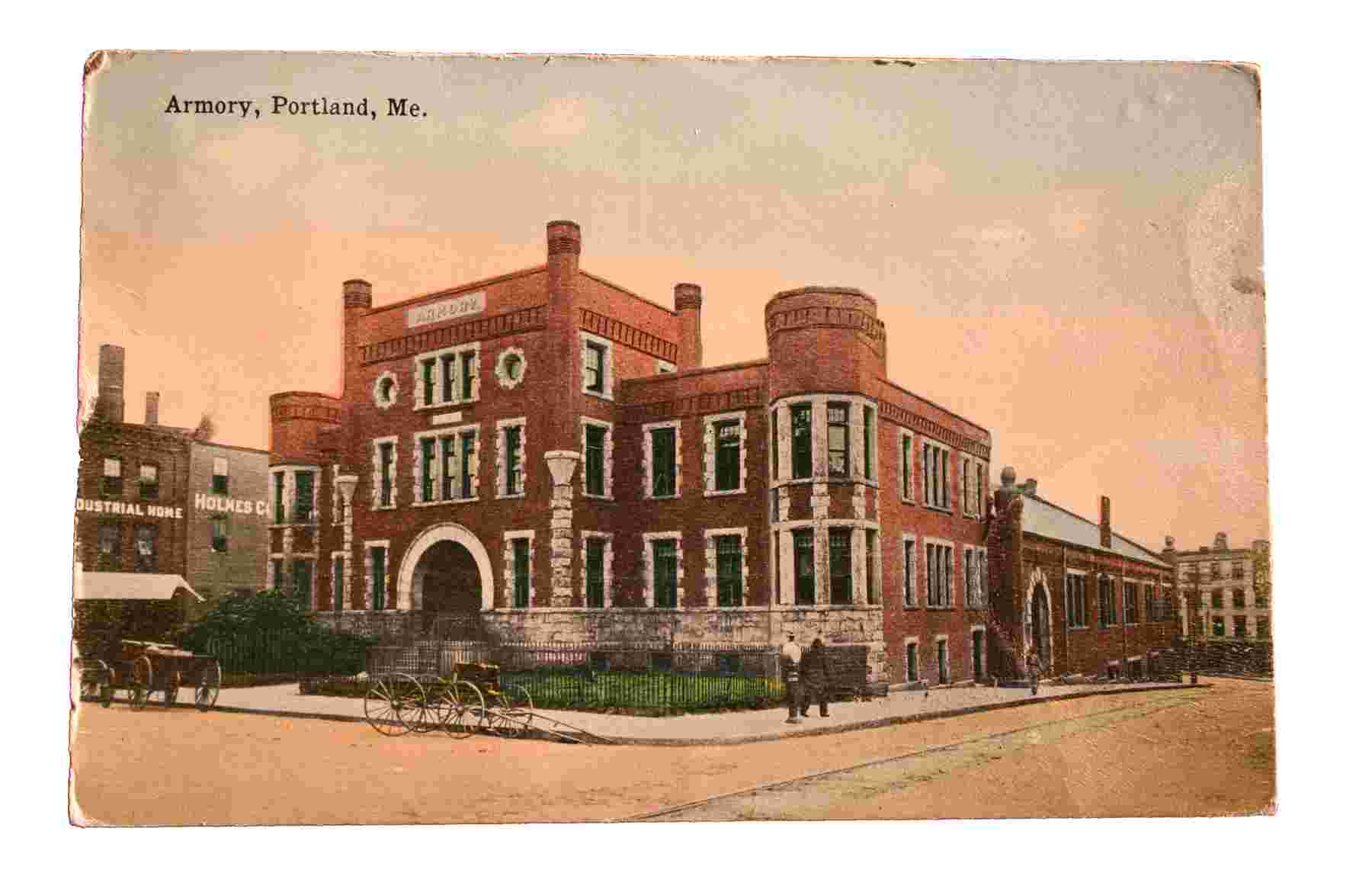
Originally constructed at the height of the Gilded Age, the Portland Regency Hotel & Spa is among the most exclusive holiday destinations in downtown Portland. This magnificent historic hotel specifically resides in Portland’s “Old Port” neighborhood, which is the city’s most historic district. Yet, the building that now constitutes the Portland Regency Hotel & Spa first debuted as a military installation for Maine’s National Guard. Named as the “State of Maine Armory,” it was built for a grand sum of $20,000 in 1895. Many across the nation considered the building to be among the best equipped armories throughout all of New England due to its impressive Romanesque Revival-style architecture. The State of Maine Armory then operated for the better part of the next four decades, until it closed for good in 1941. (The Maine National Guard had vacated the structure under the orders of the federal government.) A lone caretaker resided on the premises for several months, until city officials decided to convert the armory into a temporary housing facility for new military recruits that had begun to flock into Portland. With America’s entry into World War II, the city itself had undergone a significant transformation into a massive defense installation operated by the U.S. Navy. The Navy subsequently jumped at the opportunity to use the former armory as a barracks for its servicemen. Soon enough, hundreds of sailors were billeted inside the State of Maine Armory. Amazingly, some 4,000 men had even stayed at the building within just a two-month period of time!
The U.S. Navy eventually requisitioned the facility outright a year later, turning it into a recreation center for its personnel. When the war finally ended in 1945, the U.S. Navy returned the building back over to Maine’s state government. The former State of Maine Armory building then served a variety of purposes over the next few years, including serving as a garrison for the Maine National Guard, a civic auditorium, and even a public bathhouse. But in 1962, the City of Portland assumed control over the grounds with the intent on converting it into a waterfront parking lot. Fortunately, the city spared the building’s fate, instead selling it to the State Paper Company for use as a warehouse. But true salvation finally arrived in the early 1980s, when private hoteliers acquired the building with the hope of renovating it into a luxurious boutique hotel. Taking nearly three years to complete, the hoteliers spared no expense in their metamorphosis of the historic armory complex. They also worked diligently to preserve its rich architectural character, ensuring that its wonderful heritage would endure for future generations to appreciate. The State of Main Armory finally debuted as the “Portland Regency Hotel & Spa” to great acclaim in 1987. Then, in 1991, the Portland Regency Hotel & Spa joined Historic Hotels of America, becoming one of the organization’s earliest members. The hotel has since emerged as a spectacular vacation getaway, renowned throughout all of Portland for its unmatched splendor and world-class service.
Hotel Timeline
The Location
In 1623, an English explorer named Christopher Levett received a massive land grant of some 6,000 acres near Casco Bay from the court of King Charles I. He proposed to found a colonial settlement on a peninsula that jut out into the bay, which the local Native Americans had referred to as “Machingonne,” or “Great Neck.” Levett named the nascent community “York” in honor of York, England, and constructed a quaint stone house along the shoreline. Sailing back to Great Britain, Levett left a small company of ten men in his wake to monitor the budding colony. But the settlement failed and Levett’s men abandoned the house. Nevertheless, the English returned nearly a decade later when George Cleeve and Richard Tucker established a fishing village in the vicinity called “Casco.” It remained isolated for the next 25 years until the neighboring Massachusetts Bay Colony annexed the whole territory in 1658. Subsequently renamed as “Falmouth,” the town continued to exist in relative harmony for some time. In 1676, the Abenaki targeted the settlement and torched it to the ground during the savage fighting that characterized King Phillip’s War. (The conflict was a brief, yet intense war between the English colonists and the New England’s indigenous people for ultimate control over the region. Despite some early victories by the Native Americans, the English ultimately won the struggle.) Barely given any time to recover, France then attacked Falmouth at the Battle of Fort Loyal in what was a part of the global Nine Years’ War. The French colonists and their allies had specifically targeted a citadel named “Fort Loyal,” which the English had constructed as a deterrent against potential raiders in the wake of King Phillip’s War. Fort Loyal’s garrison vainly attempted to fend off their assailants for two days, but eventually surrendered. The French then destroyed the community, before heading toward the frontier of nearby New Hampshire Colony.
Falmouth was assaulted a final time during the American Revolutionary War. Having largely rebuilt from its earlier tribulations, the community had since become a vibrant seaport and commercial center. The British Royal Navy recognized the town’s economic importance and subsequently destroyed it during the “Burning of Falmouth.” Undeterred, the local Mainers railed once again and rebuilt their beloved settlement, choosing to reorient its downtown core that the site of today’s Old Port district. The local economy came roaring back to life, as more people immigrated to the city in greater numbers. Its size had grown so great that the Falmouth’s residents were able to form a new settlement out of the town’s southern neighborhoods in 1786. Called “Portland,” it encompassed much of the original colonial settlement that had formed around Casco Bay. Yet, rising tensions with Great Britain started to negatively affect the mariners in both Falmouth and Portland, culminating with the War of 1812. Portland managed to survive the new war, reemerging stronger than ever before. Portland soon became the capital of Maine following its admission into the union as a separate state in 1820, and maintained that title for the better part of two decades. The arrival of the Grand Trunk Railway in the mid-1850s also further augmented its status as a vibrant center for trade, as Portland’s merchants started shipping an unprecedented amount of goods both into and out of Canada. Industrialization also began to alter Portland’s landscape, transforming its skyline to resemble a modern city. (Much of the construction occurred after 1866, when a massive fire desolated most of Portland.) Perhaps the greatest industrial enterprise to operate within the community at the time was the Portland Company, which manufactured all kinds of vehicles, ranging from steam locomotives to fire engines. Interestingly, Portland had also developed a reputation as a haven for many artistic and literary figures. Starting with the great poet Henry Wadsworth Longfellow, the community acted as the home for many famous American intellectuals like John Neal, Nathaniel Parker Willis, and Elizabeth Oakes Smith.
As the 20th century dawned, Portland had grown to be one of the most prosperous cities in all of New England. Heavy industry had begun to replace Portland’s traditional maritime trade as the dominant economic force, although it never entirely supplanted it. Shipbuilding remained an important part of the local economy, especially during World Wars I and II. World War II, in particular, had a profound impact on Portland, as the U.S. Navy opened all kinds of military installations across the city. Almost as soon as the war began in 1939, the navy turned Casco Bay into a heavily armed base that serviced merchant convoys slated to cross the ocean. The naval vessels—some as large as battleships—were specifically tasked with frequently hunting down U-boats during the famous “Battle of the Atlantic,” once America formally entered the conflict in 1941. Many auxiliary offices for the U.S. Navy appeared in Portland, such as a Fleet Post Office, a Naval Dispensary, and a Navy Relief Society office. Several state-of-the-art training facilities for the U.S. Navy also opened, with most concentrated on a few unused railroad piers developed by the Grand Trunk Railway. Sailors learned a wide range of skills inside those structures, such as long-range navigation (LORAN), fire-control radar operations, gunnery spotting, and anti-submarine warfare. The nearby landmass of Long Island even became a naval flight school for the Casco Bay Naval Auxiliary Air Facility base. Portland has since returned to being among the most vibrant communities in the region, with its hallmark maritime commerce playing a significant role in its continued vitality. Tourism is also a significant part of its current identity, as people from the world over travel to Portland every year to bask in its unique history and ambiance. Its earlier artistic character has even been fully revitalized, too, as it is home to many world-renowned museums, like the Portland Museum of Art, the Maine College of Art, and the Maine Historical Society & Museum. Few places in New England are truly better for a wonderful cultural experience than Portland, Maine.
The Architecture
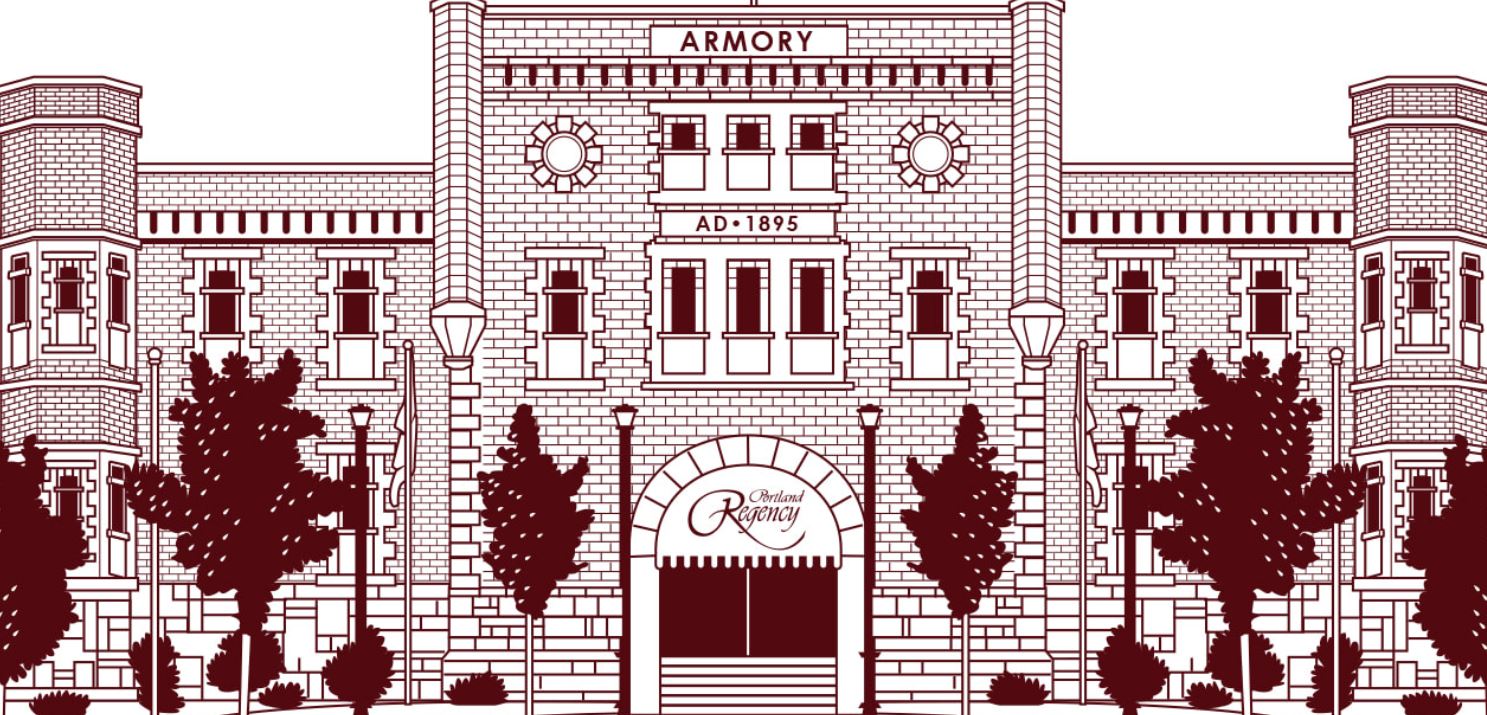
The Portland Regency Hotel & Spa features a fantastic array of Romanesque Revival-style architecture. Romanesque Revival-style architecture is a wonderful architectural style first appeared in North America in the middle of the 19th century, as design principles from both Rome and medieval Europe found a popular audience. Architects interested in specializing in Romanesque Revival-themed architecture specifically studied the works of Norman and Lombard engineers who were active in the 11th and 12th centuries. Structures created with the aesthetic are commonly defined by their pronounced round arches and round towers. Yet, those grand archways and towers were far less ostentatious than their historic counterparts located on the other side of the Atlantic. Romanesque Revival-style architecture also implemented squat columns, decorative wall carvings, and the extensive use of masonry. But architects would sometimes favor wood over bricks or stones due to financial concerns. The first wave of Romanesque Revival-style architecture impacted North America in the 1840s and 1850s, appearing in such cities like Washington, D.C., and Toronto. University College at the greater University of Toronto is one such example of a brilliant Romanesque Revival-inspired structure to emerge at the time. But the general public in both the United States and Canada did not fully embrace the aesthetic, preferring the tastes of Italianate and Gothic Revival architecture at the time. It was not until an American architect named Henry Hobson Richardson started using the form in the late 1800s that Romanesque Revival style finally became popular. A graduate from the renowned École des Beaux-Arts in Paris, Richardson developed numerous designs in places like New York City, Boston, and Detroit. His approach to Romanesque Revival style was somewhat different, as it also incorporated elements of medieval Mediterranean design principles. His vision of Romanesque Revival-style architecture was soon embraced by other architects, including those in neighboring Canada. Historians today largely refer to Richardson’s design philosophy as “Richardson Romanesque” architecture.
Guest Historian Series

Built in 1895 as the armory for the Maine National Guard, the U.S. Navy took control and used it as a recreation center during World War II. At the end of the war, the building served multiple purposes: National Guard headquarters, civic auditorium, public bath house, and warehouse for the State Paper Company.
In 1984, the armory building was converted into a hotel and opened in 1987 as a luxurious 95-room facility. The exterior of the armory was preserved intact with the exception of the skylight windows on the upper floors. Many of the original interior elements such as highly-detailed fireplaces, turreted corners, and windows of many shapes and sizes add singular character to the guest rooms.
Continue Reading