
History
Discover The Kendall Hotel, located in bustling Kendall Square, which once functioned as an important transportation hub between Boston and Cambridge.
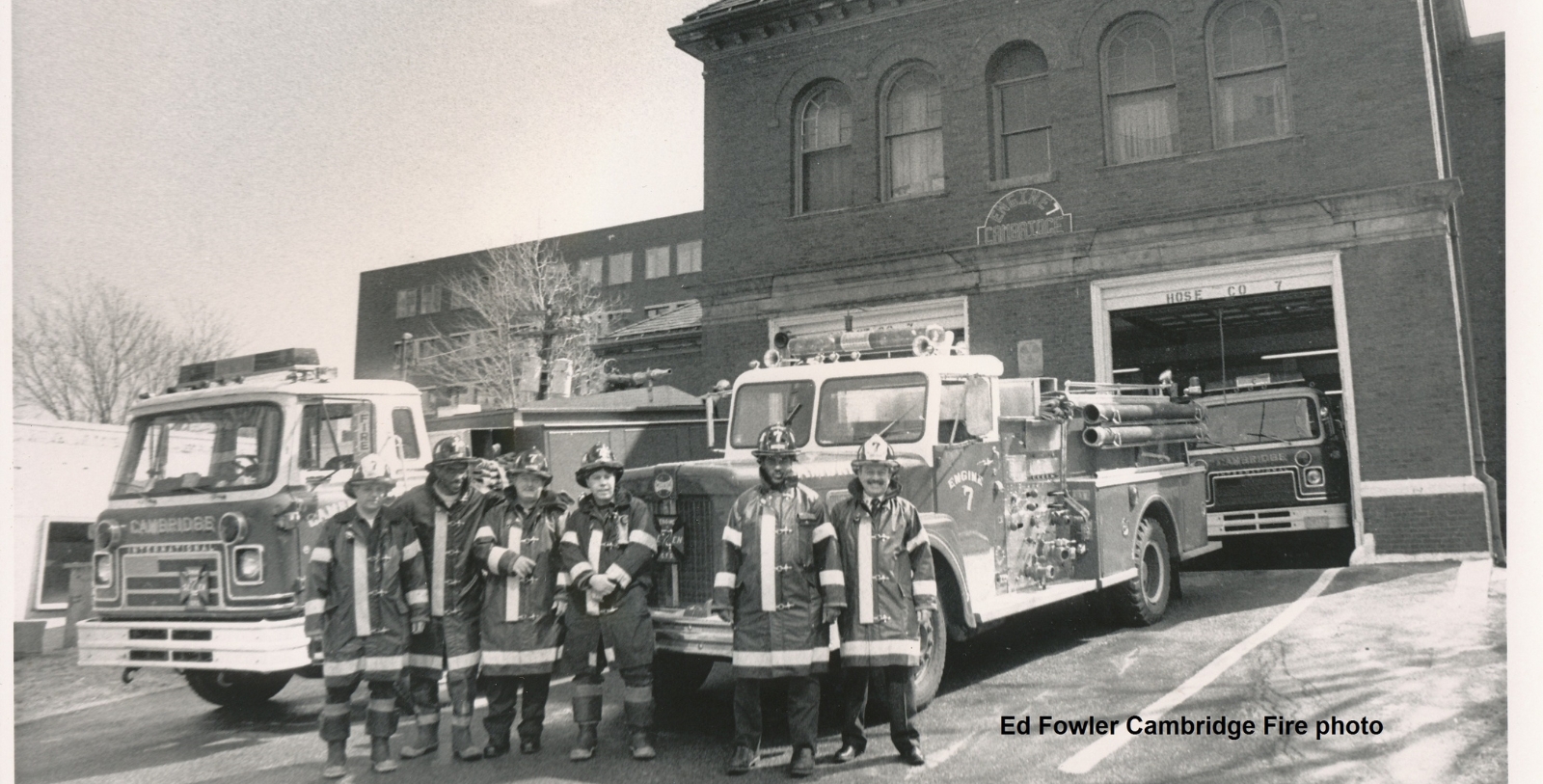
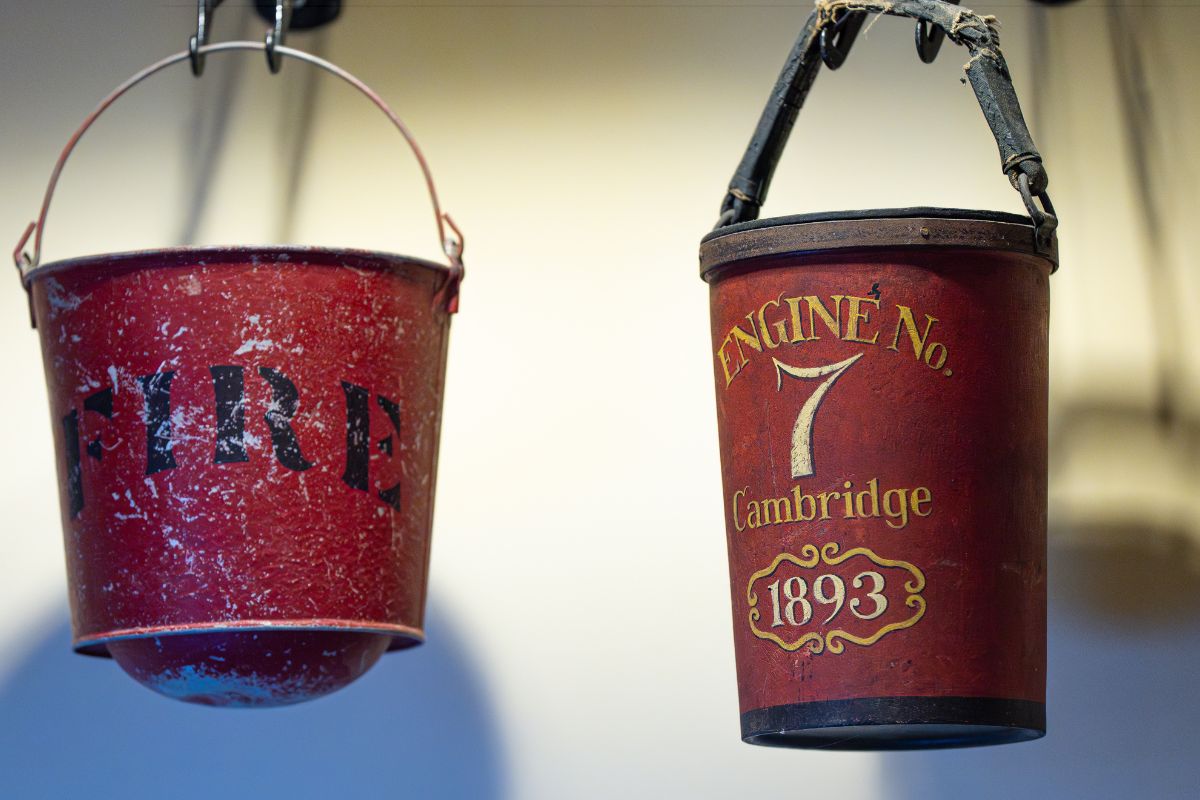
A member of Historic Hotels of America since 2004, The Kendall Hotel in Cambridge, Massachusetts, is a fantastic historic destination. Its history is quite extensive, as its origins harken back to the height of the Gilded Age. During the 1890s, the neighborhood of Kendall Square had rapidly emerged as one of Cambridge’s most industrialized areas. Once the site of a salt marsh, manufacturers had flocked to the area to open dozens of towering factories. Those businesses subsequently created countless products ranging from musical instruments to printing materials. (The greatest was the Kendall Boiler and Tank Company, whose founder, Edward Kendall, was the namesake for the neighborhood.) Due to the increased industrial activity, city officials eventually decided to extend a branch of the Cambridge Fire Department to the district. Called “Engine 7,” the new station quickly moved into a state-of-the-art engine house that had been built for it in 1894. Designed by architects R.J. Fitzgerald and S.D. Mitchell of Boston, it contained numerous technological innovations, including advanced steam pumpers, coal bunkers, and a novel fire engine. Perhaps its most noteworthy feature was the fact that it was one of the region’s first single-purpose fire stations. While most fire departments at the time normally occupied the same premises as other municipal agencies—such as the police—the Engine 7 Firehouse worked exclusively for the fire fighters of Engine 7. As such, the grounds contained amenities like expansive dormitories and a stable filled with a permanent team of horses.
The novel Engine 7 Firehouse continued to serve Kendall Square for decades. But in 1993, the historic Engine 7 vacated the grounds for a more modern headquarters located near Central Square. Left abandoned, the fate of the erstwhile engine house appeared bleak. Fortunately, artist Charlotte Forsythe and her husband, Gerald Fandetti, discovered the deserted building and sought to save it. Already accomplished preservationists, the couple petitioned the City of Cambridge to transform the former fire station into a wonderful boutique hotel. Impressed, the city greenlit the project and awarded the sale of the building to Forsythe and Fandetti in 1999. Construction began a year later, which thoroughly renovated the dormitories and other areas into an amazing series of guestrooms. (Forsythe and Fandetti also developed a seven-story tower behind the firehouse to hold more accommodations.) But the renovations also restored the building’s brilliant historical architecture back to its former glory. Indeed, Forsythe and Fandetti endeavored greatly to ensure that the fire station’s architectural integrity remained intact, as evidenced by their meticulous work revitalizing the building’s iconic cupola. When construction was thus concluded in 2002, “The Kendall Hotel” stood as a remarkable monument to the neighborhood’s Victorian past. Today, The Kendall Hotel continues to offer the same level of luxury and comfort, while also providing a rich historical experience that few other destinations can match.
Hotel Timeline
The Location
In 1630, a fleet carrying 700 English Puritans landed off the coast of Massachusetts Bay. Selecting a small hill overlooking the Charles River, a group of those colonists subsequently created a small settlement known first as “Newtowne,” and then just “Cambridge” just a few years later. (The name was an homage to the University of Cambridge, which was located back in an English city of the same name.) Despite being among the first settlements to appear in colonial Massachusetts, Cambridge expanded slowly over the next several decades. Nevertheless, the community was chosen as the site for a few important facilities, including Harvard College (now a part of Harvard University), which trained young men to become Puritan preachers. Still, Cambridge remained a small settlement by the time of the American Revolution, with most of its inhabitants living in farms around the college and a park called the “Cambridge Common.” However, its cultural significance nonetheless grew tremendously in the years that followed. Indeed, Cambridge emerged as a favorite gathering spot for numerous American authors at the start of the 19th century. A few members of the famous Fireside Poets—such as Henry Wadsworth Longfellow and Oliver Wendell Holmes—frequented the town regularly at the time!
Cambridge only began to resemble its current appearance when industry arrived in the middle of the 1880s. True, the community had already been the sight of several important manufactories—the prominent New England Glass Company being one such entity—but largescale industrialization after the American Civil War transformed Cambridge into a modern metropolis. Numerous factories and warehouses quickly dotted the landscape, which produced a range of goods like textiles, furniture, and processed foods. Much of the growth transpired in neighborhoods like Kendall Square in a region of town known as “East Cambridge.” The presence of so many factories attracted scores of immigrants from Western, Eastern, and Southern Europe, too. Black families from the Deep South also arrived as well, supplementing a small, yet vibrant local African American community that had been active since colonial times. This outstanding economic activity continued well into the 20th century, making Cambridge one of the greatest industrialized communities throughout the whole United States. Many famous businesses had opened shop in downtown Cambridge by this point, like the Athenaeum Press, Carter’s Ink Company, and several ancestors of the Tootsie Roll Industries.
Today, Cambridge is now a leading city within Massachusetts. It continues to be a thriving center for business, specifically technology startups. Indeed, Google, Facebook, and IBM all have prominent research laboratories in Kendall Square, inspiring some to refer to it as a top hub for tech innovation. Cambridge has also retained its historical status as a center for culture, too, as evidenced by the major schools it hosts, such as Harvard University, Lesley University, and the Massachusetts Institute of Technology (MIT). But Cambridge is also a popular destination for cultural heritage travelers, given its proximity to prominent sites like Cambridge Common and Harvard University’s Harvard Museum of Natural History. Travelers are pleased that Cambridge is just a short drive away from Boston, too, which is home to dozens of landmarks that are closely connected to the very founding of the nation. (Some of the most famous are located along Boston’s Freedom Trail, such as the Old South Meeting House, the Old State House, Boston Common, and the Boston National Historical Park.) Countless museums are even present in downtown Boston, as well, including renowned institutions like the Boston Children’s Museum, the Museum Fine Arts, Boston, the Museum of African American History (MAAH), and the John F. Kennedy Presidential Library and Museum.
The Architecture
The Kendall Hotel possesses a unique architectural style that can best be described as “eclectic.” Dating to the mid-19th and early 20th centuries, historians today consider “eclecticism” to be part of a much larger movement to fuse together a variety of historical designs. Earlier in the 1800s, architects—particularly those in Europe—decided to rely upon their own loose interpretations of historical architecture whenever they attempted to replicate it. Such a practice appeared within such styles as Gothic Revival, Italianate, and Second Empire architecture. But at the height of the Gilded Age, those architects decided to use historic architecture more literally when developing a building. A few architects went a step further by combining certain historical styles together to achieve something uniquely beautiful. And in some cases, those individuals felt inspired to add a new historical form onto a building that they were renovating—just like The Kendall Hotel. Ultimately, the architects felt that joining such architectural forms together would give them a new avenue of expression that they otherwise did not have at the time. They also believed that they had stayed true to the earlier forms, so long as their designs perfectly replicated whatever it was they wanted to mimic.
In Europe, this approach first appeared as a rehash of Gothic Revival-style known as “Collegiate Gothic.” The European architects then used such a mentality to influence the unfolding philosophies of both the Beaux-Arts school of design, as well as the emerging Renaissance Revival-style. Many architects in America followed suit, the most notable of which being Richard Morris Hunt and Charles Follen McKim. The American architects who embraced “eclecticism” were at first interested in the country’s colonial architecture. Much of the desire to return to the time period was born from the revived interest in American culture brought on by the Centennial Exposition of 1876. Pride in preserving the nation’s heritage inspired the architects to perfect the design principles of their colonial forefathers in new and intriguing ways. This interest gradually splintered into other revival styles, though, like Spanish Colonial and Tudor Revival. Some Americans even infused the approach with the popular Beaux-Arts aesthetics of France, such as Hunt and McKim. Yet, the birth of Modernism in the 1920s and 1930s eventually ended the worldwide love affair with “eclecticism,” for architects throughout the West became more enchanted with the ideas of modernity, technology, and progress.
Guest Historian Series
The Kendall Hotel at the Engine No. 7 firehouse is the only hotel in Cambridge to be designated a Historic Hotel of America by the National Trust for Historic Preservation. In 1894, the Engine No. 7 firehouse was erected to serve the rapidly-growing Kendall Square area. It was designed by architects R.J. Fitzgerald and S.D. Mitchell in Queen Anne-style to accommodate stables with a permanent team of horses, coal bunkers to fuel the new steam pumpers, maintenance facilities, and dormitories for the firemen complete with brass poles for quick exits. Engine Company No. 7 served Kendall Square for nearly a century as the neighborhood around it changed dramatically. In 1912, the subway system was built connecting Cambridge to Boston. A few years later, the Massachusetts Institute of Technology moved to its present location. Following World War II, many of Kendall Square's manufacturing firms relocated, leaving abandoned buildings and factories behind them.
Continue Reading