History
Discover The Plaza - A Fairmont Managed Hotel, the iconic luxury New York City hotel that has hosted guests from around the world since opening in 1907.
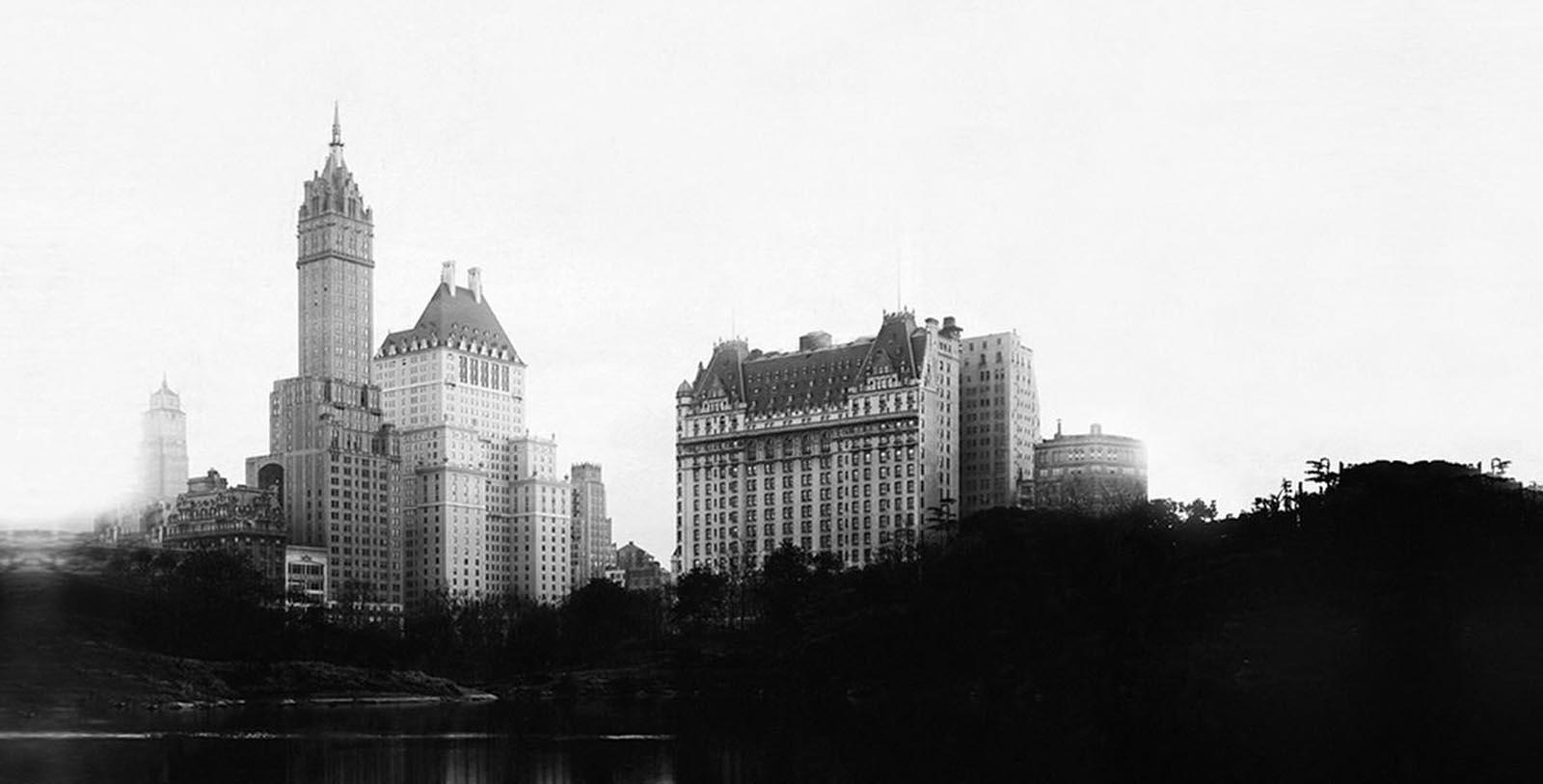
A U.S. National Historic Landmark, The Plaza - A Fairmont Managed Hotel has stood as one of New York City’s most iconic destinations since the beginning of the 20th century and has a unique hotel history. Yet, the current hotel actually a second version. The first iteration of The Plaza appeared in upper Manhattan in 1883, when several aspiring hoteliers decided to construct a magnificent boutique hotel on the site of the New York Skating Club. But the builders failed to raise the necessary funds to finish the construction, forcing the New York Life Insurance Company to foreclose on the whole project. Now the building’s steward, the bank hired renowned architectural firm McKim, Mead and White to complete it. In all, it took some 27 years to fully erect the first hotel. By 1905, the New York Life Insurance Company had managed to find new owners for the structure: Fred Sterry, Harry S. Black, and Bernhard Beinecke. It soon became apparent to the three men that the hotel was too small to meet the growing demand among its customers. As such, they subsequently dismantled most of the hotel in order to construct a far more magnificent one on the same spot. The men spared no expense. For their ambitious scheme, they hired architect Henry J. Hardenbergh to design its entire layout. Designing the hotel in a style reminiscent of a French chateau, Hardenbergh used only finest building materials, including brilliant oak paneling and rare marble from across the world. He even placed the single largest gold-encrusted china order in history with L. Straus & Sons, along with an order for 1,650 crystal chandeliers.
Taking some two years and $12.5 million to complete, the new version of The Plaza debuted on October 1, 1907. Just as the doors opened that morning, an ornate, horse-drawn carriage pulled up to the entrance. Its passenger was the powerful millionaire Alfred Gwyne Vanderbilt, a great-grandson of Commodore Cornelius Vanderbilt. A renowned railroad magnate, he wanted to make the headlines by being the very first guest to book a guestroom. Vanderbilt’s arrival marked the beginning of a long tradition, in which many prominent international luminaries would visit the hotel. Most of the 20th century’s biggest names stayed at The Plaza - A Fairmont Managed Hotel, including Greta Garbo, Elizabeth Taylor, Richard Burton, and Frank Sinatra. Others held spectacular galas, such Truman Capote and his famous “Black and White Ball.” Some went on to perform down in the hotel’s Persian Room, like Marlene Dietrich, Eartha Kitt, Miles Davis, Duke Ellington, and Peggy Lee. And a few—including actress Kay Thompson and architect Frank Lloyd Wright—even lived for a time inside the building’s luxurious suites. The Plaza - A Fairmont Managed Hotel has also hosted a number of high-profile weddings over the years. One of the earliest ceremonies to transpire at the hotel involved Patricia Kennedy marrying British film star Peter Lawford. Held in 1954, their nuptials featured a wealth of influential people, such as Patricia’s brothers Robert Kennedy (future Attorney General), Ted Kennedy (future U.S. Senator), and John F. Kennedy (future President of the United States).
Conrad Hilton acquired the hotel during the height of the Second World War for a sum of $7.4 million. He spent an additional $6 million on renovating the entire structure, opening the legendary Oak Room in the process. Yet, Hilton would then sell his rights to the hotel to A.M. Sonnabend roughly a decade later, in order to raise money to construct for the nearby Savoy-Plaza Hotel. Sonnabend ran The Plaza - A Fairmont Managed Hotel for the next 18 years, managing the building through his business, the Hotel Corporation of America (HCA). Sonnabend then sold The Plaza - A Fairmont Managed Hotel to Westin International Hotels in 1973, which renamed it as “The Westin Plaza.” Future U.S. President Donald J. Trump then acquired the building for $390 million and invested another $50 million into completely renovating the site. With his first wife, Ivana, acting as its president, the Trumps managed to create a healthy operating income for the hotel for the first time in years. El Ad Properties eventually acquired The Plaza - A Fairmont Managed Hotel in 2004, which subsequently spent $450 million on renovating the structure. Today, The Plaza - A Fairmont Managed Hotel is owned by Katara Hospitality, although it is operated by Fairmont Hotels and Resort. This spectacular historic hotel still retains its brilliant historical eloquence, all while providing the latest in contemporary comfort for the modern traveler. A member of Historic Hotels of American since 2011, few places in downtown New York City are better for a historic vacation than The Plaza - A Fairmont Managed Hotel.
Hotel Timeline
The Location
The hotel is located on the westside of a picturesque public square known as Grand Army Plaza. It resides at the intersection of 5th Avenue and 59th Street in upper Manhattan. Completed in 1916, the New York City Board of Aldermen named the park after the Civil War-era Army of the Potomac. Grand Army Plaza was originally designed by the architectural firm Carrère and Hastings, which had been responsible for creating many other beautiful structures throughout the United States. Among its most celebrated buildings were The Jefferson Hotel in Richmond, Virginia; the Russell Senate Office Building in Washington D.C.; and the Ponce de León Hotel in St. Augustine, Florida. The firm specifically designed Grand Army Plaza with Beaux-Arts-style architecture, having been selected from a contest of four other applicants. Carrère and Hastings’ plan called for the park to be divided into two sections by 59th Street, with the northern part carved out of the southeastern corner of Central Park. This area of Grand Army Plaza would then be developed around an equestrian statue of General William Tecumseh Sherman that had stood in the area since 1903. Meanwhile, Carrère and Hastings would develop the southern section around a new monument called the “Pulitzer Fountain.” Designed specifically by the firm’s own Thomas Hastings, the structure was meant to resemble the Place de la Concorde in Paris. Its most striking feature was a brilliant bronze statue created by Karl Bitter. The New York Preservation Landmarks Commission subsequently identified it as a New York City Designated Landmark in 1974.
The Plaza - A Fairmont Managed Hotel also sits opposite of The Pond and the Hallett Nature Sanctuary in Central Park. One of the area’s most iconic landmarks, The Pond was originally created by renowned landscape architects Calvert Vaux and Frederick Law Olmstead. The two men had formed the body of water from a creek called DeVoor’s Mill Stream in accordance to their “Greensward Plan.” A historic crossing called “Gapstow Bridge” covers the length of The Pond, which architectural firm Howard & Caudwell developed in 1896. Made of schist, it replaced an earlier structure designed by Jacob Wrey Mould some two decades prior. Several statues also surround The Pond, including busts of poet Thomas Moore and composer Victor Herbert. A 3.5-acre large peninsula juts out into the water, forming the basis of the Hallett Nature Sanctuary. Originally known as the Promontory, it is the site of a large bird refuge. The destination specifically got its name from George Hervey Halley Jr., who was an avid birdwatcher and conservationist from New York City at the height of the Gilded Age. The Hallett Nature Sanctuary is typically open for half-hour tours, although it had spent nearly a century closed-off to the general public. Central Park itself was the crown achievement of Frederick Law Olmstead and his colleague, Calvert Vaux. Constructed from 1859 to 1876, it quickly became one of the largest public parks in all of New York. It has since retained that status as it currently covers a total of 843 acres. It is also one of the most filmed locations in the world, having served as the set for more than 230 movies. Central Park today is recognized by the U.S. Department of the Interior as a National Historic Landmark.
The Architecture
The current version of The Plaza - A Fairmont Managed Hotel was originally designed by the great architect, Henry J. Hardenbergh. He had developed a reputation throughout the nation for his unrivaled use of Beaux-Arts design aesthetics as well as many other types of French-inspired architecture. For The Plaza - A Fairmont Managed Hotel, Hardenberg had specifically incorporated Châteauesque-style into its overall design. This unique architectural form blends elements of Revivalist and French Renaissance design aesthetics to achieve its distinctive appearance. Buildings constructed in such a way are also known to incorporate pitched roofs and elaborate towers that borrow heavily from Gothic and Italian Renaissance architecture. Yet, he also embraced an organic approach, which promoted practical design elements for the sake of convenience and safety. Much of Hardenbergh’s work emphasized the presence of symmetry in order to achieve an appealing, uniform design. He accomplished this feat with The Plaza - A Fairmont Managed Hotel through the repetition of such architectural motifs as balconies, balustrades, arches, loggias, pilasters, and columns. According to the U.S. Department of the Interior’s official report:
“The picturesque gables of the Fifth Avenue front successfully counterbalance the ornate dormers facing Central Park. The relation of the upper loggias to the breaks in the front wall has been skillfully worked out. It is these subtleties of design, as well as many attractive details, which make the hotel so satisfying architecturally…the main facades are tripartite in composition, being composed of a recessed central portion with projected terminal sections at each corner. Vertically, they consist of a base, a shaft and a crown, each clearly marked off by horizontal string courses or balconies for emphasis. The base consists of three stories of marble, two of which are rusticated. The shaft is formed by ten floors of white brick topped by a marble balcony which casts a band of deep shadow. The crown consists of the top five floors including the gables on the Avenue side and steep slate roofs with their dormers facing the park. The two corners of the rusticated base on the east side are rounded, and flow logically upward into turrets which rise uninterruptedly for fourteen floors, through shaft and roof crown, and are terminated by small domed roofs.”
The Plaza - A Fairmont Managed Hotel originally had two entrances: the main one located along 59th Street and a more exclusive entry point on 58th Street. Only the most prominent guests had access to the latter entrance. Those two areas were then joined by a third entrance that faced Grand Army Plaza and 5th Avenue. As visitors entered through this entryway, they would first encounter the world-famous Palm Court. It was first known as the Tea Room though and featured a wealth of fantastic architectural components. Some of the most iconic aspects of the room’s architecture included columns of Caen stone, Italian Breche violet marble, and Chinese cachepots. The renowned Persian Room was located further south of the 5th Avenue lobby, which had been decorated by Joseph Urban and Lillian Palmedo following the repeal of Prohibition. To the east was the Fifth Avenue Café, later renamed as the “Edwardian Room” in 1955. Complete with a beamed ceiling, it contained a beautiful array of dark wood paneling that contained red damask. Perhaps the greatest space featured inside the hotel was the Oak Room. Hardenbergh employed a different series design aesthetics for the venue that were inspired by the German Renaissance. Constructed with English and Flemish oak, it contained a grape-laden chandelier, several faux wine casks, and numerous frescoes depicting Bavarian castles.
Famous Historic Events
Plaza Accord (1985): The Plaza Accord was a joint international plan created by financial representatives from France, West Germany, Japan, Great Britain, and the United States. Held at The Plaza on September 22, 1985, the attendees had agreed on devaluating the U.S. dollar in a bid to bolster global markets. The deal specifically sought to support the Japanese yen and the German Deutsche mark. Industrialists in the U.S. had lobbied the Reagan administration extensively for the talks to commence, in the hopes that a stronger international finance market would inspire foreign trading partners to buy American-made goods. A secondary goal also emerged that sought to reduce America’s trade deficit with both Japan and Western Europe. The policy proved to be a mixed bag in the long run. The United States managed to achieve both of its primary goals in Europe, but it never came close to satisfying its economic challenges with Japan. Many historians today cite the Plaza Accord as the moment in which Japan emerged as a significant influencer within the international monetary system.
Famous Historic Guests
- Greta Garbo, actress known for her roles in Grand Hotel, Romance, and Anna Christie.
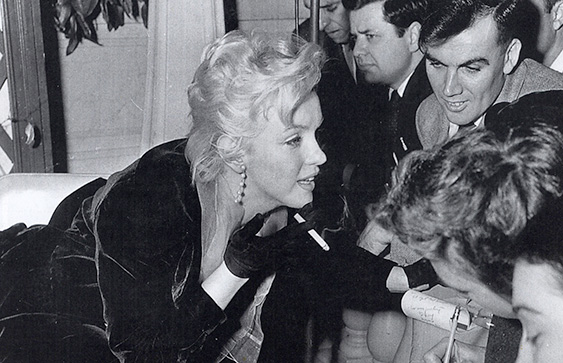
- Marilyn Monroe, actress known for her roles in Bus Stop and Some Like It Hot.
- Elizabeth Taylor, actress known for her roles in Cleopatra and The Taming of the Shrew.
- Richard Burton, actor known for his roles in Cleopatra and Where Eagles Dare.
- Marlene Dietrich, actress known for her roles in Morocco, Shanghai Express, and The Blue Angel.
- Mia Farrow, actress known for her roles in movies like The Purple Rose of Cairo, Rosemary’s Baby, and John and Mary.
- Kay Thompson, actress known for creating the Eloise children’s book series.
- Josephine Baker, actress and civil rights activist known for being the first African American to appear in a motion picture.
- Eartha Kitt, singer and actress known for such songs as “C’est si bon” and “Santa Baby.”
- Duke Ellington, Jazz musician whose orchestra famously played at the Cotton Club.
- Frank Sinatra, singer and actor part of the famous Rat Pat known for selling 150 million records worldwide.
- Miles Davis, musician remembered as being one of the key figures in the history of jazz.
- John Lennon, lead vocalist and rhythm guitarist for the legendary rock band, The Beatles.
- Paul McCartney, lead vocalist and bassist for the legendary rock band, The Beatles.
- George Harrison, vocalist and lead guitarist for the legendary rock band, The Beatles.
- Ringo Starr, drummer for legendary rock band, The Beatles.
- F. Scott Fitzgerald, author best known for writing The Great Gatsby.
- Truman Capote, author known for such stories as Breakfast at Tiffany’s and In Cold Blood.
- Andy Warhol, artist and film director who played a central role in the development of 20th-century American pop art.
- Frank Lloyd Wright, architect responsible for creating over 500 legendary building, including Fallingwater.
- Conrad Hilton, founder of the Hilton Hotels chain and one-time owner of The Plaza - A Fairmont Managed Hotel.
- Edward VIII, King of the United Kingdom and Duke of Windsor upon his abdication in 1936.
- Robert F. Kennedy, U.S. Attorney General and Senator from New York (1965 – 1968)
- Ted Kennedy, U.S. Senator from Massachusetts (1962 – 2009)
- Jacqueline Kennedy Onassis, First Lady to former U.S. President John F. Kennedy (1961 – 1963)
- John F. Kennedy, 35th President of the United States (1961 – 1963)
- Richard Nixon, 37th President of the United States (1969 – 1974)
Film, TV and Media Connections
- No Limit (1931)
- The Gentleman’s Agreement (1947)
- North by Northwest (1959)
- Man on a String (1960)
- Barefoot in the Park (1967)
- Funny Girl (1968)
- Plaza Suite (1971)
- 40 Carats (1973)
- The Way We Are (1973)
- Network (1976)
- The Front (1976)
- Love at First Bite (1979)
- The Rose (1979)
- Just Tell Me What You Want (1980)
- Arthur (1981)
- Prince of the City (1981)
- Paternity (1981)
- They All Laughed (1981)
- Author! Author! (1982)
- The Cotton Club (1984)
- Unfaithfully Yours (1984)
- Brewster’s Millions (1985)
- Crocodile Dundee (1986)
- Big Business (1988)
- Soapdish (1991)
- Home Alone 2: Lost in New York (1992)
- Scent of a Woman (1992)
- Sleepless in Seattle (1993)
- Seinfeld: The Doodle (1995)
- The Pickle (1993)
- It Could Happen to You (1994)
- The Associate (1996)
- For Richer or Poorer (1997)
- Almost Famous (2000)
- Gossip Girl: The Goodbye Gossip Girl (2007)
- Bride Wars (2009)
- The Great Gatsby (2013)
- The Post (2017)
Women in History
Kay Thompson: Eloise—the precocious young girl who lives at The Plaza - A Fairmont Managed Hotel—was introduced to the world by Kay Thompson in 1955. An entertainer in the Persian Room at The Plaza, she spent many years living at the hotel. Rumors say that Eloise was Kay Thompson’s creation and was started out as her ‘alter ego’ during rehearsals and night show acts. Other people say that Eloise was based on Liza Minnelli as a child living here when her mother Judy Garland was performing at The Persian Room. Either way, Kay Thompson’s first book about Eloise, entitled, Eloise: A Book for Precious Grown-Ups. Three more books were to follow, ending with Eloise in Moscow in 1959. (A fifth book, Eloise Takes a Bawth, was posthumously published in 2002). While the work followed Eloise around the globe, she always found herself returning back to her home at The Plaza.
The story of Eloise reached a global audience, and guests and visitors wanted to ‘meet Eloise’ at The Plaza and see where her escapades took place. Remember her dog Weenie who looks like a cat? And Skipperdee, the turtle who wears sneakers and eats raisins! Nanny, the ‘rawther’ British nanny who tried her best to watch over Eloise as she took interest in every part of the hotel, sometimes bringing chaos to those around her. In 1998, The Plaza - A Fairmont Managed Hotel was designated a Literary Landmark by the Friends of the Library (now the Association of Library Trustees, Advocates, Friends and Foundation)— one of only three hotels in the United States with this prestigious designation. Today, The Plaza proudly commemorates Thompson’s legacy, from the Eloise flag at the front of the hotel to the one-of-a kind Eloise Suite.

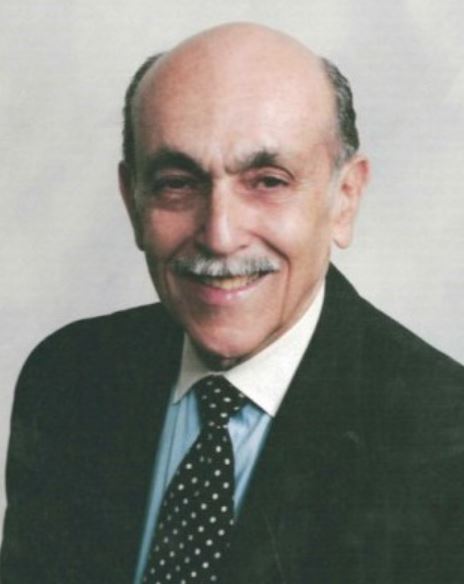
Guest Historian Series
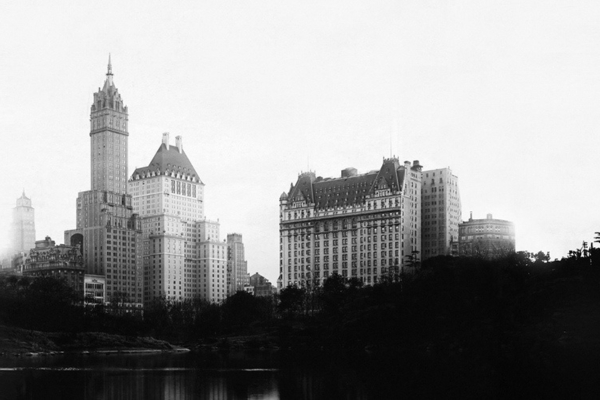
Originally constructed between 1905 and 1907, The Plaza - A Fairmont Managed Hotel is set back from Fifth Avenue and is prominently located near Grand Army Plaza and the Pulitzer Memorial Fountain. The 1969 New York Landmarks Designation Report said:
“By day, the impressive white mass of the The Plaza - A Fairmont Managed Hotel is visible above the trees in Central Park. By night, the lighted windows and the picturesque silhouette of the high roofs, reminiscent of a French Renaissance Chateau, add a note of beauty to the skyline… the building occupies one of the finest sites in the City and is the most elegant of our great New York hotels…. The boldness of mass and good scale of this eighteen story white brick and marble structure make The Plaza - A Fairmont Managed Hotel the outstanding example of American hotel architecture of the first decade of the Twentieth Century.”
Continue Reading