History
Discover Skirvin, a Hilton Hotel, which has been an iconic Oklahoma City landmark since it opened in 1911.
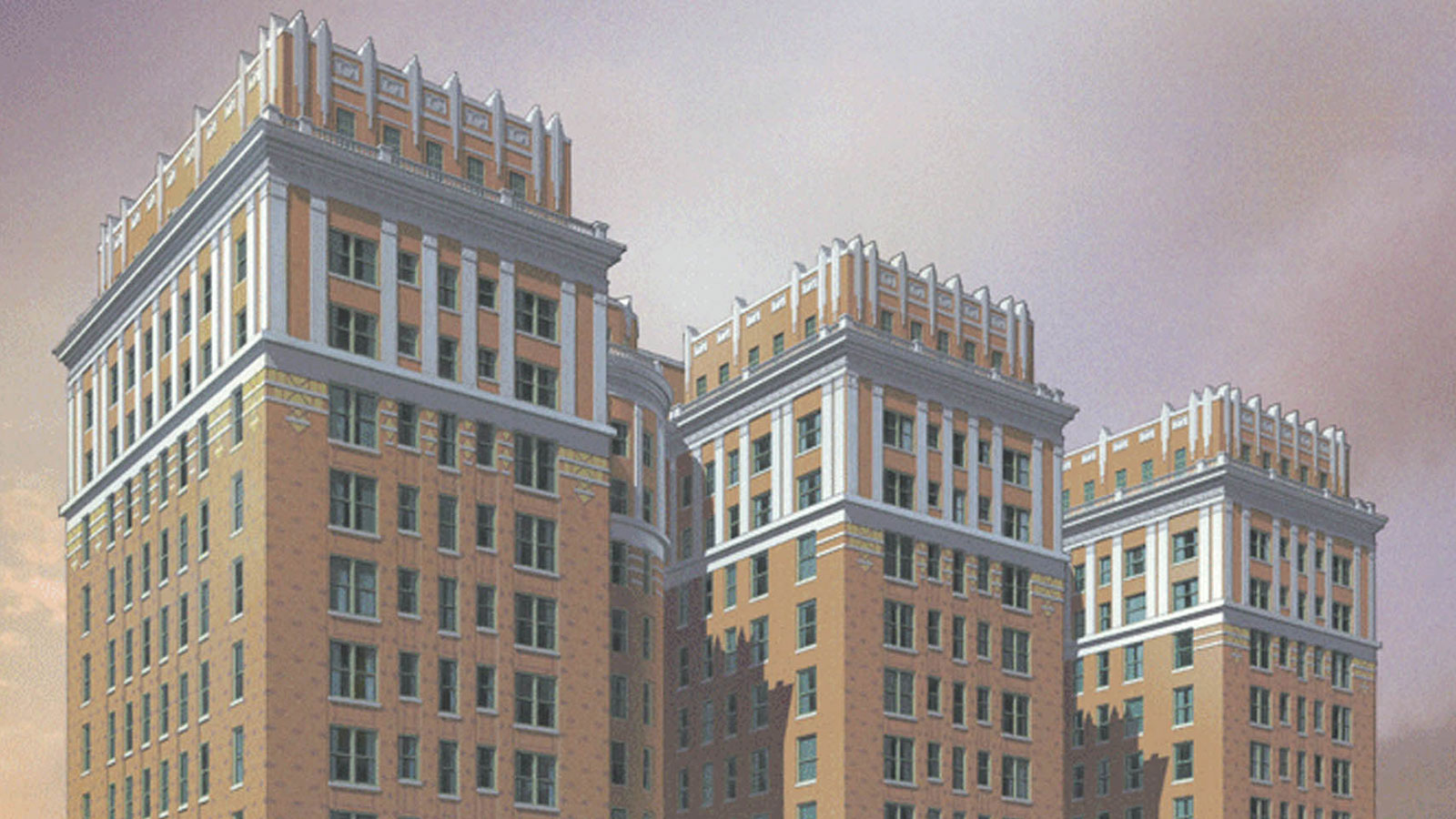
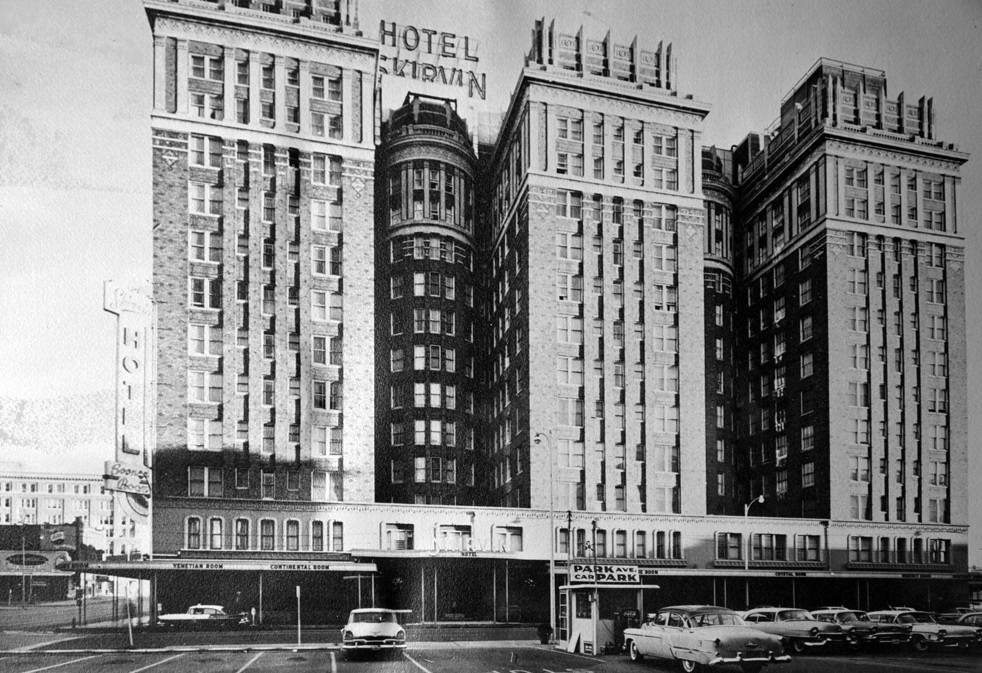
Listed on the U.S. National Register of Historic Places, Skirvin, a Hilton Hotel has a fascinating history. This spectacular holiday destination first opened when Oklahoma City was rapidly transforming into a major economic center in the early 20th century. Amid the economic renaissance, Skirvin, a Hilton Hotel's founder, William Balser “Bill” Skirvin, quite literally fulfilled the role of a community builder. Originally from Michigan, Skirvin had acquired land in Oklahoma City during the Land Rush of 1889. Several years later in 1909, an investor from New York City approached Skirvin with an offer to purchase his landholdings. The investor stated his intent to develop the most extravagant hotel in Oklahoma. A shrewd entrepreneur, Skirvin turned down his offer, only to take it upon himself to build the structure. Skirvin then sought out reputed architect, Solomon A. Layton, and together, they created a blueprint for a six-story hotel with a U-shaped design. Oral tradition even stipulates that after the completion of the fifth floor, Layton persuaded Skirvin to add an addition ten levels as a means of keeping up with the thriving population of Oklahoma City. The revised hotel magnificently opened to the public on September 26, 1911, as “The Skirvin.” The Skirvin had two wings—both facing south—of 225 accommodations, as well as an interior decorated in English Gothic detail. Outside, Skirvin and Layton had used Art Deco architecture to construct the building’s exterior, creating a brilliant façade that was among the most gorgeous in all of Oklahoma City.
When he was not busy with his other enterprises, Skirvin was in the hotel greeting guests and talking to local luminaries. As a result, The Skirvin became a center for politics in the early days of Oklahoma’s statehood. Skirvin and his family moved to a five-room suite in order for Skirvin to help manage the prospering business. The Skirvin also attracted guests of all calibers from politicians to ranchers, too. Even famous bank robbers visited at one point or another. Perhaps the most notorious was Al Jennings, an ex-convict who launched his bid for governor right in the hotel’s grand lobby. The Skirvin’s popularity subsequently made it incredibly prosperous, prompting ownership to install a lavish 12-story wing for $650,000. By 1930, all three stories had been raised and the capacity was increased to 525 accommodations. Several new facilities also made their grand debut, including a roof garden and a cabaret club that cost an extra $3 million. Despite the economic disaster of the Great Depression, Skirvin remained hopeful that his wonderful grand hotel would endure for generations to come. (Skirvin himself was well protected by the vast investments in oil that he had made when he first moved to Oklahoma.) With his characteristic boldness, he declared that his team would construct a 26-story tower as a way to “expand the capabilities of his hotel.” The project began shortly thereafter. Unfortunately Skirvin fell victim to financial ruin in early 1932 and temporarily abandoned the work. The tower itself did not see completion until later that decade.
After Skirvin’s death in 1944, his three children decided to sell the gorgeous destination. They subsequently sold the entire hotel complex to Dan W. James for just a few million dollars. While its ownership changed frequently among various investors and businessmen for the next five decades, The Skirvin remained a choice destination for hundreds of guests in Oklahoma City. In fact, the hotel continued to entertain many illustrious individuals for some time thereafter, such as Elvis Presley, Frank Sinatra, Jimmy Hoffa, Roger Staubach, Mikhail Baryshnikov, and Bob Hope. The hotel also hosted former U.S. Presidents, including Harry S. Truman and Dwight D. Eisenhower. Nevertheless, the hotel’s popularity entered a steady decline toward the end of the century. The diminishing interest with the business ultimately forced it to close its doors for good in 1988. After sitting dormant for the next two decades, contractors began preparing The Skirvin for a long-awaited restoration. The craftsmen specifically focused on rehabilitating the entire interior, within which they installed historically accurate windows and new guest elevators. After more than $50 million in renovations, the building reopened to great acclaim in 2007 as Skirvin, a Hilton Hotel. A member of Historic Hotels of America since 2008, Skirvin, a Hilton Hotel is now once again among the best places to stay in all of Oklahoma.
Hotel Timeline
The Location
Oklahoma City is one of the most exciting places to visit in the entire South. Not only is Oklahoma City the state capital of Oklahoma, but it is also its largest, with a population of around 655,000. This fantastic metropolis first came into existence during the waning days of the Old American West. Most of the area’s original Euro-American inhabitants arrived in the region amid what many historians have since referred to as “The Land Run” or the “Run of ’89.” Between the late 1880s and early 1900s, some 10,000 settlers arrived in Oklahoma’s “unassigned land,” the territory in which the federal government had not assigned to any Native Americans. (Oklahoma has existed for many years prior as “Indian Territory,” a place where the federal government had controversially relocated various Native American tribes.) The greatest wave of settlement transpired in 1889, though, when nearly half the number of Oklahoma City’s original pioneers arrived in the area. While the initial wave of pioneers were frontiersmen and cattle ranchers, more ordinary settlers—such as merchants and laborers—began congregating upon rudimentary plots of land within the unassigned lands. Most began settling near a train stop created by the Atchison, Topeka and Santa Fe Railway, called the “Oklahoma Station.” In just a matter of months, the settlers had gradually formed their disparate plots of land together to form an actual community around the isolated depot. Due to mounting pressure to legalize the land rush, Congress and President Benjamin Harrison formally organized the region into seven counties and approved the chartering of “Oklahoma City” in the spring of 1890. Despite Oklahoma City’s growth, the nearby town of Guthrie became the first capital. A rivalry between the two communities then existed for the next two decades, until a referendum permanently established Oklahoma City as the state capital in 1910. (Oklahoma had just become a state itself only three years prior.)
The population of Oklahoma City continued to swell, reaching well over 64,000 people on the eve of World War I. Its growth had largely been spurred by a spate of commercial real estate development, driven by countless entrepreneurs who coordinated closely with both the city’s Chamber of Commerce and the state government. Many prominent industries debuted in the community during the early 20th century, including dozens of heavy manufacturing operations like the Oklahoma City Ford Motor Company Assembly Plant. Yet perhaps the greatest to debut at the time was its lucrative meatpacking trade. Its proximity to hundreds of cattle ranches rendered the city a natural fit to distribute livestock and meat throughout the southern United States, giving rise to many warehouses and food processing plants. (Local farmers also transported various crops into Oklahoma City, too, such as cotton, wheat, and corn. Nonetheless, the distribution of livestock remained the primary staple that local agriculturalists sent into the community.) Stockyards in Oklahoma City became a regular site, supplanting the ones in Chicago and Omaha in both size and prosperity. And the discovery of oil just beyond the city limits in the 1920s transformed the community into one of the most industrious places for the domestic production of petroleum and natural gas products. The greater Oklahoma City area even had around 1,400 derricks in operation at the height of the Roaring Twenties. People continued to flock into the area over the next several decades, as well, with the city’s population increasing to an astonishing 300,000 by the 1950s. Today, Oklahoma City is still one of the most important communities in the South. It remains the home to many prominent industries and hosts such renowned cultural attractions like the Oklahoma City Museum of Art, the Myriad Botanical Gardens, Bricktown, and the National Cowboy and Western Heritage Museum.
The Architecture
Designed together by William Balser “Bill” Skirvin and Solomon A. Layton, Skirvin, a Hilton Hotel is a wonderful example of Art Deco design aesthetics. Art Deco itself is still one of the most famous architectural styles in the world. The form originally emerged from a desire from architects to break with past precedents to find architectural inspiration from historical examples. Instead, professionals within the field aspired to forge their own design principles. More importantly, they hoped that their ideas would better reflect the technological advances of the modern age. As such, historians today often consider Art Deco to be a part of the much wider proliferation of cultural “Modernism” that first appeared at the dawn of the 20th century. Art Deco as a style first became popular in 1922, when Finnish architect Eliel Saarinen submitted the first blueprints to feature the form for contest to develop the headquarters of the Chicago Tribune. While his concepts did not win over the judges, they were widely publicized, nonetheless. Architects in both North America and Europe soon raced to copy his format in their own unique ways, giving birth to modern Art Deco architecture. The international embrace of Art Deco had risen so quickly that it was the central theme to the renowned Exposition des Art Decoratifs in Paris a few years later. Architects the world over fell in love with Art Deco’s sleek, linear appearance, defined by a series of sharp setbacks. They also adored its geometric decorations that featured such motifs as chevrons and zigzags. But in spite of the deep admiration people felt toward Art Deco, interest in the style gradually dissipated throughout the mid-20th century. Many examples of Art Deco architecture survive today, with some of the best located in such places as New York City, Chicago, and Miami Beach.
Guest Historian Series
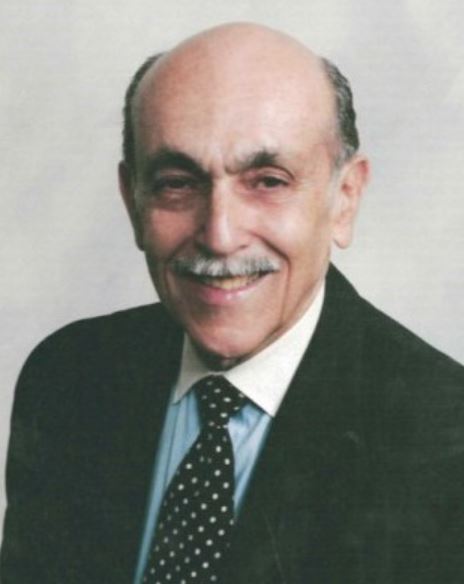
Skirvin, a Hilton Hotel is Oklahoma City’s oldest hotel. It was built by William Balser Skirvin, a native of Michigan who made his fortune in Texas land development and oil. In 1906, Skirvin and his family (including his daughter Pearl who would later become Perle Mesta, ambassador to Luxembourg and a famous Washington hostess) moved to Oklahoma City. Skirvin hired Solomon Andrew Layton, an American architect who designed over 100 public buildings in the Oklahoma City area including the Oklahoma State Capitol. Twenty-two of Layton’s buildings are listed on the National Register of Historic Places.
Skirvin and Layton made the hotel as self-sufficient as possible. Skirvin installed a proprietary gas pipeline to the building, dug three wells for water supply, built an electric generating plant and operated an in-house laundry and cooling system.
CONTINUE READING