
Golf
Discover the Fairmont Banff Springs Golf Course, which has been renovated by the like of Donald Ross and Stanley Thompson.
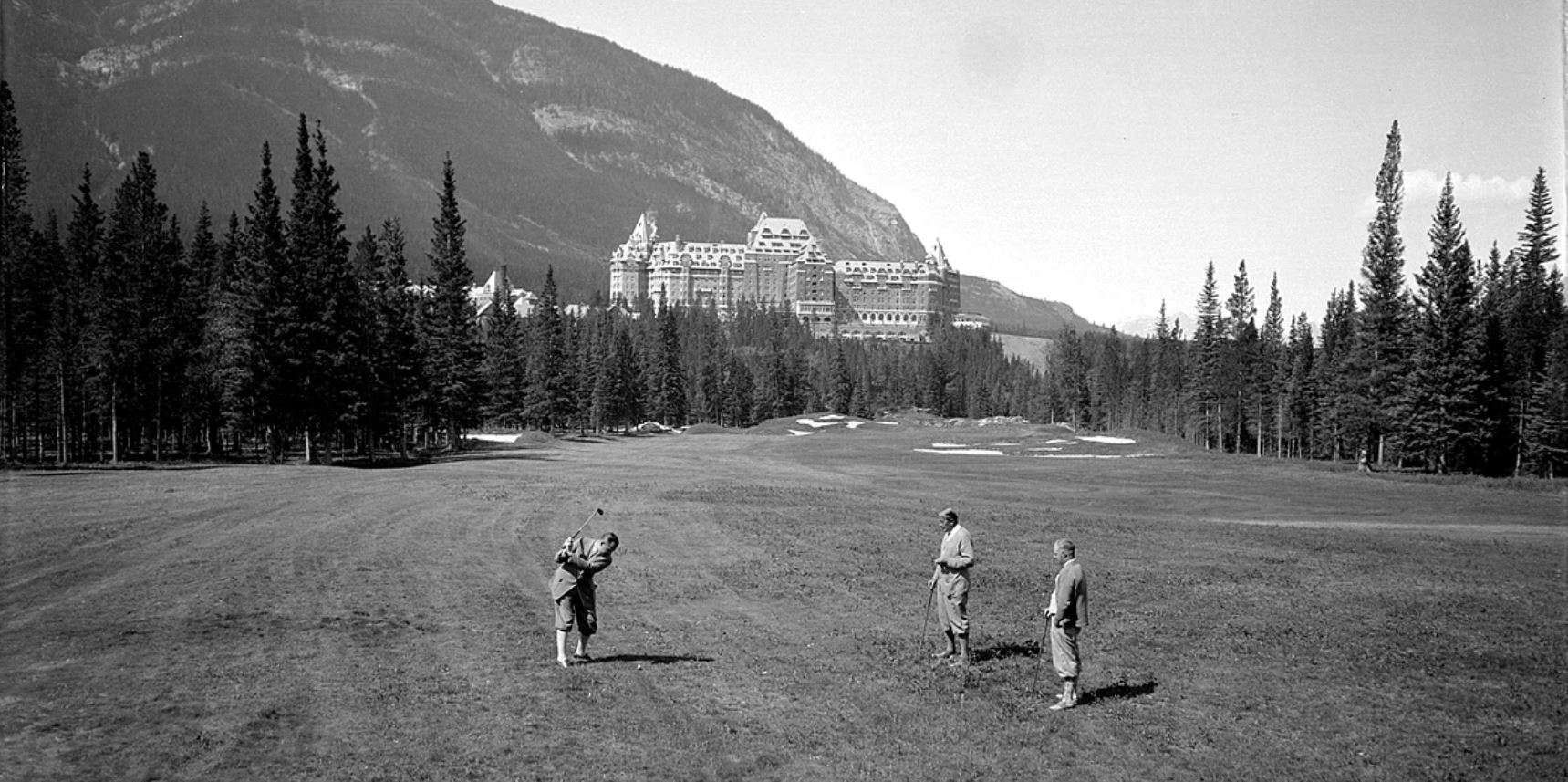
At the height of the Victorian era, the Fairmont Banff Springs was one of the most illustrious vacation retreats in all Canada. The magnificent Châteauesque-style structure had earned a considerable reputation throughout the world for its unrivaled hospitality and outstanding elegance. To keep up with the resort’s rising popularity, its owner—Canadian Pacific Railway—decided to continuously expand upon the building’s available offerings. Among the construction projects that the company undertook was the development of new activity facilities, including a stunning nine-hole golf course in 1910. William “Bill” Thomson—a protégé of the legendary Old Tom Morris—oversaw its creation, which took several months to finish. Thomson had specifically selected a section of land nestled between the picturesque Tunnel and Rundle mountains and crafted an iconic layout that enchanted countless guests. Thomson’s new golf course soon emerged as one of the region’s most exciting attractions, charming high-profile guests like members of the British Royal Family. By the end of World War I, the course had become so popular that Canadian Pacific Railway realized that it needed to expand it further to 18 holes. Work subsequently began in 1917, although the initial plans were later modified some two years later when iconic golf course architect Donald Ross was brought to lead the redesign. He proceeded to masterfully double the size of the golf course, placing each fairway perfectly within the lush, verdant landscape of the surrounding Canadian Rockies. Guests were subsequently amazed when the reconfigured course finally reopened in 1924.
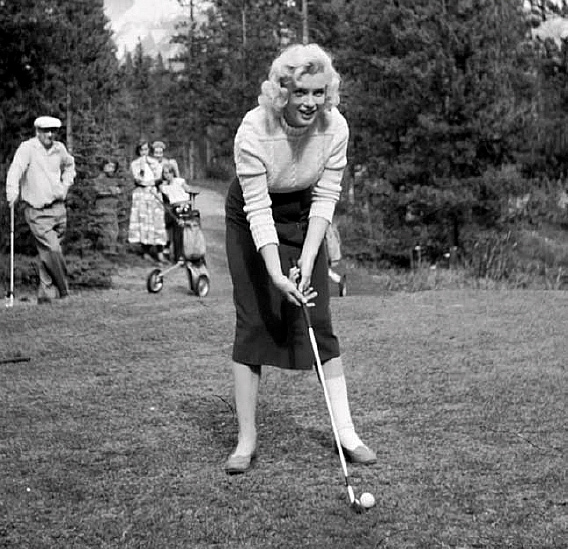
Meanwhile, a competitor to the Fairmont Banff Springs—today’s Fairmont Jasper Park Lodge—had begun building its own terrific golf course. Renowned Canadian architect Stanley Thompson had supervised its formation, causing the executives at Canadian Pacific Railway to become very envious. Not wanting to be outdone, the company chose to renovate the Fairmont Banff Springs golf course yet again. Canadian Pacific Railway even pitched Thompson himself to lead the venture, telling the architect that he would make a course that would be “the final word in golf.” Enticed, Thompson enthusiastically began redesigning all the holes at Fairmont Banff Springs in 1927. While Thompson had diligently preserved Ross’ original concepts, he had implemented his own changes, too, including a series of new fairways that connected the resort to the golf course. Perhaps his greatest modification were the three additional holes around a small pond known as the “Witch’s Cauldron,” which he transformed into a stunning water hazard. Considered one of his finest designs, Thomson’s renovations were well-received when the golf course reopened on the eve of the Great Depression. The golf course thrived for generations despite war and economic turmoil, going on to host thousands of guests every year. Famous celebrities continued to be among the many visitors to play it as well, including Marilyn Monroe, Joe DiMaggio, and Gene Sarazen. This historic collection of fairways has since remained an elite destination for golf, forming the nucleus of a bigger facility known as the “Fairmont Banff Springs Golf Course.” Indeed, the course’s exhilarating format and gorgeous scenery continues to allure golf enthusiasts of all skill levels today.
Golf Timeline
The Location
For more than a century, the Fairmont Banff Springs has resided deep within the verdant, snow-capped mountains of Banff National Park. A UNESCO World Heritage Site, Banff National Park encompasses some 6,600 square miles in the famed Canadian Rockies. Some of the tallest mountains in North America are in the park, including Mount Sir Douglas (11,175 feet) and Mount Columbia (11,365 feet). Developed as a result of glaciation over several thousand years ago, most of these geographic formations are composed of substances like limestone and shale. Hikers today note that the mountains in this part of the world are rugged with many jagged geological features, yet they still manage to create an incredibly tranquil atmosphere. Banff National Park is also known for more than just its pristine alpine summits, for it is filled with countless wetlands, meadows, and forests. The park is home to an active glacier field called the Columbia Icefield, which is located along its northern border. Fishing hotspots abound throughout the region at such magnificent bodies of water like the Bow and Red Deer Rivers, as well as the renowned Lake Louise.
Indigenous people have long lived in the lush forests of the Canadian Rockies, using its abundant resources for centuries. But the area did not become a Canadian National Park until the 1880s, when the Canadian Pacific Railway started laying track through the Continental Divide. Part of the company’s plan involved directing the nascent railway through the small mining settlements that proliferated throughout the Bow River Valley. In 1883, three workers employed by the Canadian Pacific Railway stumbled upon a series of hot mineral springs in an area on Sulphur Mountain that soon came to be known as “Siding 29.” William Cornelius van Horne quickly seized upon the economic opportunity and began constructing several grand hotels in the region to spur passenger travel along the railroad. But Horne did more than just commercially develop the land—he also petitioned the Canadian government to conserve the region as a national park. Horne succeeded and the region became Canada’s first national park in 1885. This spectacular destination has since attracted millions of visitors from around the world due to its inherent national beauty and tranquil splendor.
The Architect
Donald Ross: While many architects have worked on the Fairmont Banff Springs’ historic 18-hole golf course over the years, among the most influential was the legendary Donald Ross. Born in Dornoch, Scotland, Ross’ legendary career began when he apprenticed under Old Tom Morris at historic St. Andrews during the late 1890s. He harnessed several important skills from Morris that ranged from club maintenance to landscaping. Ross then used his education to parlay a job at the Royal Dornoch Golf Club near his childhood home. Unfortunately for Ross, the pay was abysmal. With the encouragement of Scottish expat named Robert W. Willson, Ross decided to try to find more rewarding work at one of the many new professional golf facilities that had started opening across the United States. Willson subsequently financed Ross’ trip across the Atlantic in 1899, who helped him settle down just outside of Boston, Massachusetts. Ross accepted a job as the resident golf pro at the Oakley Country Club, where he left an immediate impression upon its members. Word soon spread of his talents, which eventually attracted the attention of prominent businessperson James Walker Tufts. In the midst of developing the resort town “Pinehurst” within the North Carolina sandhills, Tufts decided to hire Ross to head the new settlement’s golf club. Ross headed south that winter, although not without some cajoling from friends who doubted the entire endeavor.
Nevertheless, Ross went to work in 1901, serving as the primary golf instructor for a single, 18-hole course created a few years prior by Dr. Leroy Culver and John Dunn Tucker. Ross decided to completely renovate its fairways after conferring with Tufts, thus jumpstarting the work on the future Pinehurst No(s). 1 – 4 over the next two decades. Over time, they quickly became the treasures that Tufts had originally envisioned. Their success further catapulted Ross’ reputation throughout the United States, inspiring many other destinations to hire him to design their respective courses. In all, Ross would create (and redesign) over 400 unique golf courses across the country, with some of his most notable being at the Seminole Golf Club, Oak Hill Country Club, and the Aronimink Golf Club. Ross was also commissioned to renovate golf courses outside of the United States, too, including the renovations to the fairways that constitute the Fairmont Banff Springs Golf Course. He subsequently transformed the layout into a stunning system of 18 different holes that blended in seamlessly into the surrounding countryside. Ross continued to work well into his seniority, often returning to Pinehurst to modify his first four professionally made courses. When he finally died in 1948, he had managed to leave a legacy that few others in the world of golf have come close to matching ever since. In fact, Ross’ legacy is still so great today that the World Golf Hall of Fame even inducted him posthumously several decades later in 1979.
Stanley Thompson: Another architect to influence the Fairmont Banff Springs Golf Course was Stanley Thompson, hailed today as one of the world’s best golf course architects. Although Thompson himself hailed from Toronto, he was born to Scottish parents in the late 19th century. Golf was big in his family growing up, with all five Thompson brothers working as caddies at the Toronto Golf Club. Stanley Thompson nonetheless decided to pursue an education, earning a degree from the Malvern Collegiate Institute and even enrolling in the prestigious Ontario Agricultural College for two years. Unfortunately, Thompson’s studies were abruptly interrupted when Canada joined the Allied cause during World War I. Enlisting in the Canadian Expeditionary Force, Thompson served with distinction in the 4th Brigade, Canadian Field Artillery throughout much of the conflict. Upon his return from serving overseas, Thompson began working in golf course design alongside his brother, Nicol, for some time, before the two finally formed a partnership with a longtime associate named George Cumming. (The Thompsons knew Cumming as the head professional of the Toronto Golf Club from their time working as caddies.) While the group’s company only constructed a handful of golf courses, the experience was invaluable for Stanley Thompson. The projects allowed him to begin refining his soon-to-be famous practices of using the natural flow of the land to guide his designs.
When their partnership finally dissolved in the early 1920s, Thompson subsequently went on to produce dozens of golf courses across Canada on his own. In just a matter of years, he gradually developed a celebrated reputation for his picturesque, scenic courses. Indeed, some of his best examples were in many of Canada’s national parks—or places that would become national parks—including Banff National Park, Jasper National Park, and the Cape Breton Highlands National Park. Demand for Thompson’s talents had become so great that by the end of the 1920s, he was able to begin hiring additional architects to handle his caseload. In fact, his firm had a hand in starting the careers of many other noteworthy golf course designers, such as Geoffrey Cornish and Robert Trent Jones Sr. In all, Stanley Thompson designed or renovated nearly 180 courses throughout his lifetime, playing an integral role in establishing golf firmly in Canada’s popular culture. He had even crafted several additional courses around the world, too, in places like Brazil, Colombia, and the United States. But perhaps his greatest achievement came later in his life when he helped found the American Society of Golf Course Architects alongside Donald Ross and Robert Trent Jones Sr. in 1948. Inducted posthumously into the Canadian Golf Hall of Fame several decades after his death during the 1950s, Thompson’s legacy has been rivaled by few others ever since.
Famous Historic Guests
- Jack Nicklaus, winner of 18 major golf championships—the most of any professional golfer.
- Gene Sarazen, winner of seven major golf championships that include the U.S. Open, the British Open, the PGA Championship, and the Masters Tournament.
- Bobby Locke, winner of four major golf championships, specifically four British Opens.
- Marylin Monroe, actress known for her roles in Bus Stop and Some Like It Hot.
- Joe DiMaggio, outfielder for the New York Yankees best remembered as the “Yankee Clipper.”
- Princess Patricia of Connaught, granddaughter of Queen Victoria I of the United Kingdom.
- Prince Arthur, Duke of Connaught and Strathearn and 10th General Governor of Canada (1911 – 1916)
- King Edward VIII of the United Kingdom (1936; abdicated and became Duke of Windsor)