
History
Discover the Le Manoir Richelieu, which first opened at the height of the Victorian era to great acclaim.
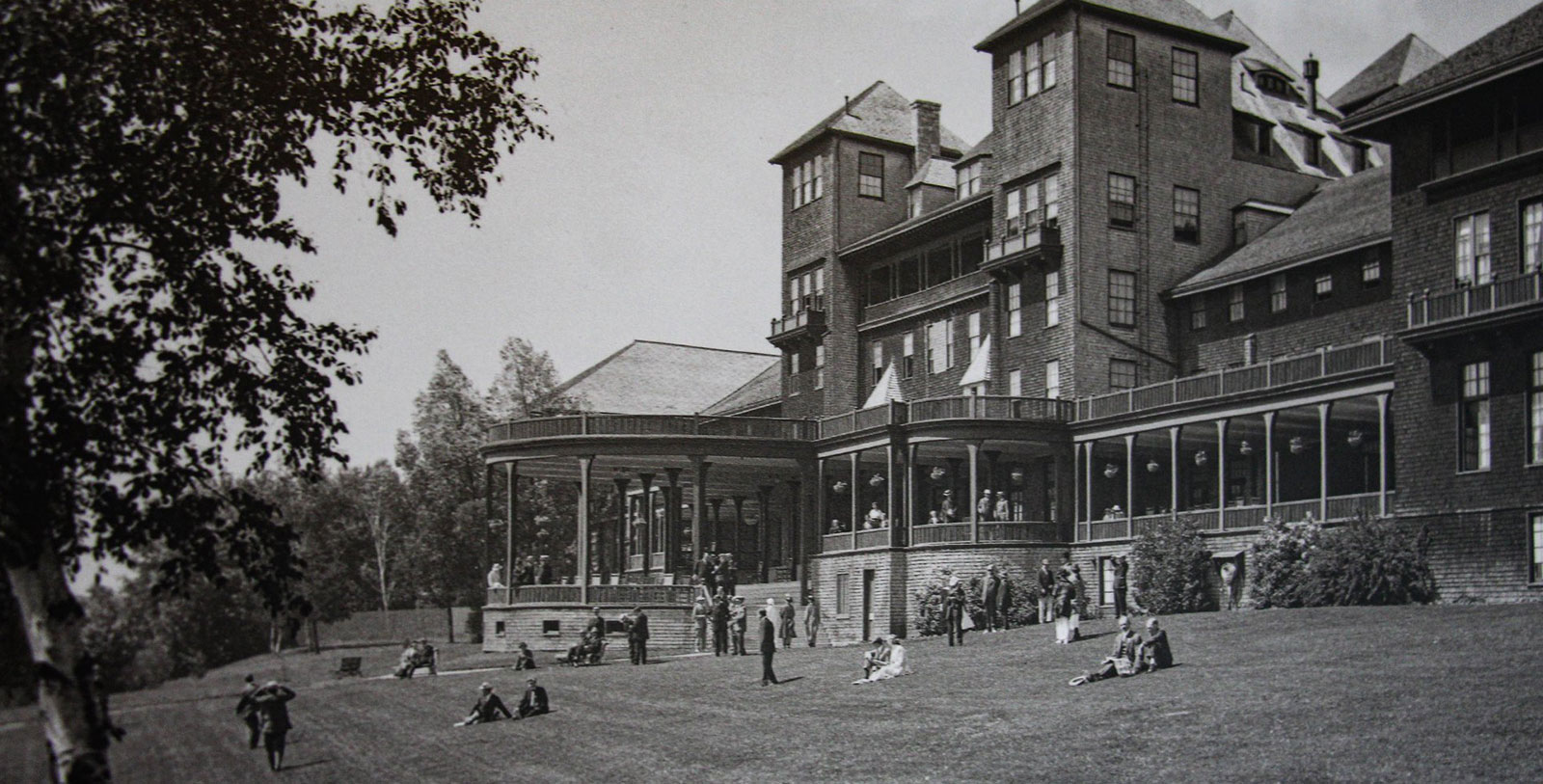
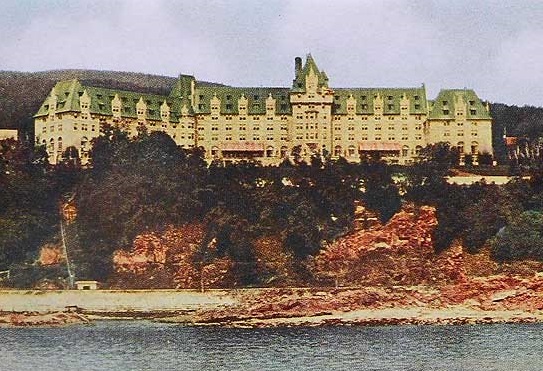
A member of Historic Hotels Worldwide since 2017, Fairmont Le Manior Richelieu is among the most historic holiday destinations operating in the Canadian Province of Quèbec. Architect Edward Maxwell designed the first iteration of the hotel on behalf of the Richelieu and Ontario Navigation Company back in 1899. The company was a transportation business that ferried goods and people along the St. Lawrence River. At the height of the Victorian Era, the Richelieu and Ontario Navigation Company decided to create a magnificent retreat along the estuary of the Malbaie Bay. They specifically selected a beautiful parcel of land atop the Pointe-au-Pic bluffs as the site for their nascent getaway. Sportsmen had long visited the area for centuries, due to its grand bash fishing and tranquil environment. The company had hoped such a serene atmosphere would incentivize travel on its new passenger vessels as they departed from Quèbec City further south. Investors affiliated with the Richelieu and Ontario Navigation Company opted to merge its company with several others in 1913. As such, they formed a new commercial entity known as “Canada Steamship Lines.” Under the reformed company’s watch, the Manoir Richelieu underwent a massive renovation of its entire structure in 1929. Led by renowned architect John Smith Archibald, the hotel was completely redesigned to resemble a grand historic manor from France’s Loire Valley.
Around the same time, Canada Steamship Lines hired famed British golfer Herbert Strong to design a fabulous golf course. It debuted for the first time in 1925 before a large crowd, with former U.S. President William Howard Taft hosting the opening ceremony. (The golf course itself became one of the area’s most celebrated attractions, even receiving the title of “Canada’s Golf Course of the Year” in the early 2000s.) Nevertheless, Canada Steamship Lines eventually sold its controlling interest in the location to engineering firm Warnock Hersey in 1966. Despite the hotel’s relative popularity, the company opted to sell the location to alleviate strain on its financial portfolio. The decision was driven by a significant drop in consumer interest in leisure travel along the St. Lawrence River during the decade prior. After traversing a period of fluid ownership over the next 40 years, the Manor Richelieu joined Canadian Pacific Hotels in 1998. The company had managed to acquire the hotel through a partnership of Loto-Quèbec and Solidarity Fund QFL. Canadian Pacific Hotels then became known as “Fairmont Hotels and Resorts,” following a major reorganization by its parent company, Canadian Pacific Railway. As such, the Manior Richelieu was reborn as the “Fairmont Le Manoir Richelieu.” The hotel has since maintained its standing as one of Canada’s most prestigious vacation hotspots. Indeed, its reputation for luxurious hospitality is matched today by only a handful of hotels throughout the world.
Hotel Timeline
The Location
While the current town of La Malbaie did not formally appear in the late 1990s, its history harkens all the way back to the mid-18th century. The first settlers to arrive in the area were two British Army officers: John Nairne and Malcolm Fraser. Nairne and Fraser had served with distinction in the French and Indian War, having played a significant role in capturing the cities of Québec City and Louisbourg at the height of the conflict. Due to their lack of economic prospects in their native Scotland, the men decided to acquire land in an unpopulated part of Upper Québec at the confluence of the Malbaie and St. Lawrence Rivers. The British Crown eventually awarded their claim in 1761, granting Nairne the western shore of the Malbaie River and Fraser the eastern side. As such, Nairne’s settlement became known as the Seignory of La Malbaie, while Fraser’s was designated as the Seignory of Mount Murray. But they also informally renamed the entire river—as well as its accompanying bay—after General John Murray, who had served alongside the two men in the French and Indian War. Smaller communities then quickly formed around the area, such as the Parish of Saint-Étienne in 1774. The inhabitants eventually made several attempts to incorporate the entire area into one community over the next several decades, forming at various points the Municipality of La Malbaie and the Municipality of Saint-Étienne-de-Murray-Bay. Then in the late 1890s, the village of La Malbaie—the former center of the Seignory of La Malbaie—seceded and became its own political entity known as the Village Municipality of La Malbaie.
It was around this time that the historically powerful Taft family of Ohio established a beautiful summer home along the Malbaie River. The most prominent member of the family to frequent the location was William Howard Taft, who would become President of the United States, as well as a Chief Justice of the Supreme Court. Taft was beloved throughout the community, as the natives took to affectionately calling him as “le petit juge.” Many lifted their caps to him as he passed them on the street and featured his visage in dozens of local plays. They even held a large candle-light vigil upon learning of his death in 1930. The Municipality of Saint-Étienne-de-Murray-Bay eventually became known as Saint-Etienne-de-la-Malbaie in 1957. Meanwhile, the neighboring Village Municipality of La Malbaie changed its own designation to that of a town, formally becoming the town of La Malbaie in 1958. The town of La Malbaie gradually absorbed the surrounding communities throughout the remainder of the 20th century, culminating with the merger between the town of La Malbaie and the neighboring settlements of Rivière-Malbaie, Saint-Fidèle, Cap-à-l'Aigle, Sainte-Agnès, and Pointe-au-Pic in 1999. Today, the town of La Malbaie is among the most exciting destinations in Québec’s Charlevoix region. Located a couple hours north of Québec City, the area today is celebrated for its competitive fishing, delicious cuisine, and tranquil ambiance. Charlevoix itself was designated as a UNESCO World Biosphere in 1989, due to its rich wildlife and picturesque geography. Few places are better for a relaxing vacation in all of Québec than the town of La Malbaie.
The Architecture
Fairmont Le Manoir Richelieu displays some of the finest Châteauesque-style architecture in the world. This outstanding architectural form first became popular in Western societies at the height of the Victorian Era, starting with the United States in the 1870s. Architect Richard Morris Hunt introduced the architectural aesthetics of the French Renaissance to America upon completing his studies at the renowned École des Beaux-Arts in Paris. Upon his return across the Atlantic, he began using the style to create magnificent manors for many of the country's most powerful families. The new architectural form spread like wildfire across North America. In Canada, the first building to feature Châteauesque architecture was the gorgeous Voltigeurs de Québec Armoury (Quebec City Armoury) in downtown Québec City. Architects across the country quickly adopted the aesthetic, as such, including John Smith Archibald of the firm Archibald and Schofield. Archibald’s firm would then go on to design several outstanding structures with Châteauesque architecture, such as Bessborough Hotel, the Hotel Vancouver (another member of Historic Hotels Worldwide), and of course, the Manoir Richelieu.
Châteauesque architecture attempted to make buildings appear as if they were one of the grand French manors that emerged in the Loire Valley from the late 15th to the early 17th centuries. This unique architectural style blends elements of Revivalist and French Renaissance design aesthetics to achieve its distinctive appearance. But it also borrows design principles from Gothic and Italian Renaissance-style architecture, providing slight variations in appearance that differ somewhat from the Loire Valley’s manors. Still, buildings developed using Châteauesque architectural elements feature a few key structural elements from the French Renaissance: grand ornamentations, lavish chimneys, and beautiful towers. The steeply pitched roof functioned was the highlight of the structure, as it typically featured decorative gabled dormers and spectacular finials. In most cases, the roof line often varied in height, reflecting the asymmetrical layout architects used to create the Châteauesque-style building’s foundation. Balconies also displayed quatrefoil or arched tracery, while exterior entrances contained different kinds of ornate archways. Truly, Châteauesque design aesthetics are among the most gorgeous in existence today.
Famous Historic Guests
- Bob Hope, comedian and patron of the United Service Organization (USO).
- Fred Astaire, dancer and actor known for his roles in such films like Top Hat, Funny Face, and Swing Time.
- William Howard Taft, 27the President of the United States (1909 - 1913) and 10th Chief Justice of the United States (1921 - 1930)
Film, TV and Media Connections
- If Looks Could Kill (1991)
- Beyond Borders (2003)
- Michel Vaillant (2003)
- An Eye for Beauty (2014)