
History
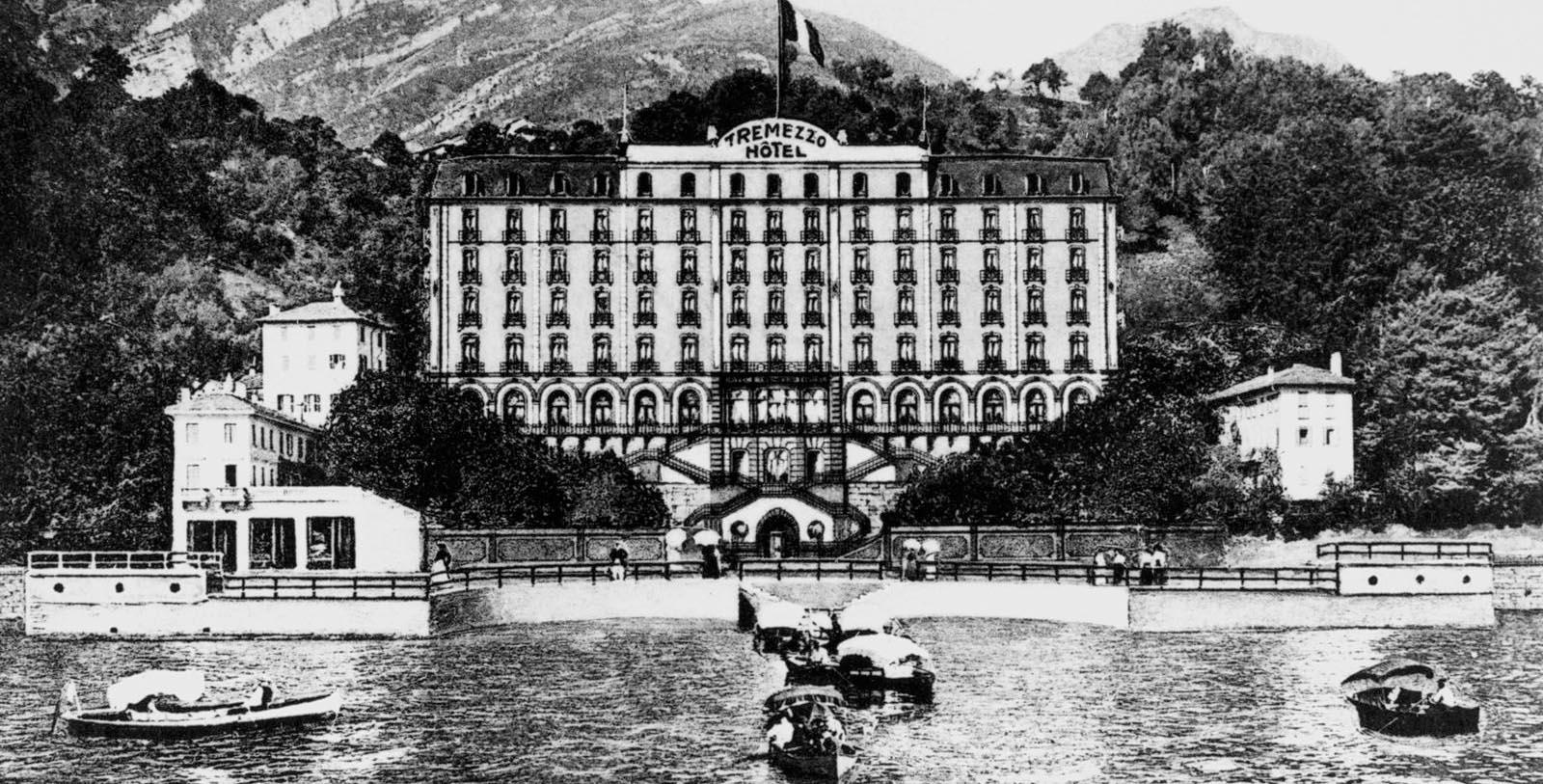
Discover the Grand Hotel Tremezzo, which has been among Italy’s most renowned holiday destinations since 1910.
Since the early 1900s, Lake Como was a popular vacation destination for Europe’s illustrious dignitaries. After extensively travelling the world with his wife, Maria Orsolini Bolla, Enea Gandola was inspired to create a distinguished hotel along the lake’s beautiful shoreline that would cater to the demands of those European travelers. Shortly after the discovering Villa Carlotta—which alone commands the best views of the entire area—the Gandolas decided to develop a luxurious hotel along the shoreline of Lake Como. The couple purchased a nearby building called the Villa Porcetta in 1907 and transformed it into a wonderful boutique hotel. The family even oversaw the creation of a beautiful series of gardens that now extend for some 20,000 square feet. After a three-year-long renovation, the Grandolas debuted their magnificent building as the Grand Hotel on July 10, 1910.
Following its debut, the hotel experienced a period of great success until it was temporarily transformed into a hospital during the First World War. After the conflict had ended, Grand Hotel Tremezzo stayed apace with the evolving nature of tourism. In the 1930s, the Sampietro family purchased the location and guided it through the turbulent waters of the Great Depression and World War II. The hotel soon attracted many celebrities and luminaries alike from across the world. It was even immortalized in the film Grand Hotel, where Greta Garbo refers to the Grand Hotel Tremezzo as, “that happy, sunny place.” While the beginning of the Second World War brought upon the collapse of international tourism, Grand Hotel Tremezzo never closed its doors. Despite such obstacles, Grand Hotel Tremezzo still endured as one of Italy’s foremost holiday destinations for the remainder of the century. In fact, this outstanding historic hotel celebrated its centennial anniversary in 2010 to great acclaim.
In recent years, Grand Hotel Tremezzo acquired two additional historic structures to help service its guests. One of these wonderful buildings was—and still is—known as the Villa Sola Cabiati. Originally constructed by the Duchess of Carretto during the early 16th century, this wonderful location famously served as the summer home for the Dukes of Serbelloni for generations. Designed with some of the finest Baroque-style architecture in the region, Villa Sola Cabiati offers six opulent suites that visitors today may reserve. The other historic building is the Villa Passalacqua. Protected as a national heritage site by the Fondo Ambiente Italiano (otherwise known as the National Trust of Italy), the villa originally functioned as the residence of Count Andrea Passalacqua. Passalacqua built the lavish estate upon the grounds an ancient monastery in the 18th century. Countless statesmen, business leaders, and intellectuals have since stayed at the building, including Napoléon Bonaparte and former British Prime Minister Winston Churchill.
Hotel Timeline
The Location
Located within the Italian community of Tremezzina, Grand Hotel Tremezzo resides along the shoreline of the majestic Lake Como. A glacier lake stretching for some 56 square miles (146 square kilometers), this beautiful body of water is the third largest of its kind in Italy. Its tranquil environment and picturesque landscape have made it a popular holiday destination among European aristocrats for centuries, as many historic villas populate its coast. Among the most famous of these structures are Villa del Balbianello, Villa Melzi d’Eril, and the neighboring Villa Carlotta. The hotel is near several historic Italian towns as well, the most notable of which is Bellagio. Located directly across the lake from the Grand Hotel Tremezzo, Bellagio is celebrated for its storied history that harkens back to the time of the Romans. A number of UNESCO World Heritage Sites call the region home, too, including the Sacri Monti of Piedmont and Lombardy.
Grand Hotel Tremezzo is just an hour’s drive from the City of Milan and its Milan Malpensa Airport. Milan is an ancient community that can trace its lineage all the way back to the 1st century B.C. It has functioned as the capital of many important civilizations ever since, including the powerful Kingdom of Lombardy, the medieval Duchy of Milan, and even the Western Roman Empire. More recently, Milan has grown to become one of Europe’s wealthiest cities and is one of the world’s four “fashion capitals.” Guests will find countless cultural attractions to experience, such as the Duomo di Milano (Milan Cathedral), Castello Sforzesco, and the Santa Maria delle Grazie. Many of these destinations even feature historical artwork from such renowned Italian artists like Leonardo da Vinci. From Milan, guests can also travel to nearby cities such as Turin and Verona, as well as the Swiss Alps.
The Architecture
Grand Hotel Tremezzo:
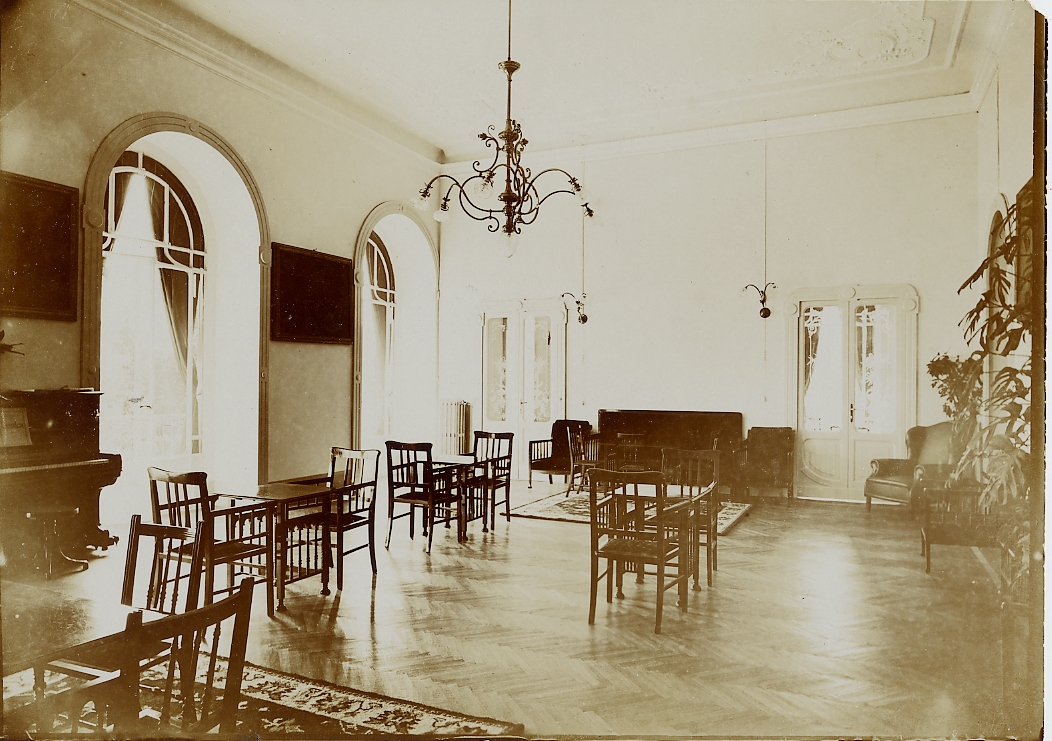
When Enea Gandola and his wife, Maria Orsolini Bolla, decided to transform the Villa Porcetta into one of the finest hotels in Europe, they hired architect Constantino Ferrario to head the project. Ferrario incorporated many unique design aesthetics into the building’s façade that reflected the Art Nouveau architectural style of the age. But the Gandolas also added many distinct features into the villa’s interior. Perhaps the greatest of these architectural elements were the many frescoes that still cover the hotel’s grand ceiling. Painted by Francesco Congeliani, the frescoes depict scenes of the Aeneid of Virgil as well as that of heaven. Congeliani himself was the pupil of Gianbattista Tiepolo, who was well-known across the continent for his work throughout the Mediterranean and Germany.
Grand Hotel Tremezzo is also immersed within a beautiful series of manicured gardens that date back over a century.
Extending for more than 20,000 square feet, the park features many footpaths and steps that wind gently up the hill to the Belvedere, where it adjoins the neighboring gardens of Villa Carlotta. In the past, part of the grounds even belonged to Villa Carlotta’s botanical garden. Rare ancient magnolias stand among a profusion of palm trees that face Lake Como. Countless azaleas, tulips, and geraniums—along with hedges of rhododendron and beds of hydrangea—provide an alternating palette of pinks, reds, purples, and blues amid breathtaking scenes of the waterfront below.
Villa Sola Cabiati:
Constructed in the early 16th century with Neoclassical architecture, Villa Sola Cabiati spent many years serving as the summer home for the Dukes of Serbelloni. This wonderful Italian villa is a three-storey structure that opens up onto two magnificent wings. The wings possess curved tympanums and—on their second floor—small marble balconies. The attic features many fascinating architectural elements, including a separate tympanum that displays the Serbelloni’s coat of arms. Guests may access Villa Sola Cabiati’s main building by means of a marble portal, which is connected to a grand staircase that has many perforated stone balustrades.
Villa Sola Cabiati also contains six historic suites that feature some of the finest artwork found inside a hotel. Several rooms even display frescoes painted by the likes of Muzio Canzio and Francesco Conegliani. Both men were students of the renowned Gianbattista Tiepolo, who had painted all over the Mediterranean. The rooms are also furnished with a private collection of antiques that first arrived at the building in the beginning of the 19th century. The artifacts originally came from the Palazzo Serbelloni in Milan in a desperate bid to save them from a fire. The palace had been the residence of Napoléon Bonaparte’s wife, Joséphine de Beauharnais, at the time.
Villa Passalacqua:
Villa Passalacqua dates to the 18th century and contains nine wonderful suites for guests to experience. Originally built by architect Felice Soave, these rooms display beautifully carved ceilings, Venetian chandeliers, and antique furniture. Yet, their most striking elements are the frescoes painted by the renowned Neoclassical artist, Andrea Appiani. The villa’s well-preserved pillared porticoes and detailed wall carvings are a testimony to the opulent tastes of its first owner, Count Andrea Passalacqua.
This outstanding historical building also has a magnificent garden that guests can traverse directly from the villa’s front door. Featuring winding walkways lined with fountains and lush hedges, the garden offers some of the best views of Lake Como in the entire area. Guests will also discover a hidden labyrinth of underground cellars, rooms, and corridors that connect the villa to the lake and private dock below. The gardens even contain countless olive and lemon trees, as well as a greenhouse that is almost as historic as Villa Passalacqua itself.
Famous Historic Guests
- Paul von Hindenburg, famous German general during World War I and President of the Weimar Republic.
- Greta Garbo, renowned actress known for her roles in Grand Hotel, Romance, and Anna Christie.
- Vincenzo Bellini, celebrated Italian composer known for his operas Norma and La Sonnambula (Villa Passalacqua)
- Napoleon Bonaparte, legendary French statesmen who ruled as Emperor of France from 1804 to 1814 and briefly again in 1815 (Villa Passalacqua).
- Prime Minister Winston Churchill of the United Kingdom (1940 – 1945; 1951 – 1955)—(Villa Passalacqua)
- Greta Garbo, renowned actress known for her roles in Grand Hotel, Romance, and Anna Christie.
- Vincenzo Bellini, celebrated Italian composer known for his operas Norma and La Sonnambula (Villa Passalacqua)
- Napoleon Bonaparte, legendary French statesmen who ruled as Emperor of France from 1804 to 1814 and briefly again in 1815 (Villa Passalacqua).
- Prime Minister Winston Churchill of the United Kingdom (1940 – 1945; 1951 – 1955)—(Villa Passalacqua)
Film, TV and Media Connections
Grand Hotel (1932)