History
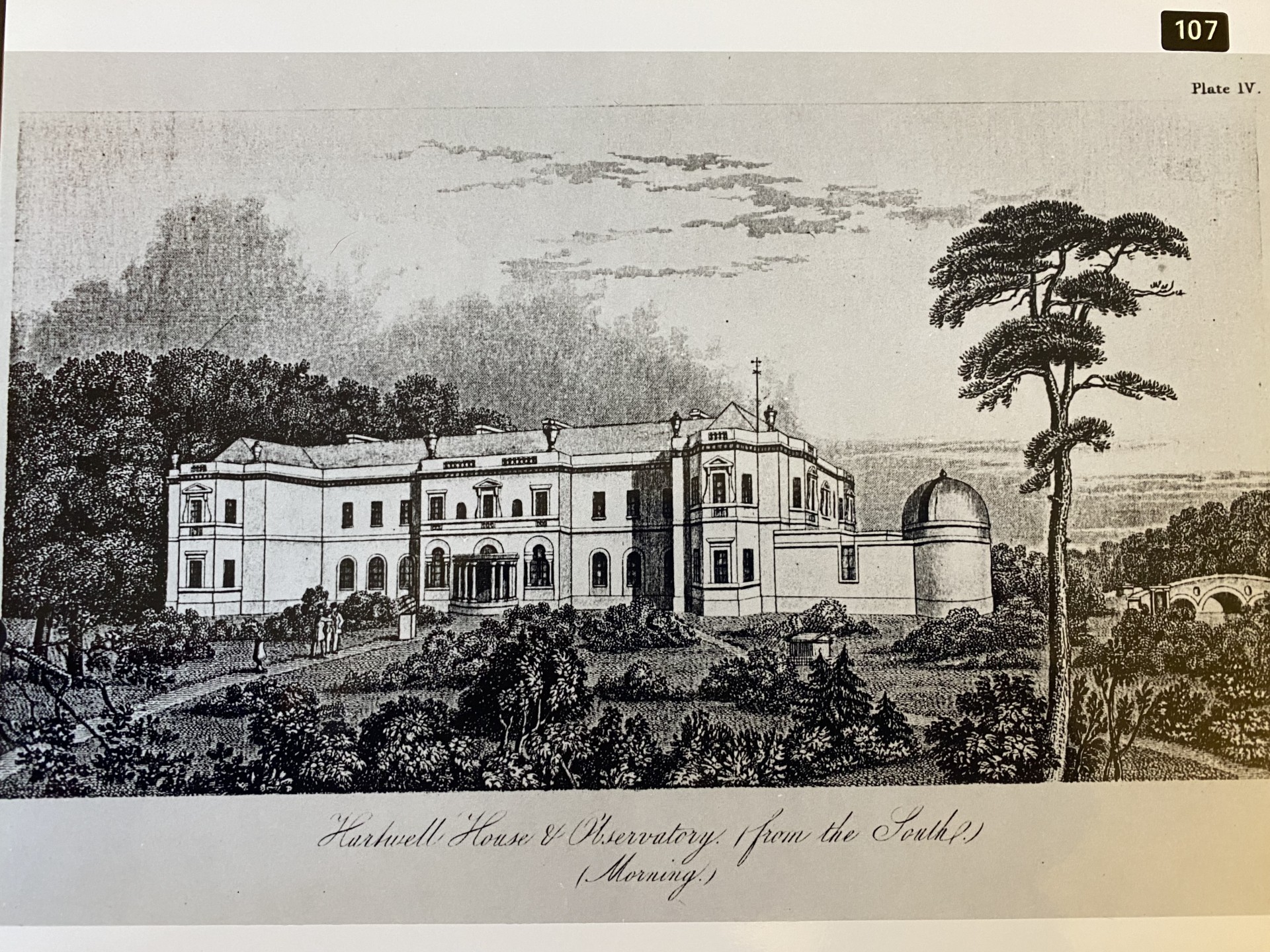
Discover the country home known as Hartwell House which was constructed between 1570 and 1617 by Sir Alexander Hampden.
Surrounded by immaculate gardens near the market town of Aylesbury, Hartwell House & Spa is one of the country’s most distinguished historic country house hotels. The heritage of this fascinating historic site stretches back almost a thousand years, encompassing medieval aristocracy, Jacobean architecture, and Georgian landscape design. Indeed, the earliest recorded history of Hartwell dates to the 11th century, when the surrounding estate was associated with a William Peverel, a Norman knight and veteran of William the Conqueror’s fateful invasion of England. The settlement subsequently became connected with one of William’s distant relatives, John, Count of Mortain, who later ascended the English throne as “King John” in 1199. By the late 16th century, Sir Alexander Hampden had begun constructing the substantial country house that would form the foundation of present-day Hartwell House & Spa. Developed between approximately 1570 and 1617, the residence reflected the architectural tastes of the Jacobean era, which saw wealthy landowners increasingly commission to demonstrate their influence.
But Hartwell House would pass into the hands of the Lee family several decades later, whose descendants retained the estate for approximately 300 years. Under successive generations, the house underwent substantial architectural alterations, particularly in the 18th century, when Georgian architectural aesthetics thoroughly augmented its appearance. Among the distinguished architects associated with its development at the time were James Gibbs and Henry Keene, whose work contributed to the mansion’s elegant interiors and imposing exterior. In fact, the house acquired its distinctive combination of Jacobean and Georgian characteristics thanks to them, which featured decorative plaster ceilings, elaborate carved paneling, and ornamental chimneypieces throughout the building. Its surrounding grounds experienced considerable changes, evolving through successive phases of more formalized landscaping. Complex garden formats, ornate sculptures, and carefully planned vistas came to reflect the prevailing fashion for combining artistic grandeur with the picturesque English countryside.
However, Hartwell House achieved true international historical significance as soon as it became the residence of the exiled French royal family during the early 19th century. Amid the rise of Napoleon Bonaparte, Louis Stanislas, the future King Louis XVIII of France, sought refuge in England. From 1809 until 1814, he established his court at Hartwell House, accompanied by members of his family and a few French royalists. His household included Marie-Joséphine of Savoy, his queen, and his niece, the Duchess of Angoulême. Hartwell House consequently became a remarkable center of European royal life, where French courtiers maintained their traditions while awaiting the restoration of the Bourbon monarchy. In the wake of Napoleon’s first abdication, Louis XVIII signed the papers affirming his accession to the French throne within Hartwell’s library before departing for France. Following the departure of the French court, Hartwell House continued to pass through successive phases of private ownership. From 1829 until 1866, it belonged to Dr. John Lee, an accomplished astronomer and scientific enthusiast who helped found The British Meteorological Society on-site inside the home’s very library.
The estate remained under the Lee family until 1938, when it was acquired by Ernest Cook, a prominent conservationist and grandson of travel entrepreneur Thomas Cook. By the latter half of the 20th century, the mansion required substantial restoration to preserve its architectural significance and revive its distinguished interiors. A new era fortunately began once Historic House Hotels undertook an extensive program of restoration starting in 1987. Working under the direction of architect Eric Throssell, the restoration team carefully renewed the mansion’s historic rooms and grounds amid their wider efforts to adapt the residence for modern hospitality. Hartwell House opened as a hotel known as “Hartwell House & Spa” some two years later, allowing guests to experience its remarkable architectural heritage firsthand. Then in 2008, the interests of Historic House Hotels—including Hartwell House & Spa—were donated to the National Trust, securing an important future for this nationally significant landmark. A designated Grade II Listed Building today, Hartwell House & Spa now welcomes visitors with elegant accommodations, fine dining, restorative spa facilities, and beautifully maintained gardens.
Hotel Timeline
The Location
Buckinghamshire’s history is deeply intertwined with the broader story of England, its landscapes bearing witness to millennia of human settlement and cultural achievement. Located between London and the Midlands, the county occupies a strategic position that has attracted successive generations of inhabitants since prehistoric times. Long before Buckinghamshire acquired its present name, early communities established settlements along the valleys of the River Thames, the River Great Ouse, and the chalk ridges of the Chiltern Hills. Ancient travel routes, most notably the Icknield Way, traversed the region and connected its inhabitants to neighboring territories, laying out the groundwork for centuries of trade and migration. Indeed, the arrival of the Romans during the 1st century AD transformed the area into an important component of Britain’s imperial infrastructure. Major roads, including Watling Street and Akeman Street, linked London with military centers and commercial settlements throughout Roman Britain. Villas, agricultural communities, and small market centers emerged along these routes, while the new road network facilitated economic growth and regional connectivity. Although Roman authority gradually receded during the 5th century, the transportation corridors they established continued to influence settlement patterns for generations.
Buckinghamshire assumed a more recognizable identity in the Anglo-Saxon period. (In fact, the county takes its name from Buckingham, a settlement whose designation derives from the Saxon phrase “Bucca’s home.”) By the 10th century, Buckinghamshire had become an administrative division of the Anglo-Saxon Kingdom of Wessex, formed in part to strengthen defenses against Danish incursions. Nevertheless, the Anglo-Saxons cultivated the land, established churches, and developed municipal institutions that would shape the region’s character for centuries to come. But following the Norman Conquest of England in 1066, Buckinghamshire entered a period of significant political and social transformation. The now-famous Domesday Book noted that the area was then composed of thriving homesteads, woodlands, and manorial estates administered by Norman lords. Throughout the subsequent medieval period, towns such as Buckingham, Aylesbury, and High Wycombe expanded their importance as commercial and political hubs. Weekly festivals attracted merchants and farmers from neighboring communities, and parish churches were focal points for civic life. The county’s proximity to London even ensured that it remained connected to the political currents shaping the greater Kingdom of England.
During the Tudor and Stuart periods, Buckinghamshire became increasingly associated with aristocratic families whose country seats represented growing wealth and prestige. Grand houses and landscaped grounds appeared across the countryside, supported by agricultural prosperity and access to the capital. But the county also experienced the turbulence of the English Civil War, when competing armies maneuvered through the region. Although fighting occurred much farther north, the county emerged as an important strategic staging area for Parliamentary military forces mobilizing around London. Nevertheless, the subsequent 18th century ushered in an era of architectural ambition and landscape design throughout Buckinghamshire. Estates such as Stowe gained national acclaim for their innovative gardens, classical monuments, and carefully orchestrated vistas. At the same time, coaching roads brought a steady flow of travelers through the county, stimulating commercial activity and encouraging the growth of inns and service industries. Farming improvements enhanced productivity, and expanding trade strengthened Buckinghamshire’s connections to emerging centers of commerce.
Industrialization arrived more gradually than in many other parts of England, yet the 19th century still brought substantial change. Canal construction and railway development improved transportation and expanded economic opportunities. Furniture manufacturing became particularly important in High Wycombe, helping establish the town as one of Britain’s leading centers for the industry. Improved infrastructure encouraged residential growth, allowing communities within Buckinghamshire to benefit from increasing access to London and other major population centers. Then during the 20th century, Buckinghamshire contributed to the national effort during both world wars and in turn experienced significant demographic and economic growth. The most dramatic transformation occurred with the development of Milton Keynes, conceived as a new town designed to accommodate expanding populations and modern industries. Its emergence reshaped the northern part of the county, as well as complementing the historic settlements that had defined Buckinghamshire for centuries.
The Architecture
Hartwell House & Spa stands among the most distinguished country houses in Buckinghamshire, its architecture representing more than four centuries of ongoing design and adaptation. Bearing a Grade II Listing from Heritage England, the house evolved from a late Tudor and early Jacobean residence into a refined mansion that still showcases rich architectural influences from several periods of English history. Constructed between 1570 and 1617 for the Hampden family, the house first took shape amid a period when England’s leading families sought residences that conveyed prestige and permanence. The north front is the best example from this phase, distinguished by its eloquently crafted compass and oriel windows. Although alterations undertaken during the 18th century simplified portions of the carved decoration and removed the original gables, the elevation nonetheless continued to express the confidence and grandeur associated with Jacobean architecture. By the mid-18th century, Hartwell House was transformed to reflect prevailing Georgian tastes. The south and east fronts were rebuilt around 1760 and introduced features characteristic of the age, including projecting eaves, canted bays, skirted windows, and elegant Ionic colonettes set within relieving arches. Those additions softened the earlier architectural language and established a greater sense of classical order and refinement.
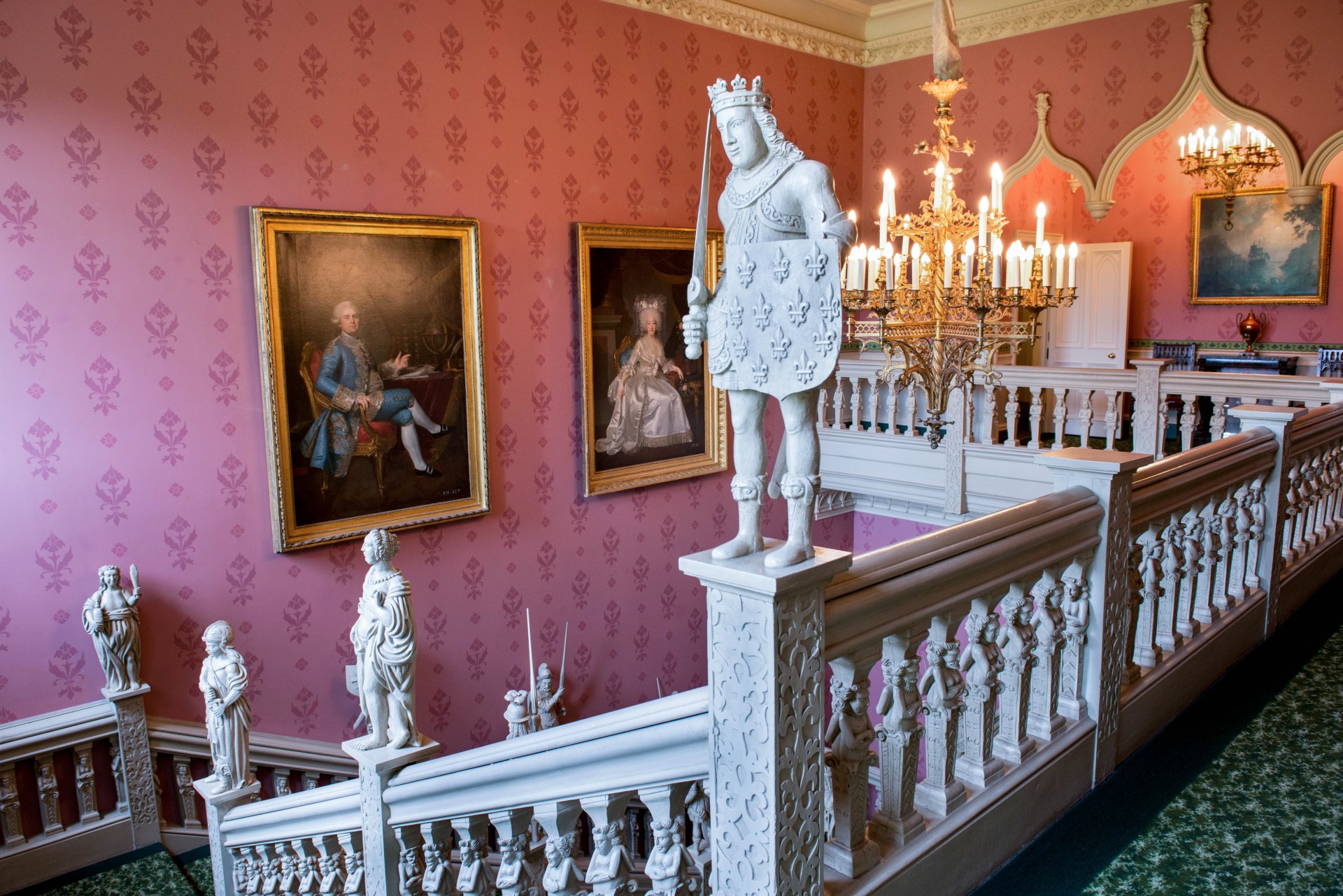
At the heart of the mansion stands the Great Hall, widely regarded as a masterpiece of English Baroque design. Apart from the replacement of its original Portland stone floor, the hall survives substantially as it first appeared upon its completion around 1740, preserving the scale and theatricality that defined the prevalent architecture of the period. Nearby, the principal staircase showcases a fascinating combination of historic craftsmanship. Its carved figures have long attracted the attention of curious guests, while two balusters created during subsequent restoration campaigns were fashioned in the likenesses of Winston Churchill and G. K. Chesterton, linking contemporary interventions to the broader narrative of the house. Among Hartwell’s most celebrated interiors are the Morning Room and the Library, both executed in the Rococo style around 1760. These rooms feature curvilinear marble chimneypieces, fluid plasterwork, and intricate decorative joinery enriched with garlands, masks, animals, and volutes. The Library is especially significant for its gilt-brass bookcase wirework, considered one the finest surviving examples in England. It was also within this room that King Louis XVIII, during his exile at Hartwell between 1809 and 1814, accepted the French crown following Napoleon’s defeat, forever associating the architecture of the house with a pivotal moment in European history.
Beyond the mansion itself, the surrounding landscape forms an essential component of Hartwell’s architectural significance. The park was extensively shaped during the second half of the 18th century and contains an extraordinary collection of follies, monuments, and garden structures. The Gothic Tower, Ionic Temple, statue of Hercules, ornamental obelisk, Egyptian-style pavilion, Gothic bridge, and equestrian statue of Frederick, Prince of Wales, illustrate the period’s fascination with classical antiquity, romanticism, and picturesque design. The landscape embodies the work of influential designers and architects, including James Gibbs, Henry Keene, James Wyatt, and Richard Woods. Hartwell House continues to be one of Buckinghamshire’s most distinguished architectural landmarks. Visitors continue to encounter the celebrated compass and oriel windows, the Baroque Great Hall, the Rococo Library and Morning Room, the richly carved staircase, and the carefully restored grounds. Extensive restoration undertaken during the late 20th century reinstated lost decorative details, restored fireplaces and plasterwork, and returned the gardens to a condition befitting the house’s architectural importance. Together, these features ensure that Hartwell House endures as a vivid representation of English architectural development across the 17th to the 20th centuries.
Women in History
Dorothy Neville-Rolfe: Dorothy Neville-Rolfe was a pioneering British educationalist and founder of the House of Citizenship, an institution dedicated to preparing young women for professional and public life. In 1956, she established the college at Hartwell House & Spa, transforming the historic country residence into a finishing school and secretarial college. The institution offered an education combining traditional social skills with secretarial training, citizenship, current affairs, and personal development, reflecting Dorothy’s belief in the importance of women’s education and independence. An internationally respected educator with a keen interest in world affairs, she also published Nothing Venture: The Story of the House of Citizenship in 1961. Dorothy died in 1976, but the college continued to operate at Hartwell House & Spa until 1983, marking a distinctive chapter in the property’s history before its restoration and reopening as a luxury hotel in 1989.