History
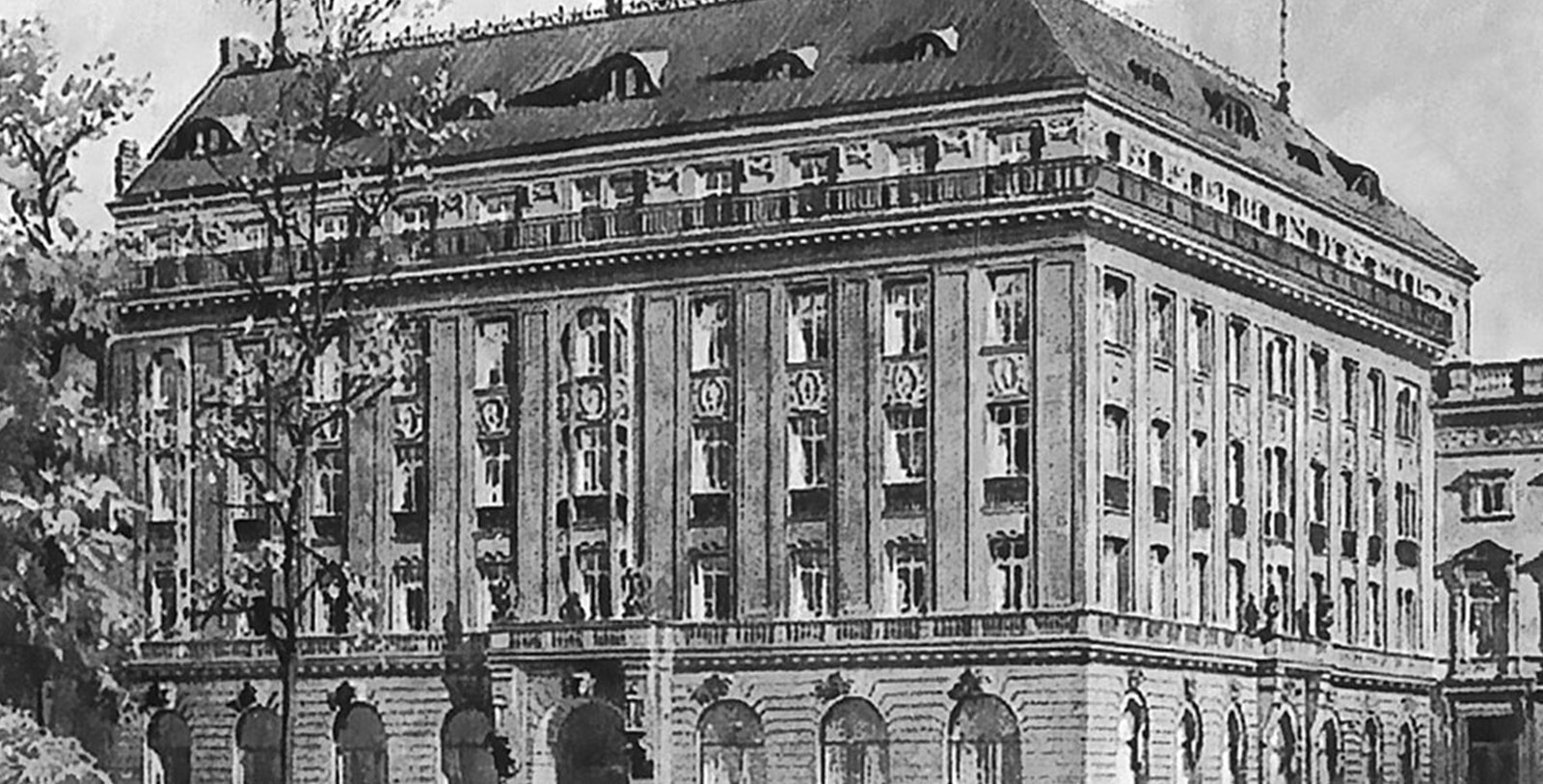
Hotel Adlon owes its name to its original owner, Lorenz Adlon, a native of Mainz and a Berlin restaurant manager of good repute. Adlon invested 20 million gold marks and two years into the creation of the hotel, which opened on October 23, 1907.
Lorenz Adlon’s vision was to create the most opulent hotel in the world, setting standards previously unseen in the hotel industry. Guests were amazed by the sophistication and comfort: facilities included hot and cold running water, gas and electricity, and a refrigeration and cooling system linked into a fountain. There was even a power plant which provided electricity to the 110-volt light bulbs produced specially for the hotel. Shortly after opening, Adlon’s vision was realized when the Hotel Adlon was acknowledged to be 'one of the most beautiful hotels in the world.'
Hotel Adlon’s first (and most loyal) guest was the Emperor Wilhelm II, the last Kaiser of Germany. His desire and request to be the first guest to enter the hotel was honored on its opening day. He treated Hotel Adlon as if it were one of his palaces. He even paid the hotel an annual retainer (one equivalent to €75,000) to ensure there were always rooms available for his personal guests upon demand.
As word of the hotel’s magnificence spread across the country, it quickly became the meeting place of choice for Berlin’s upper class citizens. Royalty, diplomats, politicians, artists, actors and international dignitaries flocked to the Neo-Baroque and Louis XVI styled Hotel Adlon. It was the place to see and be seen. Embassies moved their offices to the hotel; political officials preferred the Adlon’s magnificent Kaisersaal (Emperor’s Hall) to their own headquarters’ reception halls. The first private dinner held at the hotel was hosted by the German Crown Prince, with his brothers as his honored guests. It is said that some royal families preferred the hotel over their own residences so much that they sold private homes.
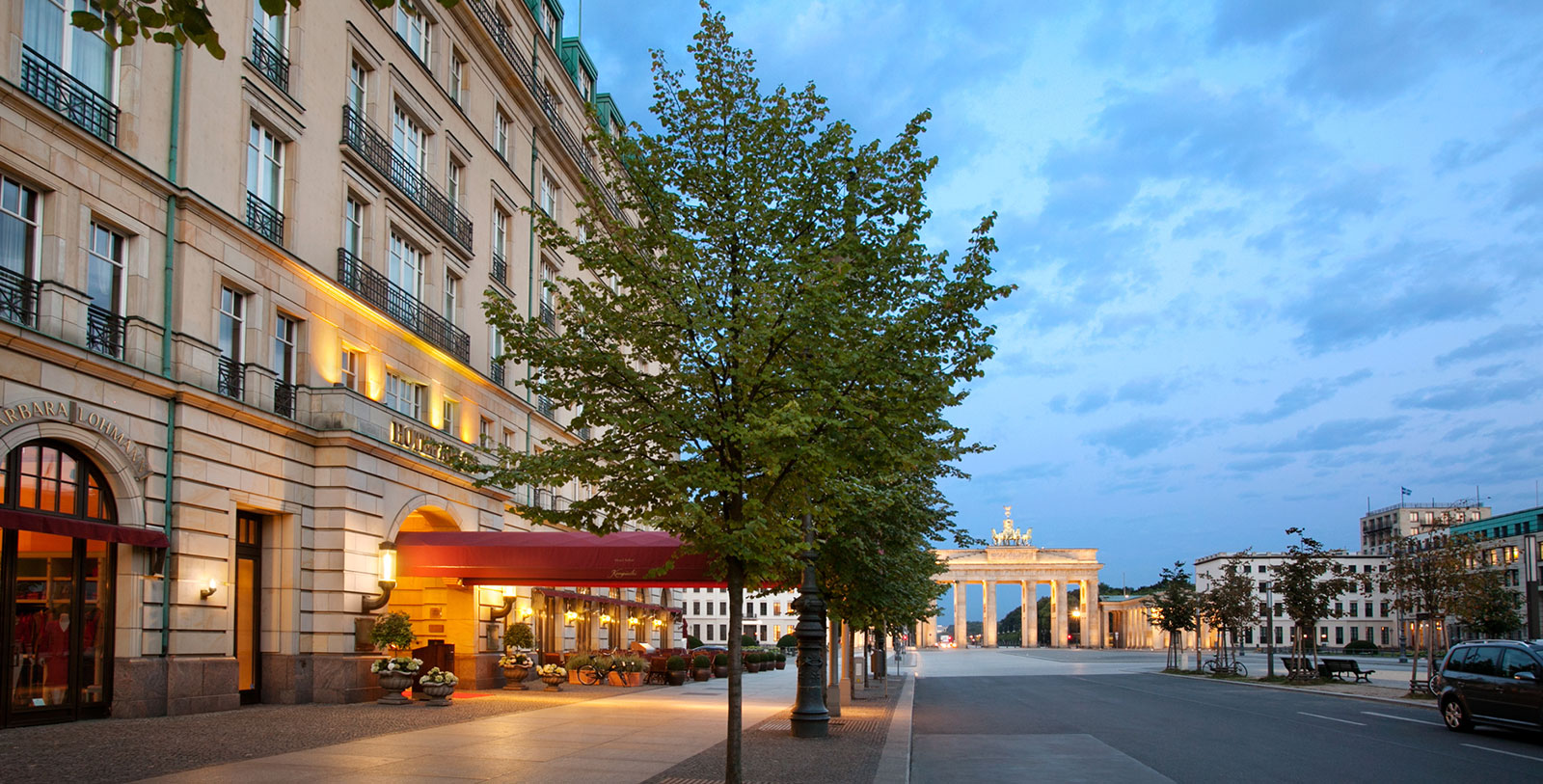
The list of famous guests that have stayed at the Hotel Adlon is a virtual “who’s who” of celebrities and entertainers. Albert Einstein could often be seen in the window of his corner suite, which overlooked the Brandenburg Gate, waving to pedestrians on the Pariser Platz below. Suite 101-114 was the preferred room of Charlie Chaplin. Other famous guests include industrialists Henry Ford and Thomas Edison; Presidents Herbert Hoover, Theodore and Franklin D. Roosevelt; and Hollywood luminaries Mary Pickford and Josephine Baker. During the filming of Grand Hotel, Greta Garbo’s famous quote “I want to be alone” was captured at the Hotel Adlon, which served as the site and inspiration of the film.
The Hotel Adlon remained open and fully functional in the run up to and during WWII, operating to the professional standards for which it was known, despite the inevitable shortages and problems of that period. The Hotel Adlon survived WWII, but burned to the ground soon afterwards. After Germany’s reunification, the land on which the original Adlon once stood was acquired by the Fundus Fond.
With the blessing of the Adlon family, who had refused to lend their name to another property unless re-built on the original site, a new Hotel Adlon opened on August 23, 1997. At a cost of approximately €245 million, the Hotel Adlon Kempinski reflects the classic style of its predecessor and is setting new standards in five-star hospitality that other European hotels find hard to follow.