History
Set amid the rolling countryside of Lancashire near Blackburn, the Mercure Blackburn Dunkenhalgh Hotel & Spa traces its origins to a storied manor dating back more than seven centuries.
The history of Mercure Blackburn Dunkenhalgh Hotel & Spa can be traced back to the medieval period, when Roger de Dunkenhalgh built the manor by the end of the 12th century. The manor was first documented in 1285; it later passed through several well-known families, including the Rishtons, Walmesleys, and Petres. In 1332, Dunkenhalgh came under the ownership of the Rishton family. They were an established Lancashire family whose influence extended throughout the region for generations. For more than 200 years, the family maintained the site through different periods while gradually expanding its lands and preserving its importance within the county. During their tenure, the manor developed from a traditional medieval hall into a more functional residence through gradual additions and modifications. By the time the estate was no longer inhabited by the family, the manor had become established as one of the area’s notable manors.
The manor remained with the Rishtons until 1571, when Sir Thomas Walmesley of Lincoln’s Inn purchased the estate, including 110 acres, with an additional 29 acres acquired through a separate transaction. Sir Walmesley built a successful legal career, serving as an influential lawyer and judge during the reign of Queen Elizabeth I, and was later knighted by King James I in 1603. His status brought wealth and prestige to the estate. Around 1600, he oversaw the development of the manor from the medieval hall into a more modern country house that reflected changing architectural styles in England. Portions of this phase of construction remain part of the present building, providing a direct connection to Dunkenhalgh’s earlier period of development.
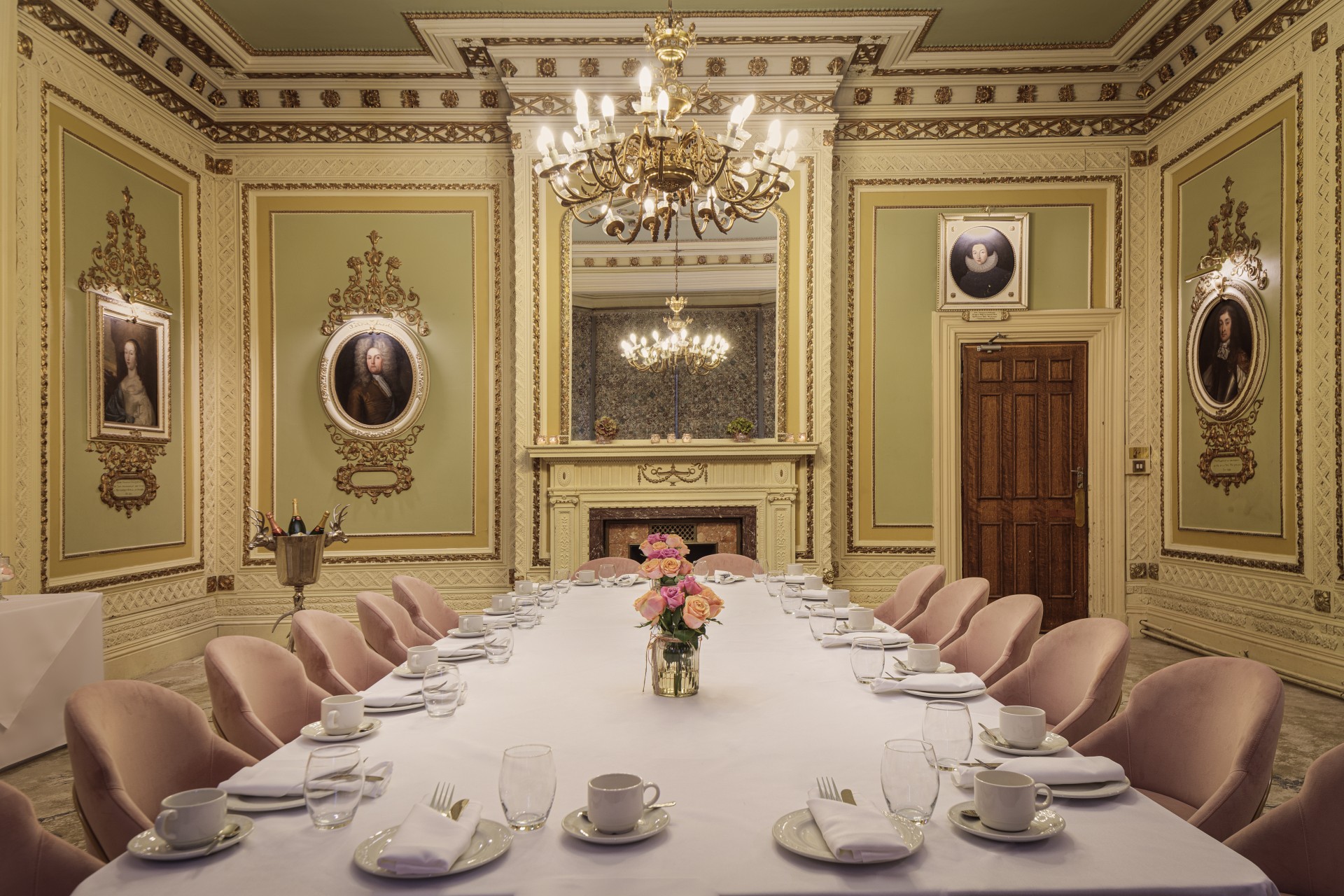
Ownership of the manor passed to the Petre family through the marriage of Catherine Walmesley and Robert, 7th Baron Petre, in 1712. The Petre family maintained the estate for more than two centuries, preserving its historic status as a country estate through periods of social and economic change. During the 19th century, the manor underwent significant rebuilding and expansion. After the Second World War, in 1947, the Petre family sold Dunkenhalgh, marking a new chapter in its history. Rather than remaining as a private country estate, the manor was converted into a hotel, operating under its historic name as the Dunkenhalgh Hotel. It would later join the Mercure brand, becoming part of the Accor hotel portfolio as Mercure Blackburn Dunkenhalgh Hotel & Spa. The historic hotel continues to preserve elements of its character while serving as a modern hospitality destination.
Hotel Timeline
The Location
Clayton-le-Moors is a town in the Borough of Hyndburn in Lancashire, England. Located within the county of Lancashire, the town was originally a small rural settlement surrounded by farmland and manors. For centuries, the surrounding region was supported by agriculture, local trade, and nearby market towns before industrial development transformed the area.
During the 18th and 19th centuries, the area grew and became part of one of Britain’s leading industrial regions. With the manufacturing of cotton, coal mining, and advancements in engineering, the regional economy was transformed. The Leeds and Liverpool Canal also played an important role in the town’s development by improving the transportation of raw materials and goods throughout the region. Passing near Clayton-le-Moors, the canal supported the growth of Hyndburn and neighboring communities.
Although much has changed since the Industrial Revolution, Clayton-le-Moors continues to reflect both its rural origins and industrial heritage. Historic manors like Dunkenhalgh, nearby churches, former textile mills, and neighboring market towns preserve the area’s long history of settlement and its evolution over time.
The Architecture
Clayton-le-Moors is a town in the Borough of Hyndburn in Lancashire, England. Located within the county of Lancashire, the town was originally a small rural settlement surrounded by farmland and manors. For centuries, the surrounding region was supported by agriculture, local trade, and nearby market towns before industrial development transformed the area. During the 18th and 19th centuries, the area grew and became part of one of Britain’s leading industrial regions. With the manufacturing of cotton, coal mining, and advancements in engineering, the regional economy was transformed. The Leeds and Liverpool Canal also played an important role in the town’s development by improving the transportation of raw materials and goods throughout the region. Passing near Clayton-le-Moors, the canal supported the growth of Hyndburn and neighboring communities.
Although much has changed since the Industrial Revolution, Clayton-le-Moors continues to reflect both its rural origins and industrial heritage. Historic manors like Dunkenhalgh, nearby churches, former textile mills, and neighboring market towns preserve the area’s long history of settlement and its evolution over time.