
History
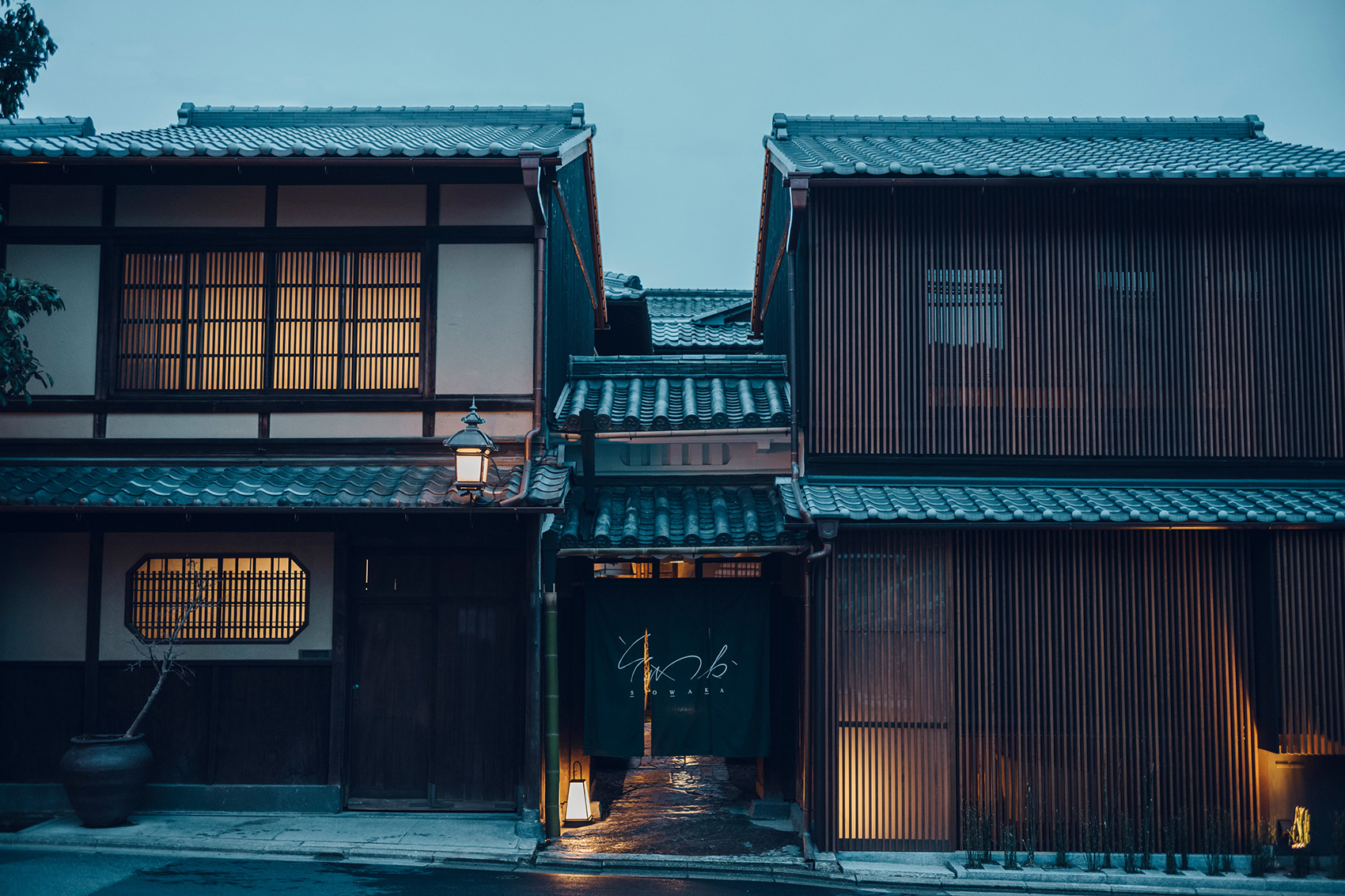
Located in the heart of Kyoto, SOWAKA, Kyoto, occupies a quiet corner of the historic Gion district within carefully restored buildings that embody the area's rich architectural and cultural legacy.
SOWAKA, Kyoto occupies a quiet corner of the historic Gion district, where the layers of the past remain close to the present. The hotel stands within a cluster of restored wooden structures whose proportions and materials reflect architectural conventions that have shaped the area since Kyoto functioned as Japan’s imperial capital all the way back in the late 8th century. Gion grew in the shadow of Yasaka Shrine, originally established to placate perceived epidemic-causing spirits, and the constant flow of pilgrims created fertile ground for ochaya (teahouses), ryotei (high-end restaurants), and ryokan (inns). From its earliest days, the district’s inhabitants learned how to host travelers while preserving a ritualized sense of place—a balance that would define it for centuries. Nevertheless, Gion gradually evolved from a religious precinct into a lively urban quarter sustained by commerce, performance, and seasonal festivals. By the Edo era, the neighborhood had become synonymous with refined hospitality, as ochaya and ryotei cultivated highly codified practices of service that emphasized discretion, atmosphere, and deep attentiveness to guests. The timber townhouses lining Gion’s lanes were designed to impress inwardly, too, revealing gardens, tatami rooms, and carefully framed views. Gion once again underwent significant growth when Japan started opening to the wider world during the following Meiji era. Electric lights, updated infrastructure, and foreign visitors entered the district, yet its culture of hospitality remained rooted in historical forms. Inns modernized quietly, updating interiors while preserving their traditional spatial footprints.
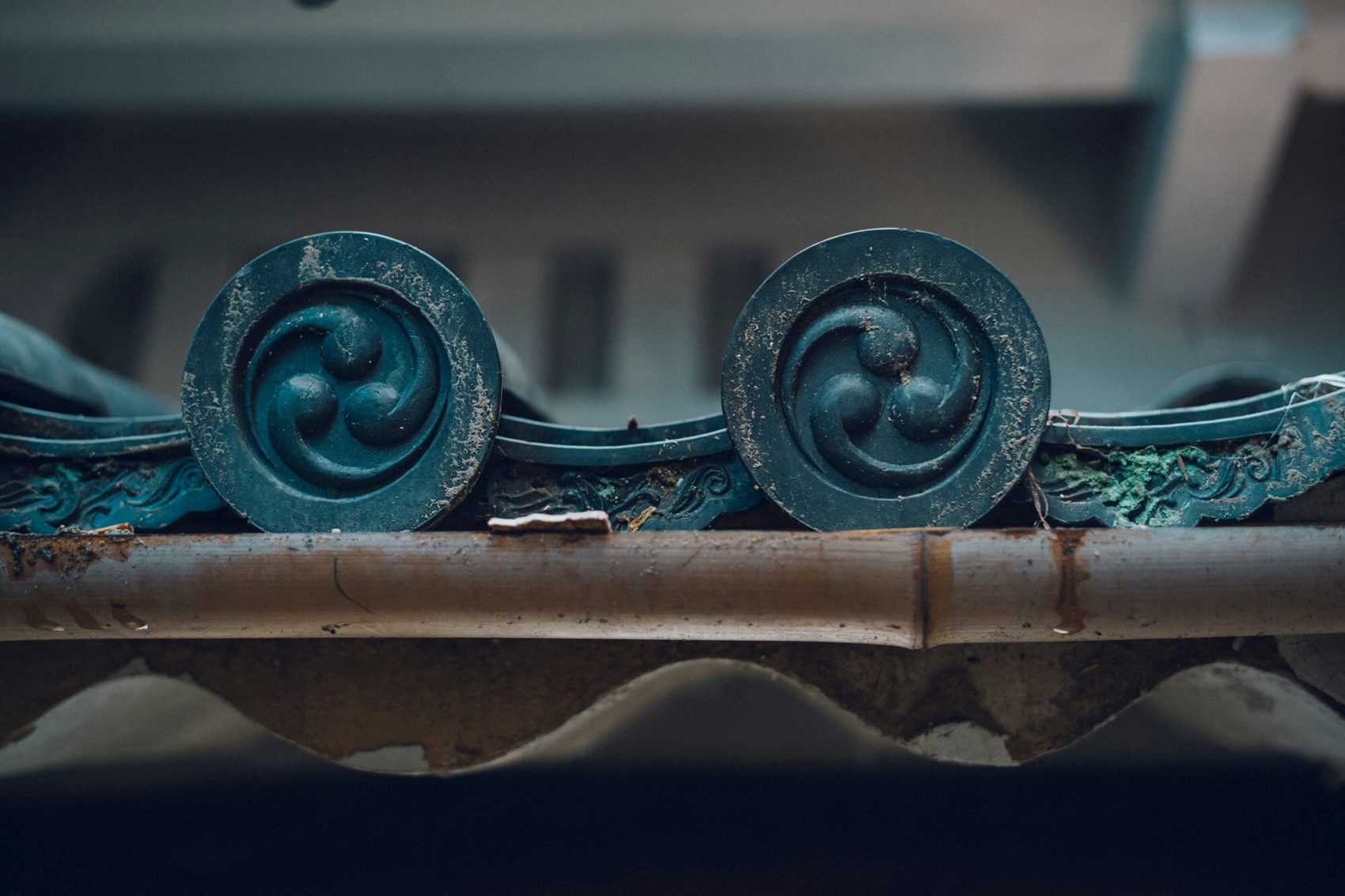
This capacity for careful reinvention laid the groundwork for the buildings that would become SOWAKA, Kyoto, which ultimately debuted as a ryotei in the early 20th century. Many of the earlier vernacular architectural motifs that had defined Gion appeared throughout the complex’s reserved exterior facade, aligning it perfectly with the longstanding local preference for subtlety over spectacle. The buildings assumed many other functions over the following decades, serving as private residences, hospitality spaces, and even support buildings for local artists. The structures in turn absorbed the marks of changing lifestyles while still retaining their core architectural elements, such as clay walls, tiled roofs, and wooden post-and-beam construction. Then during the early 21st century, ambitious hoteliers decided to revitalize the historic site as a luxury hotel. Its developers chose restoration rather than constructing a whole new edifice, ultimately implementing a thoughtful renovation that combined traditional and modern aesthetics. Even the choice of the name “SOWAKA” gestured to Gion’s greater heritage, as it commemorated its history as a revered spiritual destination. (Sowaka is an expression borrowed from a Sanskrit-derived Buddhist chant about “well-being.”) The story of SOWAKA, Kyoto is inseparable from the broader history of Gion as a place defined by its heritage. Just as Gion evolved from a shrine town to a protected cultural landscape, the buildings that now house SOWAKA, Kyoto have thus shifted roles across time without losing their essential character.
Hotel Timeline
The Location
Kyoto’s story begins with an act of optimism and intention. In the late 8th century, when Emperor Kanmu selected a broad valley surrounded by gentle mountains as the site of a new capital, the choice reflected a deep confidence in harmony between nature, spirituality, and human governance. Founded “Heian-kyō” in 794, the city was carefully planned along a graceful grid inspired by continental ideals and adapted to the Japanese landscape. From the outset, Kyoto was envisioned as a center not only of political life but of beauty, balance, and cultural aspiration, a place where the rhythms of the seasons would shape daily experience and elevate the human spirit. During the Heian period, Kyoto blossomed into a refined world of courtly elegance that left an enduring imprint on Japanese culture. Aristocrats devoted themselves to poetry, calligraphy, fashion, and ceremony, cultivating a sensitivity to mood and atmosphere that became a hallmark of classical aesthetics. Life revolved around the imperial court, where the ability to perceive subtle emotional shifts or to respond with a perfectly phrased verse was prized as a mark of wisdom and grace. Great literary works emerged from this milieu, capturing the emotional richness of court life and giving Japan some of its most treasured narratives.
Kyoto in this era radiated confidence as a cultural ideal, setting standards that would resonate long after political realities changed. As Japan’s political structure evolved and warrior families rose to prominence, Kyoto adapted with quiet resilience. Even when centers of military power shifted elsewhere, the city remained the symbolic heart of the nation and a wellspring of learning and faith. Buddhist temples and Shinto shrines flourished, transforming Kyoto into a spiritual crossroads that welcomed monks, scholars, artists, and pilgrims. New schools of Buddhist thought found fertile ground here, especially Zen, which encouraged discipline, mindfulness, and simplicity. These ideas enriched daily life in Kyoto, influencing architecture, garden design, painting, and the thoughtful pacing of everyday rituals. The medieval centuries brought challenges, yet Kyoto’s spirit of renewal proved remarkably strong. Periods of conflict and fire reshaped the city, but each rebuilding deepened its character and broadened participation in cultural life. Merchants, artisans, and religious communities became active stewards of the urban landscape, infusing it with fresh energy and creativity. From this dynamic environment emerged celebrated artistic traditions such as the tea ceremony, which expressed profound philosophical ideas through humble gestures.
Kyoto’s culture became more inclusive, drawing strength from collaboration across social boundaries. With the establishment of peace under the Tokugawa shogunate in the early seventeenth century, Kyoto entered an era of sustained prosperity and creative refinement. Although political authority resided in Edo, Kyoto thrived as the guardian of classical tradition and craftsmanship. The emperor’s presence continued to lend the city dignity and continuity, while skilled artisans perfected techniques in textiles, ceramics, metalwork, and woodblock printing. These crafts were not merely commodities but expressions of accumulated knowledge and pride. Festivals and seasonal celebrations renewed ancient customs, creating moments when the entire city participated in shared expressions of joy, reverence, and connection to the past. The onset of the modern era in the nineteenth century presented new opportunities for transformation. When the imperial capital moved to Tokyo in 1868, Kyoto responded not with retreat but with innovation grounded in confidence. The city embraced modern infrastructure, education, and industry while consciously preserving its historical treasures. Public efforts to protect temples, shrines, and traditional neighborhoods reflected a growing sense that Kyoto’s heritage was a vital resource rather than a relic.
This balance between progress and preservation allowed the city to redefine itself as a place where tradition and modern life could thrive side by side. Largely preserved from wartime destruction, the city also retained an extraordinary concentration of historic buildings and landscapes. In the postwar decades, Kyoto evolved into a vibrant modern city that never lost sight of its past. Universities, technology firms, and creative industries took root alongside centuries-old institutions. In contemporary Kyoto, history is not confined to museums but woven into the texture of ordinary experiences. Commuters pass ancient temples on their way to work; artisans continue family trades begun generations ago, and students gather in modern spaces adapted from traditional townhouses. Indeed, Kyoto has remained a place where art, spirituality, and daily life enrich one another. Walking its streets today feels less like stepping back in time than participating in a long, unbroken conversation, one that continues to affirm Kyoto’s role as a source of inspiration, balance, and quiet joy.
The Architecture
Originally constructed as a quaint ryotei, today’s SOWAKA, Kyoto stands as one of the finest preserved examples of Sukiya‑zukuri in the Gion district. Sukiya‑zukuri architecture itself occupies a distinctive position within the architectural history of Kyoto, representing a refined yet understated tradition that developed in parallel with more formal styles. Emerging primarily during the late Muromachi period, and undergoing further maturity amid the subsequent Momoyama and Edo eras, Sukiya style is closely associated with the cultural development of the tea ceremony (chanoyu), particularly as articulated by figures such as Sen no Rikyū. Its aesthetic foundations are grounded in the philosophical principles of wabi and sabi, which privilege modesty, impermanence, and carefully calibrated simplicity. Unlike monumental religious or palatial architecture, Sukiya‑zukuri emphasizes intimacy, asymmetry, and material sensitivity. Structures are typically characterized by natural, lightly finished materials, such as cedar, cypress, bamboo, and earthen plaster, combined with an apparent informality that nonetheless conceals a high degree of technical sophistication. Elements such as irregularly shaped wooden pillars, subtle variations in surface texture, and non-axial spatial organization reflect a deliberate departure from rigid formality. Windows and openings are frequently positioned to frame selective views of gardens or seasonal phenomena, reinforcing a dialogic relationship between interior space and its natural surroundings.
During the Edo period, the principles of Sukiya‑zukuri extended beyond the tea pavilion and were increasingly incorporated into elite residences, villas, and urban townhouses within Kyoto. This diffusion contributed to the formation of a unique architectural vocabulary that mediated between cultivated taste and everyday life, particularly within merchant districts and culturally significant neighborhoods like Gion. In this context, Sukiya style functioned both as an aesthetic ideal and as a marker of cultural literacy. Contemporary adaptations of Sukiya‑zukuri demonstrate the ongoing relevance of this architectural tradition. The SOWAKA, Kyoto hotel provides a notable example of sensitive architectural preservation and reinterpretation, too. Situated near Yasaka Shrine, SOWAKA, Kyoto incorporates restored historic structures that retain key Sukiya characteristics, exposed timber frameworks, tatami-matted spaces, and garden-oriented spatial sequences, while discreetly integrating modern amenities. This approach reflects a continuity of architectural values rather than a stylistic pastiche. In Kyoto’s built environment, Sukiya‑zukuri persists as a living tradition, one that accommodates change while maintaining conceptual coherence. In fact, the traditional techniques and craftsmanship even masterfully matched the so-called “Machiya Jyorei” requirements as specified by the Kyoto City Ordinance on the Preservation and Inheritance of Kyoto Machiya. Its enduring presence underscores the city’s capacity to sustain architectural practices that emphasize restraint, craftsmanship, and experiential depth, positioning Sukiya style as a vital component of Japan’s architectural heritage rather than a static historical artifact.