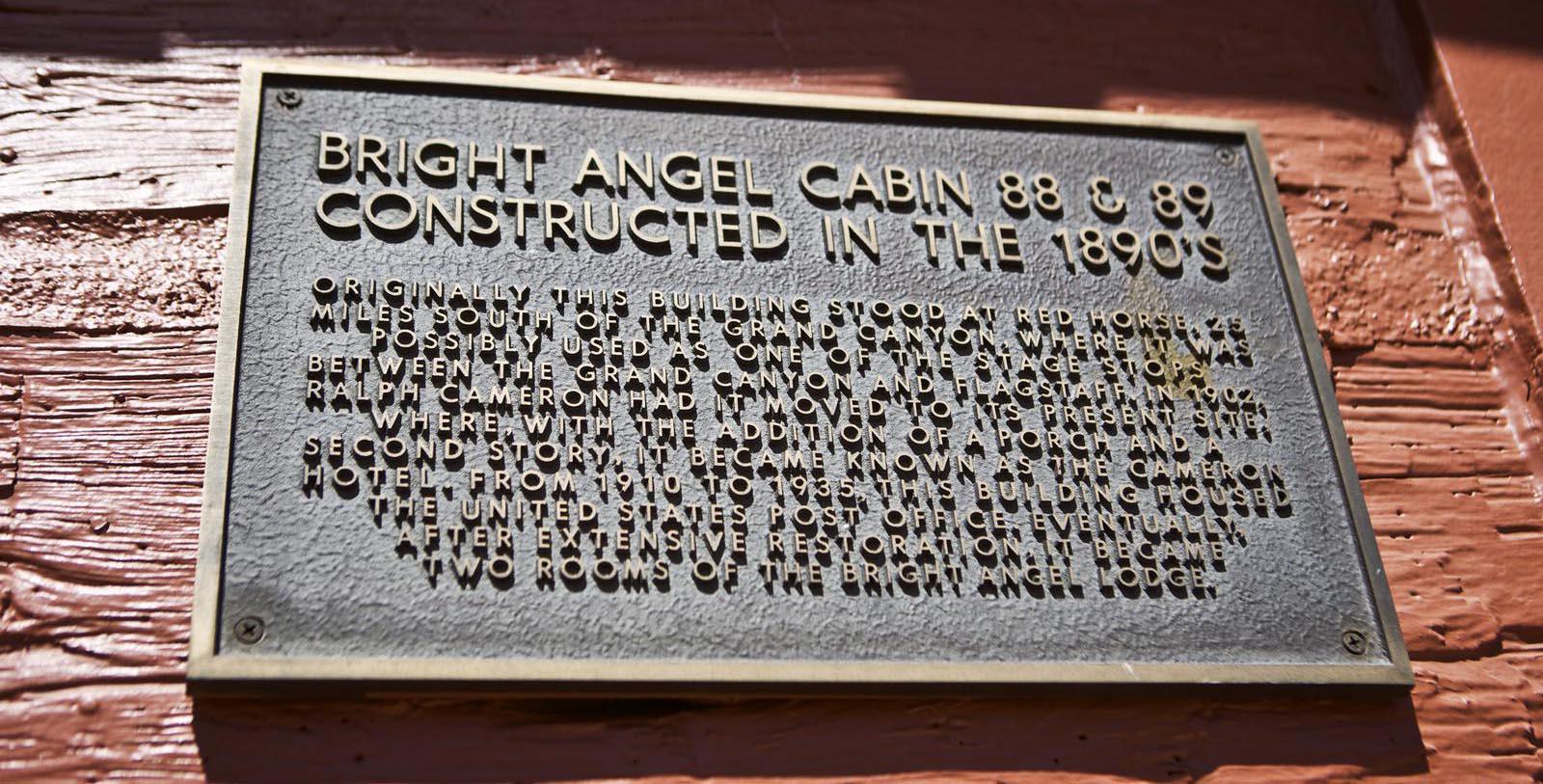

History
Discover Bright Angel Lodge & Cabins, which also consists of the historic Buckey O’Neill Cabin and the Red Horse Cabin.
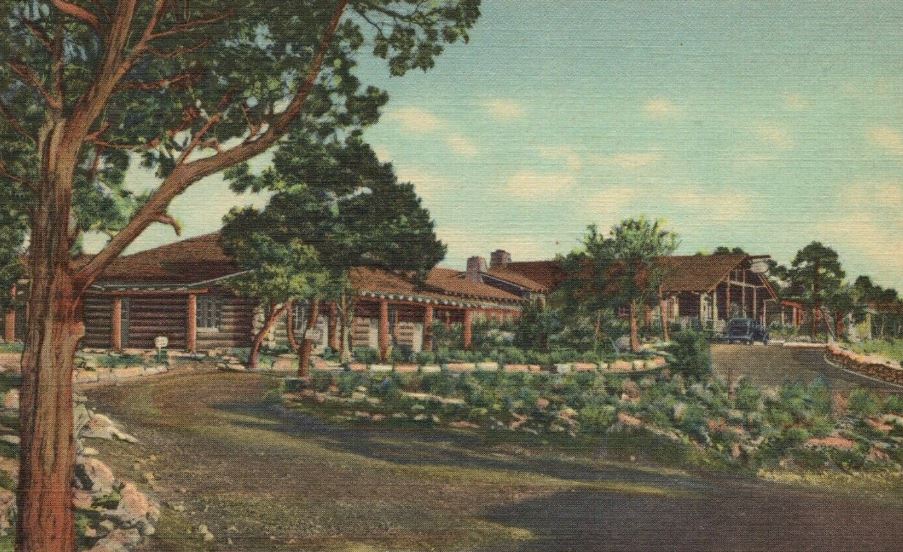
A member of Historic Hotels of America since 2012, the Bright Angel Lodge & Cabins are an integral part of the Grand Canyon Village Historic District. (The Grand Canyon Village Historic District has been listed in the U.S. National Register of Historic Places and bears a designation as a U.S. National Historic Landmark.) This amazing holiday destination is actually a group of historic structures that include several cabins and a central lodge, which are all located along the Grand Canyon’s scenic South Rim. While most of the current buildings located on site date to the 1930s, the earliest structures harken back some 40 years prior to a stagecoach line once operated by James Thurber. In 1896, Thurber had started operating a small wooden lodge to service the passengers of his local business, who were interested in hiking along the nearby Bright Angel Trail. Soon enough, the guestrooms inside the lodge—known as the “Bright Angel Hotel”—were constantly booked, prompting Thurber to find more space for additional accommodations. He thus purchased a small cabin nearby that once belonged to a man named Buckey O’Neill. (A contemporary of future U.S. President Theodore Roosevelt, O’Neill had perished while fighting alongside Roosevelt during the Spanish-American War.) Thurber would then build a series of accompanying tents, debuting the entire facility as the “Bright Angel Hotel and Bright Angel Camps” when the work finally concluded. Thurber would not own the location for long though, as he sold his interests to an aspiring hotelier named Martin Buggelin just a few years later.
Around the same time, the Atchison, Topeka and Santa Fe Railway began expanding through the Grand Canyon’s South Rim. The railroad cooperated with Buggelin for a while, which was constructing the El Tovar Hotel a few miles to the east. But once the El Tovar Hotel finally opened, the Atchison, Topeka and Santa Fe Railway bought out Buggeln in a bid to control the local tourism industry. Through its subsidiary—the Grand Canyon Railroad—The Atchison, Topeka and Santa Fe Railway would operate the Bright Angel Lodge and Bright Angels Camps for the next several decades. It would renovate the complex considerably, building new cabins and tents. The greatest renovation came in 1935, when the railroad decided to completely refurbish the entire complex. It hired renowned architect Mary E.J. Colter to head the design team, who completely constructed a series of new rustic cabins throughout the grounds with beautiful National Park Service Rustic-style architecture. But Colter also brilliantly restored the whole interior of the historic wooden lodge, as well as the O’Neill Cabin. She even incorporated another historic structure into the new design, the Red Horse Cabin, which had served as the Post Office for the Grand Canyon Village. Now under the exclusive care of the National Park Service and the Xanterra Travel Collection, these fantastic recreational structures operate today as the “Bright Angel Lodge & Cabins.” Their brilliant guestrooms and services continue to enchant countless guests eager to experience the majesty of Grand Canyon National Park.
Harvey Girls
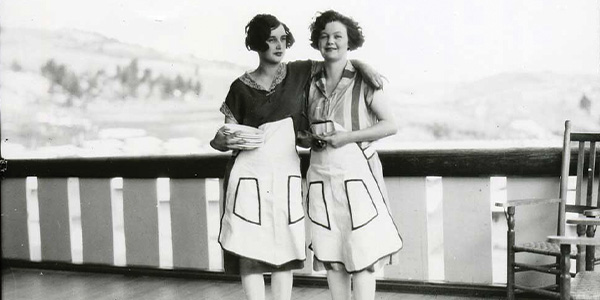
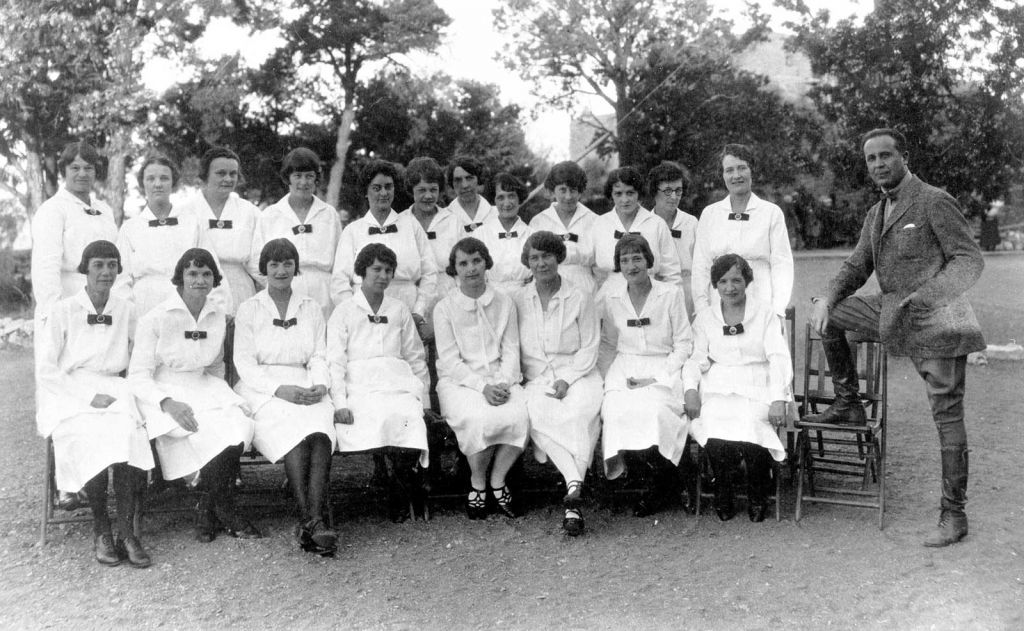
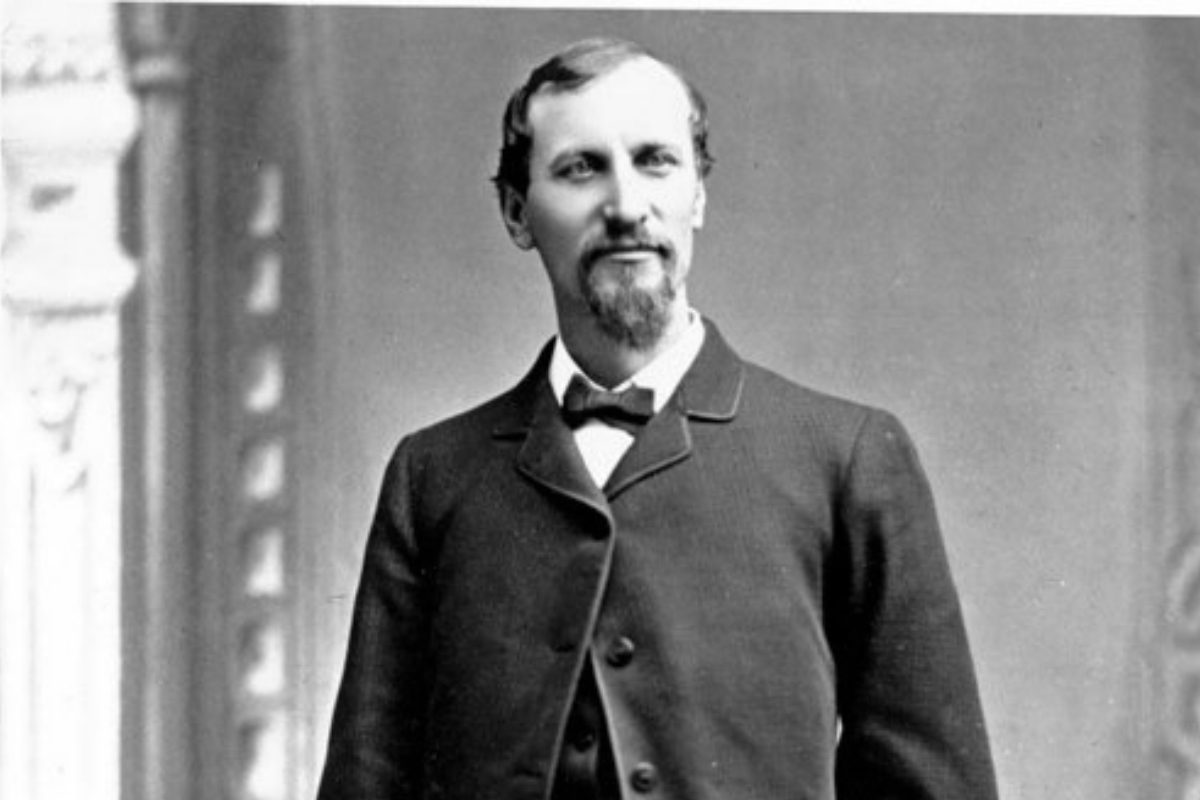
Fred Harvey was an entrepreneur who opened his Harvey House dining rooms across the Western United States in the late 19th century. Dining with Fred Harvey was an elegant experience, with linens imported from Ireland, silver from England, and china from France. Most well-known were the women who took jobs as hosts and waitresses, known as Harvey Girls.
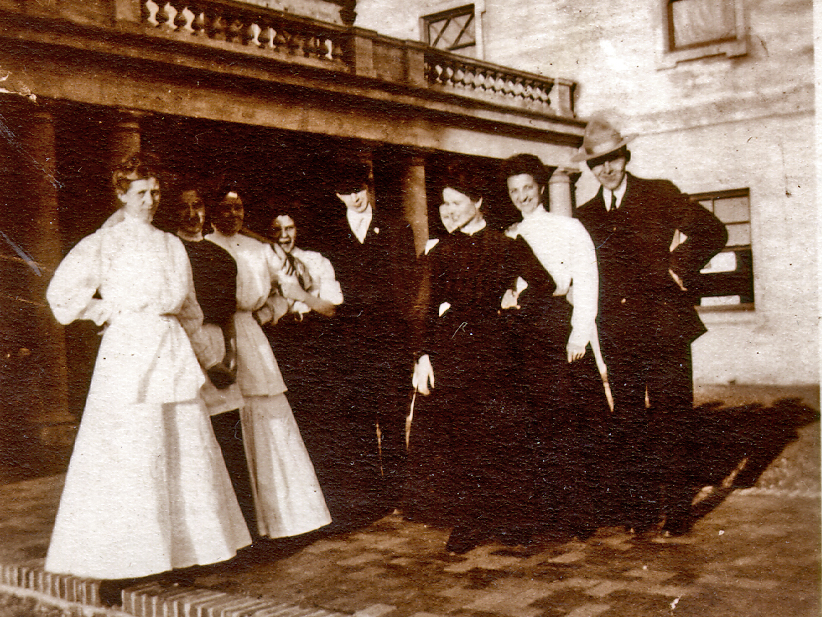
To be a Harvey Girl, women had to be between the ages of 18-20 and of "good character"—they even had to sign a contract to stay in their job for one year at a fixed rate of around $17.50 per month. The Harvey Girls were housed in dormitories and watched over by a “housemother.” During the early era of the Fred Harvey Company, Harvey Restaurant waitresses wore long black dresses with starched white collars and white aprons. Many women worked at Grand Canyon in the Bright Angel Lodge, El Tovar, and more.
Photos courtesy of Xanterra Travel Collection.
Hotel Timeline
The Location
Considered one of the legendary “Wonders of the World,” the Grand Canyon is among the most iconic places to experience in the whole United States. The Grand Canyon is a gorgeous gorge cut into the Colorado River, made from five to six-million years’ worth of constant erosion. It is also massive—the entire natural landmark measures 277 miles in length, up to 18 miles in width, and a mile deep. In fact, the entire Grand Canyon covers more than 1.2 million acres of the Colorado Plateau in northwestern Arizona. Some of the most historic geological formations in the country are located within the Grand Canyon, too, with the most notable being the Vishnu Basement Rock. Dating back nearly two millennia, much of the stone has granted geologists the unprecedented ability to study the evolution of the North American continent. Despite the semi-arid climate that defines the geography, the Grand Canyon is nonetheless full of life. The site is the home of several major ecosystems, specifically the following five biomes: Canadian, Hudsonian, Transition, Lower Sonoran, and Upper Sonoran. As such, the Grand Canyon is subsequently home to over 500 unique species of animal, as well as more than 1,500 different types of plants. Many of those lifeforms are found in few other places around the world, including the bighorn sheep, mule deer, and bison. The profound amount of flora and fauna has even made the Grand Canyon a vast repository for distinctive fossils. Scientists have discovered countless fossils within the walls, like crinoids, brachiopods, and ancient insects. The local fossil record has also indicated that the Grand Canyon hosted life—albeit in a very different environment—as far back as the Precambrian Era!
The history of human interaction with the Grand Canyon is more recent comparatively, as the earliest Native Americans originally inhabited the location just a few hundred years ago. The first were the Ancestral Pueblo, who were then followed by the likes of the Paiute, Navajo, Hopi, and Cohonina. (In fact, some of those people continue to reside throughout the Grand Canyon today, such as the descendants of the Cohonina—the Yuman, Hualapai, and the Havasupai.) However, the local Native Americans were later visited by individuals of European ancestry centuries later, starting with the arrival of several Spanish conquistadors during the 1500s. American prospectors eventually began investigating the site for ore deposits of gold and copper following the Mexican-American War. Over time, word spread of the destination’s inherent beauty, which prompted the U.S. government to sponsor its own expeditions to the Grand Canyon. Perhaps the most famous journey undertaken was that of geologist John Wesley Powell, who created a comprehensive series of maps throughout the 1870s. (Powell was also the person responsible for giving the area the name “Grand Canyon.”) Amid the ongoing geological surveys of the Grand Canyon, a number of American pioneers began settling along a portion of its southern rim. While the pioneers were originally interested in mining, they gradually started building a vibrant local tourism industry centered on the Grand Canyon itself. They specifically offered guided tours into the lower segments of the Grand Canyon, and built their own hotels to cater to the new guests whom they entertained.
By the 1880s, the Grand Canyon had emerged as one of the country’s most popular tourist sites. The great interest in the Grand Canyon inspired Congress to try and preserve it as a national park, with Senator Benjamin Harrison sponsoring several bills throughout the Gilded Age. When those efforts were unsuccessful, Harrison decided to protect the Grand Canyon as reserve while serving as U.S. President in 1893. Another U.S. President—Theodore Roosevelt—further helped conserve the the Grand Canyon by declaring it a National Monument in 1908. But legislation to turn the Grand Canyon into a national park continued to languish in the U.S. Senate for many years thereafter. Thankfully, Congress finally managed to secure enough support to pass the Grand Canyon National Park Act, which President Woodrow Wilson signed into law in 1919. Grand Canyon National Park has since become one of the most popular sites within the National Park Service system. Indeed, the location hosted more than 4.5 million people alone in 2021. It is also considered one of the most culturally significant, receiving a coveted designation as a UNESCO World Heritage Site during the 1970s. Many of the park’s cultural attractions are split between two distinctive regions, the South Rim and the North Rim. An amazing assortment of hiking trails proliferate throughout each section, as do a number of spectacular spots to go sightseeing, biking, and rafting. Furthermore, the South Rim is home to several famous historic buildings, including the Hopi House, Lookout Studio, and the Desert View Watchtower. All are located within the Grand Canyon Village, a planned visitor community run by the National Park Service that bears a designation as a U.S. National Historic Landmark.
The Architecture
The Bright Angel Lodge & Cabins stand today as brilliant examples of National Park Service Rustic architecture. As the name would suggest, the form first became prominent in the United States before it spread throughout the rest of North America. Architect Herbert Maier was central toward conceptualizing the aesthetic while he was studying the Arts and Crafts movement at the University of California, Berkeley, in the early 20th century. Rejecting the design aesthetics of industrialized society, Maier created an architectural form that utilized building materials to better connect a structure to its natural surroundings. Following his graduation from school, he quickly set about designing several structures with his novel architectural approach. Maier found a particularly receptive audience at the National Park Service, as many alumni—including his friend Ansel F. Hall—had graduated from the University of California, Berkeley around the same time. Other architects—such as Mary E.J. Colter—simultaneously mimicked Maier’s mentality and contributed their own variations to the style. Indeed, the synthesis of many unique interpretations helped create a cohesive form that soon became widespread throughout the country. Many state governments particularly embraced the eclectic design philosophy, using the aesthetic to create all kinds of public structures within their own park systems. Even the National Park Service began utilizing the form for its official construction projects, eventually making the architectural style synonymous with the organization itself! National Park Service Rustic only became more widespread in America when the Civilian Conservation Corps began erecting dozens of new park structures during the 1930s. But its popularity throughout North America had waned by the middle of the century, as architects looked to newer design philosophies. Nevertheless, National Park Service Rustic endured to become one of America’s most distinctive and historic architectural styles.
Women in History
Mary E.J. Colter: The architect responsible for giving the Bright Angel Lodge & Cabins its iconic appearance, Mary E.J. Colter is remembered today as one of the most prolific architects in American history. Not only is Colter responsible for helping establish National Park Service Rustic architecture as a style, but she also managed to promote her work at a time when architectural design was a male-dominated industry. Born in Pittsburgh right after the American Civil War, Colter moved around the country with her family before finally settling down in St. Paul, Minnesota. From there, Cotler began studying architecture and eventually enrolled into the California School of Design at the height of the Gilded Age. After relocating back to St. Paul to teach architecture for a few years, Colter secured a position as an interior decorator with the esteemed hotel business, the Fred Harvey Company, in 1902. While only seasonal in nature, she nonetheless made a memorable first impression. For instance, her work with the Alvarado Hotel’s special Indian Building in Albuquerque, New Mexico, was regarded as an absolute masterpiece. (The Alvarado Hotel is no longer standing, as the building’s owner, the Atchison, Topeka and Santa Fe Railway, demolished it during the 1970s.)
By 1910, Colter had become a permanent, full-time employee of the Fred Harvey Company, designing numerous interior designs. In fact, Colter had established herself as the led architect for many of the corporation’s numerous buildings projects throughout the Southwestern United States. She specifically affected the designs of many outstanding hotels, including La Fonda, which the Fred Harvey Company had managed for a time in the early 20th century. Perhaps Colter’s finest work transpired in Grand Canyon National Park during the 1930s, where she created and renovated several beautiful recreational structures, like the hotels Phantom Ranch and the Bright Angel Lodge & Cabins. Colter specifically synthesized numerous historic architectural examples throughout the project, such as Spanish Colonial, Mission Revival, and the Arts and Crafts Movement. Her architectural approach subsequently inspired many other contemporary architects, including those employed on behalf of the National Park Service. Indeed, the National Park Service would even incorporate aspects of Colter’s designs into its greater “National Park Service Rustic” aesthetic. Today, Mary E.J. Colter is hailed as one of the most influential architects of 20th-century America, as well as a pioneer for women who have since followed her into the field of professional architecture.
Guest Historian Series
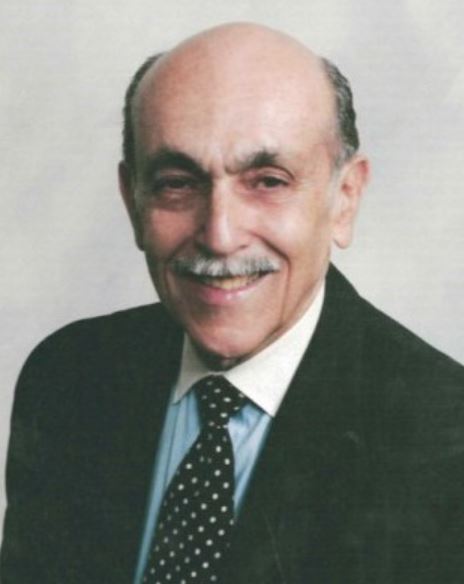
A pioneering American woman architect and interior designer whose distinct architectural knowledge was steeped in the culture and landscape of the Southwest. As the architectural historian for the Fred Harvey Company, she designed hotels, restaurants, gift shops and rest areas along the major routes of the Atchison, Topeka and Sante Fe Railway from 1902 until her retirement in 1948. Yet few of the nearly five million people who visit the Grand Canyon National Park every year are aware of Mary Colter and her accomplishments. No wonder she’s been called “the best-known unknown architect in the national parks.”
Born on April 4, 1869 in Pittsburgh, Pennsylvania, she was the daughter of Irish immigrants William Colter, a merchant, and Rebecca Crozier, a milliner. She experienced a transient childhood moving with her family from Pennsylvania to Texas and Colorado before finally settling down in Saint Paul, Minnesota at the age of eleven. In 1880, Saint Paul had a population of 40,000 people and a large minority of Sioux Indians, survivors of the Dakota War of 1862 which forced many to leave the newly-formed state.
Continue Reading