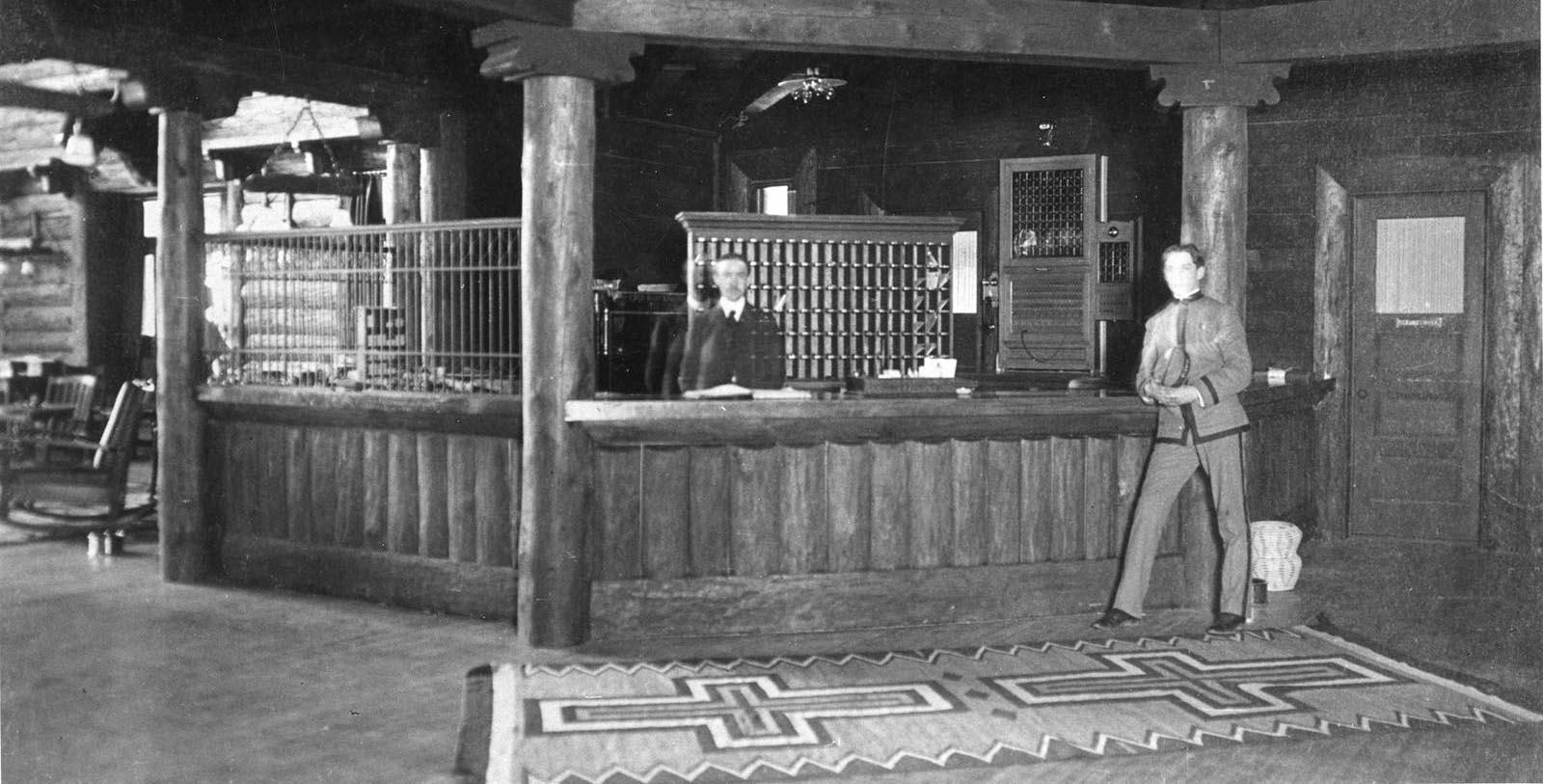

History
Discover El Tovar Hotel, which is the premier lodging facility at the Grand Canyon National Park where President Theodore Roosevelt stayed.
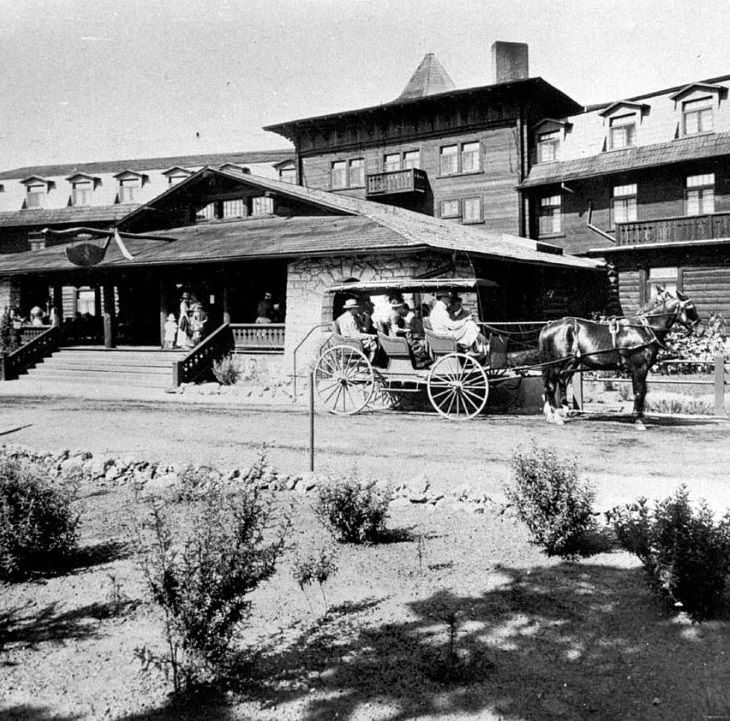
A U.S. National Historic Landmark, the El Tovar Hotel is among the most cherished holiday retreats in all Arizona. This spectacular historic destination is located in the heart of historic Grand Canyon Village, which overlooks the expansive Grand Canyon National Park. (Grand Canyon Village is also identified as a U.S. National Historic Landmark, too.) The El Tovar Hotel itself dates back to a time when the Grand Canyon was rapidly emerging as one of the nation’s most celebrated natural landmarks. Countless Americans had started to visit the Grand Canyon in order to experience its majesty and wonder during the early 20th century, including U.S. President Theodore Roosevelt. As such, several entrepreneurs—including the leaders of the Atchison, Topeka, and Santa Fe Railway—decided to capitalize upon the region’s newfound popularity. The railroad began constructing a spur of its system into the Grand Canyon, in order to help accommodate the number of people interested in visiting the site. Taking months to complete, the new Grand Canyon Railroad finally made its much-anticipated debut in 1901. The Atchison, Topeka, and Santa Fe Railway then immediately partnered with the Fred Harvey Company to construct a quaint hotel that could cater to the prospective travelers that the railroad hoped it would serve. The two companies opted to use an Albuquerque-based architect employed by the Railway named Charles Whittlesey to oversee the hotel’s construction. He quickly set about designing the new structure with a budget of $250,000, creating a beautiful multi-story structure that mimicked both a Swiss chalet and Scandinavian hunting lodge.
To achieve such an appearance, he had utilized a combination of local limestone and Oregon pine to craft a rustic, log-cabin-like façade. But the brilliance of Whittlesey’s design did not only involve the building’s appearance—he also managed to install numerous cutting-edge facilities, like a barbershop, solarium, and greenhouse that featured all kinds of fresh produce. Whittlesey even successfully outfitted every one of the hotel’s nearly 100 guestrooms with plumbing, steam heat, and electric lights. Once Whittlesey finally finished the project in 1905, the Railway chose to name the building as the “El Tovar Hotel” after one of the first people to inspire the exploration of the Grand Canyon, Pedro de Tovar. (While Tovar encourage many contemporaries to seek out the Grand Canyon during the 16th century, interestingly, he never saw it himself.) The El Tovar Hotel quickly became an overnight sensation, with many thinking of it as the finest holiday destination open west of the Mississippi River. In fact, some of the most influential individuals in the world visited not long after the building’s debut, including George Bernard Shaw, Ferdinand Foch, and Guglielmo Marconi. An enthusiastic President Roosevelt even stayed at the El Tovar Hotel upon subsequent return trips to the Grand Canyon, eventually writing about his experiences in a book that he produced in 1913. Today, El Tovar Hotel still remains just as popular among contemporary visitors to the Grand Canyon. The site has been particularly adored by modern-day cultural heritage travelers, who have been fascinated with its gorgeous historical architecture, interesting institutional history, and unrivaled hospitality.
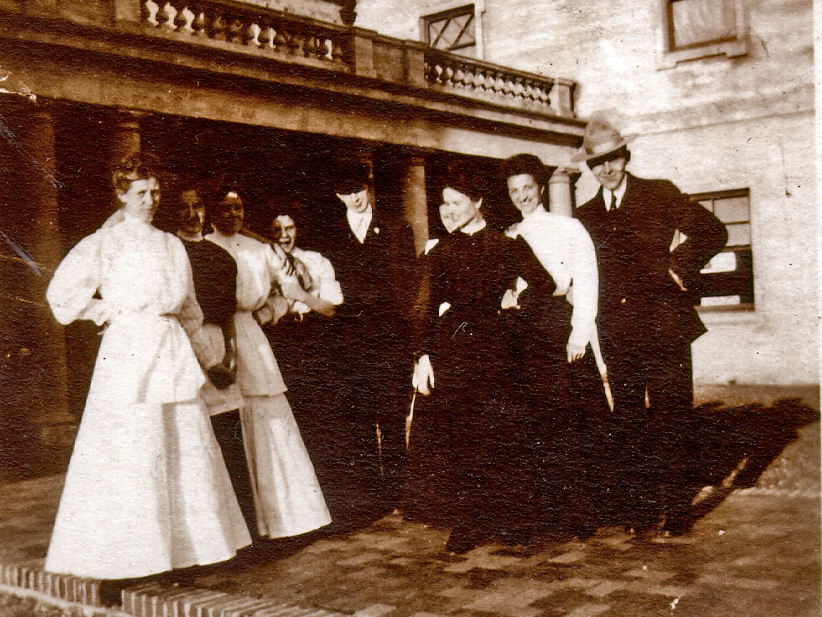
Harvey Girls
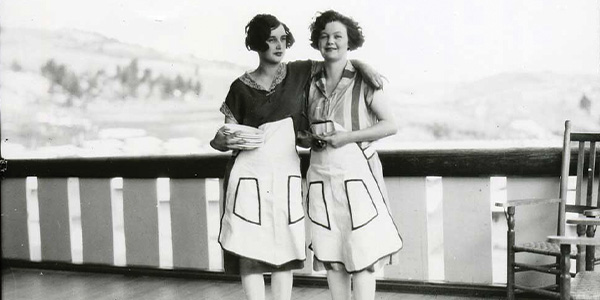
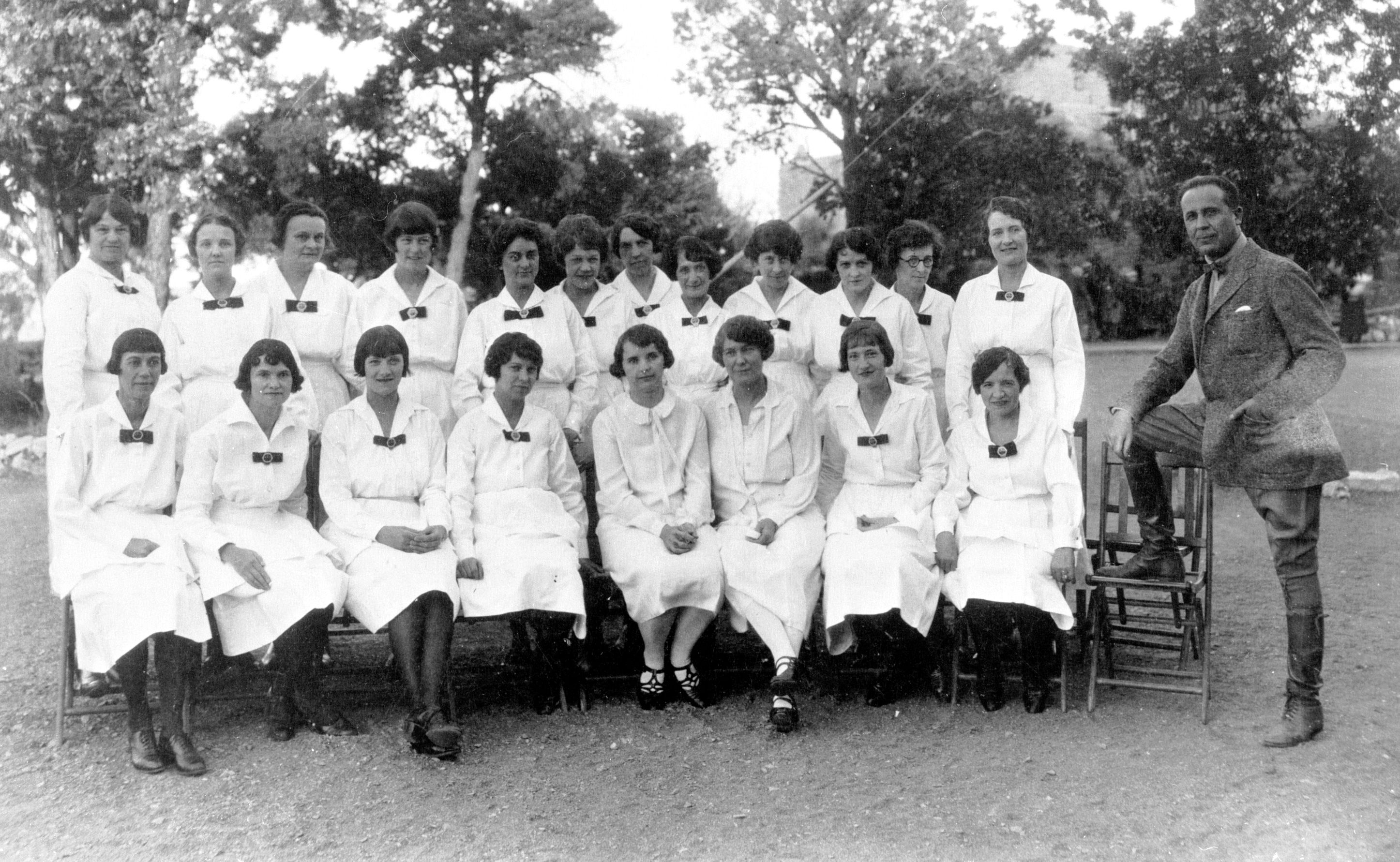
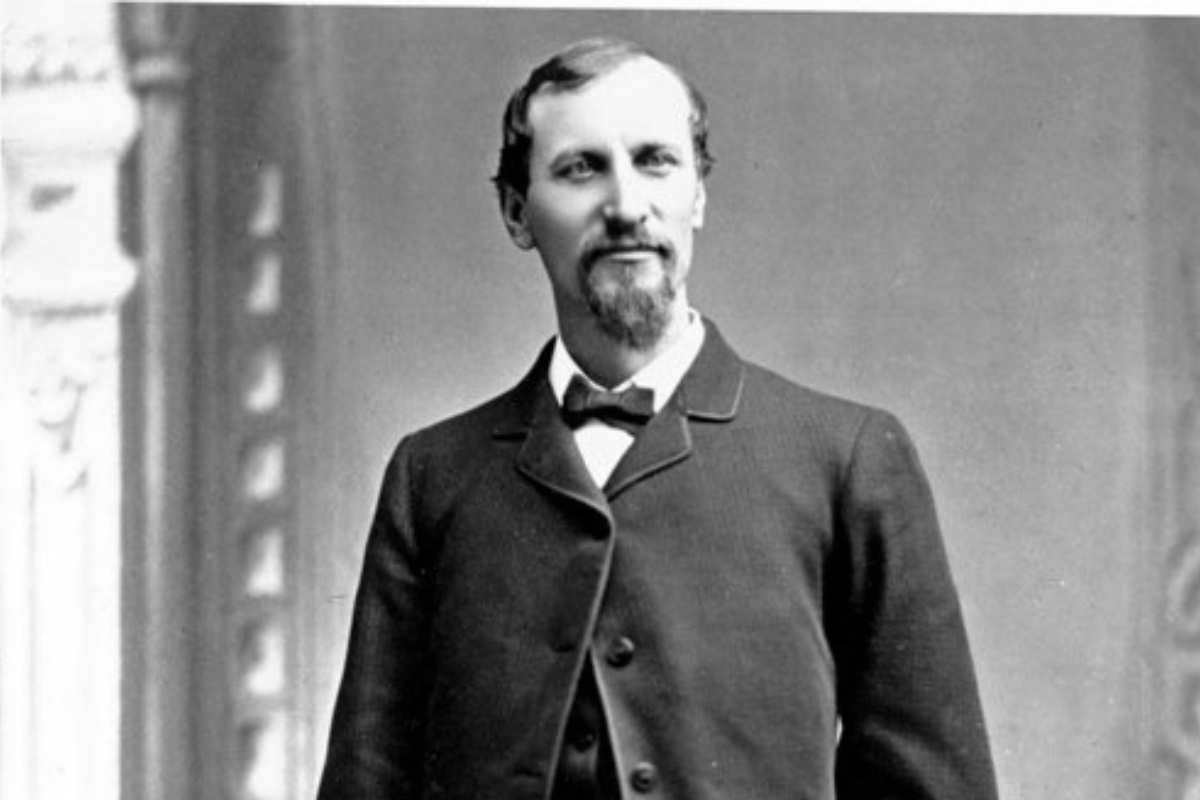
Fred Harvey was an entrepreneur who opened his Harvey House dining rooms across the Western United States in the late 19th century. Dining with Fred Harvey was an elegant experience, with linens imported from Ireland, silver from England, and china from France. Most well-known were the women who took jobs as hosts and waitresses, known as Harvey Girls.
To be a Harvey Girl, women had to be between the ages of 18-20 and of "good character"—they even had to sign a contract to stay in their job for one year at a fixed rate of around $17.50 per month. The Harvey Girls were housed in dormitories and watched over by a “housemother.” During the early era of the Fred Harvey Company, Harvey Restaurant waitresses wore long black dresses with starched white collars and white aprons. Many women worked at Grand Canyon in the Bright Angel Lodge, El Tovar, and more.
Photos courtesy of Xanterra Travel Collection.
Hotel Timeline
The Location
Considered one of the legendary “Wonders of the World,” the Grand Canyon is among the most iconic places to experience in the whole United States. The Grand Canyon is a gorgeous gorge cut into the Colorado River, made from five to six-million years’ worth of constant erosion. It is also massive—the entire natural landmark measures 277 miles in length, up to 18 miles in width, and a mile deep. In fact, the entire Grand Canyon covers more than 1.2 million acres of the Colorado Plateau in northwestern Arizona. Some of the most historic geological formations in the country are located in the Grand Canyon, too, with the most notable being the Vishnu Basement Rock. Dating back nearly two millennia, much of the stone has granted geologists the unprecedented ability to study the evolution of the North American continent. Despite the semi-arid climate that defines the geography, the Grand Canyon is nonetheless full of life. The site is the home of several major ecosystems, specifically the following five biomes: Canadian, Hudsonian, Transition, Lower Sonoran, and Upper Sonoran. As such, the Grand Canyon is subsequently home to over 500 unique species of animal, as well as more than 1,500 different types of plants. Many of those lifeforms are found in few other places around the world, including the bighorn sheep, mule deer, and bison. The profound amount of flora and fauna has even made the Grand Canyon a vast repository for distinctive fossils. Scientists have discovered countless fossils within the walls, like crinoids, brachiopods, and ancient insects. The local fossil record has also indicated that the Grand Canyon hosted life—albeit in a very different environment—as far back as the Precambrian Era!
The history of human interaction with the Grand Canyon is more recent comparatively, as the earliest Native Americans originally inhabited the location just a few hundred years ago. The first were the Ancestral Pueblo, who were then followed by the likes of the Paiute, Navajo, Hopi, and Cohonina. (In fact, some of those people continue to reside throughout the Grand Canyon today, such as the descendants of the Cohonina—the Yuman, Hualapai, and the Havasupai.) However, the local Native Americans were later visited by individuals of European ancestry centuries later, starting with the arrival of several Spanish conquistadors during the 1500s. American prospectors eventually began investigating the site for ore deposits of gold and copper following the Mexican-American War. Over time, word spread of the destination’s inherent beauty, which prompted the U.S. government to sponsor its own expeditions to the Grand Canyon. Perhaps the most famous journey undertaken was that of geologist John Wesley Powell, who created a comprehensive series of maps throughout the 1870s. (Powell was also the person responsible for giving the area the name “Grand Canyon.”) Amid the ongoing geological surveys of the Grand Canyon, a number of American pioneers began settling along a portion of its southern rim. While the pioneers were originally interested in mining, they gradually started building a vibrant local tourism industry centered on the Grand Canyon itself. They specifically offered guided tours into the lower segments of the Grand Canyon, and built their own hotels to cater to the new guests whom they entertained.
By the 1880s, the Grand Canyon had emerged as one of the country’s most popular tourist sites. The great interest in the Grand Canyon inspired Congress to try and preserve it as a national park, with Senator Benjamin Harrison sponsoring several bills throughout the Gilded Age. When those efforts were unsuccessful, Harrison decided to protect the Grand Canyon as reserve while serving as U.S. President in 1893. Another U.S. President—Theodore Roosevelt—further helped conserve the the Grand Canyon by declaring it a National Monument in 1908. But legislation to turn the Grand Canyon into a national park continued to languish in the U.S. Senate for many years thereafter. Thankfully, Congress finally managed to secure enough support to pass the Grand Canyon National Park Act, which President Woodrow Wilson signed into law in 1919. Grand Canyon National Park has since become one of the most popular sites within the National Park Service system. Indeed, the location hosted more than 4.5 million people alone in 2021. It is also considered one of the most culturally significant, receiving a coveted designation as a UNESCO World Heritage Site during the 1970s. Many of the park’s cultural attractions are split between two distinctive regions, the South Rim and the North Rim. An amazing assortment of hiking trails proliferate throughout each section, as do a number of spectacular spots to go sightseeing, biking, and rafting. Furthermore, the South Rim is home to several famous historic buildings, including the Hopi House, Lookout Studio, and the Desert View Watchtower. All are located within the Grand Canyon Village, a planned visitor community run by the National Park Service that bears a designation as a U.S. National Historic Landmark.
The Architecture
When Atchison, Topeka, and Santa Fe Railway commissioned Charles Whittlesey to construct the El Tovar Hotel, it grant him a budget of $250,000—worth more than $8.4 million today. It hoped that finances would grant Whittlesey the ability to craft a magnificent hotel that mimicked the grand destination resorts of Europe. Whittlesey did not disappoint. A beautiful three-story structure subsequently took shape over the span of three years, which loomed majestically over the nascent Grand Canyon Village. In keeping with the location’s rustic ambiance, the fledgling hotel mimicked the style of both a quaint Swiss chalet and a rugged Scandinavian hunting lodge. Whittlesey used a combination of Oregon Douglas fir and local limestone boulders to craft its outstanding façade. Much of the first level displayed an apt utilization of log siding as an homage to the earlier wooden cabins that once dotted the nearby landscape. Further atop the structure sat a number of deeply pitched mansard roofs complete with gorgeous, pierced dormers. Perhaps its most distinguishable feature was the central turret and its wrapped shingles that Whittlesey meant to house the hotel’s massive water tank. The rustic theme continued inside the structure, too, as the central lobby contained Swiss-inspired wooden railings and peeled log posts that were that were all varnished in a similar dark hue of brown. Interestingly, Whittlesey also incorporated several different architectural aesthetics in other interior spaces, including Mission Revival style and the Arts and Crafts Movement. The decision ultimately produced an eclectic character that better reflected the greater culture of the surrounding American Southwest. When the building thus debuted as the “El Tovar Hotel” in 1905, it unique architectural appearance succeeded in mesmerizing every single one of its new guests.
Famous Historic Guests
- Douglas Fairbanks, actor known for his roles in The Thief of Baghdad, Robin Hood, and The Mark of Zorro.
- Mary Pickford, actress known for her role in the silent film Coquette.
- Elizabeth Taylor, actress known for her roles in Cleopatra and The Taming of the Shrew.
- George Bernard Shaw, playwright known for works such as Man and Superman, Pygmalion, and Saint Joan.
- Ferdinand Foch, Supreme Allied Commander during World War I.
- Guglielmo Marconi, an inventor of the radio who won the Nobel Prize in Physics in 1909.
- Albert Einstein, Nobel Prize winning physicist known for his role in developing quantum theory.
- Arthur Fiedler, conductor who famously worked with both the Boston Symphony Orchestra and Boston Pops Orchestra.
- Theodore Roosevelt, 26th President of the United States (1901 – 1909)
- William Howard Taft, 27th President of the United States (1909 – 1913) and 10th Chief Justice of the United States (1921 – 1930)
- Calvin Coolidge, 30th President of the United States (1923 – 1929)
- Herbert Hoover, 31st President of the United States (1929 – 1933)
- Dwight D. Eisenhower, 34th President of the United States (1953 – 1961), and Supreme Allied Commander Europe during World War II.
- Gerald Ford, 38th President of the United States (1974 – 1977)
- George H.W. Bush, 41st President of the United States (1989 – 1993)
- Bill Clinton, 42nd President of the United States (1993 – 2001)
Guest Historian Series
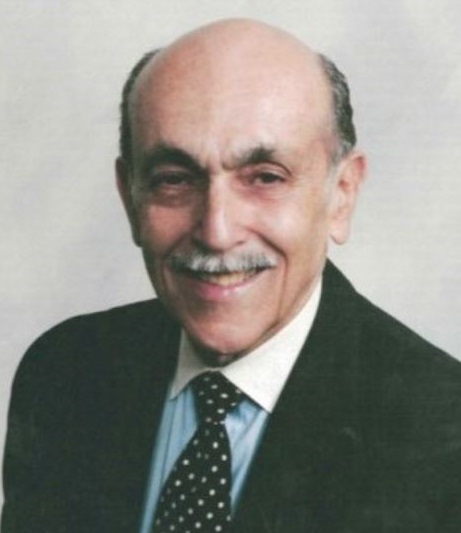
One hundred and sixteen years ago, two architectural jewels opened in the Grand Canyon National Park: the 95-room El Tovar Hotel and the adjacent Hopi House Gift Shop. Both reflected the foresight and entrepreneurship of Frederick Henry Harvey whose business ventures included restaurants, hotels, railroad dining cars, gift shops and newsstands. His partnership with the Atchison, Topeka and Santa Fe Railway introduced many new tourists to the American Southwest by making rail travel and dining comfortable and adventurous. Employing many Native-American artists, the Fred Harvey Company also collected examples of indigenous basketry, beadwork, kachina dolls, pottery and textiles. Harvey was known as the “Civilizer of the West.”
Continue Reading