
History
Discover Sheraton Maui Resort & Spa, which combines the timeless beauty of Kā’anapali Beach and the rich cultural heritage of Pu’u Keka’a (Black Rock) to create one of Maui’s most unforgettable oceanfront escapes.
Situated along the golden sands of Kā’anapali Beach, Sheraton Maui Resort & Spa first emerged during a period of extraordinary economic and cultural transformation happening throughout Hawai’i. Indeed, in the years following Hawai’i’s admission to the union as the 50th state in 1959, the islands experienced a dramatic shift from an economy long dominated by agriculture and plantation enterprises to one increasingly driven by tourism. The growth of commercial jet travel made Hawai’i more accessible than ever before, positioning Maui as an emerging vacation hotspot for travelers from across the United States and around the world. Within this changing environment, the Sheraton Maui Resort & Spa became a pioneering presence that helped define the future of resort hospitality in the Pacific. However, the origins of the resort are closely connected to the vision behind the creation of the Kā’anapali Beach Resort, one of the earliest large-scale master-planned resort communities developed in the country. The project was spearheaded by Amfac, Inc., formerly known as “American Factors", a company whose roots in Hawai’i stretched back to the 19th century. Having accumulated extensive landholdings through its agricultural operations, Amfac recognized that the future of West Maui lay not in sugar production but in tourism. Rather than pursuing isolated hotel development, the company envisioned an integrated resort district that would combine accommodations, recreation, transportation infrastructure, and public access to one of Hawai’i’s most spectacular coastlines. The Sheraton Maui Resort & Spa thus became one of the cornerstone locations within that ambitious plan, ultimately playing a vital role in establishing Kā’anapali as an internationally recognized destination.
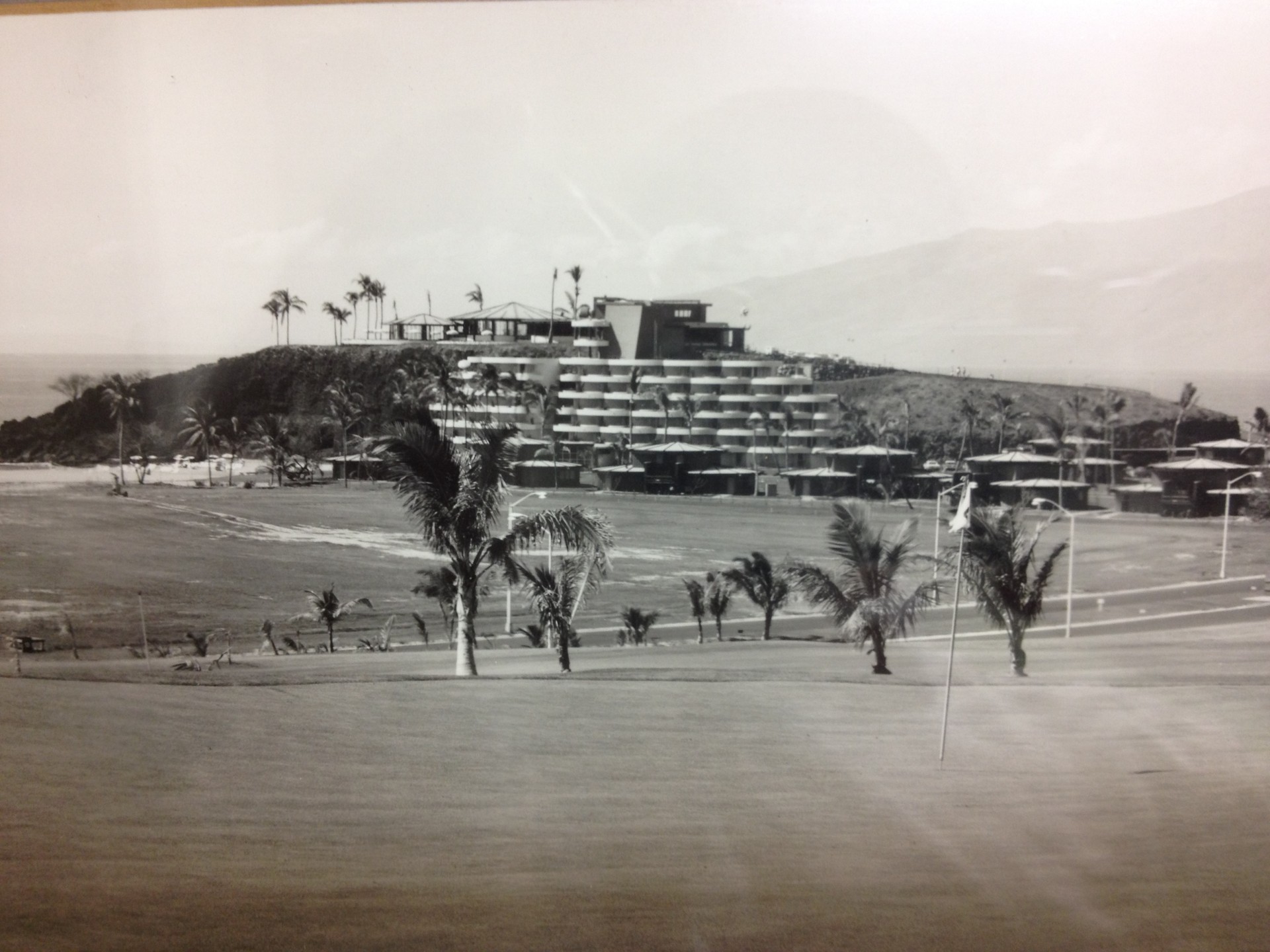
From its opening in 1963, the hotel distinguished itself through an innovative approach to architecture and site planning. Designed by the acclaimed firm Wimberly, Whisenand, Allison & Tong (later referred to globally as “WATG”), the resort reflected a new philosophy in hospitality design that emphasized harmony with the natural environment. Rather than imposing a structure upon the landscape, the architects chose to work with Maui’s dramatic coastal terrain. The resulting design was frequently described as "upside-down." Guests arrived at the highest elevation and gradually descended toward their accommodations and the shoreline below. This unconventional arrangement transformed arrival into a carefully orchestrated experience, revealing panoramic views of the Pacific Ocean, neighboring islands, and the rugged volcanic landscape of West Maui. The design became an influential example of site-responsive resort architecture and helped establish principles that would be widely adopted throughout tropical destinations during the latter decades of the 20th century. Equally significant was the resort’s relationship with Pu’u Keka’a, more commonly known as “Black Rock,” the dramatic lava promontory that rises from the northern end of Kā’anapali Beach. Long before the arrival of modern travelers, Black Rock occupied an important place within Native Hawaiian history. Hawaiian cultural narratives associate the site with Chief Kahekili, the celebrated ruler of Maui during the 18th century, who was said to have demonstrated his courage and skill by diving into the ocean below. By developing the resort adjacent to this significant landmark, the creators of the Sheraton Maui Resort & Spa established a relationship between hospitality and cultural landscape that continues to define the site.
The Sheraton Maui Resort & Spa has experienced a diverse ownership and stewardship history that reflects broader trends within Hawai’i’s hospitality industry. While initially developed through the efforts of Amfac and operated under the globally recognized Sheraton brand, the resort later came under the ownership of Kyo-ya Company Hotels & Resorts LP, controlled by the Osano family. Kyo-ya became regarded for its long-term commitment to several of Hawai’i’s most iconic historic hotels, including fellow members of Historic Hotels of America: Moana Surfrider, A Westin Resort & Spa (1901), and The Royal Hawaiian, A Luxury Collection Resort (1927). (A fourth hotel in Kyo-ya’s portfolio, the Palace Hotel (1875) in San Francisco, California, is also a member of Historic Hotels of America.) Under this stewardship, the Sheraton Maui Resort & Spa underwent modernization and enhancement while maintaining its essential relationship to the landscape, coastline, and cultural traditions that shaped its original identity. Today, more than six decades after its debut, the Sheraton Maui Resort & Spa remains one of the defining landmarks of Kā’anapali Beach and a symbol of Maui’s emergence as a world-class travel destination. Although the resort has evolved to meet the expectations of new generations of travelers, it continues to retain its historic setting, its architectural character, and its enduring association with Black Rock. The resort stands not only as an important chapter in the history of Hawaiian tourism, but also as a lasting example of how thoughtful design, cultural stewardship, and a profound sense of place can shape a historic destination for generations to come.
Hotel Timeline
The Location
Long before Kā’anapali became one of Hawai’i’s most celebrated resort destinations, its broad shoreline and fertile lands formed part of a thriving cultural landscape shaped by generations of Native Hawaiians. Situated within the traditional district of West Maui, Kā’anapali was known for its abundant resources, productive agricultural fields, fishing grounds, and associations with some of the most significant figures and events in Hawaiian history. Ancient villages flourished along this coast, while the valleys inland supplied taro, sweet potatoes, and other staple crops that sustained local communities and supported Maui’s ruling chiefs. Nearby Honokōwai Valley served as an important agricultural center, providing food for the wider region and illustrating the sophisticated land-management systems developed by Native Hawaiians over centuries. Among the most revered landmarks in the area was Pu’u Keka’a, the dramatic lava outcrop now widely known as Black Rock. Formed by an ancient lava flow, the promontory projected into the sea and divided Kā’anapali Beach into two distinct stretches of shoreline. Yet its significance extended far beyond its striking appearance. In Hawaiian tradition, Pu’u Keka’a was regarded as a sacred place known as a leina a ka ‘uhane, a location where spirits were believed to depart the mortal world and journey into the afterlife. The site held profound spiritual meaning for generations, and traditions associated with it became deeply embedded in the cultural identity of West Maui. Historical accounts and cultural traditions indicated that a heiau, or temple, once stood atop the promontory, further underscoring the sacred character of the landscape.
Pu’u Keka’a was inseparable from the legacy of Kahekili, the renowned 18th-century ruler whose name remained synonymous with bravery and athletic prowess. Often called “The Thunderer,” Kahekili governed Maui during a period of political rivalry and military expansion, extending his influence throughout much of the Hawaiian archipelago. He became legendary for his mastery of lele kawa, the art of cliff diving, and tradition held that Pu’u Keka’a was his favored place to perform these daring feats. At a site already associated with the passage of souls into the next world, his repeated leaps into the ocean below were viewed as demonstrations of extraordinary courage, strength, and spiritual power. Generations later, stories of Kahekili’s exploits continued to define the identity of the landmark and remained an essential part of its enduring cultural significance. The surrounding region likewise witnessed many of the events that shaped Maui’s history. During the 18th century, fierce conflicts between rival chiefs unfolded across West Maui, including the famous Battle of Koko o Nā Moku. According to historical traditions, thousands of warriors fought near Kā’anapali, and the scale of the struggle was so immense that streams carried blood from the battlefield into the ocean. The area served as a favored retreat for Hawaiian royalty, who gathered along the coast to surf, fish, and enjoy its scenic beauty. By the 19th century, new economic forces began transforming the landscape. Sugar cultivation expanded throughout West Maui, and plantation infrastructure gradually altered the region’s appearance while connecting it more closely to global trade networks. A plantation railroad eventually reached Kā’anapali, and a wharf near Pu’u Keka’a facilitated the shipment of sugar and supplies.
As commercial jet travel connected the islands more closely to North America and Asia though, tourism rapidly supplanted agriculture as a driving force in Hawai’i’s economy. One of the principal architects of this transition was Amfac, formerly American Factors, a company whose extensive landholdings traced their origins to the plantation era. Recognizing the growing demand for destination travel, Amfac envisioned a new future for West Maui and initiated the development of Kā’anapali Beach Resort. Conceived as one of the earliest master-planned resort communities in the United States, the project integrated hotels, recreational amenities, infrastructure, and public shoreline access into a cohesive vision that redefined the region for generations. Although Kā’anapali evolved into an internationally recognized resort destination by the end of the 20th century, its connection to the past has remained evident. The shoreline continues to follow the contours that had shaped ancient settlements, while Pu’u Keka’a still commands attention as both a natural landmark and a sacred cultural site. Each evening, a ceremonial cliff dive performed from the summit honors the legacy of Chief Kahekili, recalling traditions that go back centuries. Visitors encounter a landscape where history, culture, and hospitality converge, creating a sense of place that distinguished Kā’anapali from countless resort communities around the world. From its origins as a center of Hawaiian life and spirituality to its emergence as a transformative force in post-statehood tourism, the story of Pu’u Keka’a and the greater Kā’anapali region reflects the enduring relationship between people, place, and heritage in the Hawaiian Islands.
The Architecture
Conceived during the early years of Hawai’i’s post-statehood transformation and opened in 1963, the Sheraton Maui Resort & Spa emerged as one of the defining architectural achievements of the Kā’anapali Beach Resort, a pioneering master-planned destination that helped establish Maui as an international tourism center. Developed on land once associated with West Maui’s plantation economy, the resort was envisioned at a moment when Hawai’i was embracing a new future shaped by commercial aviation, destination travel, and large-scale hospitality development. Rather than imposing a conventional hotel upon the landscape, the project’s designers sought to create an experience inseparable from its dramatic setting along Kā’anapali Beach and the culturally significant promontory of Pu’u Keka’a, better known as Black Rock. The resort was designed by the influential architectural firm Wimberly, Whisenand, Allison & Tong, later known internationally as WATG, whose work in Hawai’i helped redefine resort architecture during the mid-20th century. At a time when many hospitality developments emphasized monumentality and uniformity, the architects embraced a more site-responsive approach that allowed the natural contours of the land to shape the guest's experience.
Their most celebrated innovation at Sheraton Maui was an “upside-down” design concept in which visitors arrive at the highest point of the facility and gradually descend toward their accommodations, gardens, pools, and the shoreline below. This carefully choreographed sequence transformed circulation into a visual journey, allowing guests to encounter expansive ocean vistas, tropical landscapes, and the volcanic coastline in a series of unfolding perspectives. Architecturally, the resort reflected the optimism and experimentation that characterized its development during the mid-20th century. Buildings were positioned to maximize connections with the surrounding environment, while open-air spaces, terraces, and view corridors reinforced a sense of immersion in the Hawaiian landscape. The design demonstrated how modern hospitality architecture could adapt to local topography rather than overwrite it, establishing principles that would influence resort planning throughout Hawai’i and other coastal destinations. Equally important was the resort’s enduring relationship with Pu’u Keka’a, which anchored the resort within a landscape long associated with Native Hawaiian history and tradition.
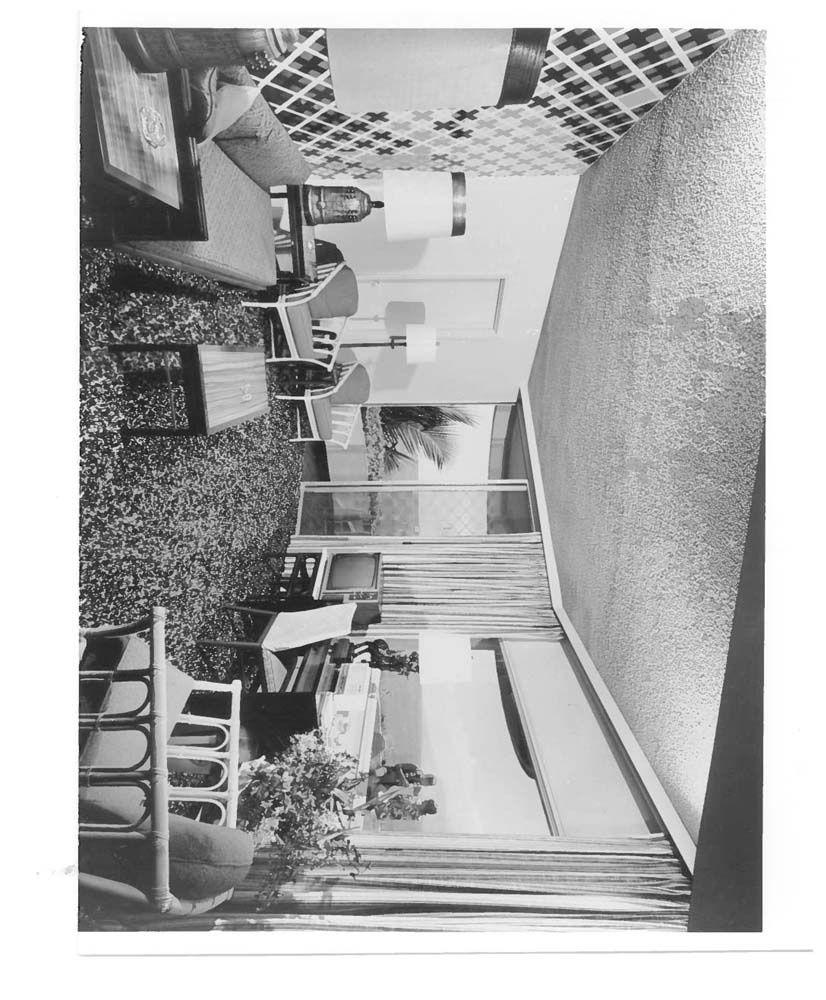
More generally, the architectural style that can best describe the resort’s overall appearance is Mid-Century Modern. An offshoot of the earlier International and Bauhaus movements, Mid-Century Modern essentially sought to portray a seemingly futuristic aesthetic that reflected the popular concepts of civic progress. Professional architects mainly utilized the style from the 1930s to the 1960s, when American society was rapidly undergoing huge transformations, both social and technological in nature. Architects thus embraced the design of ideals of function, simplicity, and rationality to create sleek-looking structures with a communal purpose. Mid-Century Modern designs made explicit use of vertical, flat lines and irregular rectangular shapes that conveyed a lack of formality. Overt ornamentation was abandoned as monochromatic brickwork, steel, and concrete served as the essential building blocks for the exterior. Inside, most of the rooms were subdivided into split levels, giving a sense that the structure had undergone a significant change in elevation. Modernist buildings featured wide, open spaces filled with natural light that represented practicality and comfort. Large windows often functioned as the primary way the architects achieved such a feature, too. The introduction of spacious windows even sought to better incorporate nature into the design, making the surrounding landscape seem as if it were part of the building itself.
Famous Historic Guests
Bob Hope, comedian and patron of the United Service Organization (USO).
Bing Crosby, singer and actor known for his roles in Going My Way and The Bells of St. Mary’s.
Elvis Presley, singer and actor best remembered to history as the “King of Rock and Roll.”
Emma Sharpe, pioneering hula performer, teacher (kumu hula), and cultural ambassador.
Rodney Arias, singer, musician, and bandleader who led the “Rodney Arias and the Paradise Serenaders.”
Jimmy Moikeha, vocalist and recording artist known for music releases like the original recording of “Behold La’ie.”
Gary Morton, stand-up comedian who later became the husband and producer-partner of Lucille Ball, serving as executive producer on several of her television projects, including The Lucy Show and Here’s Lucy.
Danny Kapoi Trio, Hawaiian music group remembered for popularizing traditional Maui music with their recording Danny Kapoi Trio at the Sheraton-Maui of 1966.
Jack Ross Quartet, the band best remembered for their popular hit recording “Cinderella,” which debuted in 1962.
Sam Snead, winner of seven major golf championships that include the PGA of America and the Senior PGA Tour.
Bernice Brown, First Lady of California (1959 – 1967).
Pat Brown, 32nd Governor of California (1959 – 1967).
Film, TV and Media Connections
Hawaii – Pacific in Miniature (1962)
Paradise, Hawaiian Style (1966)
Hereafter (2010)