History
Discover the St James Hotel which offers guests the same blend of Old World service, luxurious amenities, and culinary delights that it provided when it debuted in the 1870s.
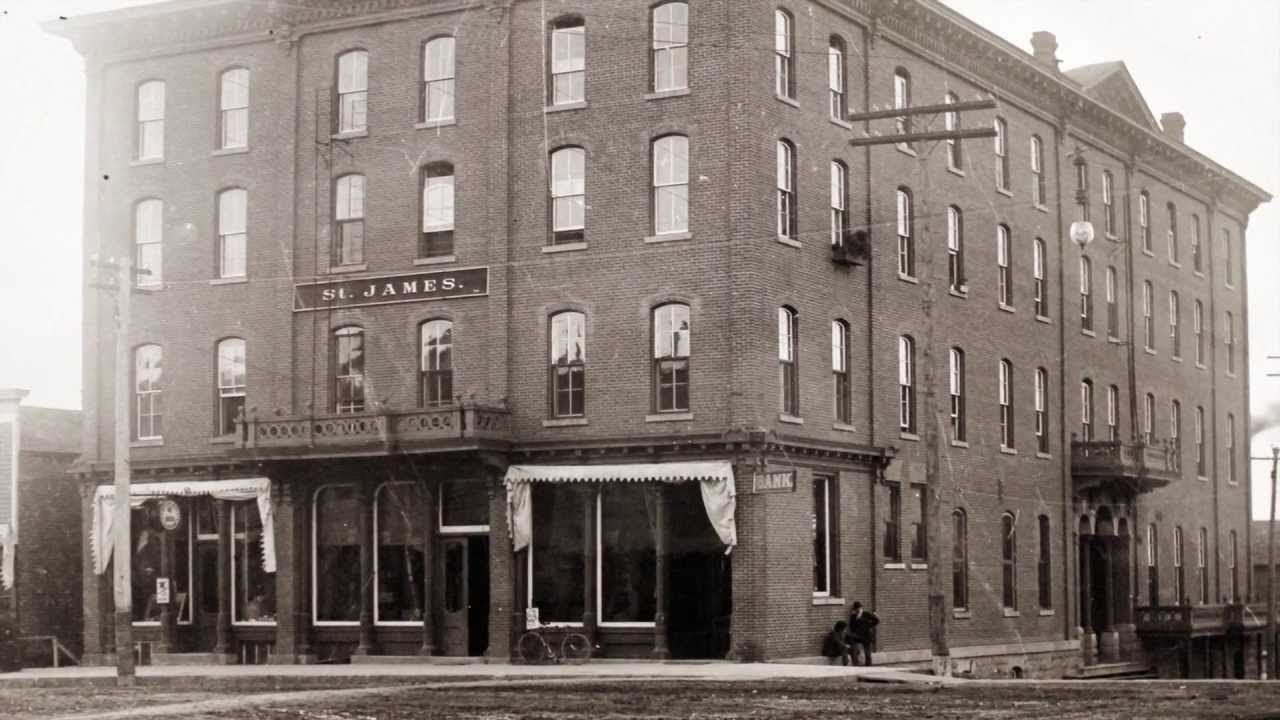
A member of Historic Hotels of America since 1994, the St. James Hotel is one of the finest holiday destinations in all of Minnesota. It is also incredibly historic, as it bears a rare listing on the prestigious U.S. National Register of Historic Places. The hotel was originally born out of an economic necessity to house the many merchants who traveled to Red Wing in the years following the American Civil War. Given its proximity along the Mississippi River, Red Wing had rapidly expanded into one of the region’s primary market centers by the early 1870s. Much of the prosperity was driven by the exchange of wheat, which had emerged as the city’s major product. Over time, business figures from across the Midwest traveled to Red Wing just to get a cut of the action. In order to handle the mounting business-related traffic into Red Wing, 11 civic-minded citizens decided to band together and construct a magnificent boutique hotel. Raising $60,000, they hired architect Edward P. Bassford to spearhead its design. Bassford created a structural masterpiece, using a brilliant blend of Italianate-style architecture for the building’s appearance. Taking a few months to complete, the new business debuted as the “St. James Hotel” on Thanksgiving Day in 1875. Many hailed the building as a modern marvel at the time, for it featured steam heat, indoor plumbing, and a fully furnished, state-of-the-art dining facility. The St. James Hotel immediately became a hub for all social activity in Red Wing and the railroads even adjusted their schedules to allow passengers the opportunity to dine inside its restaurants. Perhaps the greatest symbol of its prestige was when U.S. President Rutherford B. Hayes arrived for a short time in 1878. During his trip to the St. James Hotel, Hayes gave a resounding speech from the building’s veranda and sampled its delicious cuisine.
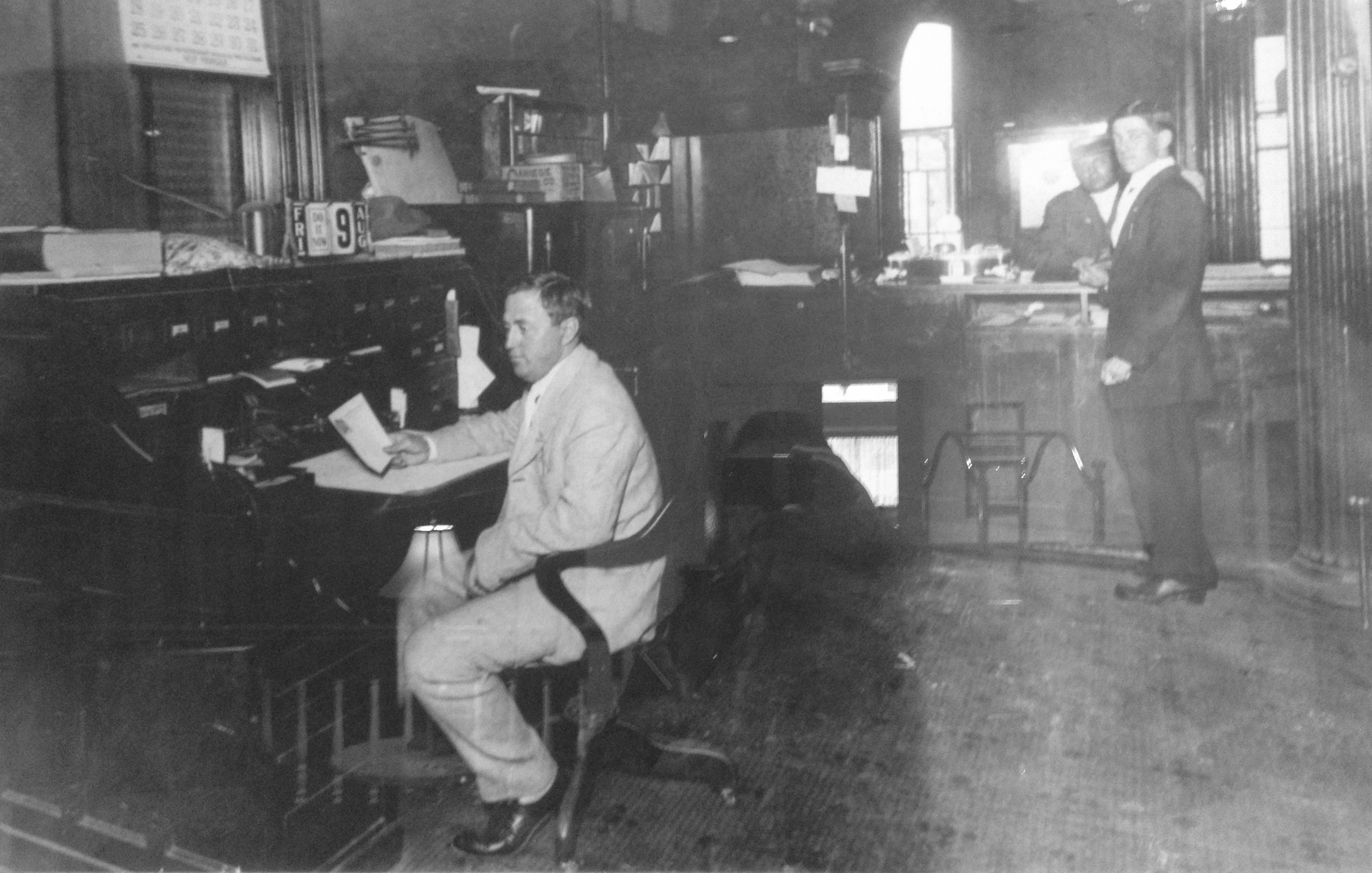
Unfortunately for St. James Hotel, the local wheat industry went into considerable decline. As such, the entire city experienced an economic downturn that greatly affected the hotel itself. Fortunately, two aspiring hoteliers, T.K. Simmons and Charles Lillyblad, eventually purchased the St. James Hotel. Under their determined stewardship, the St. James Hotel reemerged as one of the region’s most luxurious destinations. Lillybald in particular benefited from the spike in business, using his newfound wealth to buyout Simmons completely in 1909. Then, in 1914, Clara Nelson moved to Red Wing from her native Fergus Falls, and began waiting tables at the St. James Hotel. She soon caught the eye of Charles Lillyblad and the two quickly wed. They both subsequently co-managed the St. James Hotel for years, with Charles supervising the finances as Clara oversaw the front of house. In fact, Clara assumed direct control over the kitchen, using her culinary prowess to elevate the hotel’s restaurant as one of the best in the state. And after Charles passed away in 1931, Clara became the sole proprietor of the St. James Hotel right up until her own death in 1972. Her son, Art—who was born inside the building—then became its next general manager, although he decided to sell the business to the Red Wing Shoe Company five years later. The Red Wing Shoe Company subsequently renovated the building, adding a shopping courtyard, as well as additional space for offices and guestrooms. The Red Wing Shoe Company continues to operate the St. James Hotel and takes great pains to preserve the legacy left behind by the celebrated Lillyblad family.
Hotel Timeline
The Location
Located along the historic Mississippi River, the City of Red Wing is just an hour outside of the greater Minneapolis metropolitan area. Its history is also quite fascinating as the site has long been inhabited by people for millennia. Prior to the arrival of the first European-American settlers, Native Americans belonging to various Mississippian cultures used the location as a terminus for trade and communication. The anchor of their various societies was a prominent geological formation known as “Barn Bluff,” which dominated the landscape for miles. But by the dawn of the 19th century, the Mdewakanton Sioux inhabited the space. Led by a tribal chief called “Tatankamani”—or “Walking Buffalo”—the Mdewakanton established a small village upon the crest of the hilltop. There they remained in relative isolation until renowned American explorer Zebulon Pike arrived with a crew of motley adventurers in 1805. Pike and his men had a peaceful interaction with the chief, whom they called “Red Wing.” Over time, though, American frontiersmen from the east gradually displaced the Mdewakanton, eventually forcing them into a reservation that is known today as the “Prairie Island Indian Community.” Traveling along steamboats, the pioneers began clearing the land to create sprawling homesteads that specialized in cultivating wheat. The ground fortunately proved to be incredibly fertile, making most of the farms a profitable endeavor. By the eve of the American Civil War, the region’s wheat farmers were some of the most prosperous in the entire world. To help the planters market their surplus, a few locals gathered together and established a small town near the vicinity of Barn Bluff. They named the community “Red Wing” after the Mdewakanton, and began building warehouses and wharves to support the local agriculture. Soon enough, steamboats of all kinds arrived in Red Wing to transport large quantities of wheat to communities all along the Mississippi River basin.
The arrival of the railroads in the late 1860s further aided the local wheat industry, allowing the area’s farmers to market their goods to places as far away as Chicago and St. Louis. Commercial agriculturalists began to visit Red Wing frequently to place advanced orders of wheat, too, as well as to purchase any available properties that may have been for sale. The infusion of so much capital into the economy caused Red Wing to expand rapidly, emerging as Minnesota’s fifth largest city by the late 1870s. As such, the city became home to numerous cultural institutions, such as the Red Wing Seminary, Gustavus Adolphus College, and the short-lived Hamline University. But despite the areas reputation for its wheat-growing industry, the greatest economic enterprise to appear in Red Wing at the time was Red Wing Potteries. Founded in 1877, the company manufactured beautiful clay pottery with mineral deposits mined from nearby Hay Creek. The ceramics quickly built a reputation throughout the country, with many devoted customers referring to the products as “Red Wing Pottery.” Yet, this economic boon was not to last, as enterprising industrialists from Minneapolis constructed more easily accessibly flour mills further upstream. Nonetheless, Red Wing remained an attractive destination for many people looking for new opportunities out west, especially Norwegian immigrants. Those Scandinavian expats infused their own unique customs into the greater culture of Red Wing, particularly their appreciation for outdoor winter sports. Red Wing specifically became the birthplace of American ski jumping, as such, thanks in large part to Norwegian-born athletes like Mikkel Hemmestvedt. Red Wing has since turned into a brilliant vacation hotspot for tourists traveling throughout the northern regions of America’s Midwest. It has become home to many outstanding cultural attractions, too, such as the Goodhue Society Historical Society, the Pottery Museum of Red Wing, and the historic Sheldon Theatre.
The Architecture
Architect Edward P. Bassford created a structural masterpiece when he first designed the St. James Hotel at the start of the 1870s. According to the U.S. Department of the Interior, the St. James Hotel is among, “the last remaining large ‘river town’ hotels along the Mississippi River in Minnesota.” Furthermore, the agency proclaimed that: “It remains today as a major architectural landmark within the central business district of Red Wing and is representative of the once thriving role this community played in the early history of Minnesota.” Standing four stories tall, Bassford placed the magnificent structure upon a unique “L-shaped” foundation. The entire basement featured cut limestone blocks, while the remainder of the building contained red brick. A single spectacular cornice crowned the building, complete with pediments and bracketing. Many subsequently hailed the building as a modern marvel at the time, for it featured steam heat, indoor plumbing, and a fully furnished, state-of-the-art dining facility. The first floor of the hotel hosted all sorts of outstanding facilities, including a kitchen, an office space, a baggage storage unit, and several timeless dining rooms. Further down resided a parlor, a billiard hall, a barbershop, public baths, and four water closets. Higher up on the second floor, though, Bassford installed a ladies parlor, a few bridal suites, and exclusive washrooms for female guests. And on the final level of the St. James Hotel sat an amazing ballroom, which was meant to host everything from exhilarating dance parties to elegant galas.
The St. James Hotel is also one of the best Italianate structures standing in all of Minnesota. One of the first examples of Renaissance Revival—style architecture, Italianate design principles are some of the most historic ever used in the United States. Despite its popularity in the United States, it was originally conceived by a British architect named John Nash at the beginning of the 1800s. Inspired by the architectural motifs of 16th-century Italy, he constructed a brilliant Mediterranean-themed estate called “Cronkhill.” Nash borrowed heavily from both Palladianism and Neoclassicism to design the building, both of which were derivatives of the Italian Renaissance art forms. Soon enough, many other architects began copying Nash’s style, using it to construct similar manors across the English countryside. The person responsible for popularizing the aesthetic the most was Sir Charles Barry, who had his own offshoot called “Barryesque.” By the middle of the century, this Italian Renaissance Revival-style architecture had spread to other places within the British Empire, as well as mainland Europe. It had even crossed the Atlantic in the 1830s, where it dominated the American architectural landscape for the next 50 years. Architect Alexander Jackson Davis promoted the style, using it to design such iconic structures like Blandwood and Winyah Park across New York. Although he was more widely known for his use of another Revival style—Neo Gothic—his work with Italianate helped cement it within the United States.
Famous Historic Events
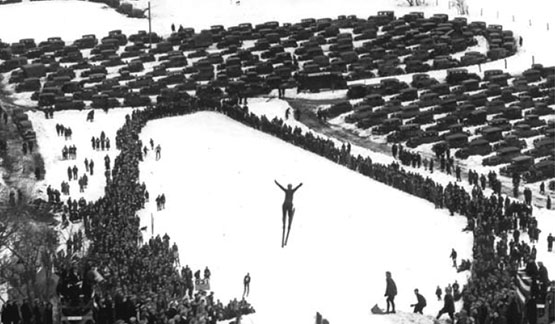
First and Second National Ski Jumping Championships (1928 and 1936): Among the greatest moments in the St. James Hotel’s history was its involvement with the First and Second National Ski Jumping Championships. American ski jumping can actually trace its roots back to Red Wing, as Norwegian immigrants first began practicing the sport in the area toward the end of the 19th century. Having found the local landscape conducive to ski jumping, the Norwegian expats formed the Aurora Ski Club in the 1880s. Soon enough, several members of the group—including Mikkel and Torjus Hemmestvedt—developed strong reputations for their unrivaled skill. Inspired, many avid alpinists opened their own clubs across the United States that attempted to replicate the organization’s “Red Wing Style.” Over time, the Aurora Ski Club even started hosting various competitions, with the first one taking place in 1887. Interest with the sport had grown so much that by the late 1920s, the National Ski Association and its president—Harris Anderson—had decided to create an official “national” tournament for American ski jumping. Partnering with the Aurora Ski Club, the National Ski Association arranged to host the first competition at Red Wing in 1928. The two organizations chose to hold the contest at the farmstead of Harold Charlson, which was known as “Charlson Hill.” Some 25,000 people soon descended upon Red Wing, vying to watch what the National Ski Association had called the “First National Ski Jumping Championship.” The affair proved to be so popular that Harris and the rest of the National Ski Association chose to create a second competition in 1936. And as with the first championship, Red Wing became inundated with thousands of onlookers. The St. James Hotel provided much needed accommodations during both events, and even served as the contest headquarters for the National Ski Association. Thanks in large part to both the First and Second National Ski Jumping Championships, Red Wing today is remembered as being the birthplace for American ski jumping.
Famous Historic Guests
- Rutherford B. Hayes, 19th President of the United States (1877 – 1881)