History
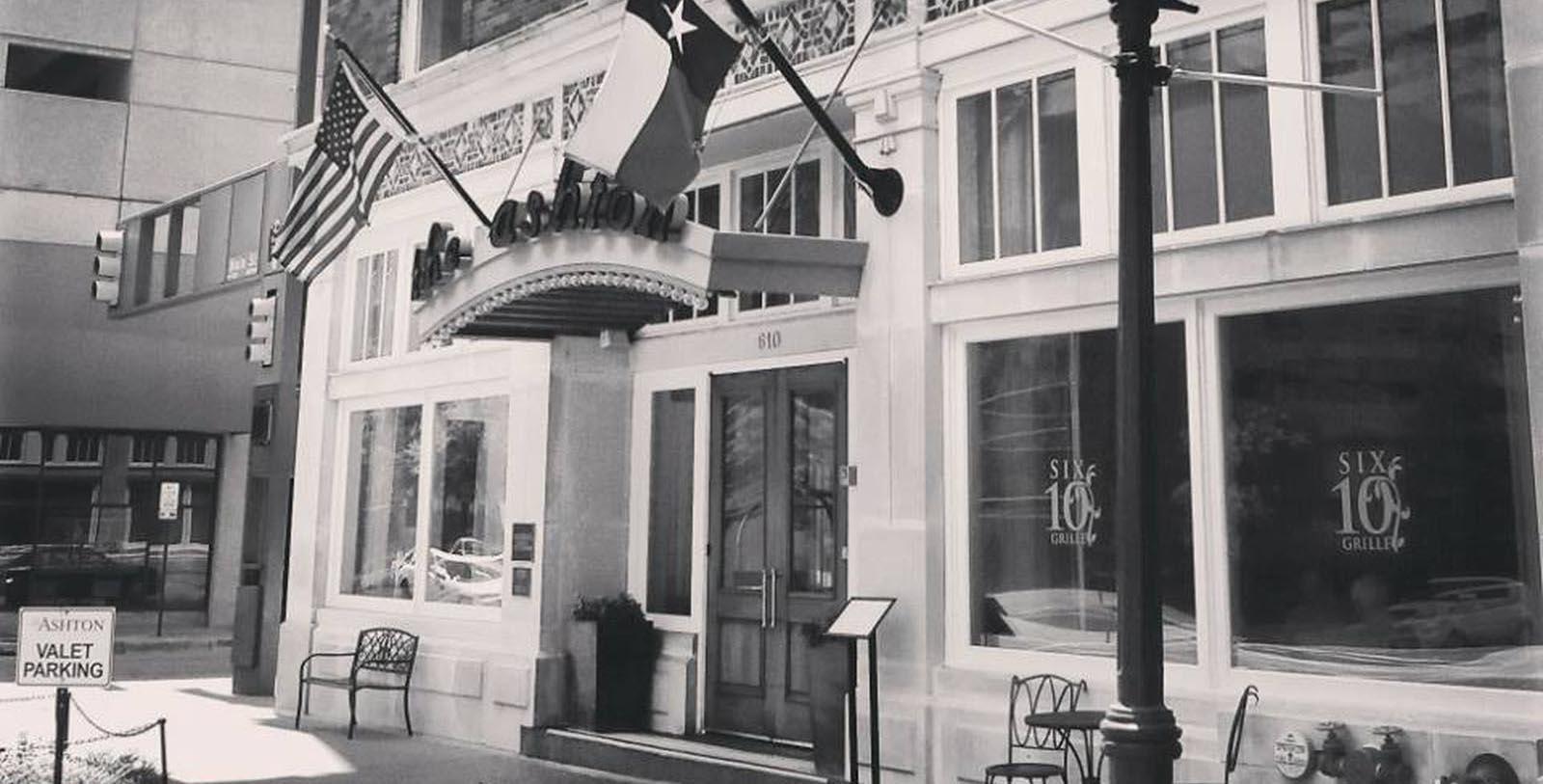
Discover the Ashton Hotel with its small luxury feel and modern enhancements.
Fort Worth, Texas, had rapidly emerged as one of the most prosperous communities in the American South at the end of the 19th century. Historically a center for cattle ranching, the arrival of the Texas and Pacific Railway had spurred forth a wave of unprecedented economic growth that transformed the city into a major hub for the national meatpacking industry. Over time, a few influential individuals began coordinating their efforts to help spread this prosperity to other areas of the city’s economy. Among the most noteworthy were Khleber Van Zandt, John Peter Smith, and B.B. Paddock, who advocated for a forum where they could all address their ideas. To that end, the men founded a unique organization called the “Commercial Club” in 1885, which provided a place for Fort Worth’s most invested business leaders to discuss their grandiose civic plans. The decision proved wise, as interest in the Commercial Club increased significantly within a matter of months. Many additional entrepreneurs began to enroll in considerable numbers, prompting the leadership team to build a quaint three-story structure to house their burgeoning group. Located at the corner of Sixth and Main Streets, the gorgeous edifice became one of Fort Worth’s most cherished local landmarks. But despite its celebrated status, the Commercial Club had nonetheless outgrown the site not long after the building’s debut. Indeed, the organization had only continued to expand, with membership reaching more than 200 people on the eve of World War I.
The Commercial Club—now known as the “Fort Worth Club”—started exploring prospective blueprints for a whole new structure in 1915. After some deliberation, the organization selected the designs of architect John James Pollard from the Fort Worth-based firm Sanguinet & Staats. (Interestingly, one of the company’s two principals, Marshall R. Sanguinet, was a committed member of the group.) Pollard then teamed together with Scottish-born contractor William Bryce to raise the building on the lot of the first clubhouse. Pollard himself crafted a magnificent multistory structure that was twice the size of the previous building. While the site displayed a variety of stunning architectural forms, the most captivating were the Italianate aesthetics that Pollard had used brilliantly throughout the facade. When the whole project concluded a year later, the new Fort Worth Club Building immediately amazed all who stepped inside. Many marveled at the masterfully laid brickwork, wrought-iron balconies, and cut-stone patterns. In fact, the building’s elegant appearance helped recruit even more people into membership, including powerful oil barons like Thomas G. Shaw and Sid Richardson. The debut of the building also coincided with the beginning of Amos Carter’s legendary tenue as the club’s president. Under his stewardship, the Fort Worth Club Building was soon hosting dozens of memorable soirees that were attended by illustrious figures from across the United States.
However, the Fort Worth Club soon grew too large for Pollard’s building and had to relocate to another facility several blocks away in 1926. (The organization has since remained at that destination to this very day.) In the wake of their departure, the erstwhile Fort Worth Club Building began functioning exclusively as a commercial office complex for dozens of prominent companies. One of the greatest tenants was the Mid-Continent Supply Company—a successful oil field supplier operated by Ken W. Davis Sr. The Mid-Continent Supply Company subsequently used the location as its own headquarters for the next several decades, with the Davis family even purchasing the structure outright in 1949! Nevertheless, the Davis's eventually vacated the premises during the 1980s, leaving the historic site’s fate uncertain. But the iconic building received renewed purpose when a couple of hoteliers acquired it in 1996. Working diligently, they transformed the structure into a fantastic boutique hotel that had preserved both its architectural integrity and fascinating institutional history. The location thus finally reopened triumphantly as “The Ashton Hotel” in 2001. Now rated highly among Fort Worth’s vacation destinations, the future of this terrific historic site has never looked brighter. (The Ashton Hotel has been a member of Historic Hotels of America since 2008 and is listed in the U.S. National Register of Historic Places by the U.S. Secretary of the Interior.)
Hotel Timeline
The Location
In the aftermath of Mexican-American War, the U.S. War Department decided to establish a series of ten forts in the vicinity of Texas’ Trinity River. The government hoped the military outposts would protect the hundreds of settlers passing through the area toward territories further west. The main sponsor for the whole assignment was General William Jenkins Worth, a war hero who had command over all the local army units in the region. Construction on the forts began in 1848, although General Worth died just a few months into the project. The loss of his influence greatly undermined its overall progress, resulting in the creation of just seven bases. One such station was developed at the confluence of West and Clear Forks of the Trinity River. Life at the newly created fort proved to be difficult, as it was constantly beset by frequent flooding. To remedy the problem, General William S. Harney—General Worth’s replacement—subsequently instructed Major Ripley A. Arnold to find a suitable location for the garrison. Major Arnold eventually rebuilt the facility atop a nearby bluff in 1849, which he named “Fort Worth” in honor of the late General Worth. Fort Worth nonetheless remained relatively small, despite its strategic importance to the federal government. But U.S. Army officials eventually concluded that the cost to operate the fort was too great, and it was abandoned just a few years later.
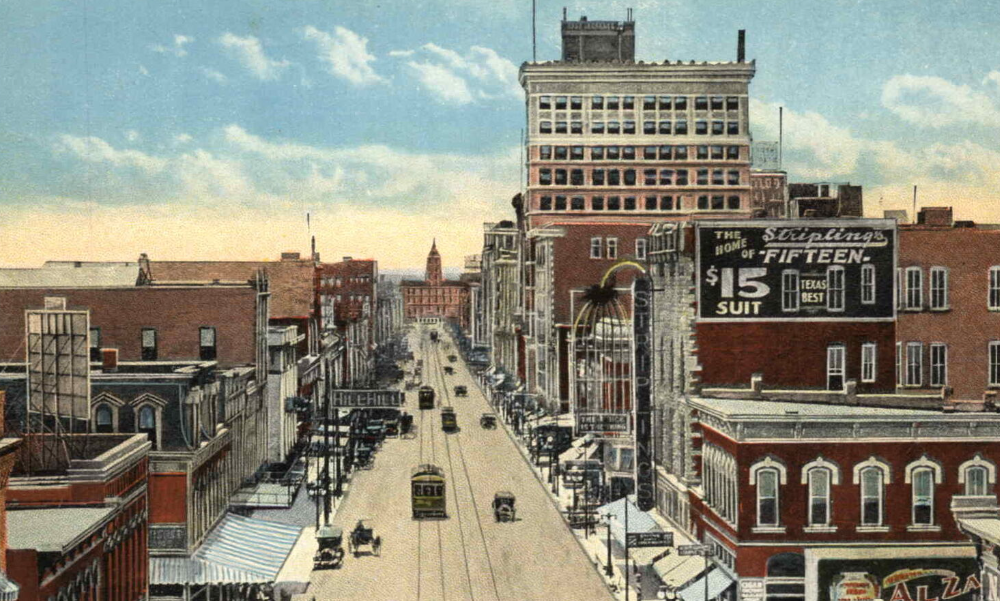
Nevertheless, a vibrant village had sprung up around the now-defunct Fort Worth. Adopting the same name as the deserted outpost, it had specifically emerged due to the development of a prosperous livestock trade. Countless cowboys had started to drive their cattle through the area along a route that would become the legendary “Chisholm Trail.” Trinity River was an important pit stop along the trail since its water was used regularly to refresh the ranchers’ animals. A few industrious entrepreneurs decided to open their own business in the vicinity to support the countless cattle drives now passing through the area. The ranching industry thus became thoroughly ingrained within the local community by the eve of the American Civil War. In fact, many Texans had even started referring to the settlement as “Cowtown.” The new town of Fort Worth grew rapidly throughout the latter half of the 19th century, turning into a city in just a matter of decades. Railroads soon supplanted the Chisholm Trail as the preferred method of transportation for the cattle ranchers, which gave rise to a massive depot known as the “Fort Worth Stockyards.” New auxiliary businesses also opened around the same time that continued to provide services to the visiting cowboys. Among the most prominent were recreational in nature, such as saloons and gambling parlors. Most of those venues debuted in a specific section of Fort Worth that was notoriously called “Hell’s Half Acre.” The neighborhood quickly attracted all kinds of infamous gamblers and outlaws, including Doc Holliday and the Earp brothers.
Indeed, Fort Worth had grown to resemble a typical metropolis. But the city’s rambunctious character eventually inspired several of its leading citizens to initiate a social reform movement and renovated areas like Hell’s Half Acre. Fort Worth’s economy remained strong for generations thereafter, too, especially once land surveyors discovered oil reserves nearby. Many prolific petroleum companies debuted in downtown Fort Worth, including the Sinclair Refining Company, Texaco, and the Humble Oil and Refining Company—a precursor to the formidable Exxon Mobil Corporation. Today, Fort Worth continues to be one of Texas’ most celebrated cities. It still possesses an incredibly prosperous economy, with many renowned corporations calling the city home. (Among the most noteworthy businesses currently headquarters in Fort Worth include American Airlines, Pier 1 Imports, and GM Financial.) Fort Worth is a major cultural capital in Texas as well, hosting respected cultural institutions like Texas Christian University (TCU), Texas Wesleyan, and the Texas A&M University School of Law. Tourism is even a significant part of the city’s current identity. Cultural heritage travelers in particular have thoroughly enjoyed experiencing Fort Worth and its many fascinating attractions, such as the Kimbrell Art Museum, the Modern Art Museum of Fort Worth, and the Amon Carter Museum of American Art. Those people have adored learning about the Fort Worth’s past firsthand, which the city has painstakingly preserved at places like the iconic Fort Worth Stockyards. Few places are truly better for a memorable vacation than Fort Worth, Texas.
The Architecture
While The Ashton Hotel displays many unique architectural styles, it most prominently displays aspects of Italianate design aesthetics. One of the first examples of Renaissance Revival-style architecture, Italianate design principles are among the most prominently used in the United States. Despite its popularity in the country, it was originally conceived by a British architect named John Nash at the beginning of the 1800s. Inspired by the architectural motifs of 16th-century Italy, he constructed a brilliant Mediterranean-themed estate called “Cronkhill.” Nash borrowed heavily from both Palladianism and Neoclassicism to design the building, both of which were derivatives of the Italian Renaissance art forms. Soon enough, many other architects began copying Nash’s style, using it to construct similar manors across the English countryside. The person responsible for popularizing the aesthetic the most was Sir Charles Barry, who had his own offshoot called “Barryesque.” By the middle of the century, this Italian Renaissance Revival-style architecture had spread to other places within the British Empire, as well as mainland Europe. It had even crossed the Atlantic in the 1830s, where it dominated the American architectural landscape for the next five decades. Architect Alexander Jackson Davis promoted the form, utilizing it to design such iconic structures as Blandwood and Winyah Park in New York. Although he was more widely known for his use of another Revival style—Neo Gothic—his work with Italianate helped cement it culturally within the country.