
History
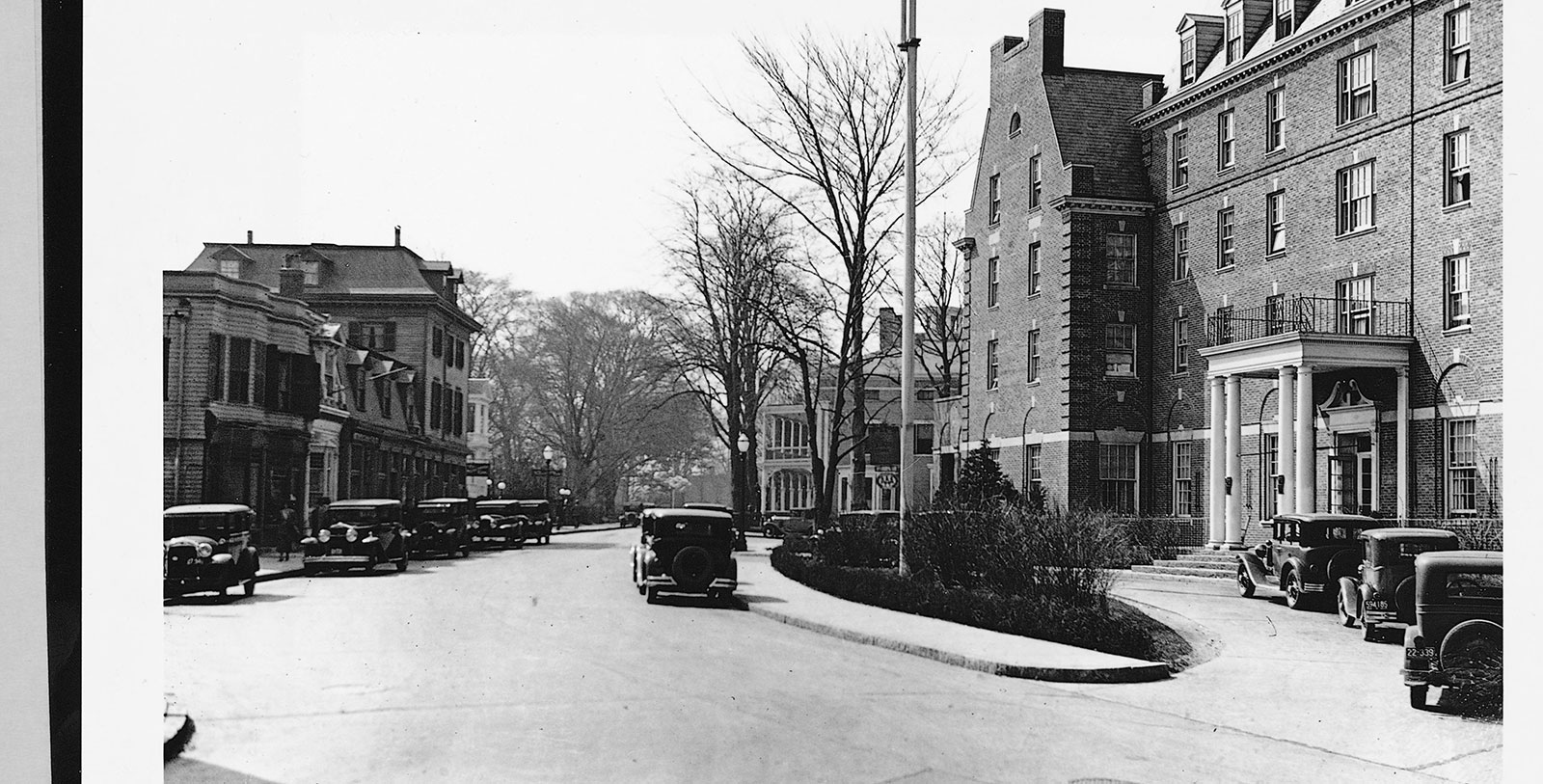
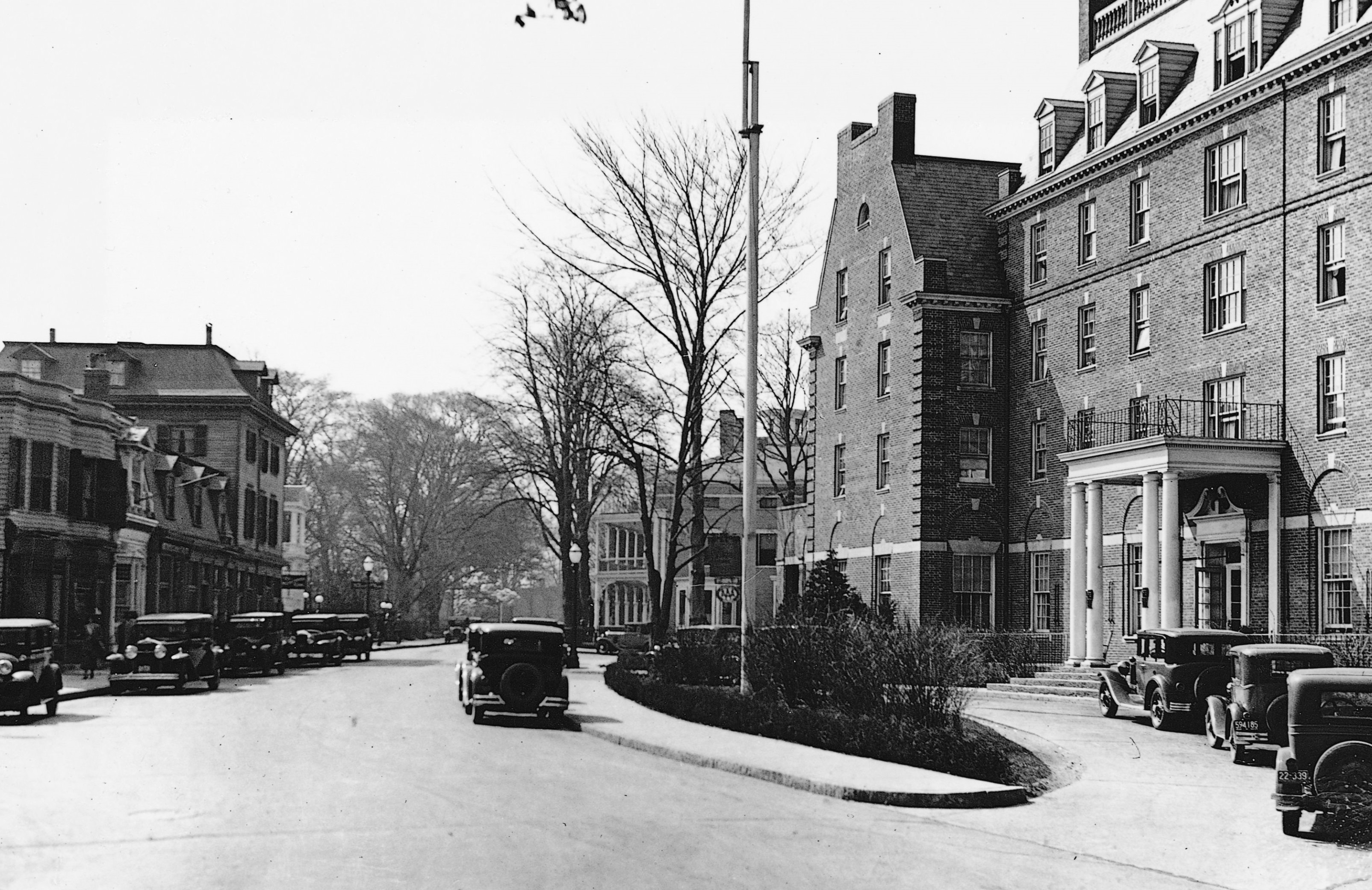
Discover The Hotel Viking, which has been offering classic Newport-style accommodations in the City by the Sea since May 25, 1926.
Since the height of the Gilded Age, Newport, Rhode Island, had been one of the nation’s most prestigious vacation retreats. Many influential families—including the Astors and the Vanderbilts—created countless summer estates in the heart of the city, allured by its quaint colonial character and bucolic shoreline. The estates appeared all over Newport, too, with the great Bellevue Avenue serving as the epicenter for the construction. But in just a short time, word quickly spread across the country of the community’s relaxing atmosphere and rich heritage. Soon enough, Americans from all walks of life had begun to travel to Newport, which eventually entertained hundreds of tourists each year. Recognizing the economic potential, several community leaders pooled their resources to create a spectacular hotel that would stand out among all the rest. Among their group included a few prosperous local merchants such as Harry Titus and James O’Connell, as well as summer vacationers like William H. Vanderbilt. Together, the men financed the hotel’s pending construction through a system of fundraising and selling public stocks. Once enough money was acquired to finally build the structure, they formed a company called “The American Hotels Corporation” to supervise the project.
Work on the new hotel commenced in earnest in 1925, just a few years before the onset of the Great Depression. The construction took several months to complete, as well as thousands of dollars. When the project concluded the following spring, the new building—christened as the “Hotel Viking”—stood as one of the most gorgeous buildings located along Newport’s esteemed Bellevue Avenue. Many throughout the community attended the opening ceremonies, from upscale seasonal visitors to Navy officers stationed at the nearby Naval War College. While the hotel’s stunning Colonial Revival-style architecture was a sight to behold, it was the luxurious guestrooms and amenities inside that truly captivated the imaginations of the guests. As such, the Hotel Viking immediately emerged as a regional powerhouse in the hospitality business, attracting all kinds of upscale clients over the next several decades. In fact, a few of the most influential people in America passed through its doors, including jazz singer Ella Fitzgerald and U.S. President John F. Kennedy. The continued popularity even enabled The American Hotels Corporation to thoroughly renovate the building around the middle of the century, adding on a wealth of new accommodations and an outdoor pool.
By the 1960s, however, the prosperity of the Hotel Viking began to change somewhat as a fluid period of ownership befell the business. Renamed as “The Viking Hotel and Motor Inn” and then just “The Hotel Viking,” the destination gradually slipped into disrepair despite efforts by the owners to add on such facilities like a spacious conference center. Thankfully, salvation for the historic hotel eventually arrived in the late 1990s, when new owners purchased the site and subjected it to a thorough eight-million-dollar renovation. Further work transpired later in 2007, when the original Viking guestrooms underwent a $6.8 million restoration to restore them to their Gilded Age splendor. And for its 90th anniversary in 2016, The Hotel Viking underwent yet more construction work to refresh its interior tones of blue, gray, and taupe. The wall separating the lobby lounge and bar were also removed to create an open living-room style space centered on a double-sided fireplace with a seating plan to encourage conversation. A member of Historic Hotels of America since its reopening in the late 1990s, The Hotel Viking continues to be among New England’s most exclusive holiday destinations.
Hotel Timeline
The Location
The Hotel Viking is near Newport’s Bellevue Avenue Historic District, a federally recognized National Historic Landmark. The district is currently famous for the gorgeous Gilded Age mansions that dot its landscape, which were created by some of America’s most influential families at the time. Founded in the 1630s, Newport was once a haven for religious exiles from Massachusetts Bay Colony. Among the first groups expelled followed the great Anne Hutchinson, a preacher who provoked great controversy throughout colonial Boston due to their disagreements over official Puritanical doctrine. Seeking refuge elsewhere, Hutchinson and her supporters settled on the northern end of Aquidneck Island after conferring with another outcast, Roger Williams. (Williams had been expelled from Massachusetts a few months earlier, fleeing south to Narraganset Bay where he founded the settlement of “Providence.”) Hutchinson’s Puritans quickly founded the town of Portsmouth before splitting into two separate sects. Led by William Coddington and Nicholas Easton, the new group eventually moved toward the southern tip of the island to a clearing occupied by a local band of Native Americans. They subsequently negotiated its acquisition and developed Newport just a short time later. Interestingly, Newport grew quite differently than its neighbors over the next several decades, for its founders decided to operate the town around the premise of spiritual tolerance. As such, Newport fostered a democratic culture that attracted people of many different creeds from across Europe, from Jews to Quakers.
The flood of immigrants into Newport caused its population to swell considerably, making it one of the largest settlements in the whole colony of Rhode Island by the end of the century. This deluge of people also introduced a wave of new industries into Newport, greatly diversifying its local economy. While trades of all flavors emerged in Newport, perhaps the greatest to appear in the years before the American Revolution was shipping. Merchants and sailors transported countless goods across the Atlantic, such as furniture, fish, and rum. In consequence, dozens of new warehouses and wharves subsequently debuted throughout Newport’s waterfront, making the town one of the greatest harbors in the “New World.” Wealth flowed into Newport unlike ever before, giving rise to numerous neighborhoods filled with many ornate residences and municipal structures. (Many of those buildings still survive today and are even listed in the U.S. National Register of Historic Places.) But this transoceanic commercial activity had a darker side to it, for a fair amount of human chattel were often shipped through Newport’s harbor—a practice that would sadly remain active until the early 1800s. Nevertheless, Newport’s reliance on maritime trade greatly affected its local politics, making the city a hotbed for revolutionary sentiment following its regulation by British Parliament in the mid-18th century. This anger—combined with the port’s prosperity—eventually made it a British military target once the American Revolutionary War finally broke out. The British stubbornly garrisoned the town for the duration of the conflict, too, only leaving after the French landed forces in the vicinity at the start of the Yorktown campaign in 1781.
The following century proved to be less prosperous for Newport, as other cities gradually surpassed it as a seaport and manufacturing center. Nevertheless, its natural harbor still made it a desirable place for recreational boating for years to come. The harbor even attracted the likes of the nascent U.S. Navy, which established major facilities like the Naval War College and Torpedo Station inside Newport around the American Civil War. Still, with the loss of its earlier economic dominance, the people of Newport sought to reinvent the city’s identity. As such, they used its unique colonial character to transform the city into a tranquil seaside resort community. At first, influential intellectuals—such as Julia Ward Howe, Thomas Wentworth Higginson, and William Ellery Channing—flocked into the reborn Newport to find inspiration for their work. But by the height of the Gilded Age, some of America’s most powerful individuals had settled in the city for their summer vacations. Brilliant mansions quickly proliferated throughout Newport, which were occupied by prevalent families like the Morgans, the Astors, and the Vanderbilts. Some of the best architects in the nation at the time worked on the structures, too, including Richard Morris Hunt and the team at McKim, Mead, and White. A few of the towering estates—like The Breakers, The Elms, and Miramar—even became celebrated local landmarks, due to their spectacular architectural appearance. Newport maintained its reputation as a prestigious vacation town for generations thereafter, despite a brief economic downturn that affected the city toward the end of the 20th century. In fact, Newport became one of the preferred holiday destinations for President Dwight D. Eisenhower, as well as President John F. Kennedy and First Lady Jacqueline Kennedy Onassis.
The Architecture
The Hotel Viking displays some of the finest Colonial Revival architecture in Rhode Island. Colonial Revival architecture itself is perhaps the most widely used building form in the entire United States today. It reached its zenith at the height of the Gilded Age, where countless Americans turned to the aesthetic to celebrate what they feared was America’s disappearing past. The movement came about in the aftermath of the Centennial International Exhibition of 1876, in which people from across the country traveled to Philadelphia, Pennsylvania, to commemorate the American Revolution. Many of the exhibitors chose to display cultural representations of 18th-century America, encouraging millions of people across the country to preserve the nation’s history. Architects were among those inspired, who looked to revitalize the design principles of colonial English and Dutch homes. This gradually gave way to a larger embrace of Georgian and Federal-style architecture, which focused exclusively on the country’s formative years. As such, structures built in the style of Colonial Revival architecture featured such components as pilasters, brickwork, and modest, double-hung windows. Symmetrical designs defined Colonial Revival-style façades, anchored by a central, pedimented front door and simplistic portico. Gable roofs typically topped the buildings, although hipped and gambrel forms were used, as well. This building form remained immensely popular for years until largely petering out in the late 20th century. Nevertheless, architects today still rely upon Colonial Revival architecture, using the form to construct all kinds of residential buildings and commercial complexes. Many buildings constructed with Colonial Revival-style architecture are even identified as historical landmarks at the state level, and the U.S. Department of the Interior has even listed a few of them in the U.S. National Register of Historic Places.
Famous Historic Guests
- Ella Fitzgerald, singer known for her songs “Dream a Little Dream,” “A-Tisket, A-Tasket,” and “It Don’t Mean a Thing (If It Ain’t Got That Swing)."
- John F. Kennedy, 35th President of the United States (1961 – 1963)