
History
Discover The Otesaga Hotel, which resides along the famed Lake Otsego.
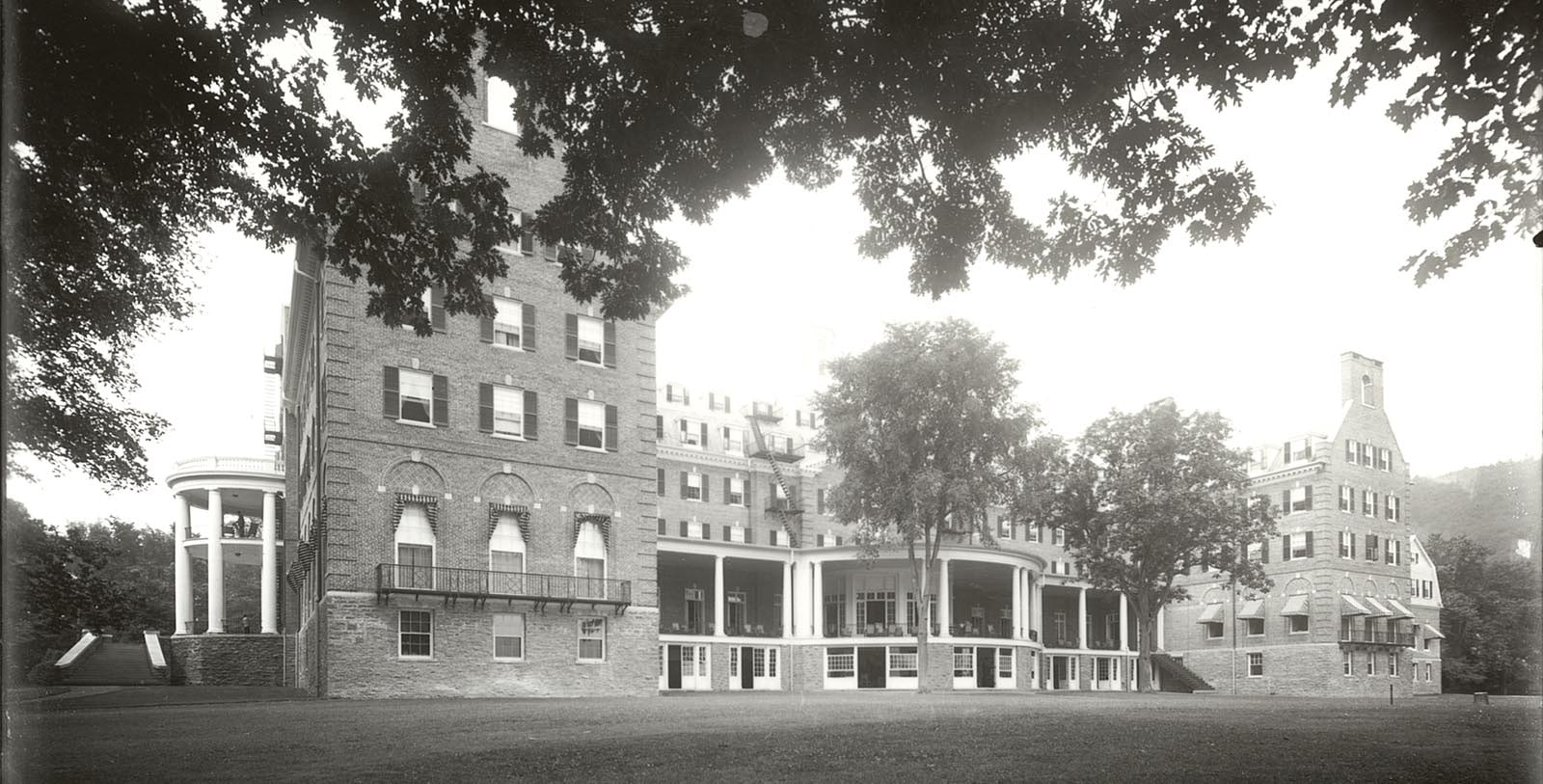
A contributing structure within the Cooperstown Historic District, The Otesaga Hotel has been a cherished member of Historic Hotels of America since 1994. Its history harkens back much further to the beginning of the 20th century, when two brothers—Stephen Carlton Clark and Edward Severin Clark—first constructed this magnificent historic resort. The Clarks themselves were the scions of one of Cooperstown’s greatest benefactors, Edward Clark. Edward Clark had specifically risen to fame for his involvement with cofounding the Singer Corporation all the way back in 1851. Clark and his family members had even financed the construction of a few buildings in New York City, as well, including the renowned Dakota apartment complex (now a U.S. National Historic Landmark). Recognizing the inherent beauty of nearby Otsego Lake, the men decided that the family’s next construction project would be the creation of a gorgeous resort hotel adjacent to the waterline. Purchasing some 700 feet of excellent waterfront land, the men began the project in earnest in 1909. Stephen and Edward hired noted architect Percy Griffin to design their nascent holiday destination. Percy relied upon Federal-style architecture for the source of his inspiration, using it to define the building’s beautiful façade. Perhaps the greatest aspects of Percy’s vision involved the construction of a spectacular octagonal dome and a front portico anchored by eight 30-foot columns. But the Clarks also commissioned celebrated landscape architect Devereux Emmet to craft a pristine 18-hole golf course near the location. Called the “Leatherstocking Golf Course,” the brothers hoped that their new fairways would entice more guests to sojourn north into Upstate New York from all the major cities in the Northeast and Mid-Atlantic.
The Clarks subsequently completed their stunning new seasonal retreat in just a few months, opening it as “The Otesaga Hotel” to great acclaim. Many contemporary guests raved about its outstanding architectural appearance, cutting-edge amenities, and unrivaled hospitality. Furthermore, the resort’s close proximity to the majestic Otsego Lake cast a relaxing ambiance onto the grounds that enchanted all who ventured onsite. As such, the business rapidly grew, forcing the Clarks to look for innovative ways to add more accommodations. In 1927, the family finally found a solution by opening the neighboring Cooper Inn. Once the home of Henry Phinney—the son of a noted newspaper publisher—the Clarks converted the entire structure into a quaint, four-bedroom guesthouse. The Clarks specifically named the reborn building as the “Cooper Inn” after famed resident William Cooper, a prominent New York politician and father of celebrated author James Fenimore Cooper. And soon after Stephen Carlton Clark established the soon-to-be famous National Baseball Hall of Fame in 1939, the Clarks subsequently expanded the inn by another 16 guestrooms. Today, the Clark family still owns and operates The Otesaga Hotel, although the Cooper Inn is no longer available to the public. Under their watchful eye, the historic Cooperstown, NY, hotel continues to rate among the best vacation getaways in all of New York. It has also received several accolades for its world-class service in recent years, receiving a AAA Four Diamond rating, as well as an Award of Excellence from Historic Hotels of America. The respected publication Condé Nast Traveler has even voted The Otesaga Hotel as one of its “Top 50 U.S. Golf Resorts,” too!
Hotel Timeline
The Location
The Otesaga Hotel is a contributing structure within the federally recognized Cooperstown Historic District. Located in the center of Cooperstown, the district is comprised of more than 230 historic structures. The area itself resides within the original settlement of Cooperstown, New York, which was first developed as a village by Judge William Cooper in 1785. Cooper was a prominent politician during America’s early republican years, serving as both a local judge for the Court of Common Pleas, as well as a Federalist member of the U.S. House of Representatives. He had come to acquire the land directly from Colonel George Croghan, a failed land speculator who had regularly worked with various Native America tribes on the frontier of Pennsylvania and Ohio. (Many tribes associated with the Iroquois Confederacy lived in the area for many centuries prior.) Covering a total land mass of some 10,000 acres, Cooper specifically selected the bottom of Otsego Lake as the site for a small settlement. Called “Cooperstown,” Cooper’s little community grew steadily over the next few years to number a couple hundred people. Cooper soon became one of the town’s most influential individuals, often dictating the temperament of local politics and carrying himself as a pseudo-aristocrat. He also raised a family alongside his wife, Elizabeth Fenimore, raising a total of 12 children throughout his lifetime. Perhaps the most accomplished of his offspring was James Fenimore Cooper, who rose to become one of the nation’s preeminent authors of historically themed novels. Most of James’ work was shaped by Cooperstown itself, particularly its many gorgeous natural landmarks. He even gave Otsego Lake its celebrated nickname of “Glimmerglass.”
Cooperstown evolved into a resort community over the next several decades, as families from across the Northeast and Mid-Atlantic traveled north to enjoy the serenity of Otsego Lake. Its transformation into a popular vacation retreat was further solidified when the Clark family—led by brothers Stephen Carlton and Edward Severin—decided to open a luxurious waterfront resort hotel in 1909. (The Clarks were themselves were the heirs to the fortune generated by the Singer Manufacturing Company, known today as the Singer Corporation.) Stephen Carlton Clark took special interest in Cooperstown’s future, especially as a picturesque holiday destination. Among the many projects that Clark pursued was the creation of the National Baseball Hall of Fame during the 1930s. With the Great Depression desolating the local economy, Stephen Carlton Clark devised a number of ways to further incentive tourism to Cooperstown. Due to the recent rise of baseball as the national pastime, Clark constructed a magnificent facility that would celebrate the sport’s heritage. He fully financed the building’s construction and dedicated the structure in June of 1939. Clark ingeniously marketed the institution’s role in preserving the legacy of baseball, which quickly attracted thousands of people from across the nation. However, he occasionally exaggerated the sport’s history throughout his marketing campaigns in order to build interest. In fact, it was Clark who erroneously claimed that Union Civil War hero Abner Doubleday invented the game while fighting in the conflict! Cooperstown has since remained one of the best destinations to visit in all of New York, offering the opportunity for hours of entertainment.
The Architecture
Throughout its history, The Otesaga Hotel has displayed one prominent architectural style: Federal—or at least a 20th-century recreation of it. Historically speaking, Federal architecture dominated American cities and towns during the nation’s formative years, which historians best identity as lasting from 1780 to 1840. The name itself is a tribute to that period, in which America’s first political leaders sought to establish the foundations of the current federal government. Fundamentally, the architectural form had evolved from the earlier Georgian design principles that had greatly influenced both British and American culture throughout most of the 18th century. The similarities between the two art forms have even inspired some scholars to refer to Federalist architecture as a mere refinement of the earlier Georgian aesthetic. Oddly enough, though, the architect deemed responsible for popularizing Federal-style in the United States, was in fact, not an American. Robert Adams was the United Kingdom’s most popular architect at the time, with his work largely involved providing his own spin on the infusion of neoclassical design principles with Georgian architecture. (This is also the reason why some refer to Federal architecture as “Adam-style architecture.”) As such, his new variation spread quickly across England, defining its civic landscape for much of the Napoleonic Era. Despite the bitter resentments that most Americans harbored toward Great Britain at the time, their cultural perceptions of the world were still largely influenced by the old mother country. Thus, Adams’ new take on Georgian architecture rapidly spread throughout the United States as it had previously across the Atlantic.
Unlike many other popular American architectural forms, Federal-style is easily recognizable due to its unique symmetrical and geometric design elements. Most structures created with Federal architecture typically stand two to three stories in height, and are rectangular (sometimes square) in their overall shape. While the buildings normally extended two rooms in width, larger structures would usually contain several more. In some cases, circular or oval-shaped rooms functioned as the center living space. The outside façade of a Federal-style building were simplistic in their appearance, although some detailed brass and iron decorations made their appearance, too. Perhaps the most common form that the ornamentations assumed were elliptical figures, as well as circular and fan-shaped motifs. Architects concentrated those features around the front entrance, where cornices, iron molding, and a beautifully sculpted fanlight resided. (Fanlights are a regular design element for Federalist buildings, appearing in other locations throughout the top of the structure, as well). The exterior walls themselves were primarily composed of clapboard out in the country, but consisted of brick in urban areas. Palladian-themed windows also proliferated throughout the façade, installed in a way that conveyed a deep sense of balance. Roofing was also hipped, and contained simple gables and dormers that allowed for natural light to more easily infiltrate the upper echelons of the structure.
Film, TV and Media Connections
Ghost Hunters: Haunted Hotel (2010)
Guest Historian Series
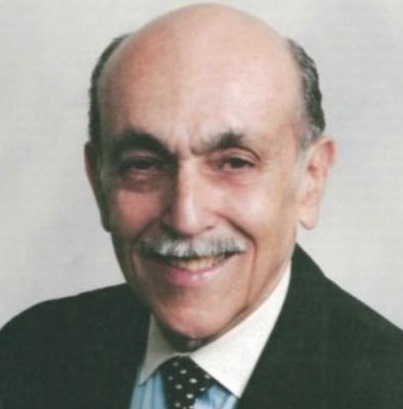
Hotel History: The Otesaga Hotel (1909), Cooperstown, New York*
This magnificent Federal-style structure with an imposing front portico supported by massive 30-foot columns occupies 700 feet of lakefront on the southern shore of Lake Otsego. The Otesaga Resort Hotel was named for the Iroquois word for "A Place of Meetings" when it was built in 1909. It is one of Americas great lakeside hotels. The Otesaga Hotel was developed by Edward Severin Clark and Stephan Carlton Clark, two grandsons of Cooperstown's prominent benefactor, Edward Clark. The family's other building projects included the Dakota apartment house in New York designed by the famous architect Henry J. Hardenburgh. The Clark brothers hired another well-known New York architect, Percy Griffin, to design The Otesaga Hotel which was universally praised for its luxurious design and amenities. Realizing the popularity of a relatively new American sport, the Clark family engaged Devereux Emmet, a famous golf course designer to lay out the Leatherstocking Golf Course. The Otesaga was voted one of the “Top 50 U.S. Golf Resorts” by Conde Nast Traveler. The Otesaga is still owned by the Clark family and has attracted guests visiting Cooperstown for more than a century.
CONTINUE READING