
History
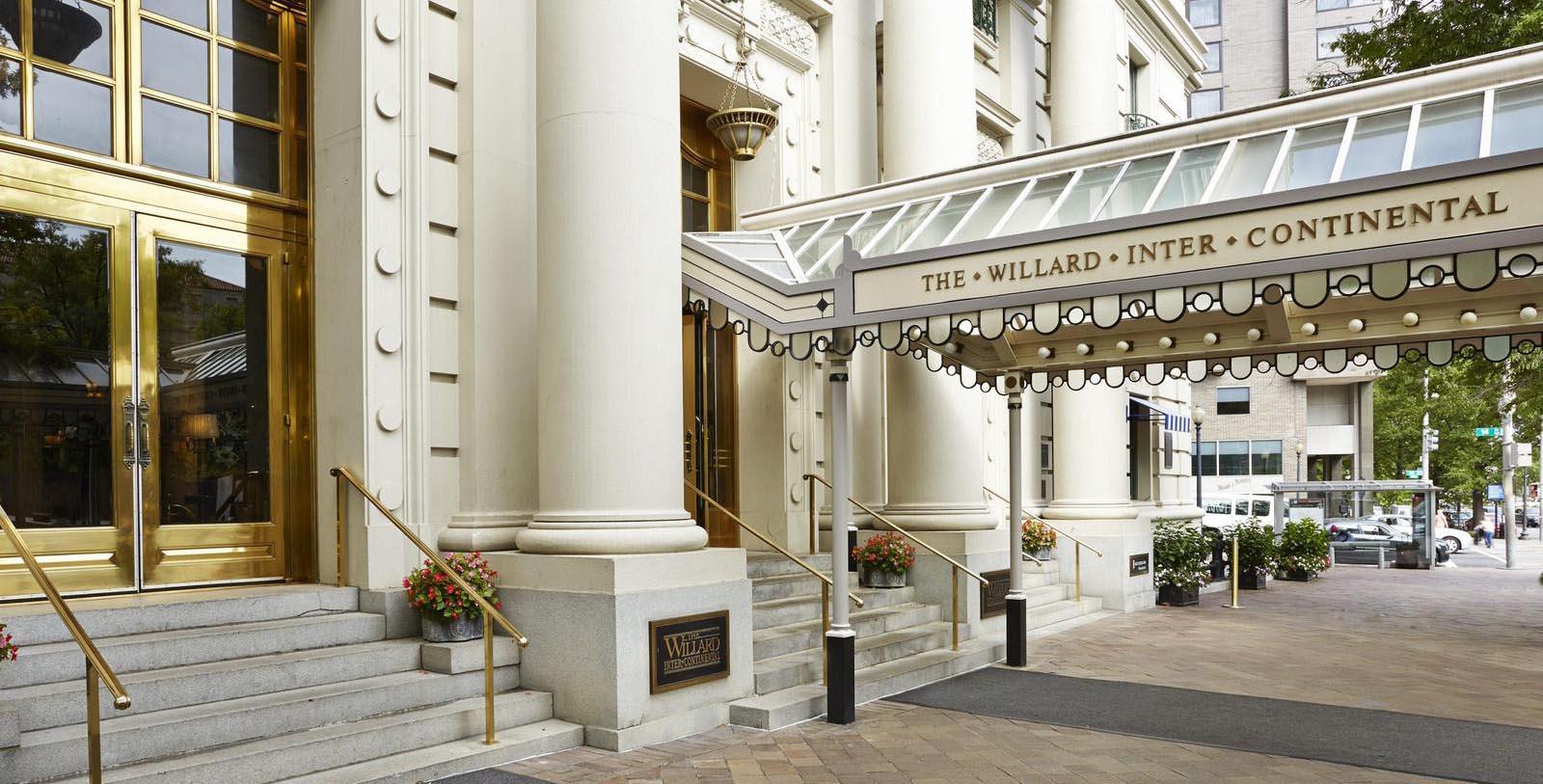
Discover The Willard InterContinental, Washington D.C., which has hosted every U.S. President since the beginning of the 1850s.
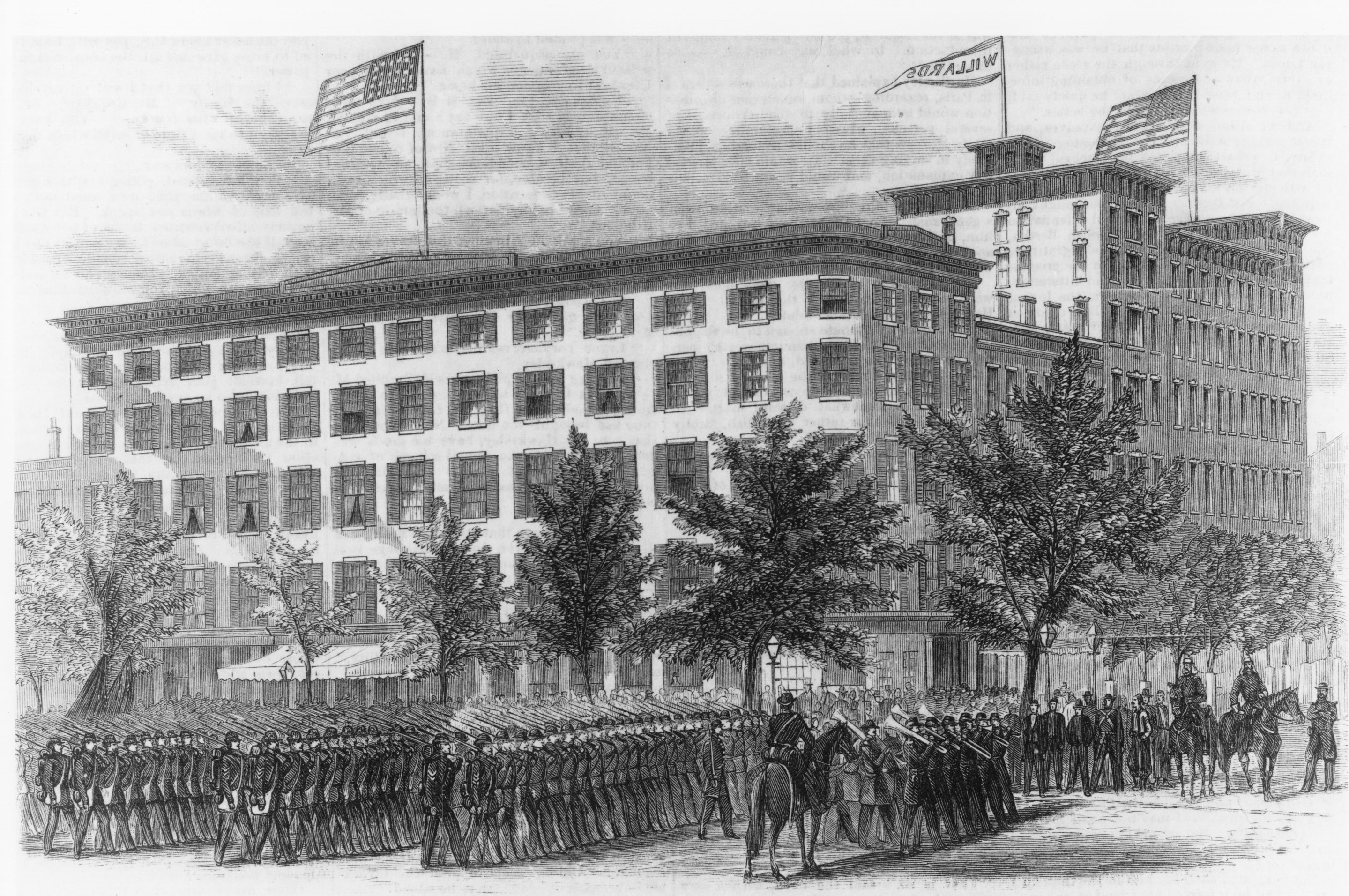
Listed on the National Register of Historic Places, The Willard InterContinental has been a fixture in downtown Washington, D.C. for three centuries. The first iteration of the hotel debuted in 1816, when Captain John Tayloe constructed six row-houses at the intersection of 14th Street and Pennsylvania Avenue. Tayloe then leased the location to Joshua Tennyson, who would use it as the site of a new hotel. The structures then changed hands numerous times over the next several decades, operating under various names throughout the process. Henry and Edwin Willard eventually purchased the entire block in 1850, renaming it as Willard’s City Hotel. The two men would subsequently unite all the buildings behind a common façade for the first time in its history. This version of hotel would remain active until it was shut down to undergo an extensive series of renovations in 1900. It finally assumed its current appearance when it relaunched roughly a year later. The Willards continued to manage the business over the next four decades, ultimately selling it to new owners in 1946. But the hotel underwent a period of considerable decline and closed during the 1960s. Salvation fortunately arrived shortly thereafter in the form of the Pennsylvania Avenue Development Corporation (PADC). Together with the Oliver Carr Company and Golding Associates, they managed to save the hotel from demolition. The team also selected InterContinental Hotels Group to manage the historic location as soon as the restoration was complete. Reopening as The Willard InterContinental in 1986, this magnificent historic hotel has once more become one of Washington’s most prestigious holiday destinations.
The Willard InterContinental has also been at the center of Washington’s social and political life for years. Foreign diplomat Francis Napier held a famous ball at The Willard to mark the end of his storied career as the British Ambassador to the United States. A delegation of Japanese envoys that included princes, aristocrats, and nobles resided at the hotel while they finalized one of the first trade agreements between their country and the United States. The National Press Club was founded here, as well. Julia Ward Howe wrote “The Battle Hymn of the Republic” during a spell at the hotel. And Dr. Martin Luther King Jr. would write his “I Have A Dream” speech inside The Willard nearly a century later. Former presidents have been particularly drawn to the hotel, as well. Celebrated as “the residence of the presidents,” every U.S. President has either visited or stayed at The Willard since the 1850s. Abraham Lincoln was smuggled into the hotel shortly before his inauguration, in order to avoid several assassination attempts. Guests often found Ulysses S. Grant in the lobby drinking whiskey and smoking his signature cigars. Woodrow Wilson’s League of Nations began to take shape here too, when he began to host meetings at the hotel for the League to Enforce Peace. Calvin Coolidge even took his second Presidential Oath of Office at The Willard following the death of Warren G. Harding in 1923. A member of Historic Hotels of America since 2010, The Willard InterContinental is truly one of the nation’s most illustrious historical landmarks.
Hotel Timeline
The Location
The Willard InterContinental resides along Pennsylvania Avenue within the celebrated Pennsylvania Avenue Historic District. The hotel itself is just three blocks from Pennsylvania Avenue, which many refer to as “America’s Main Street.” One of the city’s most traveled thoroughfares, it extends for some six miles within the District of Columbia. Most of the city’s acclaimed cultural attractions are located near Pennsylvania Avenue, including the Ford’s Theatre, the National Portrait Gallery, and the National Archives and Records Administration. Both the White House and the U.S. Capitol Building can be reached directly by way of Pennsylvania Avenue, as well. In fact, American lawmakers once enjoyed unobstructed views of both buildings back during the late 1790s. Much of Pennsylvania Avenue below 9th Street was a marshland that engineers did not dredge until after the War of 1812. The route itself was lined with underbrush, which gave the area a unique pastoral appearance. President Thomas Jefferson decided to remove these obstacles, while also enlarging the road exponentially. He tasked Benjamin Henry Latrobe—the same architect responsible for designing the U.S. Capitol Building—to complete the project.
But Pennsylvania Avenue did not start to resemble its current appearance until the 1850s, when real estate moguls began erecting a myriad of new buildings throughout the neighborhood. This development continued well into the 20th century, as the national government created a complex of office buildings on Pennsylvania Avenue known as the “Federal Triangle.” Consisting of places like the U.S. Department of Justice and the National Archives and Records Center, Federal Triangle quickly became the centerpiece of Pennsylvania Avenue. Dozens of additional structures appeared during the mid-20th century, when President John F. Kennedy—and later Lyndon B. Johnson—led a large-scale effort to rehabilitate the district. Pennsylvania Avenue is today part of the ceremonial heart of Washington. Every U.S. President since Thomas Jefferson have paraded down the road toward the U.S. Capitol Building as part of their inauguration. Several presidents even had their funeral processions follow Pennsylvania Avenue, including William Henry Harrison, Abraham Lincoln, and Gerald Ford. The whole area surrounding the Riggs Washington, D.C. near Pennsylvania Avenue is now protected by the U.S. Department of the Interior as a National Register of Historic Places District.
The Architecture
The very first iteration of The Willard InterContinental was a small residential building on corner of 14th Street and Pennsylvania Avenue that Joshua Tennison had converted into a quaint hotel. Tennison had leased the structure from John Taylor III, who had originally constructed it alongside five other structures during the late 1810s. The building would continue to operate as a hotel over the next three decades, although it consistently lost money for its proprietors. Seeking to make the endeavor profitable, the Taylor family leased the hotel to brothers Henry and Edwin Willard in 1847. They subsequently saved up enough money to purchase business, as well as its of five neighboring structures some three years later. The Willards then combined all six buildings together to form a spectacular four-story hotel that they named “The Willard Hotel.” It was this version of The Willard that would host President Abraham Lincoln on the eve of his election and saw the creation of the “Battle Hymn of the Republic.”
Yet, the current appearance of the hotel emerged during the early 20th century, when the Willard family hired renowned architect Henry Janeway Hardenbergh to completely renovate its entire layout. Hardenbergh had a hand in developing a number of outstanding hotels prior to his work on The Willard, including the Waldorf Hotel and Astoria Hotel in New York City. Historians today consider the architect to be a pioneer in his field, being one the first to incorporate a steel frame structure into his blueprints. Hardenbergh made a name for himself by using an organic approach to architectural design, which promoted practical aesthetics for the sake of convenience and safety. He used a brilliant blend of Beaux-Arts-style architecture to redesign The Willard’s entire façade, relying on ashlared Indiana limestone and terracotta tile as his primary building material. The interior reflected Hardenbergh’s preference for pragmatism, despite its irregular floor plan.
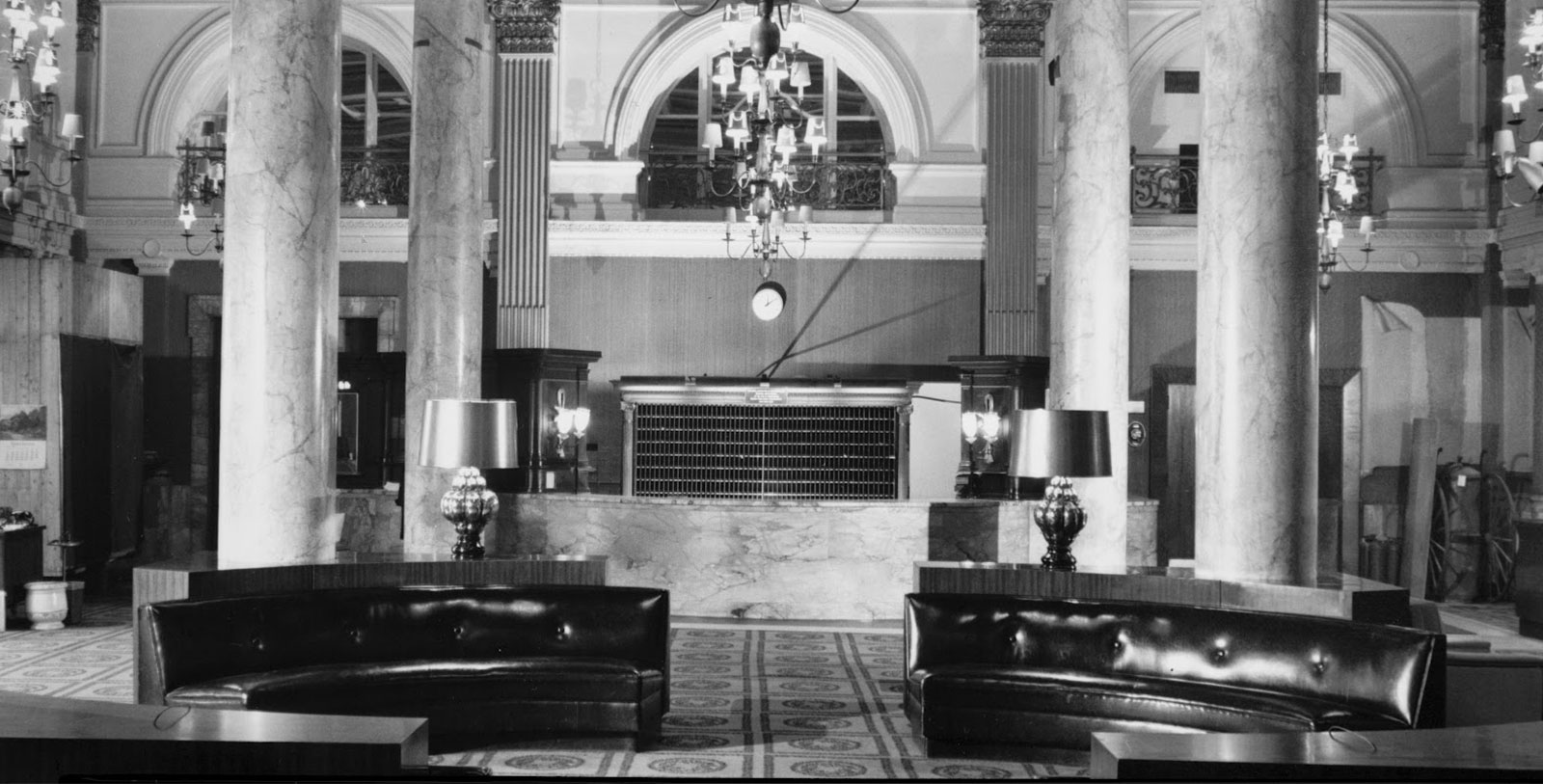
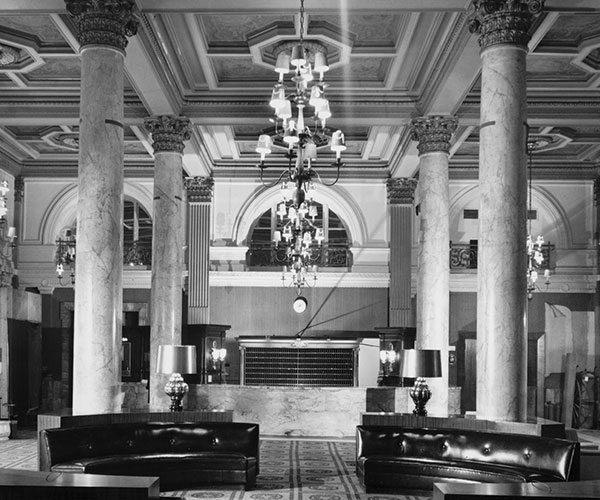
The most dramatic of these spaces is the first level of The Willard InterContinental. The hotel’s iconic lobby, for instance, has a coffered ceiling that is adorned with 48 original state seals. Additional seals for Alaska and Hawaii reside on the back pillars of the iconic Peacock Alley, which connected the lobby to the many public event spaces that proliferate throughout the ground floor. For over a century, the Crystal Room has played host to many of Washington DC’s most elegant social and corporate events. From sophisticated receptions and lavish galas, to prestigious conferences and annual meetings, the Crystal Room provides a stunning backdrop for an unforgettable event. Exuding spectacular opulence, the Crystal Room’s design motif includes mottled green columns, crystal chandeliers, gold leaf crown molding, and antique drapery.
Famous Historic Events
President Abraham Lincoln’s First Inauguration (1861): The arrival of Abraham Lincoln into the nation’s capital on the eve of his first inauguration is the stuff of legend. Lincoln had just won an important—and divisive—presidential election the year prior. Nevertheless, Lincoln was wildly unpopular throughout the southern United States. Many white southerners believed that an administration run by Lincoln would put an end to slavery in the South. The fear of Lincoln’s political future became so great in some quarters that the president-elect began to receive credible death threats. When Lincoln and his family finally arrived in Baltimore to start the last leg of their journey to Washington, legendary detective Allan Pinkerton actually had to smuggle Lincoln into the capital. Pinkerton decided to put Lincoln on a separate train from the rest of his family, disguising his appearance to confuse his would-be assailants. After completing an arduous ten-day journey, Lincoln finally arrived in at The Willard Hotel on February 23—just in time for his inauguration some two weeks later.
Lincoln and his family spent the next several days living at The Willard, while President John C. Buchanan finished his term in office. The great Thurlow Weed—who had played an integral role in establishing the Republican Party in the 1850s—was the person who convinced Lincoln to remain at the hotel for his own good. Weed even rented one of the finest rooms in the entire hotel for the First Family—a corner suite on the second floor known as Parlor Room No. 6. Lincoln entertained all sorts of guests throughout his stay, hosting everyone from congressional lawmakers to ambitious lobbyists. Among his visitors included all three of the other presidential candidates that he defeated the previous fall. Lincoln also went about the arduous task of filling out his entire Cabinet while staying at The Willard. He even spent his time inside the hotel making the final edits to his First Inaugural Address, which he had originally written in Illinois. Lincoln’s stay at The Willard came to an end on March 4, when he left the hotel with President John C. Buchanan for his swearing in ceremony at the U.S. Capitol Building. What followed next was a presidency that most historians consider to be the best in American history.
Peace Conference (1861): All seven states in America’s Deep South had passed ordinances to cede from the Union following Abraham Lincoln’s election in November of 1860. Their state legislators had agreed to the laws out of the fear that a Republican controlled White House would ultimately destroy slavery as an institution throughout the United States. Politicians in Congress from the remaining southern states began a flurry of activity that sought to establish a compromise on slavery that would forestall the crisis. Their proposals—known collectively as the Crittenden Compromise—were ultimately defeated in the Senate. A final attempt to diffuse the mounting tension occurred in late January, when former President John Tyler proposed holding a special convention where representatives from both the North and the South could discuss slavery’s future. Held inside The Willard in February of 1861, 131 delegates from 14 free states and seven slave states attended the convention as a last-ditch effort to save the Union. The attendees though, eventually drafted various measures that differed little from the earlier Crittenden Compromise. What ultimately killed any chance for the conference’s success was its failure to limit the expansion of slavery into any newly acquired territories. As such, Republicans in Congress rejected the revised plan when it came up for vote.
Calvin Coolidge Takes Presidential Oath of Office (1923): New England politician Calvin Coolidge lived at The Willard throughout his tenure as Warren G. Harding’s Vice President. Coolidge had initially made a name for himself serving as Governor of Massachusetts, where he built a strong reputation for decisive action and deregulated laissez-faire economic policies. He also endeared many with his silent demeanor and dry sense of humor. Yet, the quiet statesman was thrust firmly into the national spotlight when President Harding died unexpectedly during a trip to San Francisco. Coolidge had been visiting his family’s estate in Vermont when the news came of Hardin’s death. During the early morning hours of August 3, 1923, Coolidge was sworn into office by his father—a notary public and justice of the peace—in the family’s main parlor. Coolidge quickly returned to the nation’s capital the following day, heading straight for his apartment in The Willard. He was met by Justice Adolph A. Hoehling Jr. of the District of Columbia’s Supreme Court, who subsequently made Coolidge take a second oath of office on the spot. Hoehling had decided that such an act was necessary in order to quell any concerns that the first oath was invalid. The judge kept the event a secret until 1932—mere months before Coolidge has passed away of heart failure.
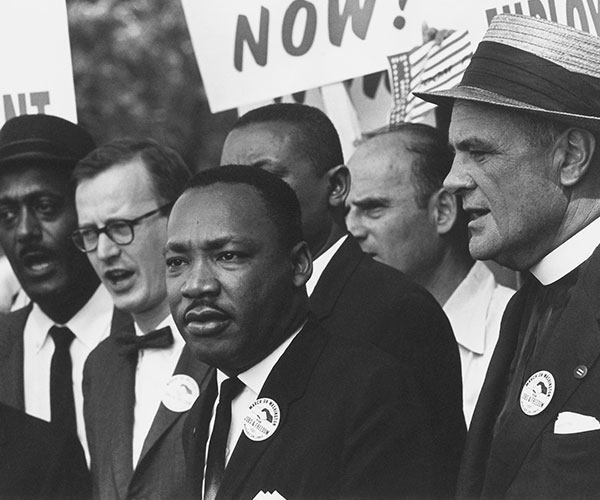
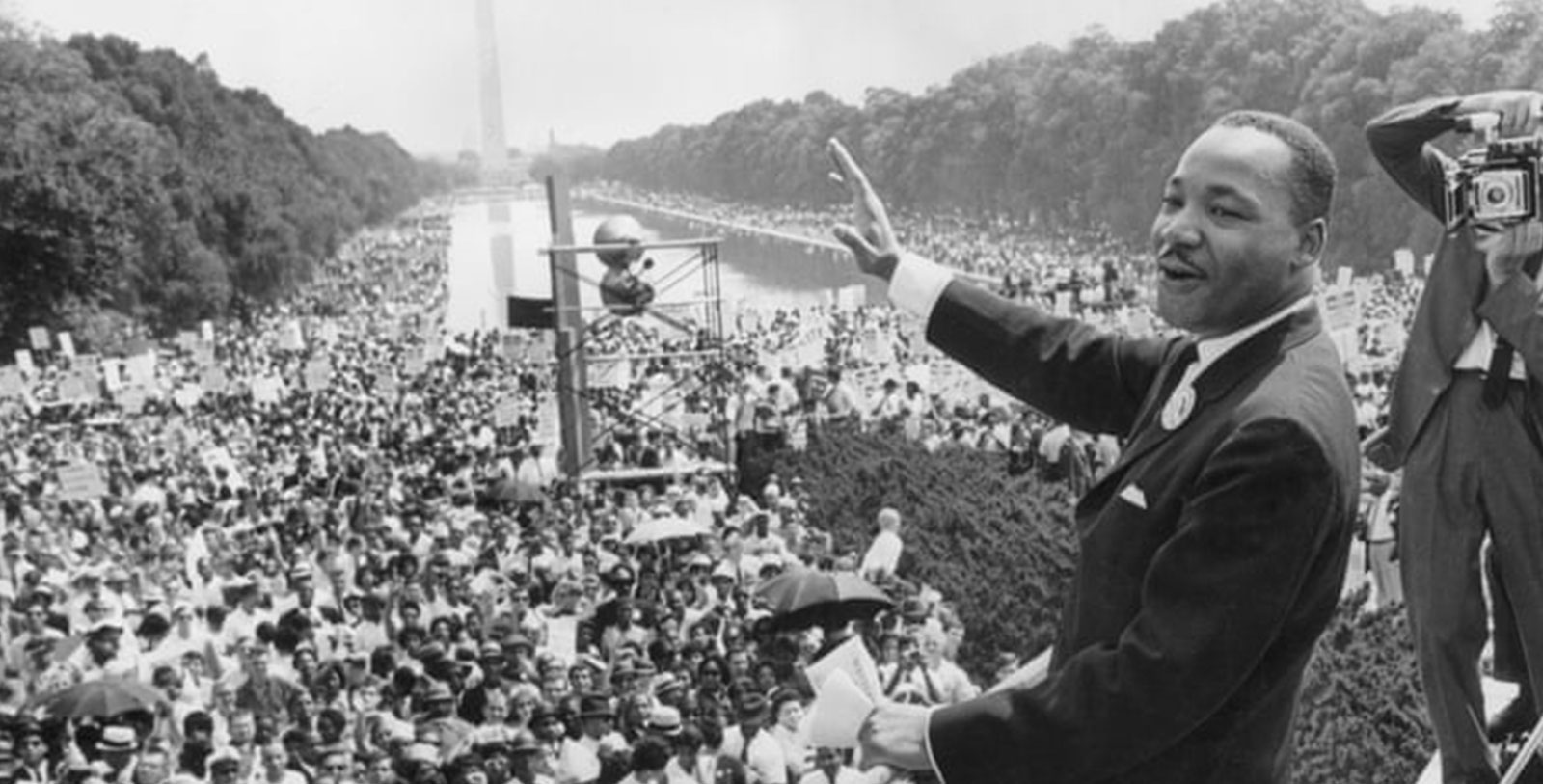
Martin Luther King Jr., Finished His “I Have A Dream” Speech (1963): Just days before the famous “March on Washington,” Martin Luther King Jr. finished writing his renowned “I Have A Dream Speech” inside The Willard. King was a legendary African American civil rights activist who had made a name for himself fighting against segregation and voter suppression throughout the American South during the mid-20th century. The 1st President of the Southern Christian Leadership Conference, he had championed the advancement of civil rights through nonviolence and civil disobedience in a vein similar to that of Mahatma Ghandi’s Indian Independence movement. King specifically had organized the highly successful Montgomery Bus Boycott of 1955 in the aftermath of Rosa Parks’ arrest for her own protest of the city’s segregated public transit system. Other campaigns that King led during his life involved the Albany Movement and the famous Selma to Montgomery Marches. The actions of King and his fellow activists forced Congress and the White House to adopt new national civil rights legislation, including the Civil Rights Act of 1964 and the Voting Rights Act of 1965.
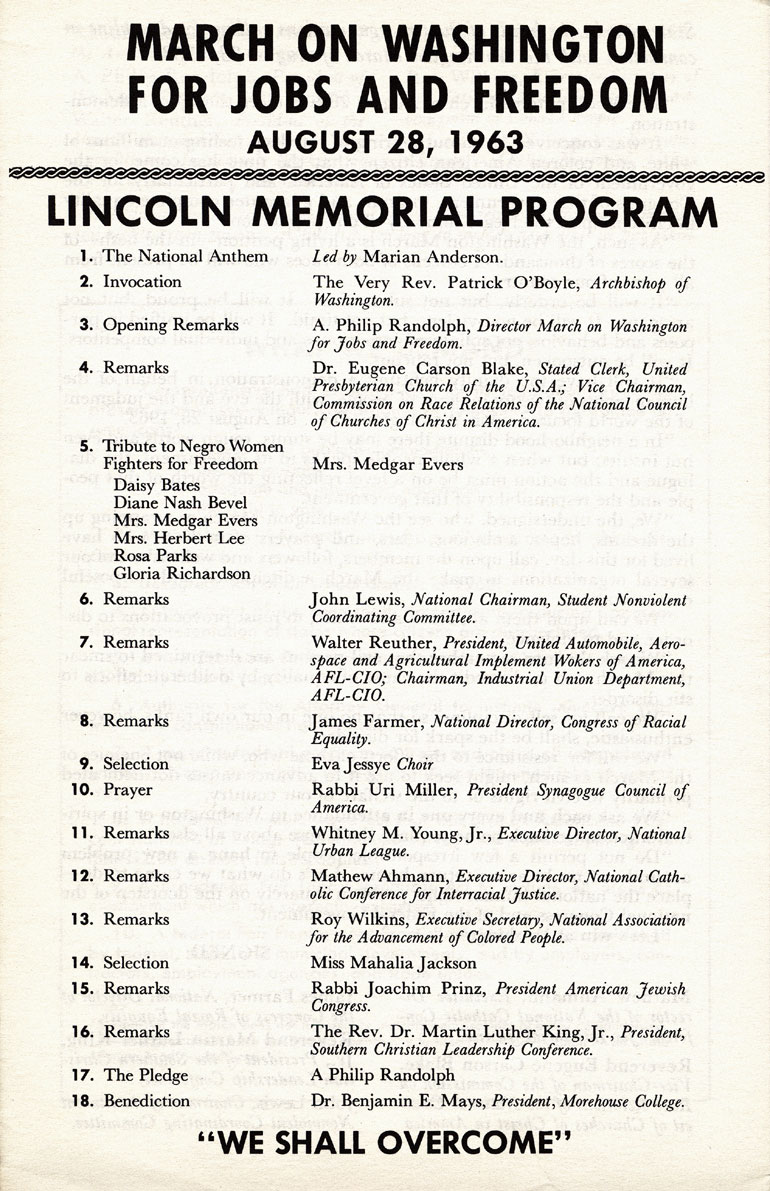
One of King’s most memorable moments occurred when he helped lead the March on Washington in 1963. Organized by A. Phillip Randolph and Bayard Rustin, some 250,000 Americans attended the event. The main purpose of the march was to demand that the federal government enhance the civil and economic rights of African Americans. The marchers descended on the nation’s capital for a single day in August, in which they converged between the Lincoln Memorial and the Washington Monument. Many of the speakers addressed the crowd from the steps of the Lincoln Memorial, including actress Josephine Baker, Rory Wilkins (then the President of the NAACP), and AFL-CIO head Walter Reuther. Yet, it was King’s “I Have A Dream” speech that captivated the audience the most. Using phrases borrowed from the Declaration of Independence and the Emancipation Proclamation, King addressed the hardships encountered by African Americans before ending on an improvised segment that dreamed of peace, friendship, and equality. The “I Have A Dream” speech has since been recognized by historians as one of the most iconic moments of 20th-century America.
Famous Historic Guests
- P.T. Barnum, founder of Barnum & Bailey Circus.
- Harry Houdini, famous illusionist and stunt performer.
- Mark Twain, author known for writing The Adventures of Tom Sawyer and Adventures of Huckleberry Finn.
- Walt Whitman, writer known for the poetry featured in Leaves of Grass.
- Nathaniel Hawthorne, author known for writing The Scarlett Letter and The House of the Seven Gables.
- Julia Ward Howe, author known for writing “The Battle Hymn of the Republic” inside The Willard.
- Emily Dickinson, poet known for writing “I taste a liquor never brewed,” and “Success is counted sweetest.”
- Charles Dickens, author known for such works as Oliver Twist, A Christmas Carol, and A Tale of Two Cities.
- John J. Pershing, commanding general of the American Expeditionary Force during World War I.
- Sam Houston, leader of the Texas Revolution who later served as president for the Republic of Texas, as well as both a Governor and a U.S. Senator.
- Martin Luther King Jr., historic civil rights leader of the 1960s-era Civil Rights Movement.
- Millard Fillmore, 13th President of the United States (1850 – 1853)
- Franklin Pierce, 14th President of the United States (1853 – 1857)
- James Buchanan, 15th President of the United States (1857 – 1861)
- Abraham Lincoln, 16th President of the United States (1861 – 1865)
- Andrew Johnson, 17th President of the United States (1865 – 1869)
- Ulysses S. Grant, 18th President of the United States (1869 – 1877)
- Rutherford B. Hayes, 19th President of the United States (1877 – 1881)
- James A. Garfield, 20th President of the United States (1881)
- Chester A. Arthur, 21st President of the United States (1881 – 1885)
- Grover Cleveland, 22nd and 24th President of the United States (1885 – 1889; 1893 – 1897)
- Benjamin Harrison, 23rd President of the United States (1889 – 1893)
- William McKinley, 25th President of the United States (1897 – 1901)
- Theodore Roosevelt, 26th President of the United States (1901 – 1909)
- William Howard Taft, 27th President of the United States (1909 – 1913) and 10th Chief Justice of the United States (1921 – 1930)
- Woodrow Wilson, 28th President of the United States (1913 – 1921)
- Warren G. Harding, 29th President of the United States (1921 – 1923)
- Calvin Coolidge, 30th President of the United States (1923 – 1929)
- Herbert Hoover, 31st President of the United States (1929 – 1933)
- Franklin Delano Roosevelt, 32nd President of the United States (1933 – 1945)
- Harry S. Truman, 33rd President of the United States (1945 – 1953)
- Dwight D. Eisenhower, 34th President of the United States (1953 – 1961), and Supreme Allied Commander Europe during World War II.
- John F. Kennedy, 35th President of the United States (1961 – 1963)
- Lyndon B. Johnson, 36th President of the United States (1963 – 1969)
- Richard Nixon, 37th President of the United States (1969 – 1974)
- Gerald Ford, 38th President of the United States (1974 – 1977)
- Jimmy Carter, 39th President of the United States (1977 – 1981)
- Ronald Reagan, 40th President of the United States (1981 – 1989)
- George H.W. Bush, 41st President of the United States (1989 – 1993)
- Bill Clinton, 42nd President of the United States (1993 – 2001)
- George W. Bush, 43rd President of the United States (2001 – 2009)
- Barack Obama, 44th President of the United States (2009 – 2017)
Film, TV and Media Connections
- Minority Report (2001)
- Captain America: The Winter Soldier (2014)
Women in History
Julia Ward Howe: Julia Ward Howe was an American writer and political activist who started her literary career in the 1850s. While she had attracted some national attention for her support of the abolition movement, Howe would not become a household name until she wrote the lyrics to the “Battle Hymn of the Republic” at the beginning of the American Civil War. Howe was first inspired to pen the song during a trip with her husband to meet President Abraham Lincoln in late 1861. The two sojourned to The Willard and stayed there for the duration of their visit. While participating in a public review of troops, one of her companions suggested that she write lyrics for a hymn that the soldiers of the 6th Wisconsin Volunteer Infantry Regiment had sang as they passed the crowd. The ballad in question was known as “John Brown’s Body,” which combined the then well-known “Oh! Brothers” tune with the recognizable “Glory, Hallelujah” chorus. She returned to her room that night and began the long process of creating new words that fit with the hymn’s melody. By morning, she had written the versus for a new song that served the spiritual ode to the preservation of the Union. Entitled the “Battle Hymn of the Republic,” it first appeared on the front page of The Atlantic Monthly in February of 1862. It became an overnight sensation, becoming one of the most frequently sung tunes by northern soldiers during the American Civil War. The “Battle Hymn of the Republic” remains one of the nation’s most beloved patriotic songs to this very day.
Guest Historian Series
The Willard InterContinental Washington, commonly known as the Willard Hotel, is a historic luxury Beaux-Arts hotel located at 1401 Pennsylvania Avenue NW in downtown Washington, D.C. Among its facilities are numerous luxurious guest rooms, several restaurants, the famed Round Robin Bar, the Peacock Alley series of luxury shops, and voluminous function rooms. Owned by InterContinental Hotels & Resorts, it is two blocks east of the White House, and two blocks west of the Metro Center station of the Washington Metro.
Continue Reading