History
Established in 1878 for international travelers to Mt. Fuji, The Fujiya Hotel is one of Japan’s oldest destination resorts.
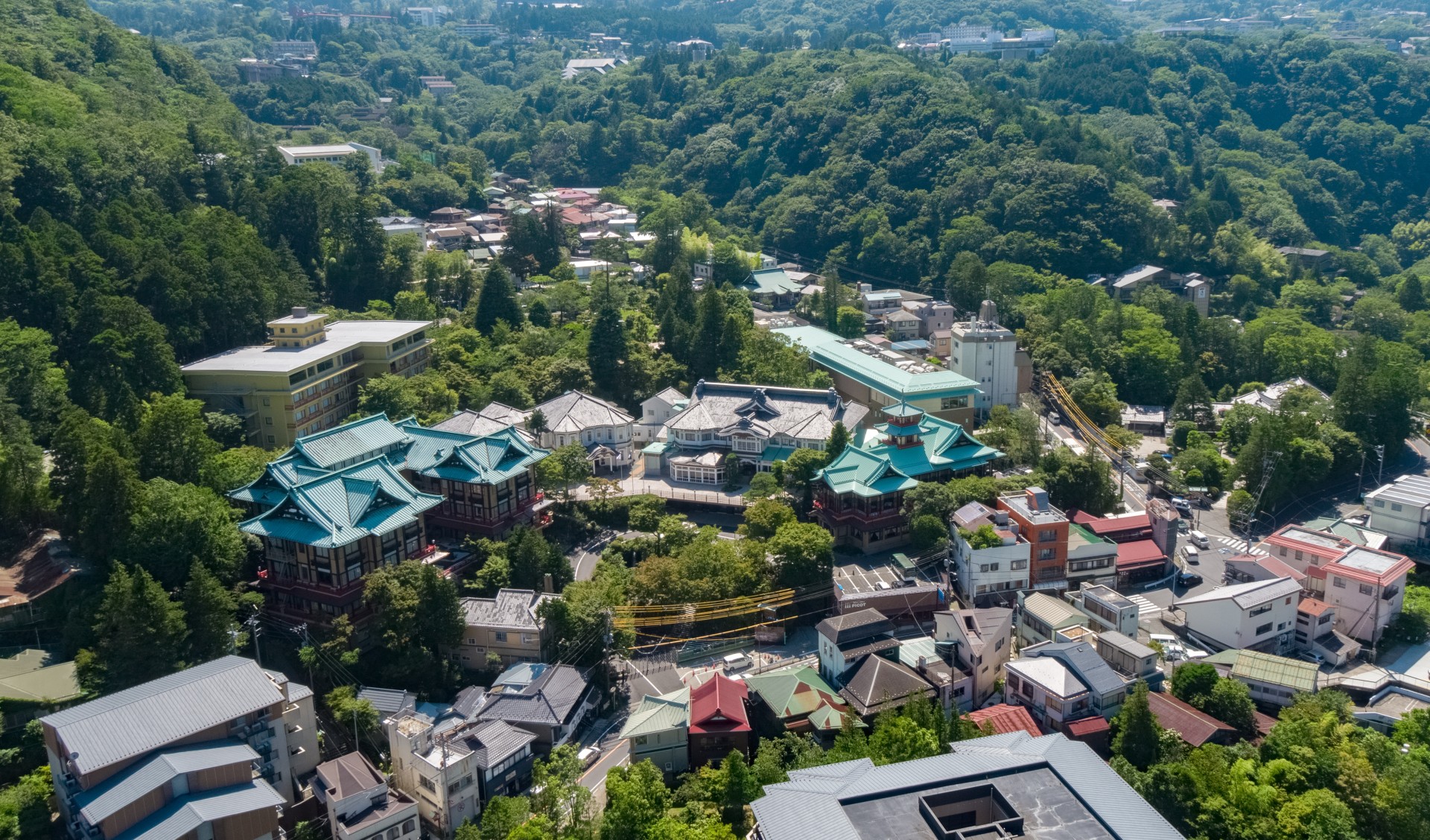
The Fujiya Hotel was founded in 1878 during the Meiji period to welcome international visitors to Japan as leisure tourism increased across the globe. The hotel’s founder, Sennosuke Yamaguchi, envisioned a blend of Western and Japanese hospitality styles and supported new roads and transportation to bring visitors through the mountain passes. Yamaguchi’s approach introduced many travelers to Japanese food and culture, and the resort became world-renowned, hosting distinguished guests like Walter Charles Hagen, Helen Keller, and John Lennon. With a beautiful campus of historic structures, spa facilities, fine cuisine, and expansive gardens, The Fujiya Hotel today offers a luxurious, modern retreat in the abundant nature of Miyanoshita and Hakone.
Hotel Timeline
The Location
Situated in the mountainous western reaches of Kanagawa Prefecture, Hakone occupies a distinctive position within the greater history of Japan. More specifically, archaeological evidence has revealed a human presence in the broader Hakone area since at least the Jōmon period, when hunter-gatherers exploited the local resources throughout the surrounding volcanic highlands. While the rugged terrain limited the development of large agricultural towns, Hakone nonetheless formed part of the shifting frontier zones through which populations moved between eastern and western Japan. By the Nara and Heian periods, alpine settlements like Hakone increasingly became associated with religious practice, particularly forms of syncretic mountain worship that combined Shintō reverence for natural phenomena with esoteric Buddhist traditions. Shrines and temples were established along pilgrimage routes, embedding Hakone within a sacred landscape that emphasized purification, liminality, and spiritual ascent. Hakone’s strategic importance became especially pronounced with the consolidation of martial regimes in the late medieval period. During the Kamakura era, when political authority shifted decisively to eastern Japan, control over routes traversing Hakone assumed military significance. Indeed, the narrow mountain passes acted as near-impenetrable defensive strongholds, which various warlords periodically contested access to them.
The historical prominence of the town reached its apex under the Tokugawa shogunate. With Tokyo established as the administrative capital, the Tōkaidō road became the principal artery linking the shogunal seat with other major metropolises like Kyoto. The Hakone checkpoint eventually emerged as one of the road’s most critical segments, its assigned officials overseeing the near constant flow of goods and people. The rugged terrain further reinforced this authority, too, rendering Hakone both a symbolic and literal gatekeeper between the main Japanese political center and its outlying provinces. Beyond its political and administrative functions, Hakone emerged as a site of travel culture and artistic representation. Despite the dangers posed by steep passes and unpredictable local weather, travelers recorded their experiences in diaries, woodblock prints, and poetry. Ukiyo-e artists such as Utagawa Hiroshige depicted Hakone’s many neighboring natural attractions—most notably Mount Fuji and Lake Ashi—as places of both hardship and sublime beauty, contributing to the development of a travel-oriented aesthetic that blended realism with idealization. In this context, Hakone became synonymous to the idea of the journey, signifying dual concepts of endurance and transition.
But the advent of the Meiji Restoration in the late 19th century transformed Hakone’s social and economic orientation. As feudal barriers were dismantled and transportation networks expanded, the community gradually shifted from a regulated security zone to a destination of leisure and health. The introduction of railways and improved roads made Hakone accessible to urban elites, while its abundant hot springs attracted visitors seeking therapeutic treatments. The in the 20th century, Hakone’s identity continued to evolve in response to national modernization and newfound global exchange. Cultural institutions such as museums and resort complexes proliferated, integrating modernist architecture and international art throughout the landscape. Meanwhile, preservation efforts began that sought to maintain the area’s historical sites and natural scenery, thus reflecting a growing consciousness of heritage and environmental value. Today, Hakone now acts as an emblem of Japanese history, where ancient shrines, medieval pathways, and contemporary cultural spaces coexist within a relatively compact geographical frame. Its historical importance lies not in continuity alone, but in its capacity to absorb successive layers of meaning, shaped by shifting political regimes, religious practices, and cultural ideals. Hakone offers a uniquely concentrated lens through which to examine the broader historical processes that have defined Japan’s relationship with its own landscape over the centuries.
The Architecture
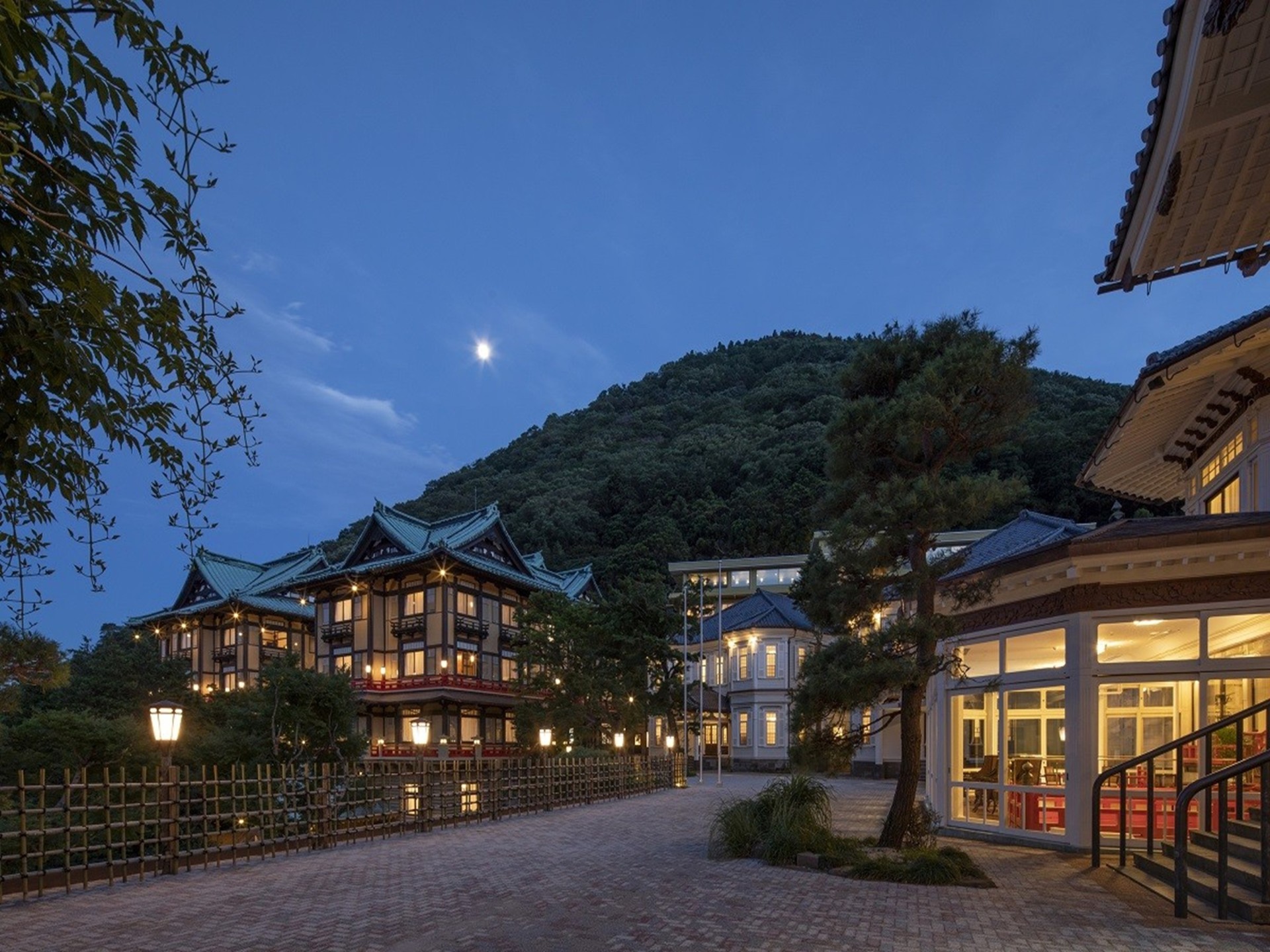
The architecture of The Fujiya Hotel in Hakone presents a layered historical narrative that mirrors Japan’s encounter with the modern world. Founded as one of the earliest Western-style resorts in the country, the hotel emerged at a moment when Japan was actively redefining its identity in the Meiji era, selectively absorbing foreign forms and then grounding them in local tradition. This dual impulse is visible from the outset, as the earliest structures combined Western spatial concepts with Japanese carpentry techniques, producing buildings that felt both novel and familiar to their early guests. As the hotel expanded through the late 19th and early 20th centuries, its architecture evolved into a deliberate expression of internationalism. The most iconic structures, including the Main Building (constructed in 1891), adopted the language of European revival styles, particularly elements inspired by Swiss chalet architecture. Steeply pitched roofs, wide eaves, and prominent balconies were well suited to Hakone’s mountainous climate and echoed alpine resorts popular among Western travelers. Japanese craftsmen executed the structures using traditional joinery, adapting foreign silhouettes to vernacular styles and materials. The result was an architecture that appeared Western at first glance but revealed Japanese preferences upon closer inspection. Indeed, The Fujiya Hotel became especially distinguished for its unabashed eclecticism.
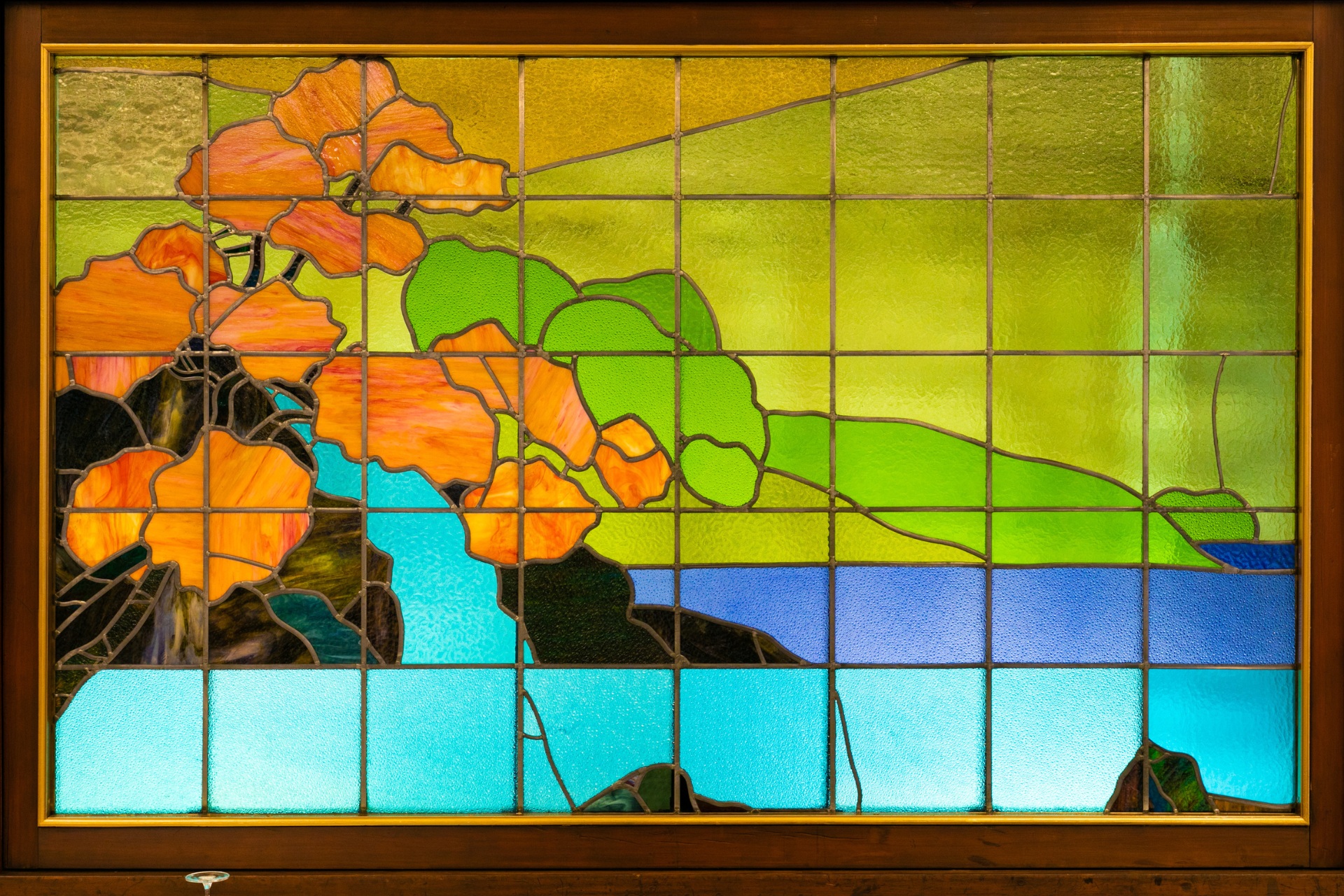
Rather than adhering to a single stylistic doctrine, The Fujiya Hotel accumulated buildings across decades, each reflecting the aesthetic sensibilities of its time. Decorative half-timbering, arched windows, carved wooden balustrades, and stained glass came to coexist across the complex, unified less by stylistic purity than by craftsmanship and scale. This architectural plurality captured the spirit of an era when Japan was both curating its image for foreign visitors while simultaneously experimenting with new forms of self-expression. Interior architecture reinforced this cultural dialogue, as Western-style dining rooms, ballrooms, and guest chambers were paired with distinctive Japanese detailing like tatami-adjacent proportions, lacquered wood, and subtle ornamental restraint. Structural beams were often left visible as decorative elements, too, signaling pride in artisanal construction even as the hotel embraced different concepts of luxury. By the early 20th century, the Fujiya Hotel had become not merely a place to stay but an architectural symbol of cosmopolitan Japan. Hosting diplomats, writers, and royalty, the buildings themselves performed a representational role, projecting stability, refinement, and openness. Subsequent renovations and restorations have since treated the surviving architectural motifs as a collective artifact, ultimately preserving the original materials and proportions to the point where The Fujiya Hotel earned the designation of Registered Tangible Cultural Property by the national Japanese government.
Famous Historic Guests
Charlie Chaplin, actor known for his silent roles in The Kid and A Woman of Paris.
William Holden, actor known for his roles in films like Sunset Boulevard, Stalag 17, and The Bridge on the River Kwai.
John Lennon, lead vocalist and rhythm guitarist for the rock band, The Beatles.
Yoko Ono, political activist, and musician married to John Lennon.
Albert Einstein, Nobel Prize winning physicist known for his role in developing quantum theory.
Helen Keller, social activist and first deaf-blind person in American history to successfully earn a college degree.
Rabindranath Tagore, renowned polymath celebrated for winning the Nobel Prize in Literature.
Chiang Kai-shek, President of the Republic of China (1950 – 1975)
Archduke Franz Ferdinand of Austria, heir to the Austro-Hungarian Empire whose assassination started World War I.
Princess Grace Kelly of Monaco, film actress known for starring in Mogambo, and wife of Prince Rainier III.
Queen Marine of Romania (1914 – 1927)
King George VI of the United Kingdom (1936 – 1952)
Emperor Shōwa of Japan (1926 – 1989)
Empress Masako of Japan (2019 – present)
Emperor Naruhito of Japan (2019 – present)
Film, TV, and Media Connections
The Bridges at Toko-Ri (1954)