




Receive for Free - Discover & Explore eNewsletter monthly with advance notice of special offers, packages, and insider savings from 10% - 30% off Best Available Rates at selected hotels. 
history
Marcus Whitman Hotel, a member of Historic Hotels of America since 2025, dates to 1928.
The historic Marcus Whitman Hotel embodies the enduring spirit of Walla Walla, Washington—a city shaped by frontier ambition and civic pride. Its revered origins harken back to prominent banker W.W. Baker and his determination to elevate the stature of Walla Walla during the early 20th century. An influential figure in the region, the aspirational financier had settled upon the decision to create the building following a trip to Seattle. More specifically, he had been in discussions with the Real Estate Improvement Company, which had proposed a partnership to build a first-class hotel in the heart of Walla Walla. Their plan required residents to collectively invest $150,000, while the Seattle-based firm would contribute the remaining money—up to half a million dollars. Baker, convinced of the plan’s viability, rallied support by forming committees of respected community leaders. In just a matter of days, the project had its first sponsors: Baker offered $10,000 and Dr. R.H. Keylor gave another $5,000. The hotel’s development was not just a mere commercial venture, though; it doubled as a continuation of the entrepreneurial legacy that had characterized Walla Walla for generations. Once a remote trading outpost, Walla Walla had grown into a thriving city consisting of many enterprising individuals. In fact, its population had surpassed 25,000 at the start of the 1920s, given a great number of economic opportunities that were present in the area. Baker’s building thus served to symbolize this energetic drive; its eloquent design meant to represent decades of hard work and commitment.
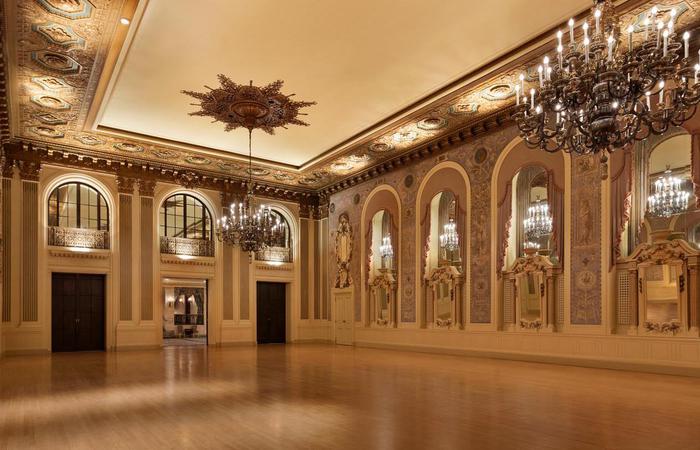
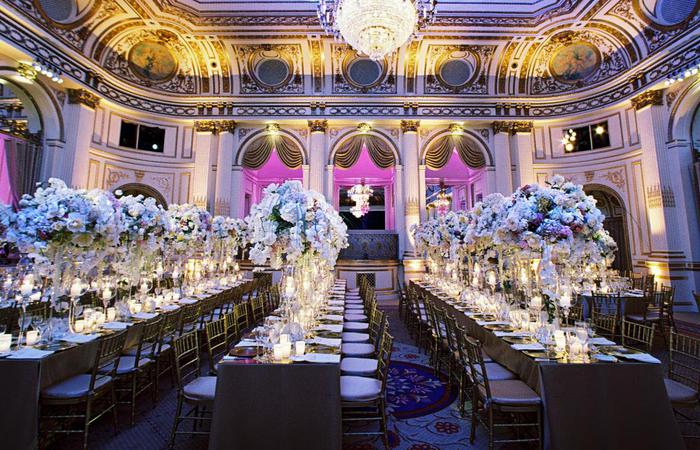
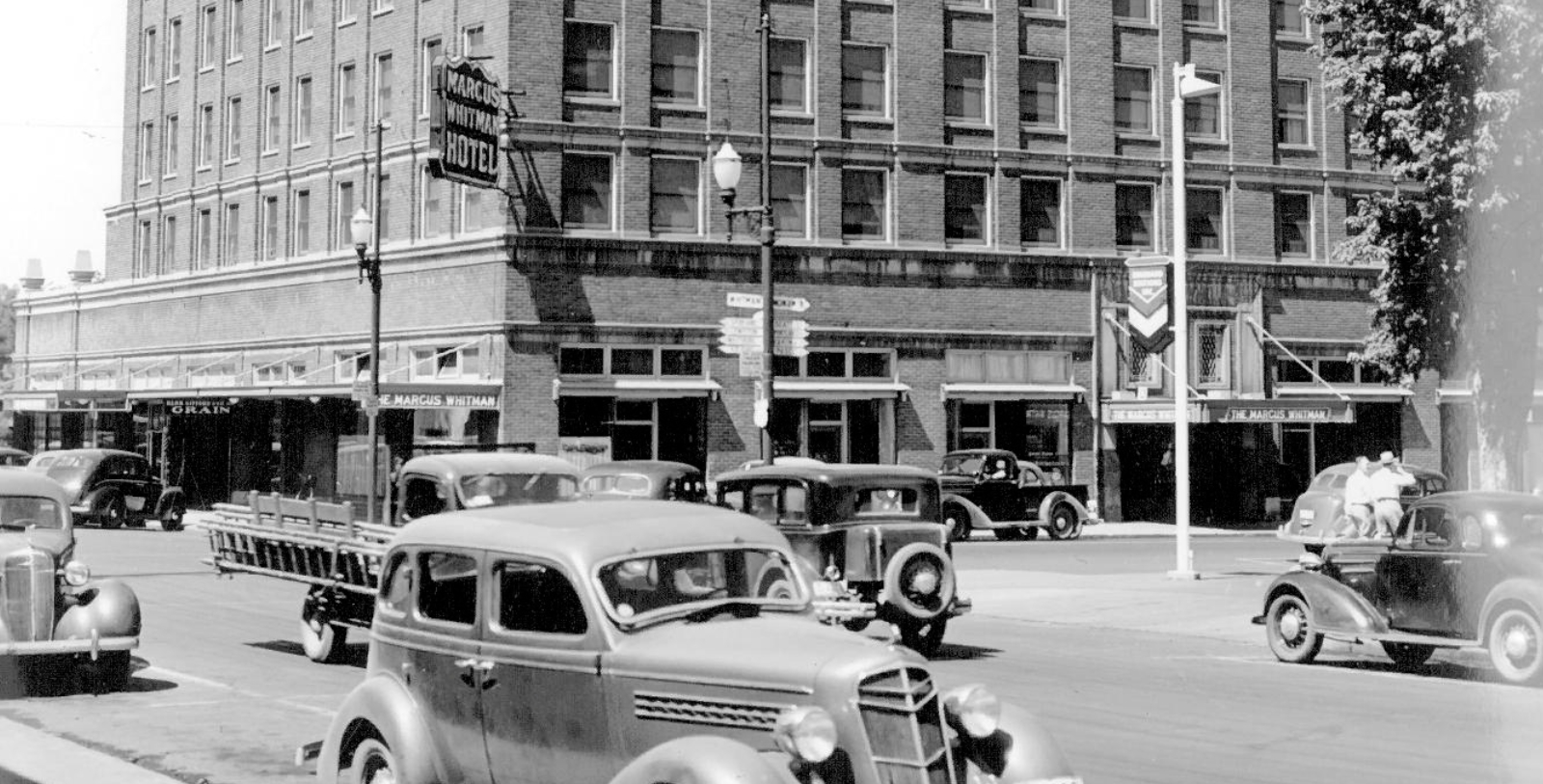
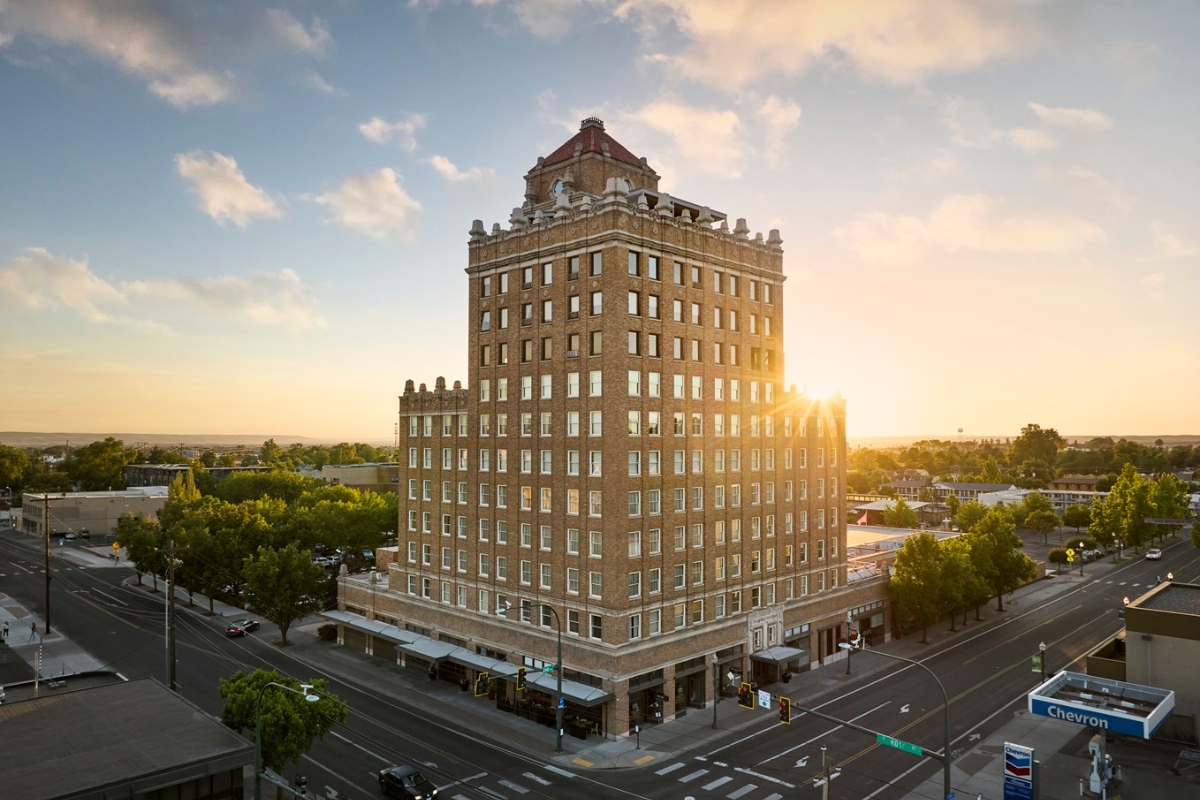
In 1927, the campaign to fund the endeavor gained serious momentum. Led by the Chamber of Commerce, teams of volunteers distributed pledge cards and solicited donations. Contributions ranged from $100 to $10,000, and within three weeks, around 500 people had promised enough to exceed the $150,000 goal. The Walla Walla Daily Bulletin celebrated the achievement with a drawing of the proposed building under the adoring caption “Our New Hotel.” Construction began not long thereafter, which took several additional months to complete. Architect Sherwood D. Ford supervised the creation of its incredible layout, incorporating distinctive architectural styles from numerous eras to craft its beautiful appearance. Brilliant Georgian motifs defined the look of the eponymously named “Georgian Room” banquet hall, as other European-inspired aesthetics proliferated throughout the neighboring venues. The most striking architectural traits were the ones derived from the Italian Renaissance, which Ford had masterfully used to mold the structure’s remarkable façade. Christened as the “Marcus Whitman Hotel” after Walla Walla founder Marcus Whitman, the grand opening took place on September 6, 1928. A grand gala featuring dinner and dancing was held that night, with 400 distinguished guests in attendance. The hotel quickly became a cornerstone of the community in turn, emerging as the focal point for all social life in Walla Walla as soon as it opened.
Many prominent historical celebrities would come to stay on-site as well, including famous actors, musicians, and business leaders. The hotel even hosted renowned politicians on occasion, such as U.S. President Dwight D. Eisenhower and then-Vice President Lyndon B. Johnson, who both visited in 1954 and 1962, respectively! Despite its earlier success, the location eventually faced financial difficulties and closed near the end of the century. A period of fluid ownership soon emerged in the wake of the event, including a time when it temporarily served as a home for apartments and condominiums. Nevertheless, the building had fallen into disrepair by the end of the 1990s; its future appeared to bleak to the wider city. Fortunately for the structure, a group of investors local to the area pooled their resources and bought the ailing landmark in 1999. What then followed was a comprehensive restoration stewarded by the new owners. But the expense proved to be a wise choice, turning the site back to a fantastic hotel that received praise from across Washington state. Now known as the “Marcus Whitman Hotel” yet again, this amazing historic destination has since resumed its place as one of the most magnificent getaways to visit in the region. However, the Marcus Whitman Hotel continues to encapsulate the heritage of the Pacific Northwest, offering contemporary guests a chance to experience its very past firsthand.
-
About the Location +
Nestled in the southeastern corner of Washington State, Walla Walla is a fascinating destination rooted deeply to the greater heritage of the region. The story begins thousands of years ago with the Walla Walla, Cayuse, and Umatilla peoples, who thrived for generations thanks to the region’s abundant rivers and rolling hills. Those tribes followed seasonal cycles of hunting, fishing, and gathering, while engaging in extensive trading across the Columbia Plateau. The first recorded contact with Euro-Americans came in 1805, when the Lewis and Clark Expedition passed through the area. The explorers described the Walla Walla people as being very hospitable, and their journals represented the beginning of a new era for the region. By 1818, the North West Company had established Fort Nez Perce at the confluence of the Walla Walla and Columbia Rivers, a strategic trading post that was later renamed “Fort Walla Walla.” This outpost became a vital hub for settlers moving westward, although it was eventually abandoned on the eve of the American Civil War. Around the same time, missionaries named Marcus and Narcissa Whitman arrived in the valley, where they founded the Whitman Mission near present-day Walla Walla. Their goal was to religiously convert the local Native Americans, with their outpost eventually becoming the key permanent settlement in Washington. However, tensions between settlers and the indigenous peoples escalated, culminating in the tragic Whitman Massacre and the “Cayuse War.”
In the wake of those incidents, the U.S. military established a new fort, named Fort Walla Walla, around which the same-named town began to grow. Officially incorporated in 1862, Walla Walla rapidly rose to regional prominence. More specifically, the discovery of gold in Idaho and Montana turned the town into a bustling supply center. By 1880, Walla Walla was the largest city in Washington, featuring banks, newspapers, and railroads. Farming soon replaced gold as the economic backbone though, with wheat, sweet onions, and even wine grapes flourishing in the surrounding valley’s nutrient-rich soil. This incredible fortune subsequently enabled Walla Walla to continue to expand, eventually reaching the size of an actual city at the beginning of the 20th century. Furthermore, the arrival of modern infrastructure, including paved streets and electric streetcars, reflected its growing sophistication. The city became a hub for education and the arts, anchored by Whitman College, which attracted scholars and fostered a vibrant intellectual community. Nevertheless, agriculture remained the bedrock of the local economy, its now-famous wheat fields coming to stretch across the entire valley. Then during both World Wars, Walla Walla played a strategic role as a training site for soldiers. The establishment of the Walla Walla Army Air Base brought new energy and population growth. Postwar prosperity ushered in suburban development, too, while the historic agricultural sector diversified to the point where many operations reached a wider audience.
The most significant development involved the evolution of farms into sophisticated, nationally renowned vineyards. By the end of the century, Walla Walla had thus embraced its dual identity as both a historic town and a forward-looking community. The restoration of its downtown preserved Victorian architecture, as vibrant festivals and wineries attracted visitors from across the country. Cultural heritage travelers have especially come to adore exploring Walla Walla, due to the many historic sites situated nearby. For instance, the Whitman Mission National Historic Site has offered guests the ability to walk the grounds of the original mission, view authentic artifacts, and learn about the complex interactions shared among the missionaries and native people. Another essential stop has been the Fort Walla Walla Museum, a reconstructed pioneer village showcasing the area’s military and agricultural heritage. For a deeper understanding of the region’s indigenous heritage, the Tamástslikt Cultural Institute—located on the neighboring Umatilla Indian Reservation—can grant a comprehensive look at the history, culture, and resilience of the Walla Walla, Cayuse, and Umatilla tribes. Through exhibits, storytelling, and art, the institute has honored the legacy of the Plateau peoples and their enduring connection to the land. Walla Walla’s historical narrative exists beyond the museums and monuments as part of the essential fabric of the city. From the preserved architecture to the stories passed through generations, the city invites visitors to step into its past and experience the convergence of cultures and ambitions that have defined its unique transformations.
-
About the Architecture +
When architect Sherwood D. Ford first designed the Marcus Whitman Hotel, he relied upon Italian Renaissance Revival architecture to craft its stunning appearance. Italian Renaissance Revival architecture is a subset of a much large group of styles known simply as “Renaissance Revival,” which is among the most ubiquitous in America. Sometimes referred to as “Neo-Renaissance,” Renaissance Revival architecture is a group of architectural revival styles that originally date back to the 19th century. Neither Grecian nor Gothic in appearance, Renaissance Revival-style architecture drew inspiration from a wide range of structural motifs found throughout Early Modern Western Europe. Architects in France and Italy were the first to embrace the artistic movement, who saw the architectural forms of the European Renaissance as an opportunity to reinvigorate a sense of civic pride throughout their communities. Those intellectuals incorporated the colonnades and low-pitched roofs of Renaissance-era buildings, with the characteristics of Mannerist and Baroque-themed architecture. The greatest structural component to a Renaissance Revival-style building involved the installation of a grand staircase in a vein similar to those located at the Château de Blois and the Château de Chambord in France. This feature served as a central focal point for the design, often directing guests to a magnificent lobby or exterior courtyard. Yet, the nebulous nature of Renaissance Revival architecture meant that its appearance varied widely across Europe and North America. Historians, thus, often find it difficult to provide a specific definition for the architectural movement, yet acknowledge its inherent beauty.
However, other elements of the building showcase Georgian Revival motifs. Georgian Revival-style architecture is a subset of a much more prominent architectural form known as “Colonial Revival.” Colonial Revival architecture today is the most widely used building form in the entire United States. It reached its zenith at the height of the Gilded Age, where countless Americans turned to the aesthetic to celebrate what they feared was America’s disappearing past. The movement came about in the aftermath of the Centennial International Exhibition of 1876, in which people from across the country traveled to Philadelphia, Pennsylvania, to commemorate the American Revolution. Many of the exhibitors chose to display cultural representations of 18th-century America, encouraging millions of people across the country to preserve the nation’s history. Architects were among those inspired, who looked to revitalize the design principles of colonial English and Dutch homes. This gradually gave way to a larger embrace of Georgian and Federal-style architecture, which focused exclusively on the country’s formative years. As such, structures built in the style of Colonial Revival architecture—as well as the Georgian Revival style—featured such components as pilasters, brickwork, and modest, double-hung windows. Symmetrical designs defined their façades, anchored by a central, pedimented front door and simplistic portico. Gable roofs typically topped the buildings, although hipped and gambrel forms were used, too. This form remained immensely popular for years until petering out in the late 20th century.
-
Famous Historic Guests +
Louis Armstrong, jazz musician regarded as one of the most influential figures in the genre.
Shirley Temple, child actress known for her roles in Bright Eyes and The Little Princess.
George Reeves, actor best remembered for portraying Clark Kent/Superman in Adventures of Superman.
Chuck Connors, athlete and actor best remembered for portraying Lucas Duncan on The Rifleman.
Aurthur B. Langlie, 12th and 14th Governor of Washington (1941 – 1945; 1949 – 1957).
Paul L. Patterson, 26th Governor of Oregon (1952 – 1956).
Dwight D. Eisenhower, 34th President of the United States (1953 – 1961), and Supreme Allied Commander Europe during World War II.
Lyndon B. Johnson, 36th President of the United States (1963 – 1969).