History
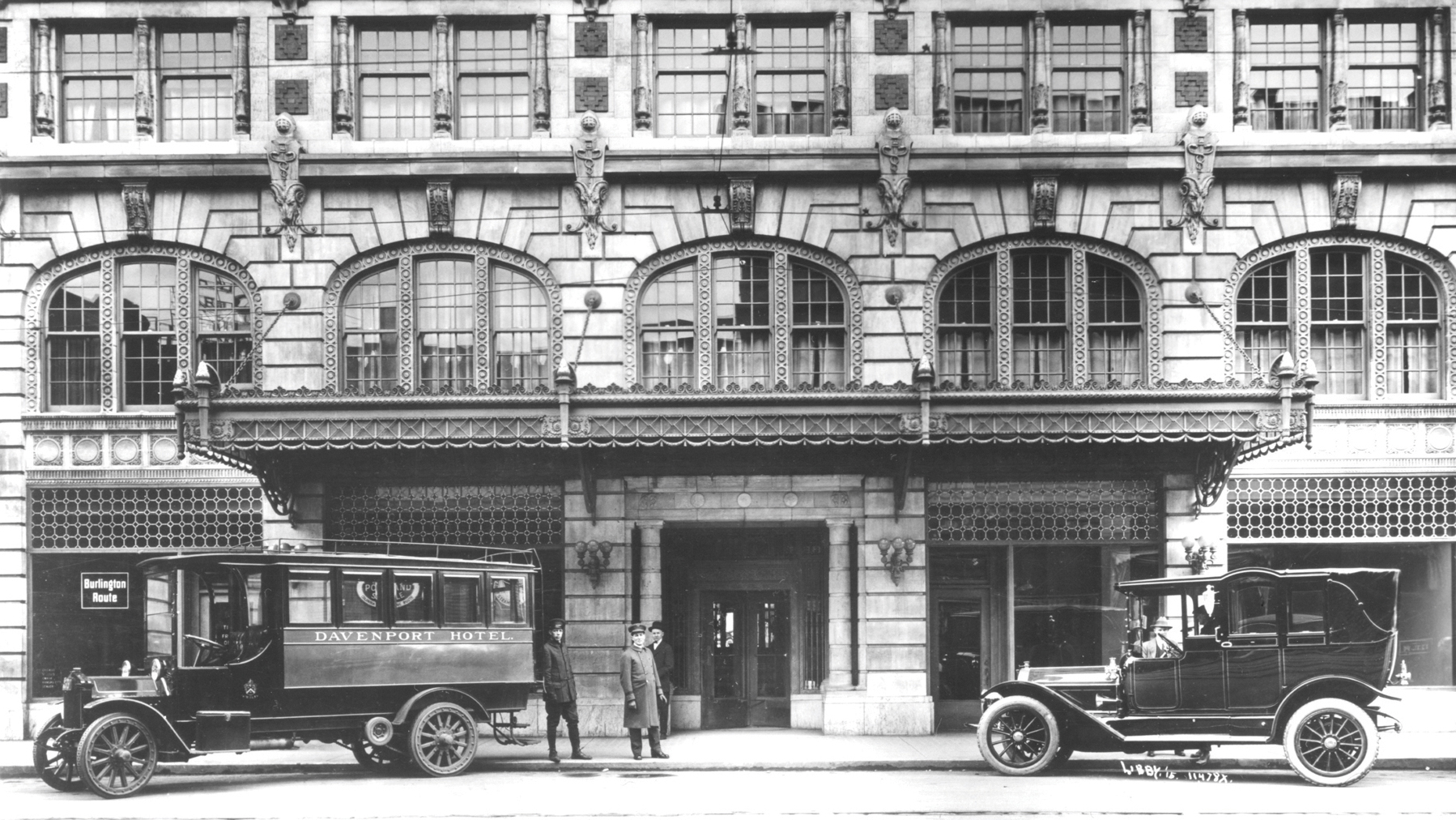
Discover The Davenport Hotel, Autograph Collection, which, upon its debut in 1914, introduced groundbreaking innovations like the housekeeping cart and an early air-cooling system.
The Davenport Hotel in Spokane, Washington, was born from the vision of the prominent businessman Louis Davenport. Davenport was born in Pawnee City, Nebraska on July 14, 1868, and spent his childhood in San Francisco. Striking out on his own at age 20, Davenport arrived in Spokane Falls, Washington in 1889 with $1.25 in his pocket. By the turn of the 20th century, Davenport was an influential member of the Spokane park board, a member of the board of directors of the Spokane and Eastern Trust, and a vice president of Ryan and Newton Company.
Embracing Spokane’s early-20th-century mining and railroad prosperity, Davenport sought to create an impressive social establishment in Western Washington rivaling those in major cities like Chicago and San Francisco. Davenport commissioned prominent architect, Kirtland Cutter to create a grand city center hotel. Modifying the existing structure, Cutter envisioned the 12-story landmark hotel in a blend of Spanish Mission Revival, Italian Renaissance Revival, and Beaux Arts architectural styes. The base was built with Boise sandstone, and Cutter called the exterior on the upper levels “Florentine eclectic.” Beyond its striking façade, the hotel featured luxurious interiors with imported materials and new, innovative amenities, including one of the nation’s earliest air-conditioning systems and a guest shuttle bus.
Over the decades, The Davenport welcomed a remarkable roster of notable guests, including world leaders and U.S. Presidents. Its ballrooms and lobby hosted events like fashion shows, presidential speeches, and exhibitions of new automobiles. John Philip Sousa performed on the roof garden dance floor, and Babe Ruth visited the Davenport Hotel on a New York Yankees barnstorming tour in 1924. (The Yankees played a game at Natatorium Park, and Ruth hit a home run so far that the ball landed on the banks of the Spokane River. American Poet Vachel Lindsay lived at The Davenport for three years and wrote some of his greatest works before the lobby fireplace. Novelist and journalist Will Irwin is reputed to have said “there are only two outstanding deluxe hotels in the world, the Davenport in Spokane and Shepheards in Cairo.”
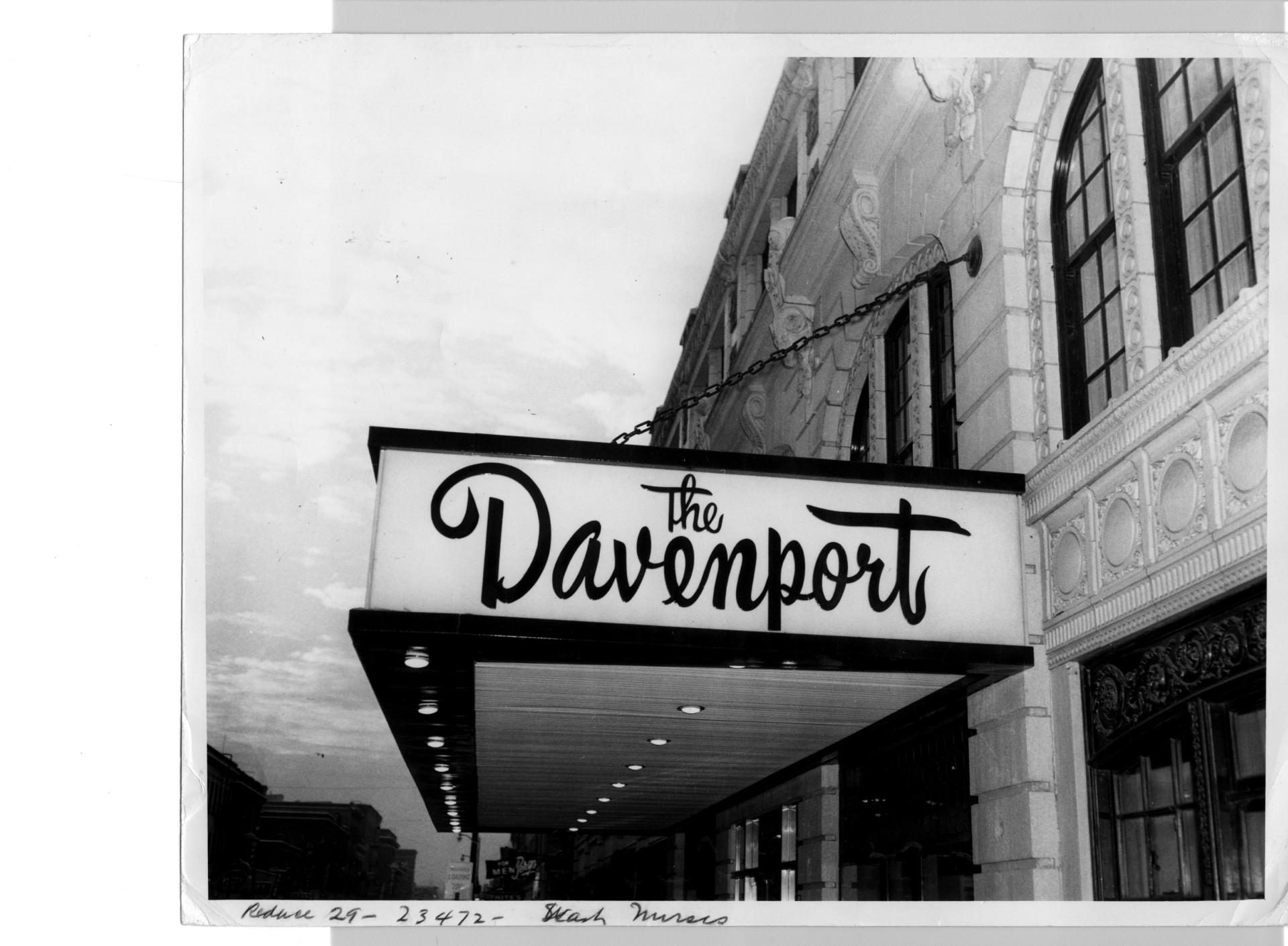
Travel trends shifted in the latter part of the 20th century, and the hotel closed in 1985. Recognizing its importance to Spokane’s heritage, local entrepreneurs Walt and Karen Worthy purchased the closed The Davenport Hotel in Spokane in May 2000. They invested in a thoughtful and exhaustive two-year restoration, reviving the original architecture, gold-leaf details, and ballrooms before successfully reopening the landmark hotel in September 2002.
Hotel Timeline
The Location
The Spokane Valley formed at the end of the last ice age, when glaciers formed a natural dam that blocked what is today the Clark Fork River. The resulting lake sustained life for generations of the Columbia River Indian tribes. By European contact, the Spokane Valley region was the home to many tribes and nations, most prominently the Coeur d’Alene tribe and the Spokane tribe. Early hunting trails, fur trading posts, and Catholic missions gave way to the expanding goals of the American nation. In 1873 James Nettle Glover founded a small settlement known as “Spokan Falls.” The name referred to the rushing river and waterfalls that bisect the city. Logging, agriculture, and mining businesses drew the Northern Pacific Railroad to Northwestern Washington in 1881. In 1883, Spokane was linked to the intercontinental railroad, drawing even more settlers and prominent business enterprises to the growing city west of the Rocky Mountains.
A natural disaster in 1889 allowed Spokane to rebuild using modern urban planning principles like elevated train tracks, a streetcar, and skyscrapers. The population by then had reached 20,000 and quickly ballooned to 104,000 by 1910. Federal projects like hydroelectric dams and aluminum manufacturing sustained Spokane’s residents through the Great Depression and World War II. Reflecting this long history, over half of Spokane’s buildings are designated as historic, and the city planning is still reflected in the beautiful Olmsted-designed parks, charming homes, and elaborate downtown establishments that comprise the city.
The Architecture
Kirtland Cutter studied at the Art Students League of New York and traveled extensively in Europe before moving to Spokane, Washington. A prominent architect in Spokane, Cutter became best known for his log cabin design for the Idaho Building at the 1893 Chicago World’s Fair before later designing for the likes of Yale University. Cutter’s design of The Davenport Hotel was decidedly eclectic and European-focused, pulling from Spanish Mission Revival, Italian Renaissance Revival, and Beaux Arts architectural styles. Cutter was among the earlier architects to view a building not solely as an envelope, but as an extension to sculpture. He chose exterior materials like Boise sandstone, Terra Cotta trim, and Englished Bonded brick veneers. Meant to be a social center for Spokane’s upper class, the interior of the hotel was constructed with a total of seventeen ballrooms, banquet halls, and convention centers, all elaborately decorated in several different styles that conscientiously copied European landmarks. The Hall of the Doges mirrored the medieval halls Italian Doges with vaulted ceilings and frescoes, while the oak paneled Elizabethan Rooms were in the style of the Tudors with furniture that resembled the famous Elizabethan pieces. Other spaces were known as the Gothic Room, Green Room, Mandarin Room, and Arabic Tent Room.
Famous Historic Guests
Babe Ruth - Baseball legend and New York Yankees Hall-of-Famer.
Amelia Earhart - Aviation pioneer and the first woman to fly solo across the Atlantic Ocean.
Bob Hope - Legendary comedian, actor, and entertainer known for his USO tours supporting American troops.
Bing Crosby - Spokane-born singer and actor best known for the holiday song "White Christmas."
Theodore Roosevelt - 26th President of the United States (1901-1909)
William Howard Taft - 27th President of the United States (1909-1913)
John F. Kennedy - John F. Kennedy - 35th President of the United States (1961-1963)
Vachel Lindsay - Influential American poet known for popularizing performance poetry and spoken-word recitations.
Dashiell Hammett - Celebrated crime novelist and author of The Maltese Falcon.
Queen Marie of Romania - Romanian queen from 1914 to 1927.
Charles Lindbergh - Aviation pioneer who completed the first solo nonstop transatlantic flight in 1927 aboard the Spirit of St. Louis.
Mary Pickford - Silent film actress and co-founder of United Artists.
Clark Gable - Academy Award-winning actor best known for Gone with the Wind.
Film, TV and Media Connections
KHQ Radio Performances: In 1925, Spokane radio station KHQ relocated its studios to the Davenport Hotel, broadcasting from the hotel’s rooftop tower and making it one of the Pacific Northwest’s earliest centers of commercial radio. Among the performers featured on KHQ was a young Bing Crosby, who appeared with The Musicaladers before launching his legendary career.
Women in History
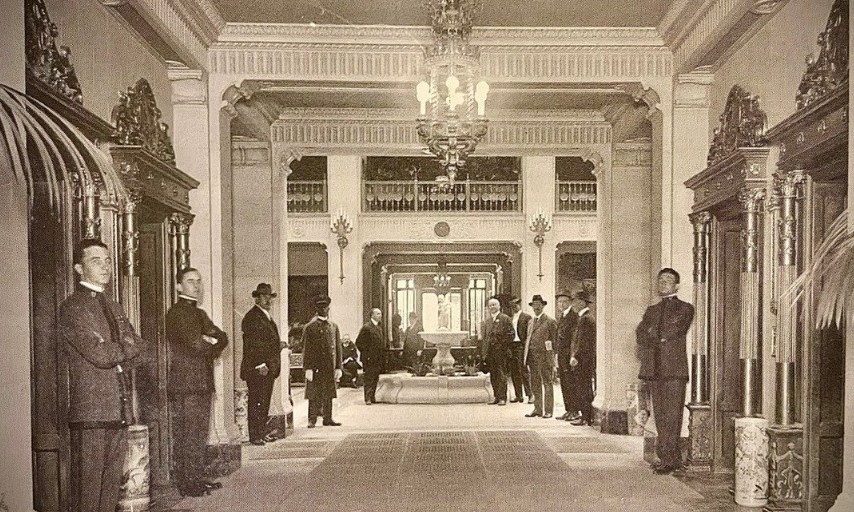
The historic Davenport Hotel has a unique connection to women’s history through its pioneering all-female elevator operator team during World War I. In 1917, as the war created labor shortages and opened new opportunities for women in traditionally male-dominated roles, the Davenport employed the first all-female crew of hotel elevator operators in the United States.