History
Discover the Mayflower Hotel, Autograph collection, which has been a cherished symbol of grandeur, style and history in Washington, D.C. since 1925.
A founding member of Historic Hotels of America, The Mayflower Hotel, Autograph Collection, is one of the most iconic holiday destinations throughout the whole country. Open for nearly a century, this fantastic historic hotel has been considered the best place to stay by countless patrons over the years. In fact, President Harry S. Truman even once referred The Mayflower Hotel as the “Second Best Address in Washington” due to its unrivaled luxury. Its renowned history harkens back to the height of the Roaring Twenties, when a prominent local real estate developer named Allen E. Walker decided to construct the largest hotel in the city. Walker’s plans were grandiose, which envisioned the creation of a beautiful, 11-story hotel filled with around 1,100 guestrooms. Inside, he dreamed about installing only the finest facilities, including a massive ballroom, a cruciform lobby, and three upscale dining establishments. The accommodations would be among the best in the country, featuring such amenities as air conditioning, private baths, and access to indoor plumbing. He even sought out the renowned architectural firm Warren and Wetmore of New York City to spearhead the hotel’s entire design. Construction began in earnest in 1922 and took more than three years to complete. The undertaking proved to be as huge as the hotel itself, as Walker had to use a team of more than 2,500 men to craft its exterior frame and interior spaces. He had also spared no expense, either. Originally budgeted to cost some $6 million, Walker continuously went over budget to the point where he had nearly spent nearly double the amount!
Indeed, Walker’s lack of financial constraint had resulted in his own personal bankruptcy. He was ultimately forced to sell the business to new owners—C.C. Mitchel & Company—shortly after the building had opened as the “Hotel Walker” in 1925. They subsequently renamed the structure as the “Mayflower Hotel” to commemorate the tricentennial of the Pilgrims’ landing at Plymouth Rock. Walker had nonetheless created a gorgeous hotel that inspired awe within all who saw it. The Mayflower Hotel quickly developed a reputation for its elegance, becoming one of the most frequented hotels in the city. Soon enough, some of the most influential people had started to grace the building with their presence. Celebrity sightings became common at the Mayflower Hotel, with politicians, movie stars, and professional athletes regularly spotted inside. Among the most prolific personalities to reserve a guestroom at The Mayflower included John Wayne, Jean Harlow, Bob Hope, and Muhammad Ali. Vice President Charles Curtis actually lived inside the building for several years, as did the famous Louisiana Senator Huey Long. Foreign dignitaries were regularly seen attending dinners and other special events within its meeting rooms, too, such as British Prime Minister Winston Churchill and French President Charles de Gaulle. J. Edgar Hoover often dined for lunch at the hotel’s Rib Room, in which he had the same meal every day—chicken soup, salad, and a helping of grapefruit. Even royals like King Mohammed V of Morocco and Queen Elizabeth II of the United Kingdom traveled to the Mayflower Hotel!
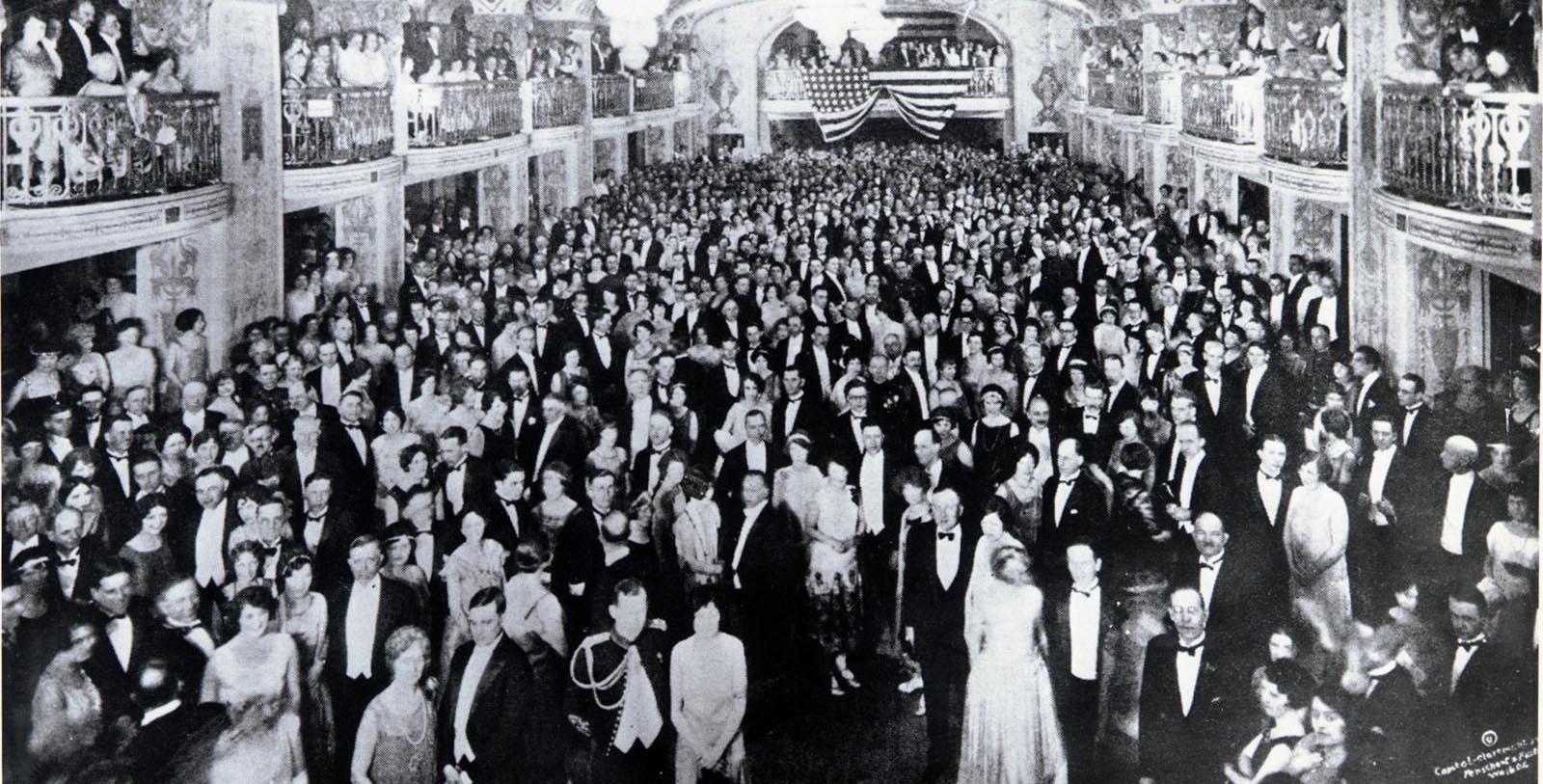
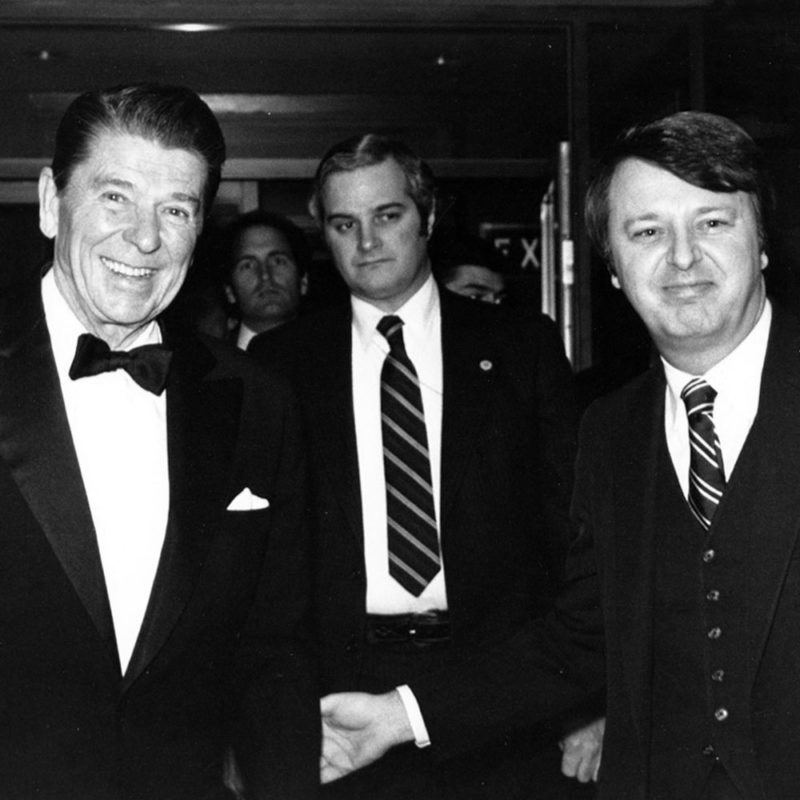
U.S. Presidents have had a storied connection to the Mayflower Hotel. Starting with an inaugural ball held to honor President Calvin Coolidge’s second term, nearly every president since then have made it a point to visit the building at one point or another. President Herbert Hoover established his White House transition team within the hotel after his election in 1928. President Harry S. Truman also announced his bid for reelection at a lively dinner hosted by the Young Democrats at the Mayflower Hotel. President Ronald Reagan gave remarks before the Center for Strategic and International Studies inside the Grand Ballroom. (The President’s former aides later distributed invitations for President Reagan’s funeral following his death in 2004.) But perhaps the president with the closest relationship to the Mayflower Hotel was Franklin Delano Roosevelt. President Roosevelt’s first arrived at the hotel in the eve of his first inauguration in March of 1932. Checking into Suite 776, Roosevelt penned his historic “Four Freedoms” speech, which sought to allay the fears many Americans felt as the experienced the Great Depression. The president and his family would frequently visit the hotel again throughout his time in the Oval Office. For instance, First Lady Eleanor Roosevelt specifically helped host a war bond and defense stamp drive at the Mayflower Hotel during World War II. Then, several years later, President Roosevelt held a special dinner for Prime Minister Winston Churchill inside the hotel’s famous Chinese Room toward the war’s conclusion in 1945.
Despite the Mayflower Hotel’s immense popularity, the business was not always in good health. Throughout the 1960s an 1970s, the hotel’s owners at the time—May-Wash Associates—often struggled to make a profit. Sadly, its lead investor, William Cohen, even expressed interest in demolishing the hotel in favor of building a mixed-use commercial skyscraper. Thankfully, May-Wash Associates entered into a managerial agreement with Westin Hotels and Resorts, which thoroughly revitalized The Mayflower Hotel’s sagging fortunes. The partnership saw the building thoroughly renovated for the first time in decades, with all its guestrooms and public spaces given a much-needed revitalization. Now known as “The Mayflower Hotel, Autograph Collection,” this stunning Washington landmark operates under the stewardship of Marriott International. Superstars and dignitaries from around the world still visit the hotel regularly, which has preserved its status as one of the best hotels throughout the District of Columbia. Cultural heritage travelers will be truly impressed by its wonderfully preserved historical architecture and fascinating institutional history. The U.S. Department of the Interior has even listed The Mayflower Park, Autograph Collection, in the U.S. National Register of Historic Places. Few other hotels in Washington D.C. offer as much in the way of history and hospitality as this absolutely stunning historic hotel.
Hotel Timeline
The Location
Washington is among the nation’s most historic cities, having been founded more than two centuries ago by the Founding Fathers. In 1790, Congress specifically passed the “Resident Act” after James Madison, Thomas Jefferson, and Alexander Hamilton agreed to create a permanent national capital in the southern United States. Known as the “Compromise of 1790,” the men decided to place the future settlement somewhere in the South in exchange for the federal government paying off each state’s debt accrued via the American Revolutionary War. George Washington—who was serving his first term as President—then carefully looked for the site of the new city in his role as the country’s chief executive. He spent weeks searching for the perfect spot before finally settling upon a plot of land near the mouth of the Potomac River. Washington had felt that the location was in a terrific spot, for it was still roughly in the middle of the nation. Furthermore, he hoped its proximity near major seaports would further bind the emerging western states with the more established Atlantic coastline. Maryland and Virginia subsequently donated around 100 acres at Washington’s site, although Virginia would later rescind its donation in 1847.
Nevertheless, work on the capital began a year later and lasted for the duration of the decade. At the start of the project, the three federal commissioners in charge of supervising its progress decided to name the nascent settlement after the President himself. (They also named the federal district surrounding the city as “Columbia,” a feminine adaptation of Christopher Columbus’ name.) Noted French architect Charles L’Enfant spearheaded the city’s new design, who presented a bold vision that featured wide boulevards and ceremonial spaces reminiscent of his native Paris. But despite L’Enfant’s grand plans for Washington, only the first iterations of the United States Capitol, the White House, and a couple other prominent governmental structures appeared at the time. Barely any other buildings stood in the city when the entire federal apparatus relocated from Philadelphia to Washington in 1800. Life in early Washington was hard, too, for its residents were constantly beset by disease, poor infrastructure, and local economic depressions. What few residents remained in the city year-round endured the worse hardships during the War of 1812, when the British notoriously ransacked the community. In fact, the British had even torched the Capitol, the Treasury, and the White House.
Washington did not finally start to develop into an actual city until the middle of the 19th century, after investment in its upkeep increased dramatically. While additional federal buildings—including the General Post Office and the Patent Office—first appeared in the 1830s, a wave of municipal and residential construction flourished in the wake of the American Civil War. But much of the construction was conducted under the auspices of a territorial government that initiated dozens of new buildings projects, including the development of schools, markets, and townhouses. Streets were also paved for the first time, while modern sanitation systems were created for the many new neighborhoods debuting throughout the city. Congress even contributed to the local construction, especially after the territorial government bankrupted itself shortly after its founding. But the federal government had also created some of the city’s most iconic structures on its own at the same time, such as the Washington Monument, the National Mall, the Library of Congress complex, and a new United States Capitol. The climax of all this construction work materialized with the Senate Park Commission—remembered more commonly as the “McMillan Commission”—which offered a comprehensive series of plans to beautify the entire city.
It would take years to complete the recommendations of the McMillan Commission’s, though. Buildings and landscape designs that reflected the commission’s research appeared throughout the first half of the 20th century, especially once the federal government became more involved in international affairs after World War I. Dozens of art galleries, storefronts, and restaurants proliferated, transforming Washington into one of the nation’s most esteemed cultural capitals. Many new embassies also debuted within the city along Massachusetts Avenue, giving rise to its iconic area of Embassy Row. Dozens of new monuments appeared throughout Washington, too, such as the iconic Lincoln Memorial. Some of the most significant construction transpired during the administration of Franklin Delano Roosevelt, which helped spur the creation of an official U.S. Supreme Court building, The Pentagon, and the famous Federal Triangle. Washington nonetheless fell into a brief period of decline around the start of the Cold War that was only reversed with the committed efforts by Presidents John F. Kennedy and Lyndon B. Johnson to invest heavily into its upkeep. Today, Washington is now among the most powerful cities in the whole world, as well as one of its most gorgeous. Thousands of people from all over flock to the city each year to take in its prestigious culture and heritage.
The Architecture
Allan E. Walker began construction on his magnificent, sprawling hotel in the summer of 1922. Selecting a block along Connecticut Avenue just north of Farragut Square, Walker and his architecture team from the firm Warren and Wetmore proceeded to create a beautiful, 11-story structure that displayed some of the best Beaux-Arts-style architecture throughout all of Washington, D.C. (Additional help with the design was provided by a local architect named Robert F. Beresford, as well.) In total, it took 2,500 men to erect the building’s entire structure. It had also cost Walker considerably, as the final sum of the expenses reached north of $11 million! Nevertheless, the building itself was developed around a steel frame that sat upon a foundation of concrete and bricks. Indiana limestone subsequently constituted the façade of the first three floors, while rusticated brick and terra cotta trimming filled out the rest. Walker also sponsored the installation of several massive oil furnaces and the largest air-conditioning system in the world to diligently maintain a constant temperature of 70 degrees year-round. Inside, Walker and his team created some of the finest guestrooms in the city, with the suites and resident guest apartments among the most luxurious. Some even contained such features like a kitchenette, a drawing room, and multiple baths.
An amazing series of facilities awaited downstairs on the lower floors, too. Walker and the architects had developed space for three magnificent restaurants: Palm Court, Presidential Room, and the Garden Terrace (later rename as the “Rib Room” in 1956). The iconic Presidential Room in particular was decorated with the seals of all the Thirteen Colonies, while the Garden Terrace featured a copper-covered, coffered ceiling, a marble fountain, and alcoves designed to look like arbors. Meanwhile, the Palm Court contained a floor of travertine and gorgeous wainscoting of gold-veined St. Genevieve marble. Several spectacular meetings venues proliferated throughout the floorplan. A wonderful banquet hall called the “Chinese Room” displayed motifs that made it appear similar to James McNeill Whistler’s The Peacock Room. Nearby, the ornate Grand Ballroom had mirror French-inspired doors, as well as an awe-inspiring proscenium stage. Even the lobby had an amazing array of architectural details, the most notable of which were great bronze torchères that dominated the entire space. Walker and his team also filled the hotel with the most extravagant antiques that originated from the 17th to the 19th centuries. Fantastic artwork adorned the walls of the hotel, including four humungous portraits of the first four U.S. Presidents by the painter Louis Grell. As such, it came as no surprise that the hotel quickly emerged as one of Washington’s finest when it finally debuted in 1925.
Beaux-Arts architecture itself is one of the most popular building forms in the entire world. This beautiful architectural form originally began at an art school in Paris known as the École des Beaux-Arts during the 1830s. There was much resistance to the Neoclassism of the day among French artists, who yearned for the intellectual freedom to pursue less rigid design aesthetics. Four instructors in particular were responsible for establishing the movement: Joseph-Louis Duc, Félix Duban, Henri Labrouste, and Léon Vaudoyer. The training that these instructors created involved fusing architectural elements from several earlier styles, including Imperial Roman, Italian Renaissance, ad Baroque. As such, a typical building created with Beaux-Arts-inspired designs would feature a rusticated first story, followed by several more simplistic ones. A flat roof would then top the structure. Symmetry became the defining character, with every building’s layout featuring such elements as balustrades, pilasters, and cartouches. Sculptures and other carvings were commonplace throughout the design, too. Beaux-Arts only found a receptive audience in France and the United States though, as most other Western architects at the time gravitated toward British design principles.
Famous Historic Events
First Inauguration of President Franklin Delano Roosevelt (1933): A pall had long affected Washington, as the nation headed toward the inauguration of President-elect Franklin Delano Roosevelt. America was in the middle of the Great Depression, a massive economic crisis that had kept millions out of work since its onset some four years prior. Industrial output was stubbornly half of what it used to be back then, which destroyed countless jobs and opportunities. The previous president—Herbert Hoover—had desperately tried to reverse the country’s sagging economic fortunes, but only exhausted himself in the process. Voters across the country blamed President Hoover for the crisis and largely voted for his challenger, Franklin Delano Roosevelt, when the former ran for reelection. Once the Governor of New York, President-elect Roosevelt had enchanted many on the campaign trail with his promises of hope and revitalization. As such, Americans across the United States awaited with anticipation for his inaugural address the day he assumed the presidency. Thousands of onlookers gathered in front of the Capitol Building’s East Portico, as President Roosevelt took to the podium alongside his son, James. After getting sworn into office by Chief Justice Charles Evans Hughes, President Roosevelt began to speak eloquently about the state of the nation and his plans for his “New Deal”—a socioeconomic strategy that would use the power of the federal government to resuscitate the national economy. He ultimately ended his address with a now famous line: “let me assert my firm belief that the only thing we have to fear is fear itself.” Interestingly, President Roosevelt had written those words the night before, while reviewing a draft of his speech from his suite at The Mayflower Hotel. Scholars have since regarded his First Inaugural Address as one of the most historic speeches ever given in American history.
Drafting of the Servicemen's Readjustment Act (1943): Known more commonly as the “G.I. Bill,” the Servicemen’s Readjustment Act of 1944 was one of the most impactful pieces of legislation passed in the United States during the 20th century. The bill mainly administered financial aide in the form of mortgages and tuition to veterans of World War II, although other services—like insurance—was made available, too. The legislation was born out of a desire to avoid the hardships that affected the soldiers returning home from World War I, who often struggled to adjust back to civilian life. In fact, the first iteration of the Servicemen’s Readjustment Act sought to help those earlier veterans receive government assistance. Nevertheless, discussions continued concerning the future of the many Americans still serving overseas in the fight against the Axis powers. In late 1943, one group—a committee from the American Legion—even met inside The Mayflower Hotel to draft a potential expansion to the theoretical Servicemen’s Readjustment Act. Led by former American Legion National Commander Harry W. Colmery, the assembly spent the next couple of weeks reviewing a myriad of ideas. Those in attendance finally agreed to a final version, which Colmery himself wrote on stationary bearing the hotel’s branding. Their bill eventually went before Congress a month later and then ultimately to President Roosevelt’s desk to be officially signed into law. The Servicemen’s Readjustment Act subsequently provided a much-needed safety net for the countless American soldiers who had sacrificed so much during the war. The bill enabled many veterans to enroll in college, buy a home, and receive unemployment benefits while they looked for a career. As such, the Servicemen’s Readjustment Act helped create the prosperous American “middle-class” that emerged in the years following World War II.
Famous Historic Guests
- John Wayne, actor known for his roles in The Man Who Shot Liberty Vance, True Grit, and The Longest Day.
- Bob Hope, comedian and patron of the United Service Organization (USO).
- Jean Harlow, actress known for her roles in such films like Red Dust, Dinner at Eight, and Hell’s Angels.
- Arnold Palmer, winner of 7 major golf championships that include the PGA Championship and the Masters Tournament.
- Muhammed Ali, professional boxer and civil rights activist often regarded as one of the best athletes of the 20th century.
- Charles Lindbergh, legendary aviator who completed the first solo transatlantic flight in world history.
- J. Edgar Hoover, first Director of the Federal Bureau of Investigation (FBI) (1924 – 1972)
- Huey Long, Governor of Louisiana (1928 – 1932) and U.S. Senator from Louisiana (1932 – 1935)
- Charles de Gaulle, World War II hero and President of France (1959 – 1969)
- Winston Churchill, Prime Minister of the United Kingdom (1940 – 1945; 1951 – 1955)
- Sultan (and King) Mohammed V of Morocco (1924 – 1953; 1955 – 1961)
- Queen Elizabeth II of the United Kingdom (1952 – present)
- Eleanor Roosevelt, First Lady to former President Franklin Delano Roosevelt (1933 – 1945)
- Charles Curtis, 31st Vice President of the United States (1929 – 1933)
- Calvin Coolidge, 30th President of the United States (1923 – 1929)
- Herbert Hoover, 31st President of the United States (1929 – 1933)
- Franklin Delano Roosevelt, 32nd President of the United States (1933 – 1945)
- Harry S. Truman, 33rd President of the United States (1945 – 1953)
- Dwight D. Eisenhower, 34th President of the United States (1953 – 1961), and Supreme Allied Commander Europe during World War II.
- John F. Kennedy, 35th President of the United States (1961 – 1963)
- Lyndon B. Johnson, 36th President of the United States (1963 – 1969)
- Richard Nixon, 37th President of the United States (1969 – 1974)
- Gerald Ford, 38th President of the United States (1974 – 1977)
- Jimmy Carter, 39th President of the United States (1977 – 1981)
- Ronald Reagan, 40th President of the United States (1981 – 1989)
- George H.W. Bush, 41st President of the United States (1989 – 1993)
- Bill Clinton, 42nd President of the United States (1993 – 2001)
- George W. Bush, 43rd President of the United States (2001 – 2009)
- Barack Obama, 44th President of the United States (2009 – 2017)
Film, TV and Media Connections
- The Private Files of J. Edgar Hoover (1977)
- True Lies (1994)
Women in History
Eleanor Roosevelt: The Mayflower Hotel, Autograph Collection, has hosted countless luminaries throughout its history, ranging from Hollywood celebrities to notable politicians. Among those illustrious individuals who stayed at the inn was former First Lady Eleanor Roosevelt. She was born Anna Eleanor Roosevelt in 1884, the daughter of Elliott and Anna Hall Roosevelt. A member of the Oyster Bay clan of the Roosevelt dynasty, Elliott himself was the brother of U.S. President Theodore Roosevelt. Roosevelt’s immediate family cherished community service, although both her parents died at an early age. Her intellectually progressive outlook on life was further reinforced by Marie Souvestre, who was Roosevelt’s headmistress during her time in London’s prestigious Allenswood Boarding Academy. Nevertheless, she kept those personal influences close to her heart, and used them as the foundation for her future work as a social activist. Indeed, some of her earliest work involved tending to the overcrowded settlement houses in New York City’s Lower East Side.
Around the same time, she began courting her distant cousin, Franklin Delano Roosevelt. They eventually married in 1905 and had six children together. Yet, the marriage was strained by the two’s dueling personalities, as well as the demands of her husband’s early political career. Roosevelt often felt her responsibilities as a “political wife” were tedious, especially after Franklin’s appointment as the Assistant Secretary of War shortly before the outbreak of World War I. Their marriage further deteriorated in 1918, when Eleanor discovered that Franklin had an affair with their mutual friend, Lucy Mercer. Roosevelt, thus, vowed to throw herself fully back into her political activism. But the two had a strong understanding that their fates remained intertwined and aspired to support one another going forward. It was Eleanor who encouraged Franklin to remain in politics even after he was beset with polio in 1921. As such, Eleanor Roosevelt was incredibly instrumental in aiding her husband’s election as the Governor of New York in 1928, as well as his subsequent rise to the presidency four years later. She often gave numerous speeches in public on his behalf that galvanized thousands of people. Roosevelt also became a central figure at of his many campaign events, serving as her husband’s voice whenever he could not attend.
But Eleanor Roosevelt still established her own vibrant political career as the First Lady of the United States. Historians today consider her actions to have fundamentally transformed the role that the First Lady traditionally held within the national government. Roosevelt used her position to advance a number of causes close to her heart, including gender equality, civil rights, and housing reform. For instance, she arranged a massive celebration at the nearby Lincoln Memorial to protest the racist decision of the Daughters of the American Revolution to not let Marian Anderson—an African American opera singer—perform at Constitution Hall. On another occasion, she privately lobbied for the passage of the Costigan-Wagner Bill, which would have made lynching a federal crime. Roosevelt also held exclusive press conferences at the White House for female journalists, in order to help enable women to break into the field. She even attempted to create an experimental community in West Virginia called “Arthurdale,” where homeless miners unfairly driven out of the industry would have a shot at achieving a new, independent life. Although considered a failure, it was testimony to her commitment to enhance the lives of countless others.
Eleanor Roosevelt’s historic career continued well after her time as the nation’s First Lady ended in 1945. She played a significant role in transforming Hyde Park into a museum dedicated to her late husband’s legacy, which set the precedent for future presidential libraries to follow. She also served as a delegate to the United Nations Commission on Human Rights, becoming its chairperson in 1947. Roosevelt remained with the organization until 1953, and her political insight proved integral toward drafting the Universal Declaration of Human Rights. After working to reform New York politics throughout the remainder of the decade, Roosevelt eventually worked to support the campaign of John F. Kennedy. While she initially rebuffed Kennedy for his refusal to denounce McCarthyism, Roosevelt relented on the grounds that she believed he had the best chance of leading the nation into the future at the time. When Kennedy won in 1960, she became his representative to such organizations like the National Advisory Committee to the Peace Corps. Then, in 1961, Kennedy appointed her as the First Chair of the Presidential Commission on the Status of Women. But Roosevelt would not see the commission come to fruition, as she died mere months after it was organized. Eleanor Roosevelt has since been revered as one of the most influential figures in 20th-century American history and is esteemed throughout the world today for her years of advocacy.
Guest Historian Series
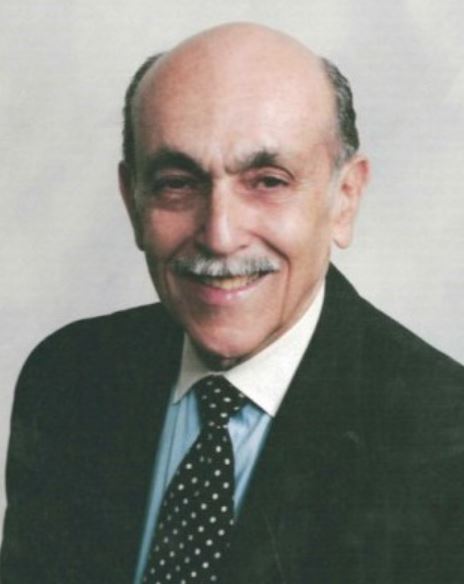
Mayflower Hotel, Washington, D.C. opened on February 18, 1925 with 440 guestrooms. It is known as the “Grande Dame of Washington”, the “Hotel of Presidents” and as the city’s “Second Best Address” (the White House is the first).
The Mayflower Hotel was built by Allen E. Walker who planned to name it The Hotel Walker. He retained Warren & Wetmore, architects who had designed New York’s Commodore, Biltmore, Ambassador Ritz-Carlton and Vanderbilt Hotels. The supervising architect was Robert F. Beresford who had worked for the Supervising Architect of the Treasury and the Superintendent of the Capitol. When Walker sold his interest to C.C. Mitchell & Company, the new owners changed the name to the Mayflower Hotel in honor of the 300th anniversary of the landing of the Mayflower and the Pilgrims at Plymouth Rock.
CONTINUE READING